
AI-generated image
Acar buah
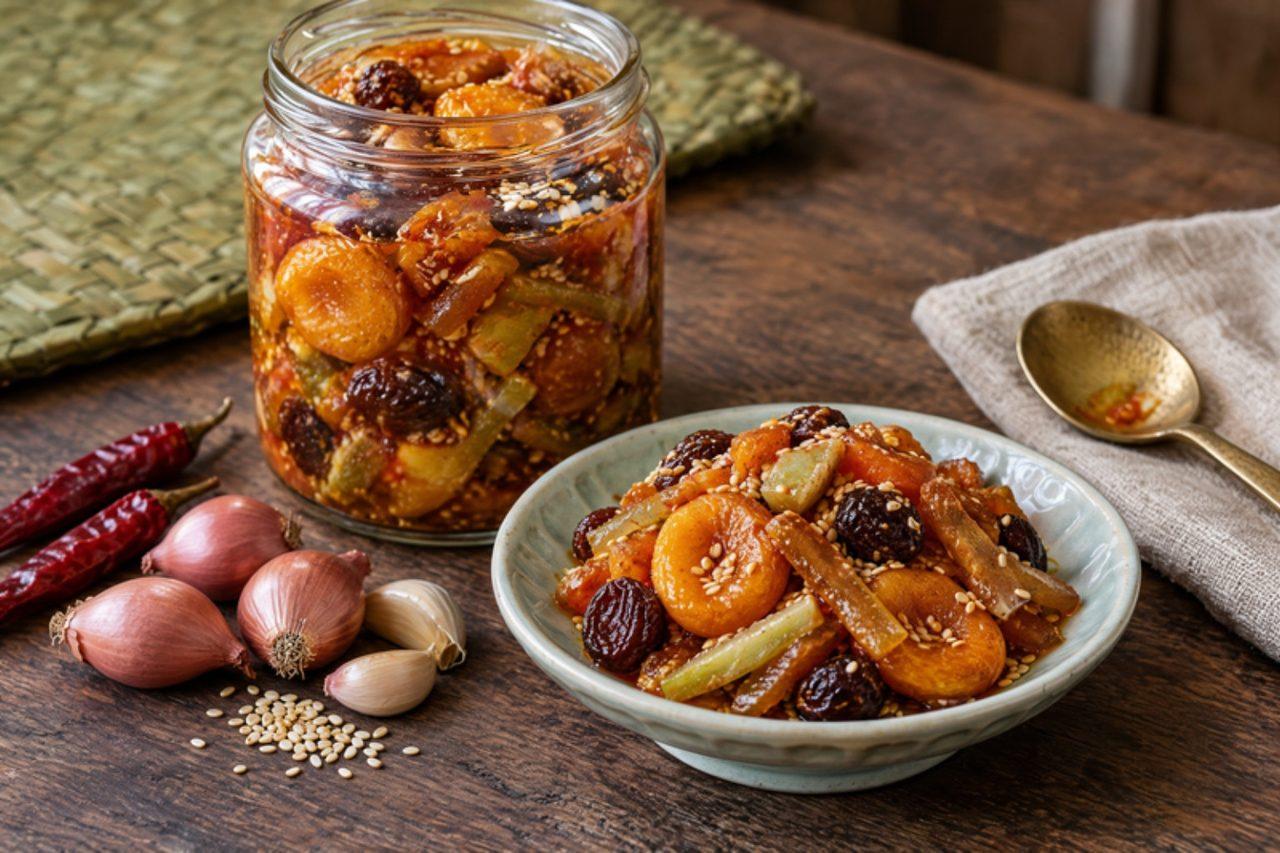
Acar buah: Penang Nyonya fruit pickle of dried apricots, raisins, nutmeg and green papaya in a sticky chilli paste



In Penang, Nyonya households start filling big glass jars with acar buah a week before Chinese New Year, so there is always a dish to set out for visitors with tea, and to eat beside nasi lemak or curry through the fifteen days. Penang is nutmeg country, and candied strips of nutmeg fruit (buah pala) from the Balik Pulau orchards go in with green papaya, dried apricots and raisins, all coated in a rempah of chillies, shallots, garlic, galangal and candlenuts fried until the oil splits, then cooked with vinegar and sugar. A shower of toasted sesame and crushed peanuts finishes it. It is sticky, jammy, sweet-hot and tangy, with crunchy papaya against chewy fruit. Many cooks add a little toasted belacan to the rempah; it is left out here to keep it vegan. Common mistake: frying the rempah too briefly, which leaves it harsh and makes the pickle spoil faster; cook it slowly until dark red and the oil separates. It tastes best after two days in the fridge. Chef's tip: squeeze the salted papaya as hard as you can, or the pickle turns watery.
- Total time
- 70 min
- Difficulty
- medium
- Serves
- 16
Ingredients
For the fruit
- 1 ⅛ lb green papayapeeled, seeded and cut into thin 4 cm strips
- 1 tbsp salt, for the papaya
- 5 ½ oz dried apricotsquartered
- 2 ⅝ oz raisins
- 1 ¾ oz candied nutmeg fruit strips (manisan pala)or 50 g more dried apricot plus ¼ tsp grated nutmeg
For the rempah
- 1 oz dried red chilliessoaked in hot water for 15 minutes
- 5 ½ oz shallots
- ⅔ oz galangal
- 4 candlenutsor macadamia nuts
- ½ tsp ground turmeric
- ½ cup vegetable oil
For the syrup and finish
- 5 ½ oz sugar
- 1 tsp salt
- 2 tbsp toasted sesame seeds
- 2 ⅛ oz roasted peanutscoarsely crushed
Shop this recipe on Amazon
Spices & pantry
Fresh ingredients (2)
Links open Amazon in a new tab. As an Amazon Associate, WhatToEat.Today earns from qualifying purchases.
Method
0/8 doneStep 1: Toss 1 ⅛ lb green papaya with 1 tbsp salt, for the papaya and leave for 30 minutes. Squeeze it hard in a clean cloth, then spread on a tray to air-dry for 1–2 hours.
10 minStep 2: Drain 1 oz dried red chillies and blend them with 3 fresh red chillies, 5 ½ oz shallots, 4 garlic cloves, ⅔ oz galangal and 4 candlenuts and a splash of water into a smooth paste.
5 minStep 3: Heat ½ cup vegetable oil in a wok over a medium-low heat, add the paste and ½ tsp ground turmeric and fry for 15–20 minutes, stirring often, until it darkens to deep red, smells sweet and the oil separates out at the edges.
20 minStep 4: Add ¾ cup white vinegar (5% acidity), 5 ½ oz sugar and 1 tsp salt and simmer for 5 minutes, stirring, until thick and syrupy. Cool completely.
5 minStep 5: Fold in the papaya, 5 ½ oz dried apricots, 2 ⅝ oz raisins and 1 ¾ oz candied nutmeg fruit strips (manisan pala) until everything is coated.
3 minStep 6: Sterilise a 1.5-litre glass or ceramic jar and lid: wash in hot soapy water, rinse, then dry in a 250°F oven for 10 minutes (or in strong sun for a few hours). Cool completely; the jar, bowls, spoons and your hands must be bone dry. Pack the acar into the jar, pressing it down, close and refrigerate.
Step 7: Leave for 2 days before eating. Keep in the fridge for up to 4 weeks, always using a clean dry spoon. Throw it out if you see mould, it fizzes or smells fermented or off.
Step 8: To serve, spoon into a dish and scatter with 2 tbsp toasted sesame seeds and 2 ⅛ oz roasted peanuts so they stay crunchy.
Nutrition per serving
- Calories
- 170 kcal
- Protein
- 3 g
- Carbs
- 25 g
- Fat
- 7 g
- Fibre
- 3 g
Nutrition values are estimates.
KrazyBadal
Good to know
- How long does acar buah take?
- About 70 minutes in total: 40 minutes to prepare and 30 minutes to cook.
- How many people does it serve?
- 16 as written. Change the servings above the ingredients and every amount scales to match.
- Is it vegan?
- Yes. It has no meat, fish, dairy or eggs.
- Is it gluten free?
- Yes, as written. Check the labels on stock, sauces and spice mixes, which sometimes contain gluten.
- Is it very spicy?
- It has some heat. Use less chilli for a milder version, or more if you like it hot.
- Can I make it ahead?
- Yes. It keeps well, so you can cook it earlier in the day or the day before and reheat it.
- What can I use instead of shallots?
- Half an onion per 2 shallots.
- What can I use instead of garlic cloves?
- ½ tsp garlic paste or ⅛ tsp garlic powder per clove.
Reviews
No reviews yet. Be the first to cook it.
Rate this recipe
Sign in to rate and review this recipe.
You might also like
Vegan nuoc cham
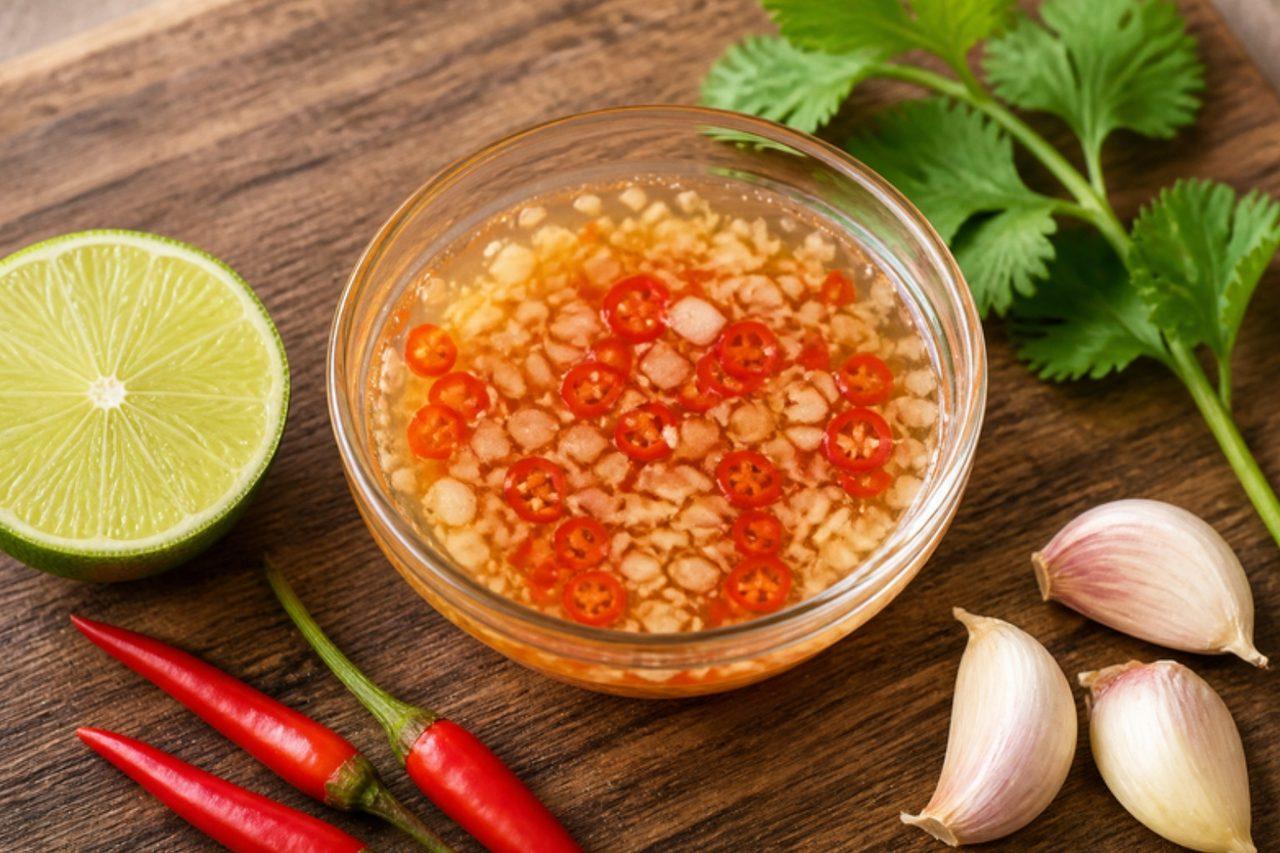
Nước chấm is the dipping sauce that goes with almost everything in Vietnam: spring rolls, bánh xèo, noodle salads and broken rice. Buddhist vegetarian cooks, all over the country, make it without fish sauce, using light soy sauce and a little coconut water for the deep, rounded taste. It should be thin, clear and pale amber, with flecks of garlic and chilli floating on top. Chef's tip: dissolve the sugar in the warm water first, then add the lime and soy, and stir in the garlic and chilli last, pounded with a pinch of sugar, so they float on the surface instead of sinking.
 Vietnamese

Mint and onion chutney
Onions fried gently until soft and sweet, then blended with fresh mint, green chilli and lemon juice. It's a mellow, fresh-tasting chutney that is great with bhajias, samosas, kebabs and tikka, or spread in sandwiches.
 Indian


Laksam
Kota Bharu's morning market has its own noodle: laksam, thick sheets of steamed rice batter rolled up like little carpets and sliced into wheels. They are drowned in a pale, creamy gravy of pounded fish and coconut milk, then heaped with raw herbs and vegetables (ulam): cucumber, long beans, bean sprouts, daun kesum and torch ginger flower, with a spoonful of fiery chilli and budu, the region's fermented anchovy sauce. The result is soft and slippery, rich and cool at the same time. Locals eat it for breakfast or as a mid-morning snack. Chef's tip: pound the cooked fish with the shallots instead of blending it smooth; the gravy should feel faintly textured, like a thin porridge.