
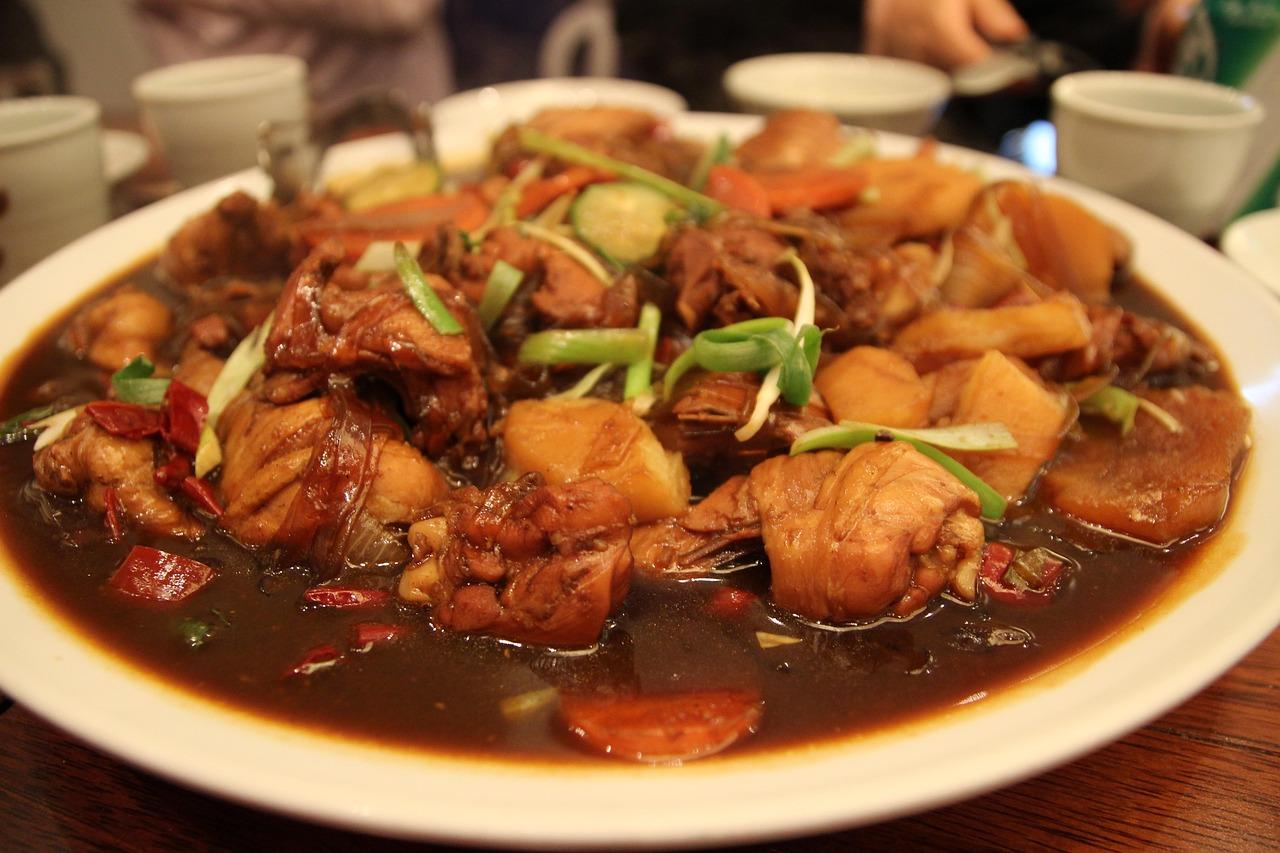
Andong jjimdak
안동찜닭: chicken braised in dark, sweet soy with potatoes and glass noodles
Andong jjimdak took shape in the 1980s in the old market of Andong, a city in North Gyeongsang province, where an alley of small restaurants still serves it on big platters for sharing. Chicken on the bone is braised in a dark, sweet soy sauce with potatoes, carrots and a few dried chillies, then slippery glass noodles are stirred in at the end to soak up the sauce. It is salty, sweet and only gently hot. Serve with rice and kimchi. Chef's tip: soak the glass noodles in warm water for 30 minutes before you start, so they only need 5 minutes in the pot.
- Total time
- 60 min
- Difficulty
- medium
- Serves
- 4
Ingredients
For the braise
For the sauce
Method
0/9 doneStep 1: Cover 3 ½ oz sweet potato glass noodles (dangmyeon) with warm water and leave to soak for 30 minutes, until soft and bendy.
Step 2: Mix 7 tbsp soy sauce, 1 tbsp dark soy sauce, 3 tbsp dark brown sugar, 2 tbsp rice syrup or honey, 1 tbsp oyster sauce, 6 cloves garlic, 1 tbsp ginger and ½ tsp black pepper in a jug. Some cooks add a splash of rice wine, which contains alcohol; it isn't needed here.
Step 3: Bring a large pan of water to the boil, add 2 ⅝ lb chicken thighs and drumsticks, on the bone and blanch for 3 minutes to clean off scum and excess fat. Drain and rinse.
5 minStep 4: Heat 1 tbsp vegetable oil in a wide, deep pan over a medium heat. Fry 4 dried red chillies for 30 seconds until they darken slightly and smell toasty, without burning.
1 minStep 5: Add the chicken, the sauce and 2 ½ cups water. Bring to the boil, then cover and simmer for 15 minutes.
17 minStep 6: Add 2 potatoes, 1 carrot and 1 onion, stir, cover again and simmer for 15 minutes, until the potatoes are tender at the edges.
15 minStep 7: Uncover, turn up the heat a little and simmer for 5 minutes, spooning the sauce over, until it has reduced by about a third. Check the chicken: the thickest drumstick must reach 165°F/165 °F near the bone, with clear juices.
5 minStep 8: Drain the noodles and stir them in with 3 spring onions and 1 green chilli. Cook for 4 to 5 minutes, until the noodles are glossy, dark and fully soft. Common mistake: adding the noodles too early. They keep drinking the sauce, so the pan dries out and they turn to mush; add them only at the very end and serve straight away.
5 minStep 9: Pile onto a large platter, scatter with 1 tsp toasted sesame seeds and serve with rice.
Nutrition per serving
- Calories
- 560 kcal
- Protein
- 42 g
- Carbs
- 58 g
- Fat
- 17 g
- Fibre
- 4 g
Nutrition values are estimates.
KrazyBadal
Good to know
- How long does andong jjimdak take?
- About 60 minutes in total: 15 minutes to prepare and 45 minutes to cook.
- How many people does it serve?
- 4 as written. Change the servings above the ingredients and every amount scales to match.
- What can I use instead of potatoes?
- Sweet potato, same weight (sweeter, cooks a little faster).
- What can I use instead of carrot?
- Parsnip or sweet potato, same weight.
Reviews
No reviews yet. Be the first to cook it.
Rate this recipe
Sign in to rate and review this recipe.
You might also like
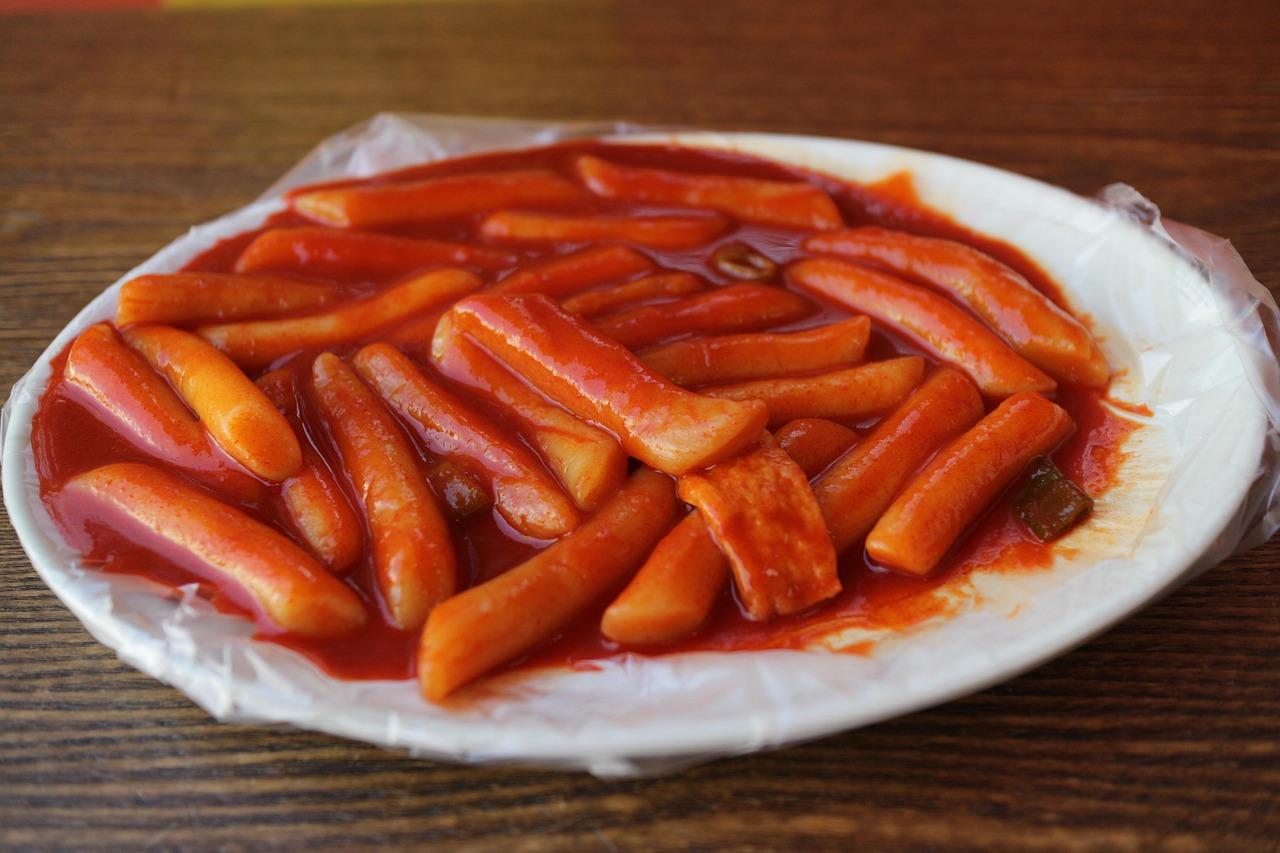
Tteokbokki
Tteokbokki (떡볶이) is Korea's best-loved street snack: chewy cylinders of rice cake simmered in a thick, glossy, sweet and spicy red sauce. It became a classic in Seoul, where it is sold from street stalls and snack bars in every neighbourhood. Street versions use anchovy stock and fish cakes; this vegan version uses a quick kelp and shiitake stock with cabbage and spring onions, and has all the same punch. Eat it hot, while the rice cakes are soft and stretchy. Chef's tip: keep stirring and scrape the bottom; the rice cakes release starch that thickens the sauce but also catches. The sauce is right when it clings to the spoon in a glossy coat.


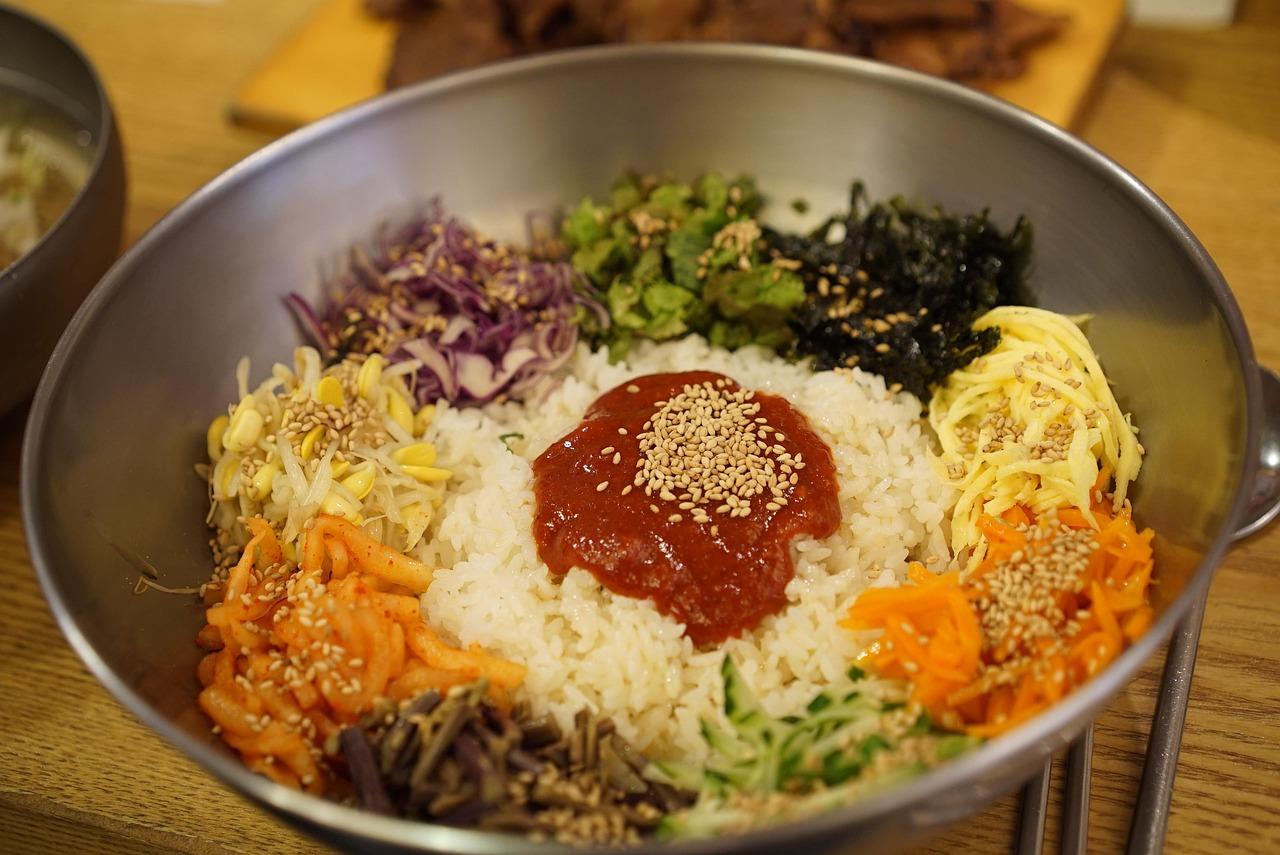
Bibimbap
Bibimbap (비빔밥) means 'mixed rice': a bowl of warm rice topped with small heaps of separately seasoned vegetables, a fried egg and a spoonful of gochujang sauce, all stirred together at the table. The city of Jeonju in North Jeolla province is famous for it and serves it with a dozen or more toppings; this home version keeps five that are easy to find. Each vegetable is cooked on its own so it keeps its colour and texture, and the sauce brings sweetness, heat and a nutty sesame finish. Serve with kimchi and a light soup. Chef's tip: season every vegetable on its own, lightly, and taste each one. If each heap is good alone, the mixed bowl will be balanced; if they are all dressed alike, the bowl tastes flat.
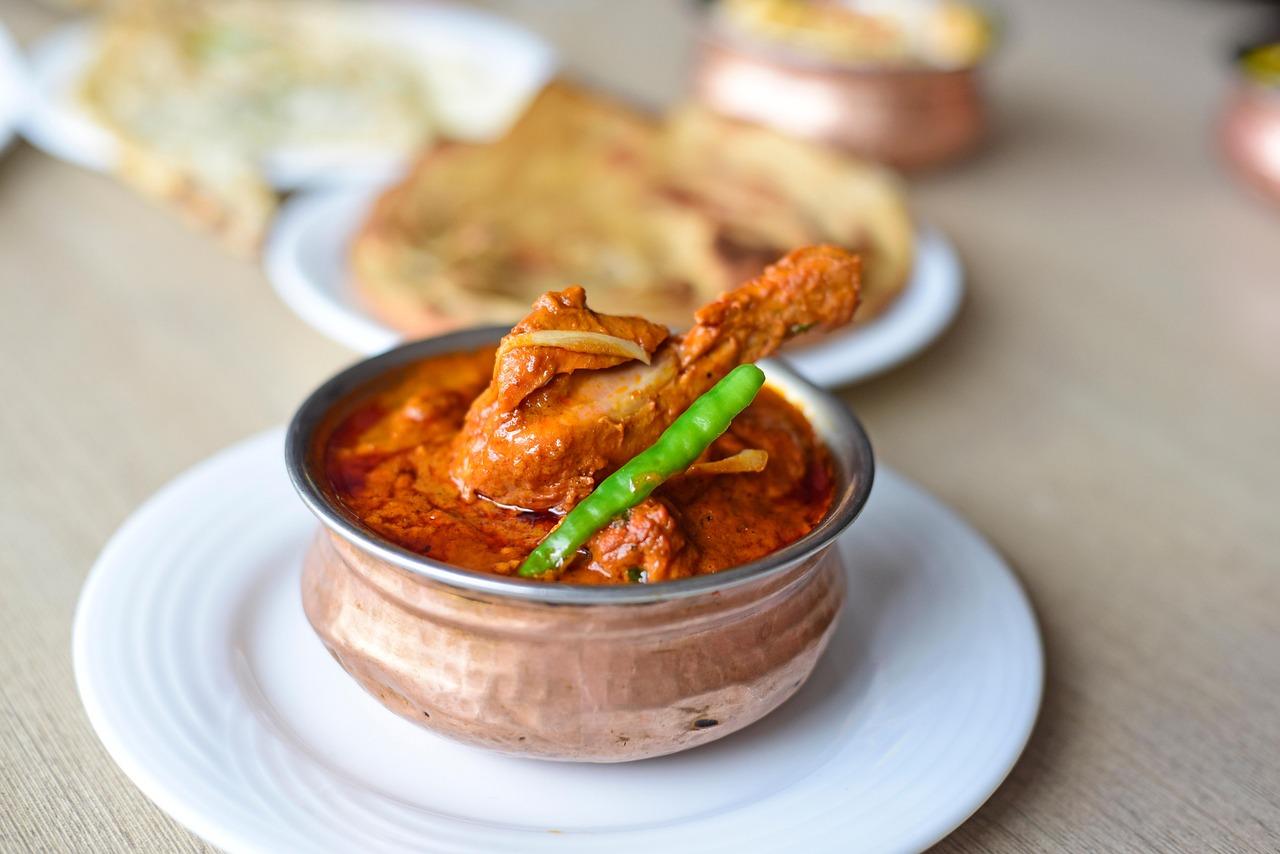
Chicken tikka masala
Marinating the chicken in spiced yoghurt keeps it tender, and a few minutes under a hot grill gives it the smoky char of a tandoor. The sauce is rich but not heavy, finished with a little cream and dried fenugreek leaves.

