
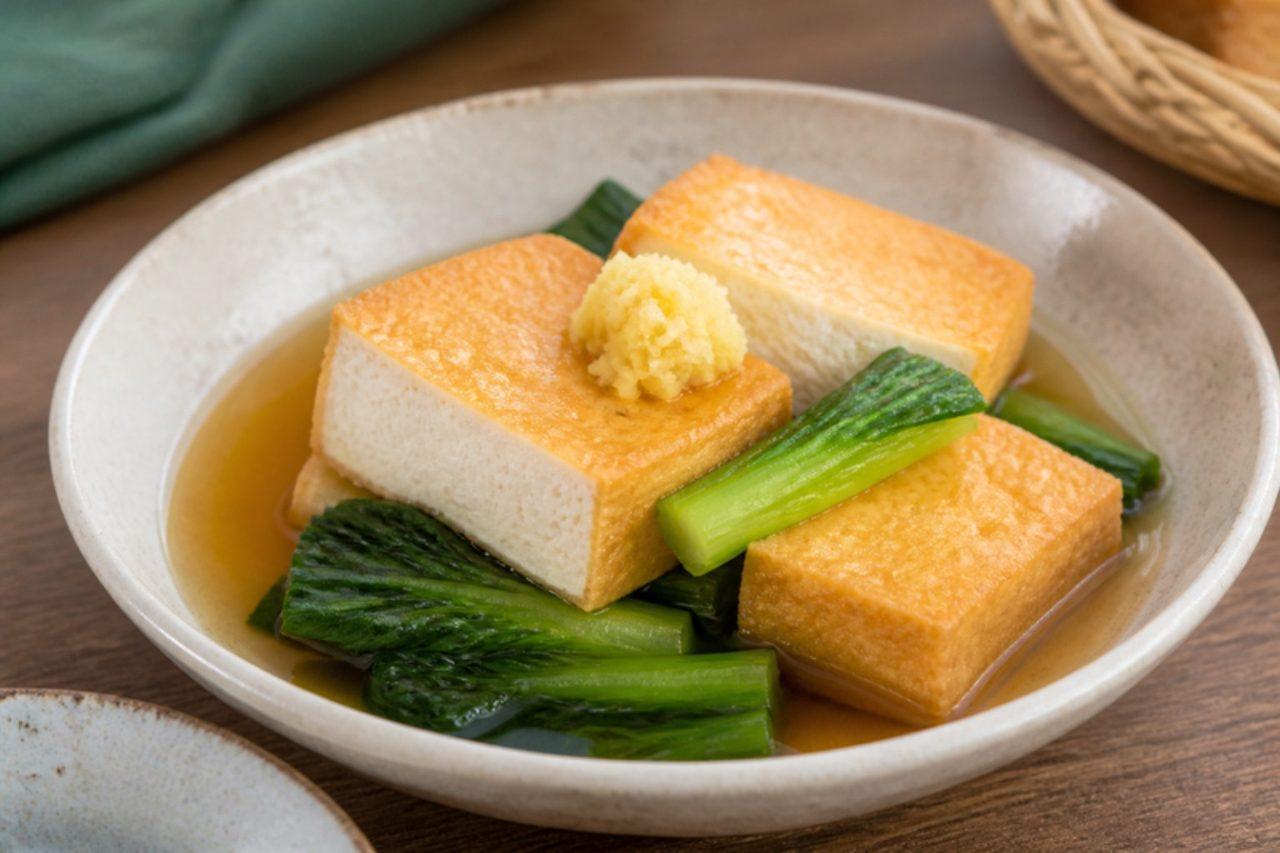
AI-generated image
Atsuage no nimono
Simmered fried tofu and greens
Atsuage no nimono (厚揚げの煮物): thick fried tofu simmered with greens in a light soy and dashi broth


Atsuage no nimono is the kind of simmered dish that turns up on everyday dinner tables across Japan, especially in autumn and winter when komatsuna and spinach are at their best. Thick blocks of fried tofu, crisp outside and soft within, are simmered in a light, slightly sweet broth of dashi and soy until they drink it up, then the greens go in for the last few minutes. This version uses kombu and shiitake dashi and no mirin, so it is vegan and alcohol-free. Served as a main for two with rice, each portion gives about 23 g of protein, from the fried tofu. The common mistake is boiling the broth hard, which toughens the tofu and makes the greens drab. Chef's tip: pour boiling water over the atsuage first to rinse off surface oil; the broth then soaks in instead of sliding off.
- Total time
- 25 min
- Difficulty
- easy
- Serves
- 2
Ingredients
- 14 oz atsuage (thick fried tofu)2 blocks, cut into bite-sized pieces
- 7 oz komatsuna or spinachcut into 4 cm lengths
- 1 ¼ cups kombu and shiitake dashivegetarian: kombu and dried shiitake soaked in water
- 2 tbsp soy sauce
- 1 tbsp sugar
- ⅜ in fresh ginger (optional)grated, to serve
Shop this recipe on Amazon
Spices & pantry
Fresh ingredients (2)
Links open Amazon in a new tab. As an Amazon Associate, WhatToEat.Today earns from qualifying purchases.
Method
0/5 doneStep 1: Put 14 oz atsuage (thick fried tofu) in a colander and pour a kettle of boiling water over it to rinse off the excess oil. Drain.
Step 2: Bring 1 ¼ cups kombu and shiitake dashi, 2 tbsp soy sauce and 1 tbsp sugar to a simmer in a wide pan over a medium heat.
Step 3: Add the tofu, cover with a lid set slightly ajar and simmer gently for 10–12 minutes, turning once, until the tofu has darkened slightly and is hot all the way through.
12 minStep 4: Push the tofu to one side and add 7 oz komatsuna or spinach, stems first. Simmer for 2–3 minutes, until the stems are just tender and the leaves have wilted but are still bright green.
3 minStep 5: Serve the tofu and greens in bowls with a little of the broth spooned over and ⅜ in fresh ginger on top.
Nutrition per serving
- Calories
- 380 kcal
- Protein
- 23 g
- Carbs
- 12 g
- Fat
- 26 g
- Fibre
- 3 g
Nutrition values are estimates.
KrazyBadal
Good to know
- How long does atsuage no nimono take?
- About 25 minutes in total: 5 minutes to prepare and 20 minutes to cook.
- How many people does it serve?
- 2 as written. Change the servings above the ingredients and every amount scales to match.
- Is it vegan?
- Yes. It has no meat, fish, dairy or eggs.
- What can I use instead of soy sauce?
- Tamari, same amount (gluten free).
- What can I use instead of sugar?
- Caster sugar, same amount.
Reviews
No reviews yet. Be the first to cook it.
Rate this recipe
Sign in to rate and review this recipe.
You might also like
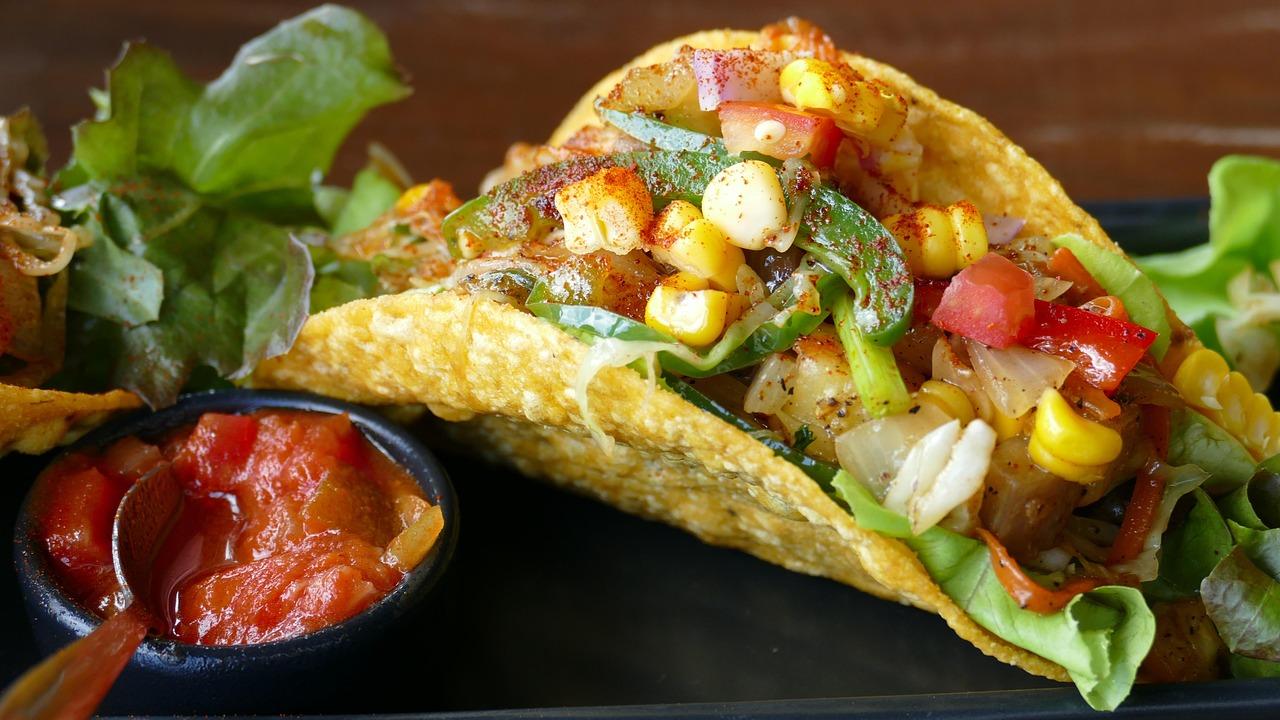
Black bean tacos with lime slaw
Proof that a meat-free taco night can be the best one. The beans are mashed with chipotle and cumin so they hold together in the tortilla, and a quick lime slaw adds crunch.
 Mexican


Yaki onigiriGrilled rice balls
Yaki onigiri (焼きおにぎり) are rice balls grilled until they form a crisp, toasty crust, then brushed with soy sauce glaze. They are eaten all over Japan, at izakaya, at barbecues and from the freezer section, as a snack or with miso soup. The inside stays soft and steamy while the outside crackles. Best eaten hot, straight from the pan. Chef's tip: let the shaped rice balls dry for 10 minutes before they go in the pan. A drier surface forms a better crust and won't stick, and the glaze goes on only at the end so it doesn't burn.

Miso soup
Miso soup (味噌汁) is drunk every day in homes all over Japan, at breakfast as well as dinner, beside a bowl of rice. The base is dashi; this vegan version uses kombu and dried shiitake instead of bonito, which gives it a deep, rounded flavour. Silken tofu and wakame seaweed are the classic fillings. It takes ten minutes; just remember not to boil the miso. Chef's tip: add the miso at the very end and never let it boil. Boiling kills the miso's fresh, fermented aroma; Japanese cooks say the soup should only 'smile', with the surface barely trembling.