
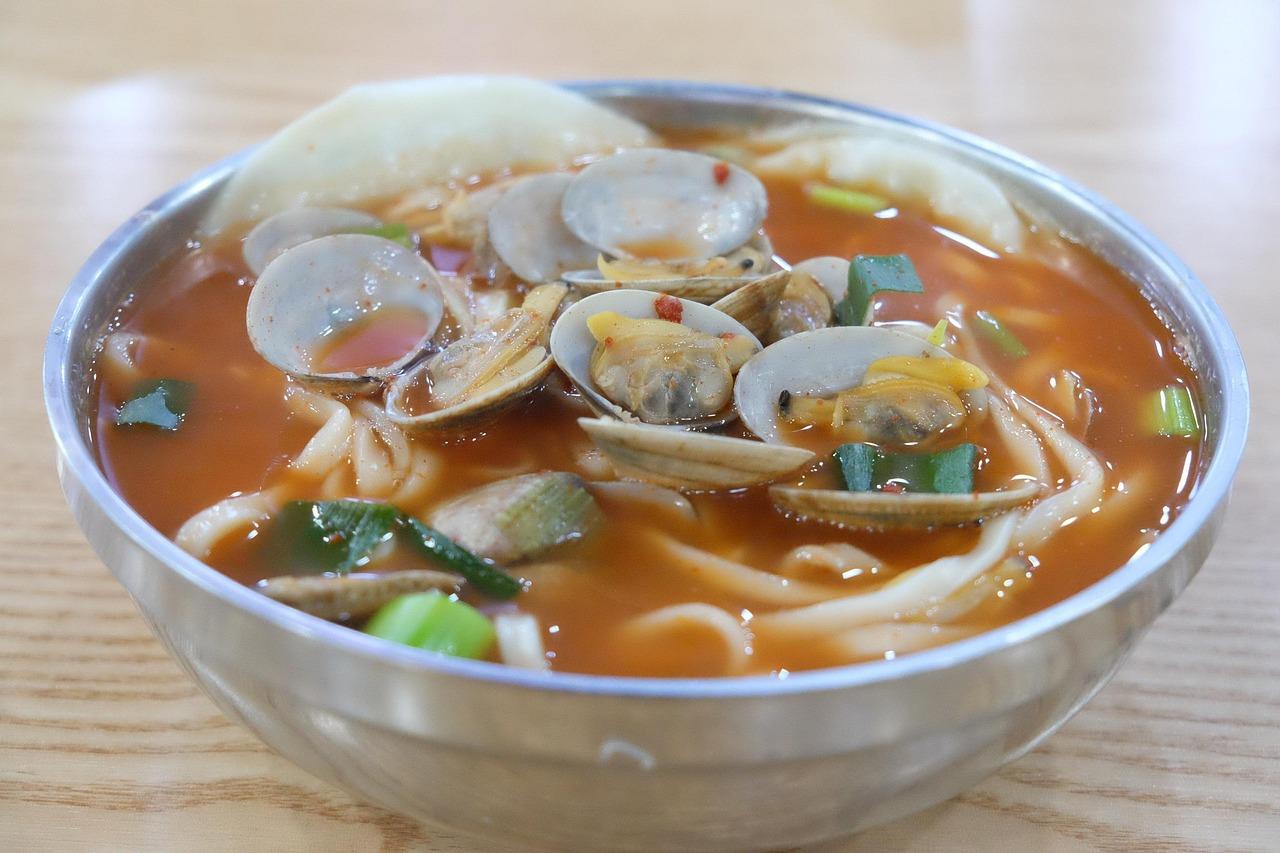
Kalguksu with clams
바지락 칼국수: hand-cut wheat noodles in anchovy and kelp broth with fresh clams
Kalguksu means 'knife noodles': a soft wheat dough is rolled thin and cut by hand. Korean noodle shops serve it all year, but it is the dish people crave on a rainy day, often with a crisp pajeon on the side. Along the west coast, near the mudflats where clams are dug, the broth is loaded with them. The flour clinging to the noodles thickens the soup slightly as they cook, giving it a gentle, silky body. Chef's tip: shake off most of the flour before the noodles go into the pot, so the broth turns silky rather than gluey.
- Total time
- 50 min
- Difficulty
- medium
- Serves
- 3
Ingredients
For the noodles
For the broth
For the soup
Method
0/11 doneStep 1: Put 1 ⅛ lb fresh live clams in a bowl of cold water mixed with 1 tbsp salt, for purging the clams, cover with a tea towel and leave in a cool place for at least 30 minutes so they spit out their sand. Throw away any clams that are cracked, or open and don't close when tapped.
Step 2: Mix 10 ½ oz plain flour and ½ tsp salt in a bowl, then add 1 tsp vegetable oil and ½ cup water and bring together into a firm dough. Knead for 5 minutes, until smooth.
5 minStep 3: Wrap the dough and leave it to rest for 20 minutes, so it relaxes and rolls out easily.
20 minStep 4: Meanwhile put 15 large dried anchovies in a dry pot over a medium heat for 1 minute to toast them, then add 6 ¾ cups water and 1 piece dried kelp (dasima).
1 minStep 5: Bring to the boil, lift out the kelp after 5 minutes, then simmer the anchovies for 10 minutes more. Strain the broth and return it to the pot.
15 minStep 6: Dust the worktop generously with flour and roll the dough out to about 2 mm thick. Dust the top with flour, fold it loosely into a flat roll and cut into 3 to 4 mm strips. Shake the noodles loose. Common mistake: not using enough flour while rolling and cutting; the strips stick back together into a lump.
Step 7: Rub the clams together under cold running water and drain.
Step 8: Bring the broth to the boil, add 1 potato, ½ onion and 3 cloves garlic and cook for 5 minutes, until the potato is half soft.
5 minStep 9: Add the noodles, shaking off most of the flour, and stir so they don't clump. Boil for 3 minutes.
3 minStep 10: Add the clams and ½ courgette and boil for 3 to 4 minutes, until the clams open and the noodles are soft but still chewy. Throw away any clams that stay shut.
4 minStep 11: Season with 1 tbsp Korean soup soy sauce (guk-ganjang) and ½ tsp salt to taste. Ladle into bowls and top with 2 spring onions and 1 green chilli. Serve with kimchi.
Nutrition per serving
- Calories
- 470 kcal
- Protein
- 24 g
- Carbs
- 82 g
- Fat
- 4 g
- Fibre
- 4 g
Nutrition values are estimates.
KrazyBadal
Good to know
- How long does kalguksu with clams take?
- About 50 minutes in total: 25 minutes to prepare and 25 minutes to cook.
- How many people does it serve?
- 3 as written. Change the servings above the ingredients and every amount scales to match.
- What can I use instead of plain flour?
- Self-raising flour, same amount (then leave out the baking powder).
- What can I use instead of potato?
- Sweet potato, same weight (sweeter, cooks a little faster).
Reviews
No reviews yet. Be the first to cook it.
Rate this recipe
Sign in to rate and review this recipe.
You might also like

Boiled pasta
The basic method for any dried pasta, from penne to spaghetti. A large pan of salted boiling water keeps the pasta from sticking, and you cook it only until just done, with a little bite left. Use it in salads, bakes or with any sauce.


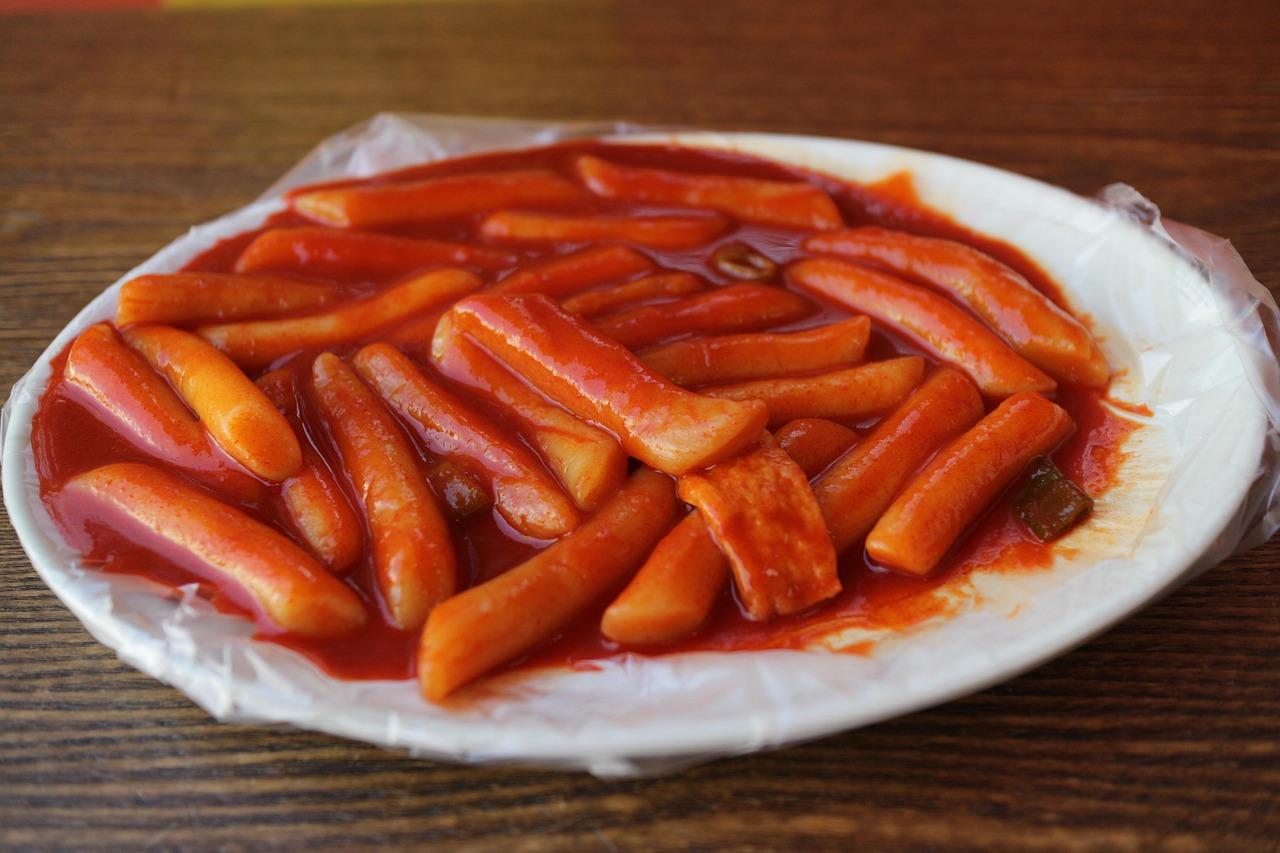
Tteokbokki
Tteokbokki (떡볶이) is Korea's best-loved street snack: chewy cylinders of rice cake simmered in a thick, glossy, sweet and spicy red sauce. It became a classic in Seoul, where it is sold from street stalls and snack bars in every neighbourhood. Street versions use anchovy stock and fish cakes; this vegan version uses a quick kelp and shiitake stock with cabbage and spring onions, and has all the same punch. Eat it hot, while the rice cakes are soft and stretchy. Chef's tip: keep stirring and scrape the bottom; the rice cakes release starch that thickens the sauce but also catches. The sauce is right when it clings to the spoon in a glossy coat.

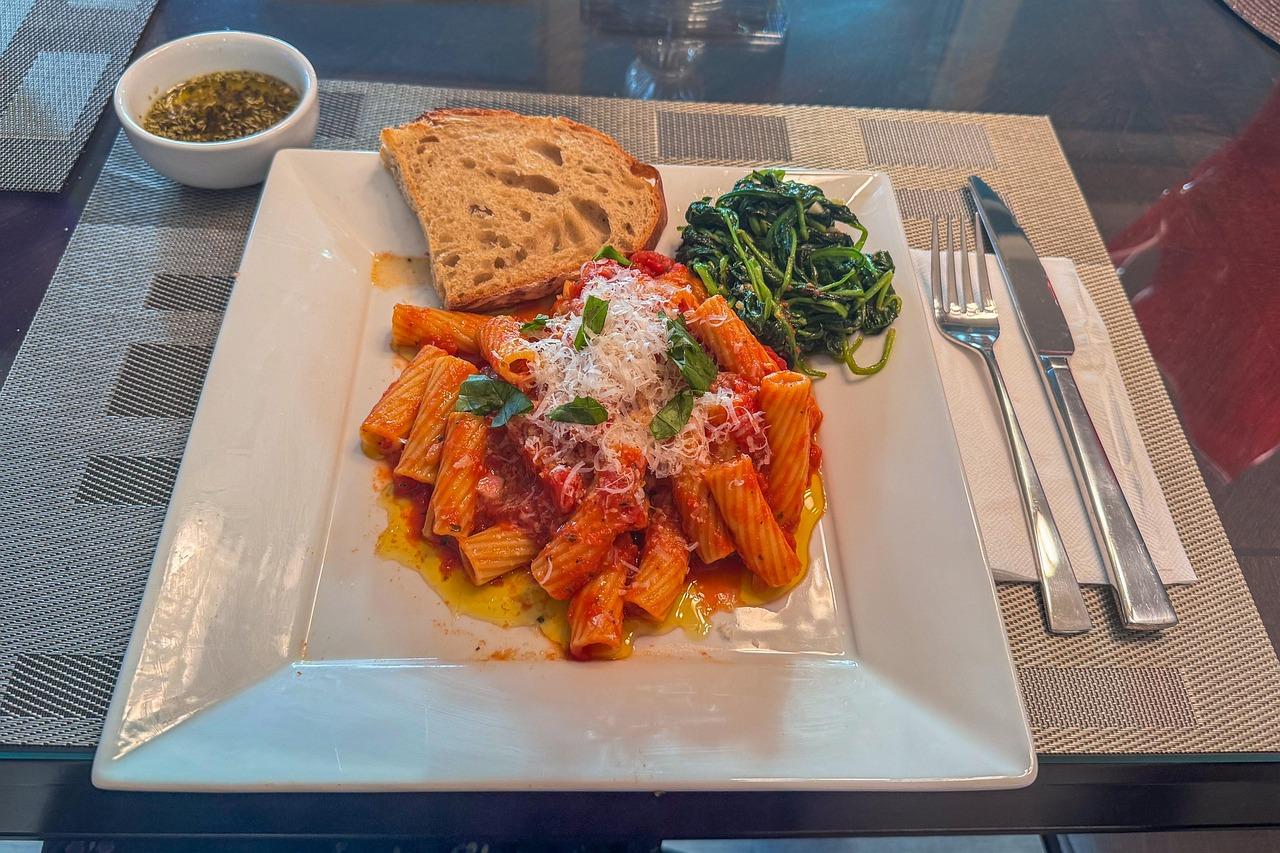
Pasta and eggplant
Rigatoni tossed in a thick tomato sauce with soft aubergine, celery and garlic, with an optional splash of brandy for depth, and topped with grated cheddar.