
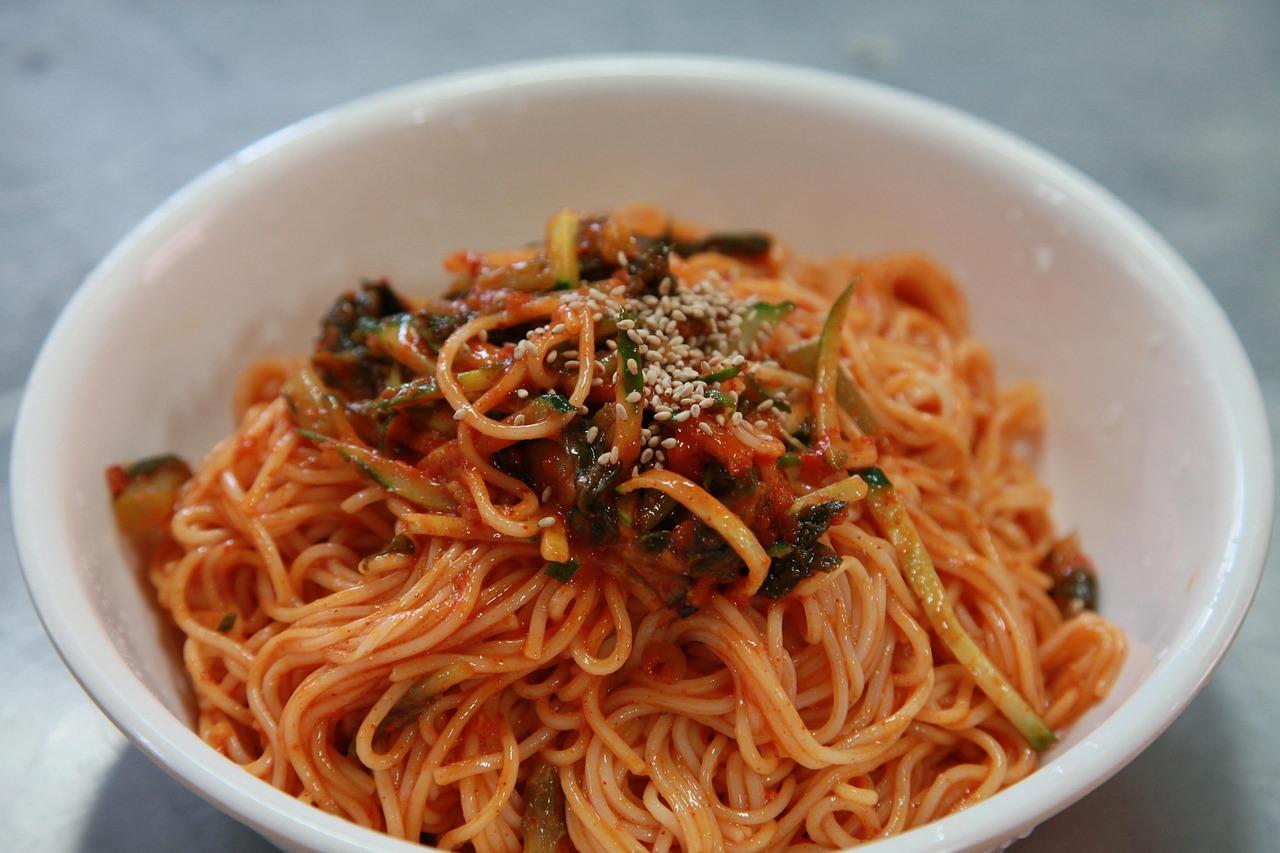
Bibim guksu
비빔국수 · Cold thin noodles in a sweet, sour and spicy gochujang dressing


Bibim guksu (비빔국수) is a bowl of chilled thin wheat noodles mixed with a sweet, tangy and fiery gochujang dressing and topped with crunchy cucumber, lettuce and kimchi. It is a summer favourite all over Korea, quick enough for lunch and refreshing on a hot day. The noodles are rinsed in cold water until springy, then tossed with the sauce just before eating. Many versions add half a boiled egg; this one is fully vegan. Chef's tip: rinse the noodles hard in cold water, rubbing them like laundry, then drain them really well. Leftover starch or water dulls the dressing and makes the noodles sticky.
- Total time
- 20 min
- Difficulty
- easy
- Serves
- 2
Ingredients
For the noodles
For the dressing
For the toppings
Method
0/5 doneStep 1: Mix 3 tbsp gochujang (Korean chilli paste), 1 tsp gochugaru (Korean chilli flakes), 3 tbsp rice vinegar, 2 tbsp sugar, 1 tbsp soy sauce, 1 tbsp toasted sesame oil and 1 clove garlic in a large bowl until smooth. Taste: it should be sweet, sour and spicy all at once.
Step 2: Bring a large pan of water to a rolling boil and add 7 oz somyeon (thin wheat noodles), stirring so they don't stick. When the water foams up, add a cup of cold water; when it boils again, the noodles are done, about 3–4 minutes in all.
4 minStep 3: Drain the noodles and rinse them under cold running water, rubbing them between your hands to wash off the starch, until they are cold and springy. Drain very well.
Step 4: Add the noodles to the bowl of dressing with 3 ½ oz kimchi and toss until evenly coated.
Step 5: Twist the noodles into two bowls and top with ½ cucumber, 4 lettuce leaves, 1 spring onion and 1 tbsp toasted sesame seeds. Serve straight away, while cold.
Nutrition per serving
- Calories
- 480 kcal
- Protein
- 13 g
- Carbs
- 92 g
- Fat
- 8 g
- Fibre
- 5 g
Nutrition values are estimates.
KrazyBadal
Good to know
- How long does bibim guksu take?
- About 20 minutes in total: 10 minutes to prepare and 10 minutes to cook.
- How many people does it serve?
- 2 as written. Change the servings above the ingredients and every amount scales to match.
- Is it vegan?
- Yes. It has no meat, fish, dairy or eggs.
- Is it very spicy?
- It has some heat. Use less chilli for a milder version, or more if you like it hot.
- What can I use instead of rice vinegar?
- Cider vinegar with a pinch of sugar, same amount.
- What can I use instead of sugar?
- Caster sugar, same amount.
Reviews
No reviews yet. Be the first to cook it.
Rate this recipe
Sign in to rate and review this recipe.
You might also like

Boiled pasta
The basic method for any dried pasta, from penne to spaghetti. A large pan of salted boiling water keeps the pasta from sticking, and you cook it only until just done, with a little bite left. Use it in salads, bakes or with any sauce.


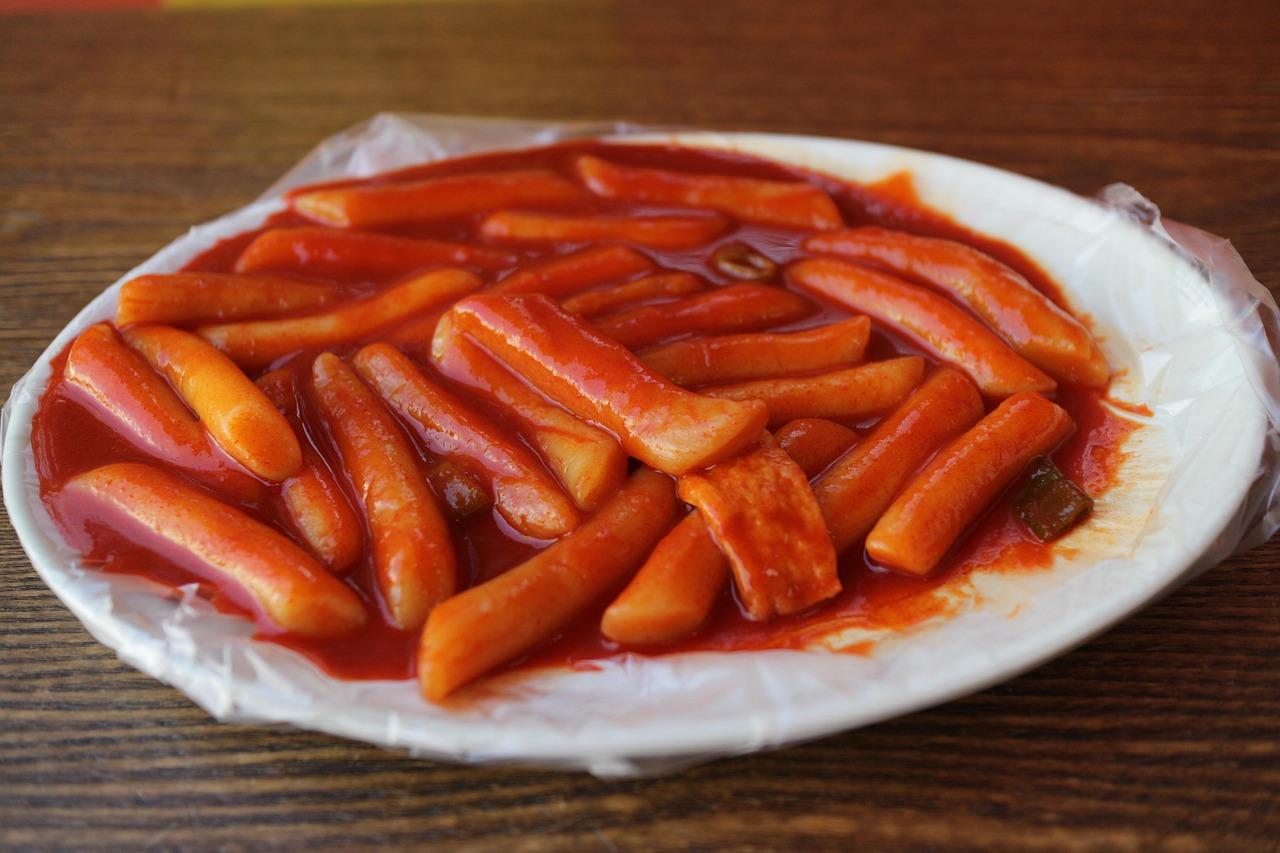
Tteokbokki
Tteokbokki (떡볶이) is Korea's best-loved street snack: chewy cylinders of rice cake simmered in a thick, glossy, sweet and spicy red sauce. It became a classic in Seoul, where it is sold from street stalls and snack bars in every neighbourhood. Street versions use anchovy stock and fish cakes; this vegan version uses a quick kelp and shiitake stock with cabbage and spring onions, and has all the same punch. Eat it hot, while the rice cakes are soft and stretchy. Chef's tip: keep stirring and scrape the bottom; the rice cakes release starch that thickens the sauce but also catches. The sauce is right when it clings to the spoon in a glossy coat.

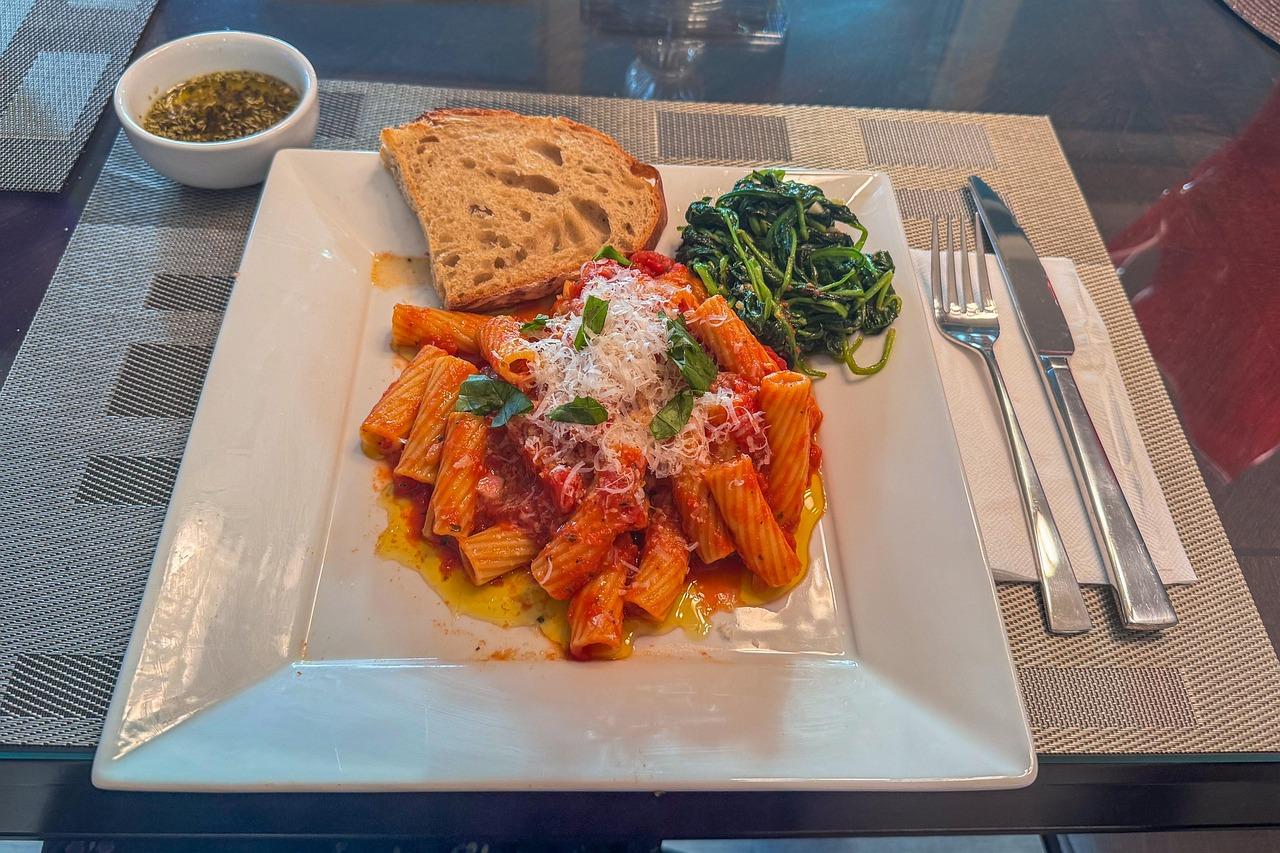
Pasta and eggplant
Rigatoni tossed in a thick tomato sauce with soft aubergine, celery and garlic, with an optional splash of brandy for depth, and topped with grated cheddar.