
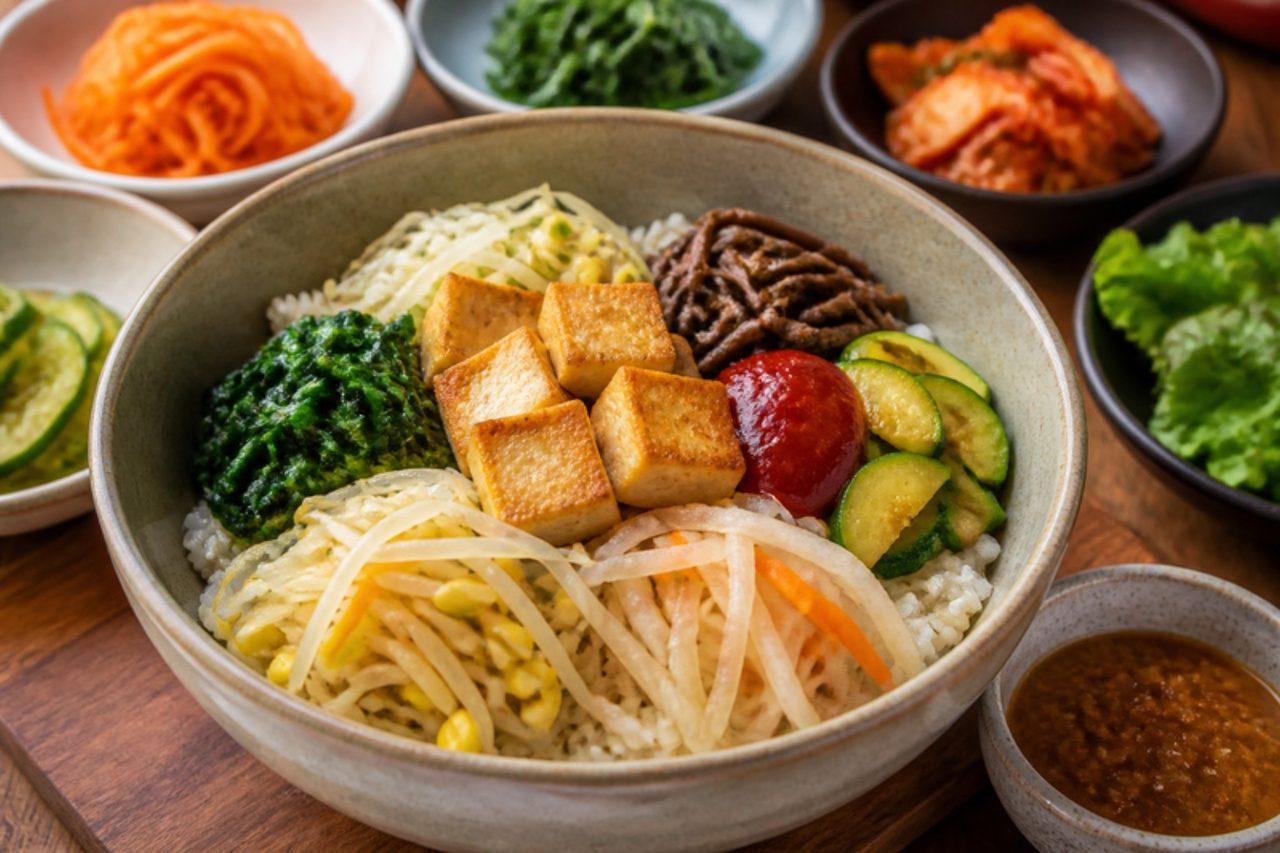
AI-generated image
Boribap
Barley rice with vegetables
Boribap (보리밥): Korean barley rice mixed at the table with namul, tofu doenjang and chilli paste


Boribap was once the rice of the poor in Jeolla's farming villages; now Seoulites drive out to the hills on summer weekends to eat it in restaurants that set down a big bowl of steamed barley rice and a ring of seasoned vegetables to mix in yourself. This home version is built for protein: soybean sprouts, spinach and radish namul, plus a thick tofu and doenjang sauce (gang-doenjang), give about 23 g of protein a bowl, from tofu, soybean sprouts, doenjang and the barley. The classic mistake with soybean sprouts is lifting the lid while they cook, which leaves a raw, beany smell; keep it shut. Soak the barley for at least 1 hour before cooking. Most gochujang contains wheat, so this is not gluten free. Chef's tip: mix the bowl with a spoon rather than chopsticks, pressing the rice against the side so every grain is coated in sauce and sesame oil.
- Total time
- 70 min
- Difficulty
- easy
- Serves
- 4
Ingredients
For the barley rice
- 7 oz pearl barleysoaked for 1 hour
- 3 ½ oz short-grain rice
- 2 ¼ cups water
For the namul
- 9 oz soybean sproutsrinsed, stringy roots pinched off
- 9 oz spinach
- 7 oz Korean radish or daikoncut into fine matchsticks
- 1 tbsp rice vinegar
- 2 garlic clovesfinely grated
- 2 tbsp toasted sesame oil
- 1 tsp salt
For the gang-doenjang
- 9 oz firm tofucut into 1 cm dice
- 1 onionfinely chopped
- ½ courgettefinely diced
- 4 shiitake mushroomsfinely diced
- 3 tbsp doenjang (soybean paste)
- ¾ cup water
- 1 tbsp neutral oil
To serve
- 2 tbsp gochujang
- 1 tbsp toasted sesame seeds
Shop this recipe on Amazon
Spices & pantry
Fresh ingredients (6)
Links open Amazon in a new tab. As an Amazon Associate, WhatToEat.Today earns from qualifying purchases.
Method
0/7 doneStep 1: Drain the soaked 7 oz pearl barley and rinse it with 3 ½ oz short-grain rice. Put both in a heavy pot with 2 ¼ cups water, bring to the boil, cover and cook on the lowest heat for 25 minutes. Rest, covered, for 10 minutes. The barley should be tender with a little bite.
35 minStep 2: Put 9 oz soybean sprouts in a pan with 100 ml water and a pinch of ⅓ tsp salt, cover and cook over a medium heat for 6 minutes without lifting the lid. Drain, then toss with 1 garlic cloves and ⅝ tbsp toasted sesame oil.
7 minStep 3: Blanch 9 oz spinach in boiling water for 30 seconds, until just wilted. Cool under cold water, squeeze out firmly, cut into 5 cm lengths and toss with the rest of 1 garlic cloves, ⅝ tbsp toasted sesame oil and ⅓ tsp salt.
3 minStep 4: Toss 7 oz Korean radish or daikon with 1 tsp Korean chilli flakes (gochugaru), 1 tbsp rice vinegar and the rest of ⅜ tsp salt. Leave for 10 minutes, until slightly softened and pink.
10 minStep 5: For the gang-doenjang, heat 1 tbsp neutral oil in a small pan over a medium heat and soften 1 onion for 3 minutes. Add 4 shiitake mushrooms and ½ courgette and cook for 3 minutes more.
6 minStep 6: Stir in 3 tbsp doenjang (soybean paste) and ¾ cup water, then add 9 oz firm tofu. Simmer gently for 8–10 minutes, until thick enough to hold a trail when you drag a spoon through it.
10 minStep 7: Divide the barley rice between wide bowls and arrange the namul around the edge. Add a big spoon of gang-doenjang, a small spoon of 2 tbsp gochujang, a drizzle of the rest of ¾ tbsp toasted sesame oil and a pinch of 1 tbsp toasted sesame seeds. Mix well at the table.
Nutrition per serving
- Calories
- 520 kcal
- Protein
- 23 g
- Carbs
- 74 g
- Fat
- 15 g
- Fibre
- 11 g
Nutrition values are estimates.
KrazyBadal
Good to know
- How long does boribap take?
- About 70 minutes in total: 25 minutes to prepare and 45 minutes to cook.
- How many people does it serve?
- 4 as written. Change the servings above the ingredients and every amount scales to match.
- Is it vegan?
- Yes. It has no meat, fish, dairy or eggs.
- What can I use instead of short-grain rice?
- Any long-grain rice, same amount.
- What can I use instead of rice vinegar?
- Cider vinegar with a pinch of sugar, same amount.
Reviews
No reviews yet. Be the first to cook it.
Rate this recipe
Sign in to rate and review this recipe.
You might also like
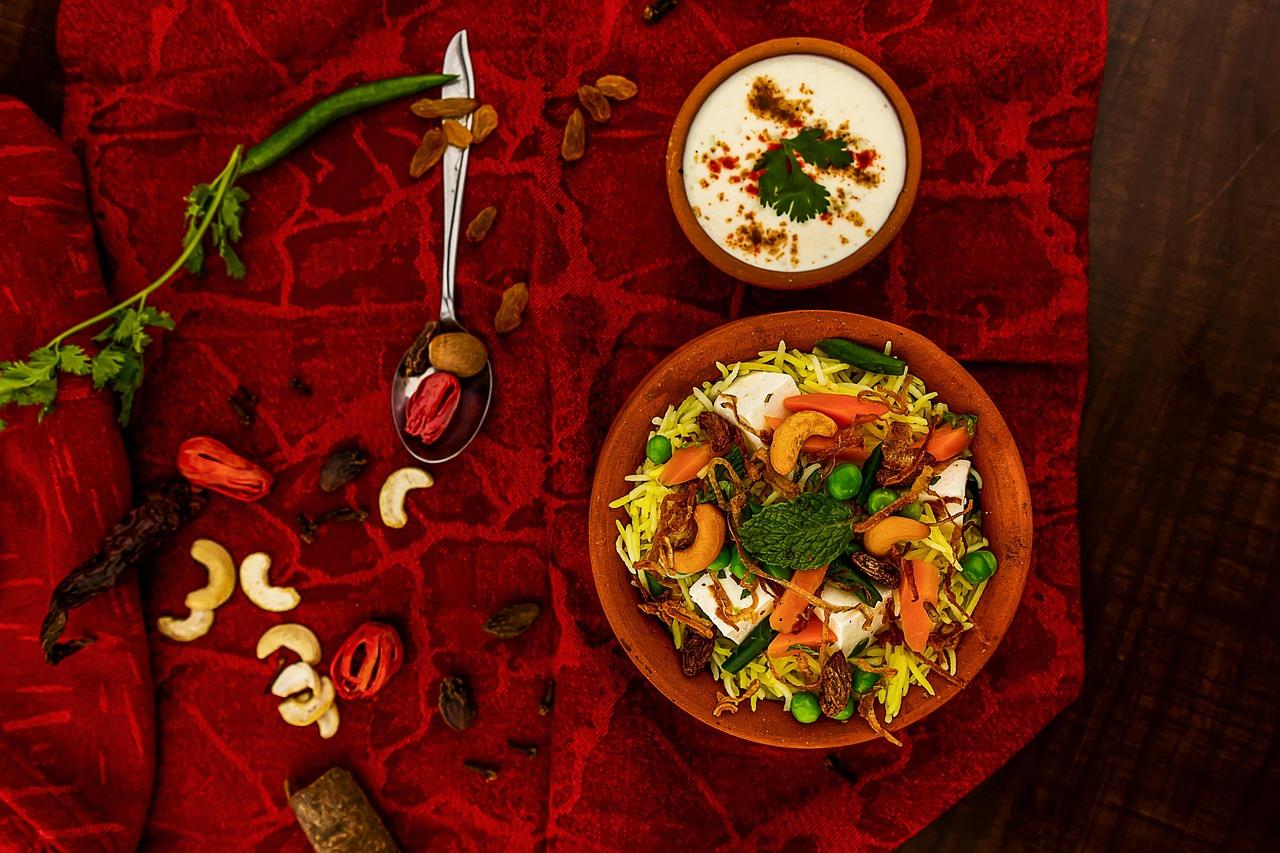
Paneer biryaniRice and moong dal in coconut milk
A mild, creamy biryani: rice and husked green gram roasted in ghee, then cooked in coconut milk with peas, carrots, potatoes, peanuts and cashews, and finished with soft fried paneer and a fresh coriander yogurt. Serve hot, garnished with more fried cashews and paneer.
 Indian

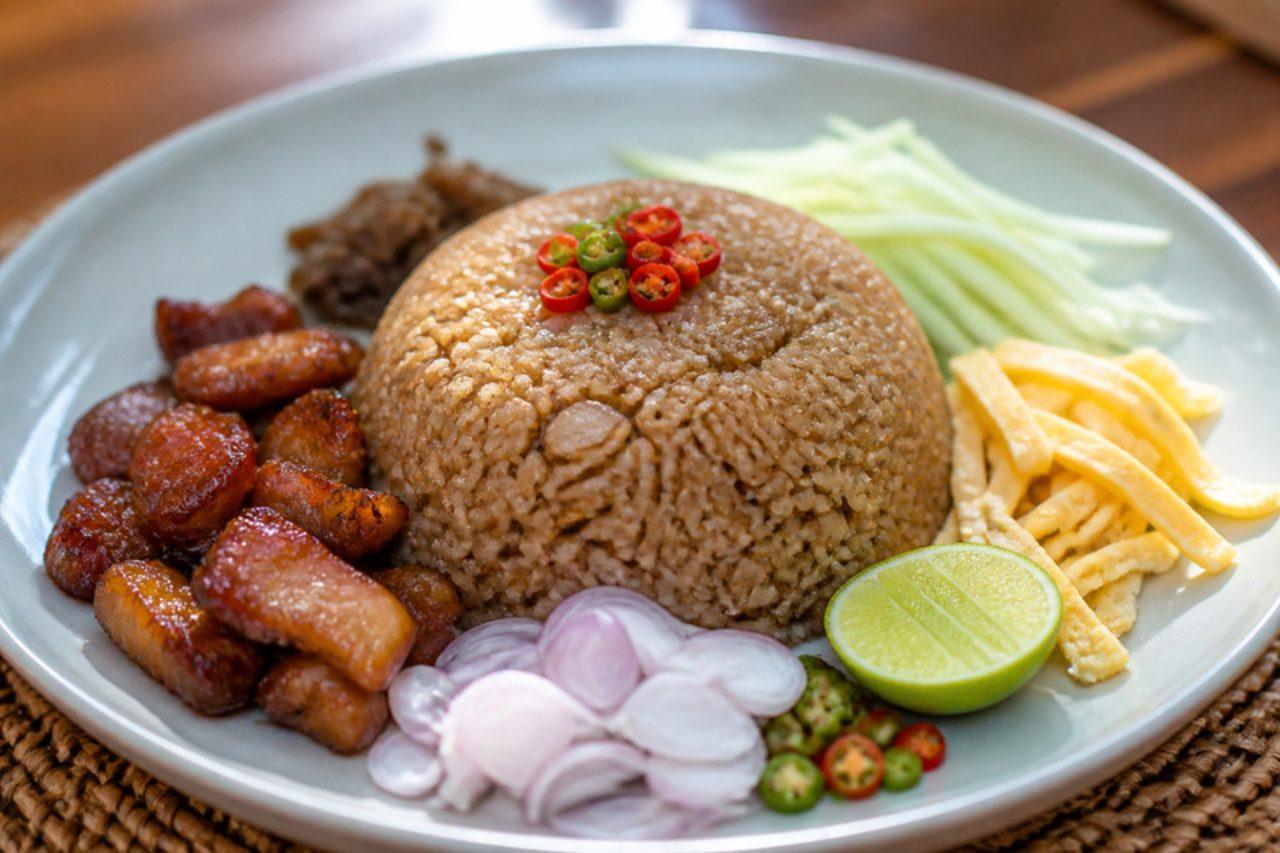
Khao kluk kapiShrimp paste rice
Everything on this central Thai plate is arranged in little heaps around a mound of rice tossed with garlic and fermented shrimp paste: sticky caramelised pork (moo wan), threads of sour green mango, shallots, chillies, sliced long beans, crisp dried shrimp and ribbons of thin omelette. You mix a bit of each into every spoonful, so salty, sweet, sour and hot arrive together. It's a favourite at Bangkok's curry-and-rice shops and a clever way to use up yesterday's rice at home; lime wedges and cucumber cool it down. Chef's tip: use day-old jasmine rice straight from the fridge, because freshly cooked rice clumps and smears the shrimp paste instead of coating each grain.
 Thai
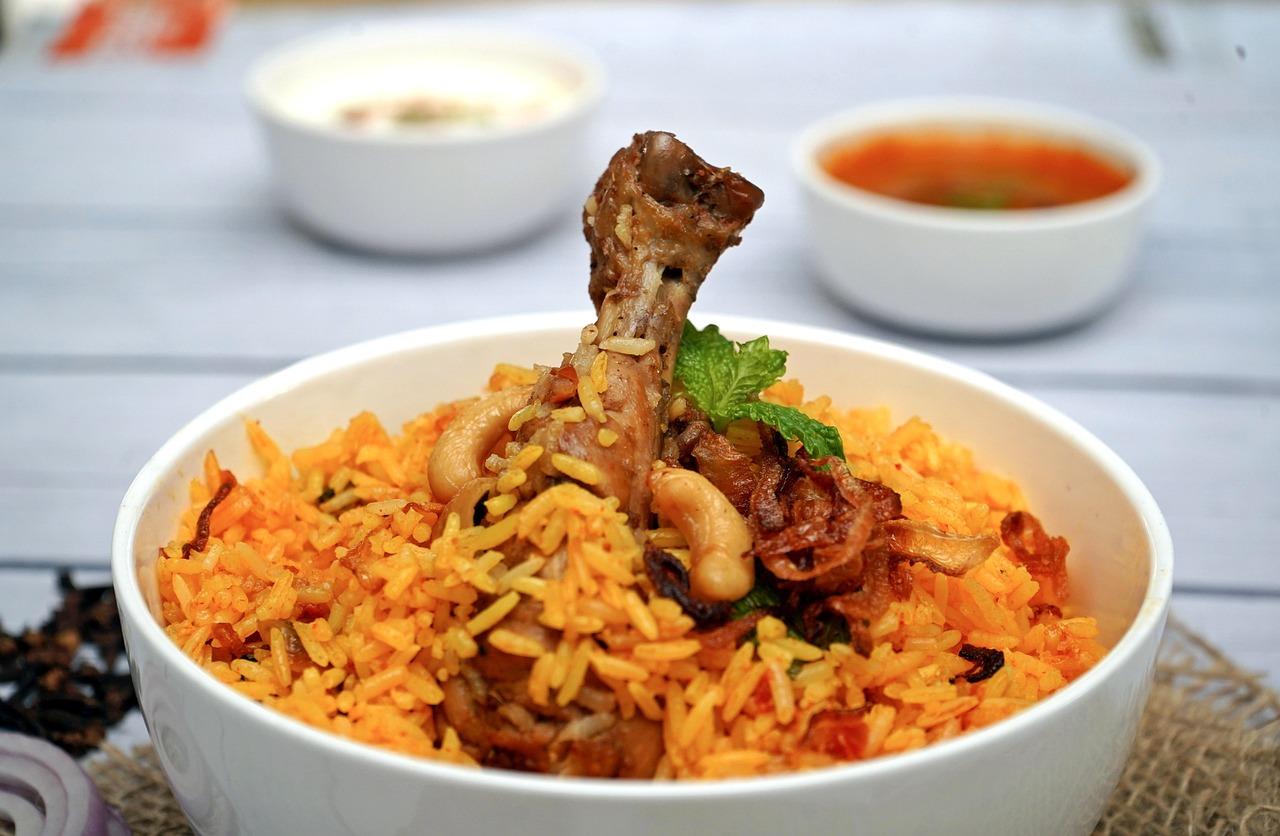
Hyderabadi chicken dum biryani
Hyderabad's biryani grew up in the kitchens of the Nizams, and the kacchi style is its proudest form: the chicken goes into the pot raw, in a thick yogurt, mint and fried-onion marinade, and cooks only in the steam trapped under part-cooked basmati. In the old city it is wedding and Eid food, ordered in huge copper deghs, and at home it's the Sunday showpiece, served with mirchi ka salan and a cooling raita. Because the meat cooks without being stirred, small bone-in thigh and drumstick pieces work best. Chef's tip: marinate overnight in the fridge — the yogurt tenderises the chicken and the flavours go right to the bone.