
Borodinsky bread
Dark sourdough rye with coriander
Moscow's dark sourdough rye with molasses, malt and coriander


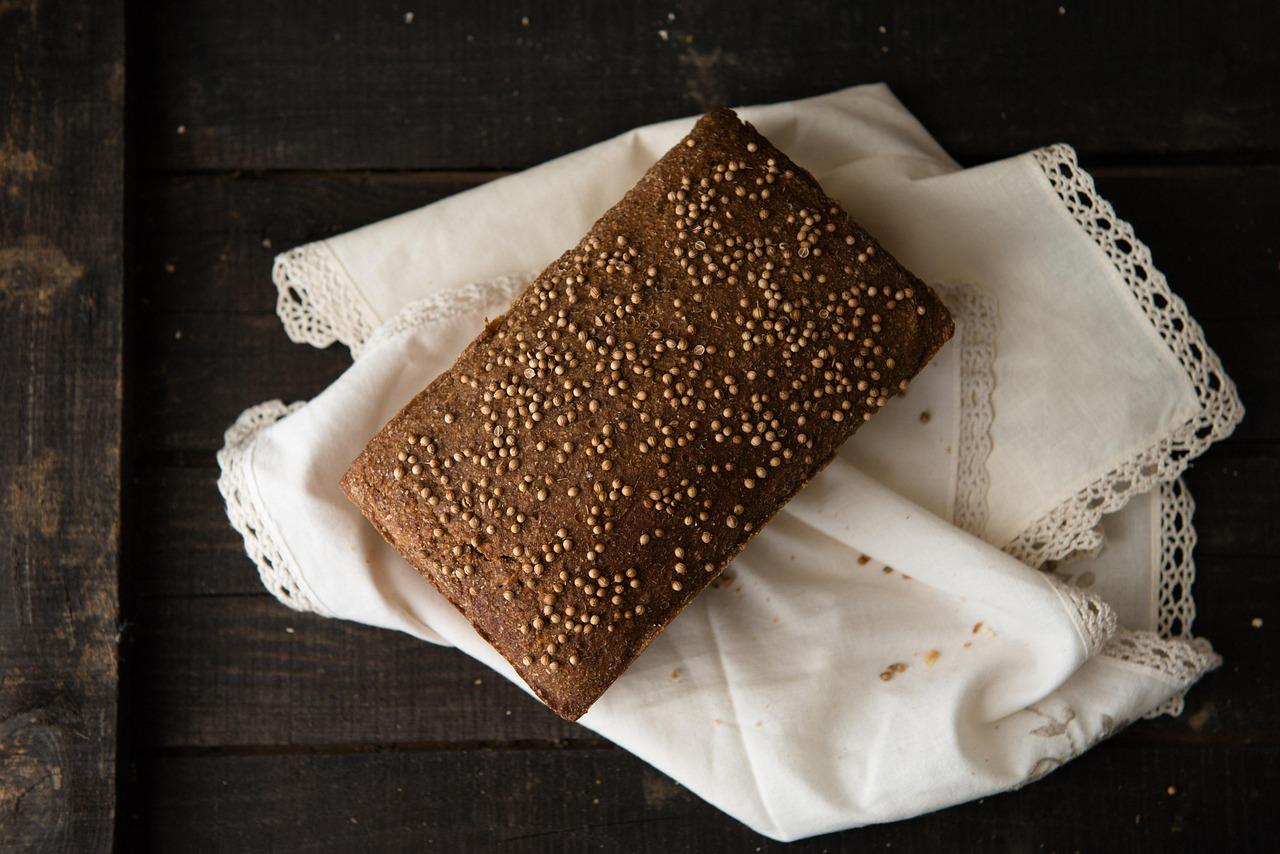
Moscow's darkest everyday loaf is said to be named after the 1812 Battle of Borodino, though the recipe bakers follow today was fixed by the city's bread trust in 1933. Borodinsky (Бородинский хлеб) is a dense, moist sourdough rye, sweet-sour from molasses and red fermented rye malt, with whole coriander seeds crackling on the crust. Russians slice it thin for breakfast with butter and salted cucumbers, alongside borscht or herring for meat-eaters, or under a slice of cheese with strong tea. The method looks long, but most of it is the starter and the scald quietly working on their own. The usual mistake is cutting it on baking day: rye crumb needs a full day wrapped in a cloth to set, and a warm loaf is gummy right through. Chef's tip: red fermented rye malt gives the colour and the deep flavour; plain diastatic malt will not do the same job, so look for the reddish-brown 'fermented' kind in Eastern European shops.
- Total time
- 1120 min
- Difficulty
- hard
- Serves
- 14
Ingredients
For the leaven
- 1 oz rye sourdough starteractive
- 5 ½ oz wholemeal rye flour
- ¾ cup waterlukewarm
For the scald
- 1 ⅜ oz red fermented rye malt
- 2 tsp coriander seedscoarsely crushed
- 2 ⅛ oz wholemeal rye flour
- 1 cup waterboiling
For the dough
- 9 oz wholemeal rye flour
- 3 ½ oz strong white bread flour
- 1 ¾ oz dark molasses
- 1 oz dark brown sugar
- ⅓ oz salt
- ¼ cup waterlukewarm
- 1 tsp sunflower oilfor the tin
To finish
- 1 tbsp coriander seedswhole
- 1 tsp cornflour
- ¼ cup watercold
Shop this recipe on Amazon
What you'll need
Spices & pantry
Links open Amazon in a new tab. As an Amazon Associate, WhatToEat.Today earns from qualifying purchases.
Method
0/13 doneStep 1: The evening before, stir 1 oz rye sourdough starter, 5 ½ oz wholemeal rye flour and ¾ cup water into a thick paste in a bowl. Cover and leave at room temperature for 12–14 hours, until domed, cracked on top and smelling pleasantly sour.
780 minStep 2: About 3 hours before you mix the dough, put 1 ⅜ oz red fermented rye malt, 2 tsp coriander seeds and 2 ⅛ oz wholemeal rye flour in a heatproof bowl. Pour over 1 cup water and whisk until smooth and glossy, like thick brown porridge.
Step 3: Cover the scald and keep it warm (an oven with only the light on works well) for 3 hours, until it tastes noticeably sweet. Let it cool until just warm to the touch.
180 minStep 4: Scrape the leaven and the scald into a large bowl. Add 9 oz wholemeal rye flour, 3 ½ oz strong white bread flour, 1 ¾ oz dark molasses, 1 oz dark brown sugar, ⅓ oz salt and ¼ cup water.
Step 5: Mix with a wet hand or a stiff spatula for 5 minutes into an even, sticky paste. Rye has almost no gluten, so there is nothing to knead; resist adding flour to make it firmer, or the loaf will be dry and crumbly.
5 minStep 6: Brush a 900 g (2 lb) loaf tin with 1 tsp sunflower oil. Scoop the dough in with wet hands, press it into the corners and smooth the top with a wet spatula.
Step 7: Scatter 1 tbsp coriander seeds over the top and press them in lightly with a damp palm so they stick.
Step 8: Cover loosely and leave in a warm place for 2–3 hours, until the dough has risen to just below the rim and small cracks and pinholes appear on the surface.
150 minStep 9: Meanwhile heat the oven to 450°F (400°F fan) with a roasting tin on the lowest shelf. Put the loaf in, pour a cup of hot water into the roasting tin for steam and bake for 15 minutes.
15 minStep 10: Turn the oven down to 375°F (350°F fan) and bake for 45–50 minutes more, until the crust is very dark and firm.
48 minStep 11: While it bakes, stir 1 tsp cornflour into ¼ cup water in a small pan and heat, stirring, until it thickens into a clear, runny paste.
2 minStep 12: Turn the loaf out: the base should sound hollow when tapped and read 205°F in the centre. Brush the hot crust all over with the glaze and return it to the oven, out of the tin, for 2 minutes to set the shine.
2 minStep 13: Wrap the loaf in a clean linen cloth and leave it on a rack for 24 hours before slicing thinly. It keeps for a week wrapped, and freezes well in slices.
Nutrition per serving
- Calories
- 150 kcal
- Protein
- 4 g
- Carbs
- 32 g
- Fat
- 1 g
- Fibre
- 5 g
Nutrition values are estimates.
KrazyBadal
Good to know
- How long does borodinsky bread take?
- About 1120 minutes in total: 1050 minutes to prepare and 70 minutes to cook.
- How many people does it serve?
- 14 as written. Change the servings above the ingredients and every amount scales to match.
- Is it vegan?
- Yes. It has no meat, fish, dairy or eggs.
- Can I make it ahead?
- Yes. It keeps well, so you can cook it earlier in the day or the day before and reheat it.
- What can I use instead of coriander seeds?
- Ground coriander, same amount (add it later in the cooking; it burns faster).
- What can I use instead of strong white bread flour?
- Plain flour, same amount (the dough will be softer and rise a little less).
Reviews
No reviews yet. Be the first to cook it.
Rate this recipe
Sign in to rate and review this recipe.
You might also like

Kartoshka cakeCocoa and cake crumb truffles
Soviet cafés and school canteens sold these knobbly brown 'potatoes' for a few kopecks, and they began as a thrifty way to use up sponge and biscuit trimmings at the bakery. Crumbs are bound with butter and sweetened condensed milk, flavoured with cocoa and vanilla, shaped into little potatoes, rolled in cocoa and finished with two dabs of pale butter cream for the sprouts. They are fudgy and dense like a brownie truffle, need no oven, and children love making them. Traditional bakers added a spoonful of rum, an optional extra for adult batches only; this version is alcohol-free with vanilla. The usual slip is coarse crumbs, which make the potatoes crack, so blitz them as fine as sand. Chef's tip: chill the shaped potatoes for at least 20 minutes so they hold their shape and slice cleanly.

ChipaCheese bread rings
In Paraguay you hear 'chipa, chipa!' called by vendors with big baskets on buses and street corners, and every family bakes it for Holy Week, when chipa is the food of Good Friday. Cassava starch, a little cornmeal, butter, eggs and a lot of hard cheese are kneaded into a dough scented with aniseed, shaped into rings or small rolls and baked in a hot oven, traditionally a domed clay tatakua. It's chewy, crisp outside and best warm with cocido (toasted yerba tea). Chef's tip: the dough should feel soft and slightly greasy; add milk a spoon at a time, as too much makes the chipa spread flat.
 Paraguayan

SalufPuffy flatbread
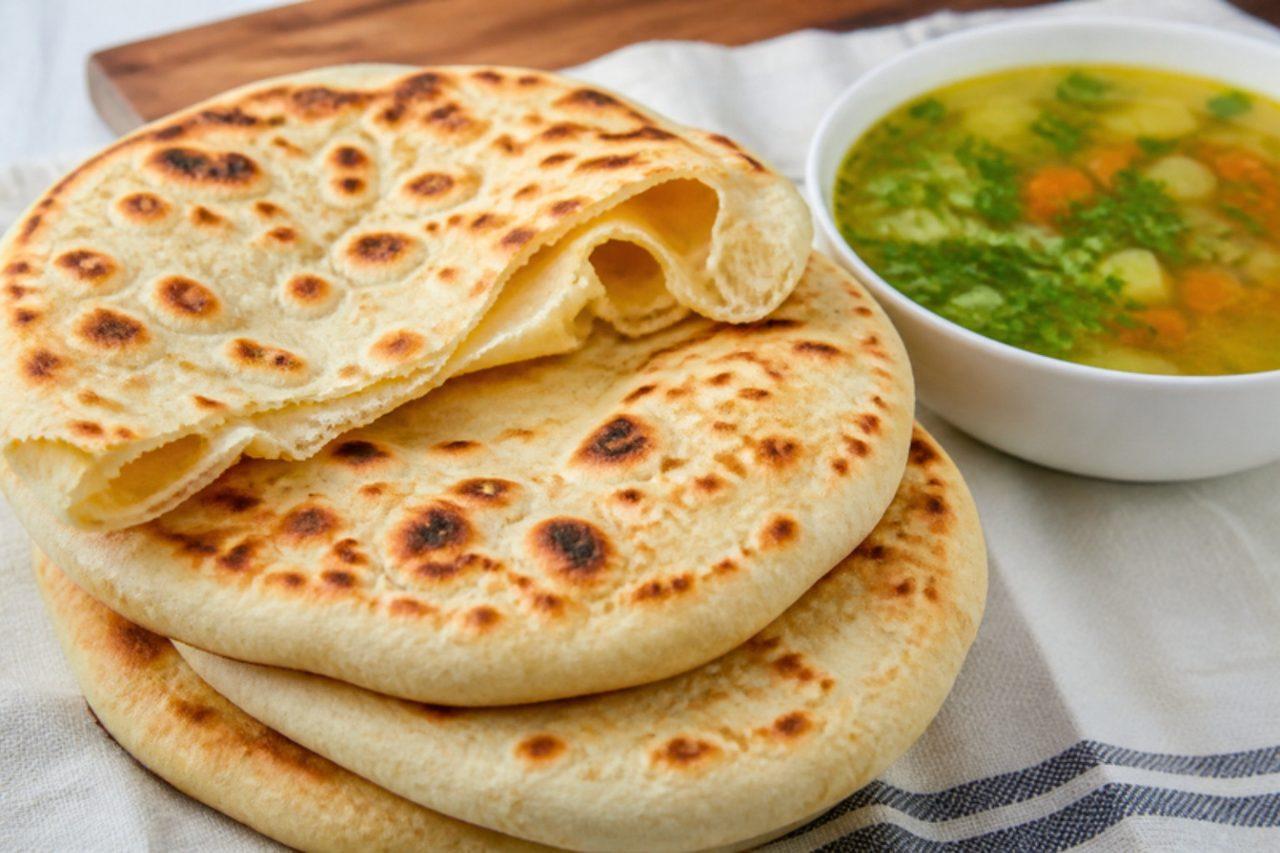
Saluf is the everyday bread of Yemenite Israelis, slapped onto a hot pan or taboon in Rosh HaAyin and Sha'arayim in Rehovot and eaten with marak temani, hilbe and zhug. It is soft and blistered, thicker than pita and with no pocket, made to tear and dunk. Home cooks often roll it too thin, which gives a cracker; it should be about 1 cm thick so it stays pillowy. Chef's tip: cook it under a lid on a very hot dry pan for the first minute, which traps steam and puffs it the way a taboon does.
 Israeli
