
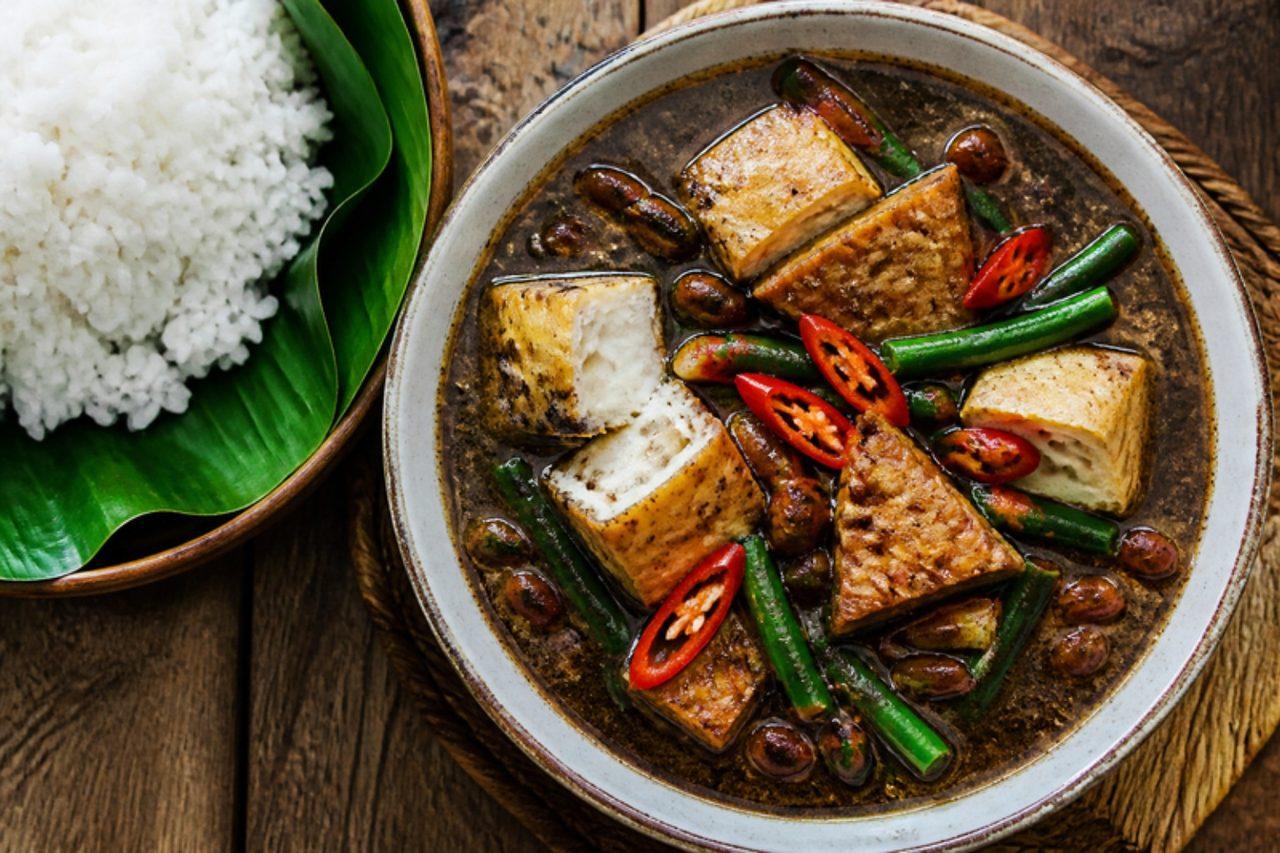
AI-generated image
Brongkos with tofu and tempeh
Tofu and tempeh black nut stew
Brongkos (brongkos tahu tempe): Yogyakarta's dark keluak and coconut stew, made with tofu, tempeh and cowpeas



Brongkos is one of Yogyakarta's old royal-kitchen dishes, a near-black stew of keluak nut paste and coconut milk eaten at lunch with rice, often alongside gudeg. The classic pot holds beef with tofu and cowpeas; this is a vegetarian version, using tofu, tempeh and red cowpeas only, which many Jogja families also cook. The keluak gives a deep, earthy, almost chocolatey flavour, softened by coconut milk and a little palm sugar. A portion gives about 29 g of protein, from the tofu, tempeh and cowpeas. The dried cowpeas need soaking for 8 hours or overnight first, which is not counted in the times. The common mistake is using keluak that has gone bad: crack each nut and smell it; the flesh should be dark and smell earthy, never sour or mouldy. Chef's tip: brongkos is better the next day, when the beans and tofu have soaked up the sauce.
- Total time
- 95 min
- Difficulty
- medium
- Serves
- 4
Ingredients
For the stew
- 5 ½ oz dried red cowpeas or black-eyed beanssoaked for 8 hours or overnight
- 10 ½ oz firm tofucut into 3 cm cubes
- 7 oz tempehcut into 3 cm cubes
- 1 ¾ cups coconut milk
- 2 cups water
For the spice paste
- 4 keluak nutssoaked for 1 day, cracked, flesh scooped out
- 6 shallots
- 1 tsp coriander seeds
- 3 candlenutsor 5 macadamia nuts
- 2 tbsp vegetable oil
Aromatics and seasoning
- 1 ⅝ in galangalbruised
- 1 lemongrass stalkbruised
- 3 Indonesian bay leaves (daun salam)or 2 ordinary bay leaves
- 1 tbsp palm sugargrated
- 1 ½ tsp salt
- 6 bird's eye chillies (optional)whole
Shop this recipe on Amazon
What you'll need
Spices & pantry
Fresh ingredients (5)
Links open Amazon in a new tab. As an Amazon Associate, WhatToEat.Today earns from qualifying purchases.
Method
0/6 doneStep 1: Drain 5 ½ oz dried red cowpeas or black-eyed beans, cover with fresh water and boil for 10 minutes, then simmer for 30–40 minutes, until tender but still whole. Drain.
45 minStep 2: While the beans cook, blend 4 keluak nuts, 6 shallots, 4 garlic cloves, 3 red chillies, 1 tsp coriander seeds and 3 candlenuts to a smooth, dark paste with a splash of water.
Step 3: Heat 2 tbsp vegetable oil in a large pan over a medium heat and fry the paste with 1 ⅝ in galangal, 1 lemongrass stalk, 3 Indonesian bay leaves (daun salam) and 3 kaffir lime leaves, stirring, for 5 minutes, until it darkens a shade and smells toasty rather than raw.
5 minStep 5: Stir in 1 ¾ cups coconut milk, 1 tbsp palm sugar, 1 ½ tsp salt and 6 bird's eye chillies. Simmer gently, uncovered, stirring now and then so the coconut milk doesn't split, for 15 minutes, until the sauce is dark brown and slightly thickened and the tofu has taken on its colour.
15 minStep 6: Taste for salt, remove the lemongrass and galangal, and serve with rice. It keeps for 3 days in the fridge.
Nutrition per serving
- Calories
- 520 kcal
- Protein
- 29 g
- Carbs
- 32 g
- Fat
- 32 g
- Fibre
- 10 g
Nutrition values are estimates.
KrazyBadal
Good to know
- How long does brongkos with tofu and tempeh take?
- About 95 minutes in total: 25 minutes to prepare and 70 minutes to cook.
- How many people does it serve?
- 4 as written. Change the servings above the ingredients and every amount scales to match.
- Is it vegan?
- Yes. It has no meat, fish, dairy or eggs.
- Is it gluten free?
- Yes, as written. Check the labels on stock, sauces and spice mixes, which sometimes contain gluten.
- Can I make it ahead?
- Yes. It keeps well, so you can cook it earlier in the day or the day before and reheat it.
- What can I use instead of coconut milk?
- Single cream, same amount (not dairy free).
- What can I use instead of shallots?
- Half an onion per 2 shallots.
Reviews
No reviews yet. Be the first to cook it.
Rate this recipe
Sign in to rate and review this recipe.
You might also like

Sayur lodehVegetables in coconut milk
Sayur lodeh is everyday cooking in Central Java, made in big pots in Solo and Semarang kitchens and ladled over rice, with lontong rice cakes at Lebaran, or alongside opor and sambal goreng on festive tables. It's soupy rather than thick: a fragrant broth of coconut milk, galangal, lemongrass and lime leaf that carries chunks of aubergine, long beans, chayote and sweetcorn, plus tempeh and tofu to make it a meal. The flavour is mellow and slightly sweet, so the heat comes from sambal on the side. Chef's tip: keep the pot at a gentle simmer once the coconut milk goes in and stir now and then — a rolling boil splits the coconut milk into oily curds.


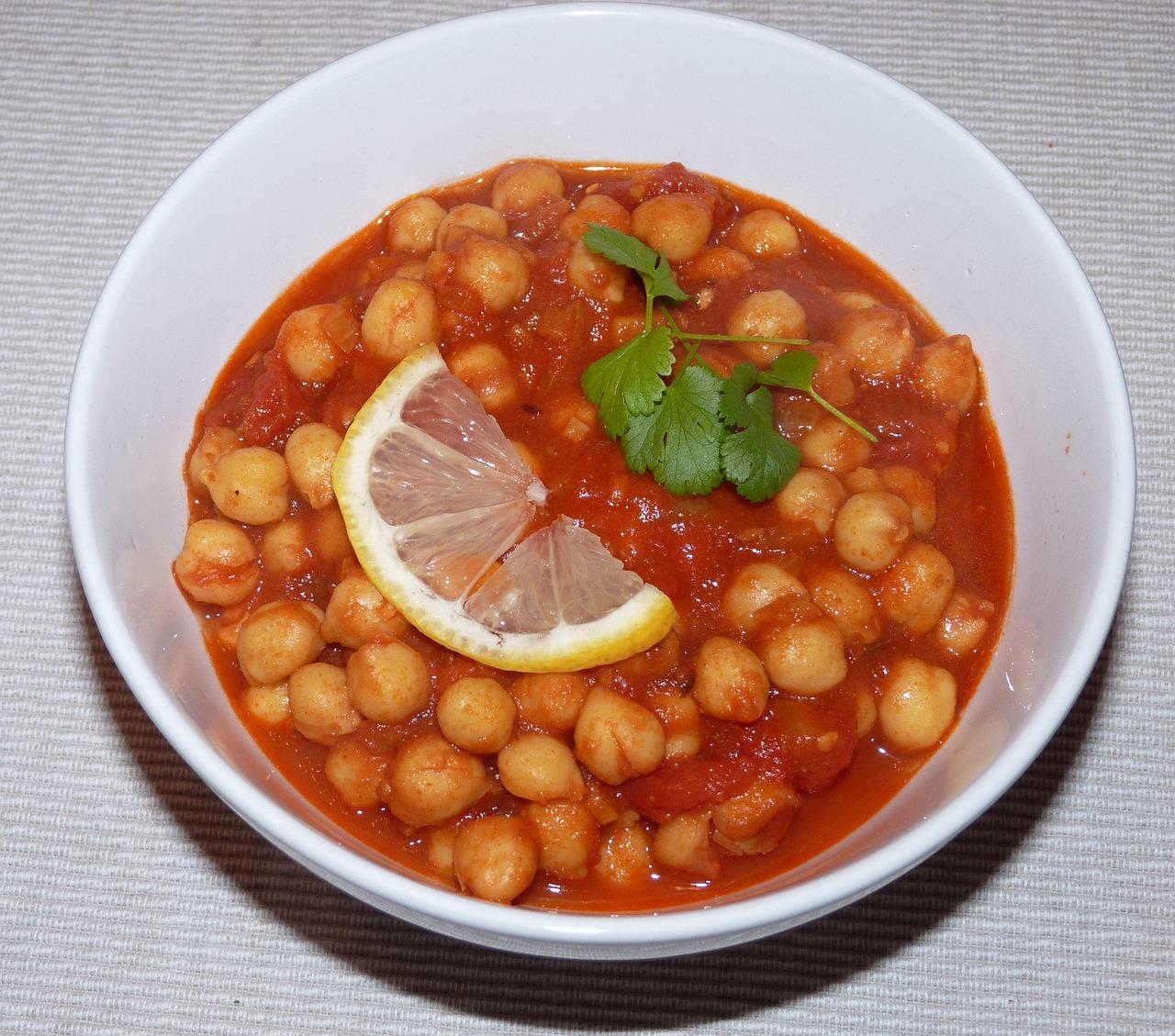
Chana masala
A North Indian staple that comes together from the store cupboard. Toasted cumin, slow-softened onion and a good spoonful of garam masala give tinned chickpeas real depth. Serve with rice, naan or a stack of warm rotis.
 Indian

Bagara bainganBaby aubergines in peanut sesame sauce
Bagara baingan is a Hyderabadi wedding dish of small aubergines cooked whole in a dark, tangy gravy of roasted peanuts, sesame, dried coconut and tamarind. Unlike a Gujarati stuffed brinjal, the aubergines here are only quartered at the base and fried until silky, then left to soak up a thin-but-rich sauce that is finished with a tempering, the 'baghar' that gives the dish its name. It's sour, nutty and gently spiced, and is served with biryani, bagara rice or plain rice. Chef's tip: choose small, glossy purple aubergines that feel heavy for their size; soft, light ones are full of seeds and turn mushy before the gravy has a chance to cling.