
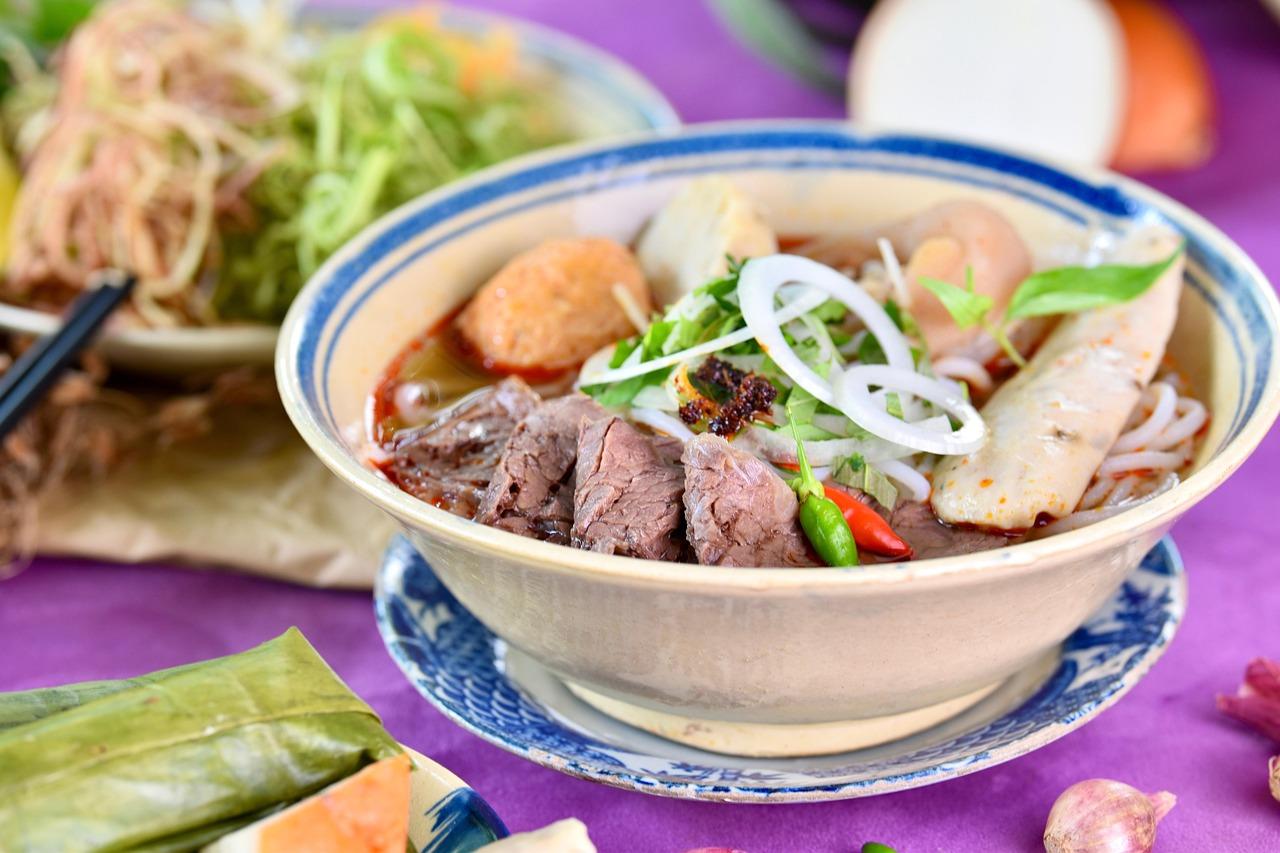
Bun bo Hue
Bún bò Huế: spicy lemongrass beef and pork noodle soup from the old imperial city

Huế, once the seat of Vietnam's emperors, is known for food that is spicier and bolder than in the north or south, and this soup is the city's breakfast. Compared with pho it is louder in every way: the broth smells of lemongrass and fermented shrimp, it glows red with chilli oil, and the noodles are thick and round. Beef shank and slices of pork hock go in every bowl, often with pork roll, and it comes with a plate of mint, banana blossom and bean sprouts. Locals add pig's blood cubes too, which we leave out here. Chef's tip: bruise the lemongrass stalks hard with a rolling pin before they go in, so their oils flood the broth.
- Total time
- 180 min
- Difficulty
- hard
- Serves
- 6
Ingredients
For the broth
For the chilli oil (sa tế)
For the bowls
Method
0/11 doneStep 1: Put the 2 ¼ lb pork bones, 1 ⅓ lb beef shank and 1 ⅓ lb pork hock in a large pot, cover with cold water and bring to a hard boil. Boil for 5 minutes, then drain, rinse everything well and clean the pot.
15 minStep 2: Return the meat and bones to the pot with the 16 ¾ cups water, 6 lemongrass stalks and 1 onion. Bring to the boil, then lower to a steady simmer and skim off the foam for the first 15 minutes.
20 minStep 3: Simmer uncovered until the beef shank is tender when pierced with a skewer. Lift it out into a bowl of cold water for 10 minutes, then drain and set aside.
75 minStep 4: Keep simmering until the pork hock is soft and comes away from the bone easily. Lift out the hock and keep it warm.
30 minStep 5: Stir the 2 tbsp fermented shrimp paste (mắm ruốc Huế) into the 1 cup cold water, leave for 10 minutes so the grit settles, then pour only the clear liquid into the broth and throw away the sediment. Common mistake: tipping in the whole mixture. The sediment makes the broth gritty and murky.
Step 6: Strain the broth and season with the 4 tbsp fish sauce, 1 oz rock sugar and 1 tsp salt. Simmer for 10 minutes more and taste: it should be savoury and gently funky, with lemongrass coming through. To make ahead, cool fast and refrigerate within 2 hours; it keeps for 3 days.
10 minStep 7: For the chilli oil, warm the 5 tbsp vegetable oil in a small pan over a medium-low heat. Add the 2 lemongrass stalks, 3 shallots and 3 cloves garlic and fry gently until fragrant and pale gold. Take off the heat, then stir in the 2 tbsp dried chilli flakes and 1 tsp sweet paprika; the residual heat cooks them without burning.
5 minStep 8: Stir 2 tbsp of the chilli oil into the broth for colour and keep the rest for the table.
Step 9: Cook the 1 ⅓ lb thick round rice noodles (bún bò Huế) in plenty of boiling water following the packet, usually 15–20 minutes for thick dried ones, until soft right through. Drain and rinse with hot water.
20 minStep 10: Slice the beef shank thinly. Divide the noodles among six warmed bowls and top with beef, hock pieces and 7 oz Vietnamese pork roll (chả lụa). Add the 1 white onion, 4 spring onions and ½ oz fresh coriander, then ladle over the broth at a rolling boil.
Step 11: Serve with 1 oz mint and Vietnamese coriander (rau răm), 7 oz bean sprouts, 3 ½ oz banana blossom, finely shredded, 2 limes and the remaining chilli oil, so everyone adds their own.
Nutrition per serving
- Calories
- 690 kcal
- Protein
- 45 g
- Carbs
- 80 g
- Fat
- 20 g
- Fibre
- 3 g
Nutrition values are estimates.
KrazyBadal
Good to know
- How long does bun bo Hue take?
- About 180 minutes in total: 30 minutes to prepare and 150 minutes to cook.
- How many people does it serve?
- 6 as written. Change the servings above the ingredients and every amount scales to match.
- Is it very spicy?
- It has some heat. Use less chilli for a milder version, or more if you like it hot.
- Can I make it ahead?
- Yes. It keeps well, so you can cook it earlier in the day or the day before and reheat it.
- What can I use instead of onion?
- 2 shallots per onion.
- What can I use instead of fish sauce?
- Soy sauce with a squeeze of lime (vegetarian).
Reviews
No reviews yet. Be the first to cook it.
Rate this recipe
Sign in to rate and review this recipe.
You might also like

Caramelised clay-pot tofu and mushrooms
Kho is the slow braise of the Mekong Delta: food simmered in a little clay pot (nồi đất) with dark caramel and seasoning until the sauce is sticky and the flavours go deep. This vegetarian cousin of cá kho tộ (braised fish) uses golden tofu and meaty mushrooms in place of fish, cooked in coconut water, as cooks do in the south, and finished with plenty of black pepper. Serve it bubbling in its pot with steamed rice and a sour soup or plain boiled vegetables. Chef's tip: take the caramel (nước màu) to a deep mahogany, darker than you think, just before it smokes; pale caramel only tastes sweet, while dark caramel gives the bittersweet, smoky flavour of a real kho.

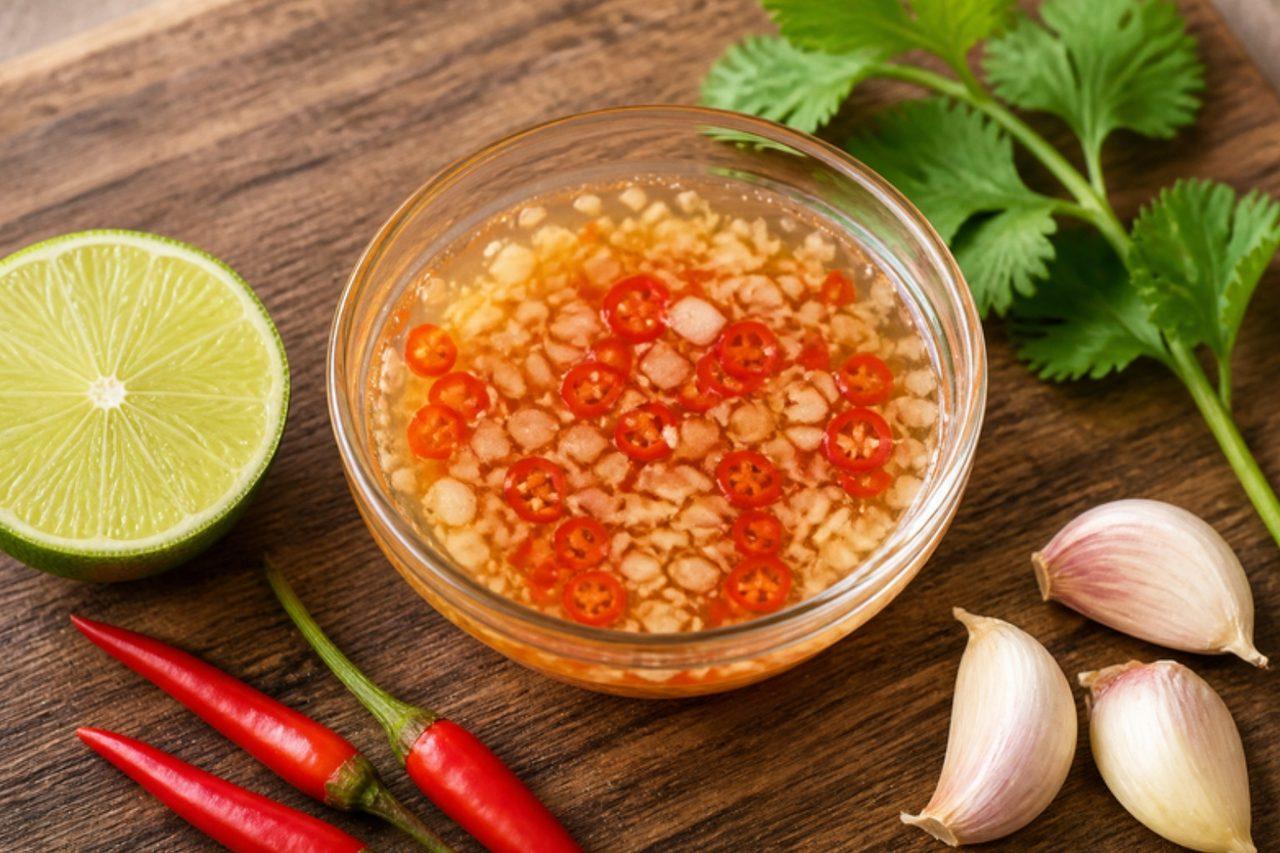
Vegan nuoc cham
Nước chấm is the dipping sauce that goes with almost everything in Vietnam: spring rolls, bánh xèo, noodle salads and broken rice. Buddhist vegetarian cooks, all over the country, make it without fish sauce, using light soy sauce and a little coconut water for the deep, rounded taste. It should be thin, clear and pale amber, with flecks of garlic and chilli floating on top. Chef's tip: dissolve the sugar in the warm water first, then add the lime and soy, and stir in the garlic and chilli last, pounded with a pinch of sugar, so they float on the surface instead of sinking.

Soto Banjar
Along the rivers of Banjarmasin in South Kalimantan, breakfast often means soto Banjar eaten at a wooden riverside warung, sometimes after a dawn trip to the floating market. Unlike the turmeric sotos of Java, this broth is pale and clear, perfumed with the sweet spices that traders brought up the river centuries ago: cinnamon, cloves, star anise, cardamom and nutmeg. Shredded chicken, glass noodles, carrot and a boiled egg go into the bowl with rice cakes, and lime and a little chilli sharpen it at the table. Chef's tip: toast the whole spices in the pan for a minute before the paste goes in; it brings out their sweetness without the dusty edge of ground spice.
