
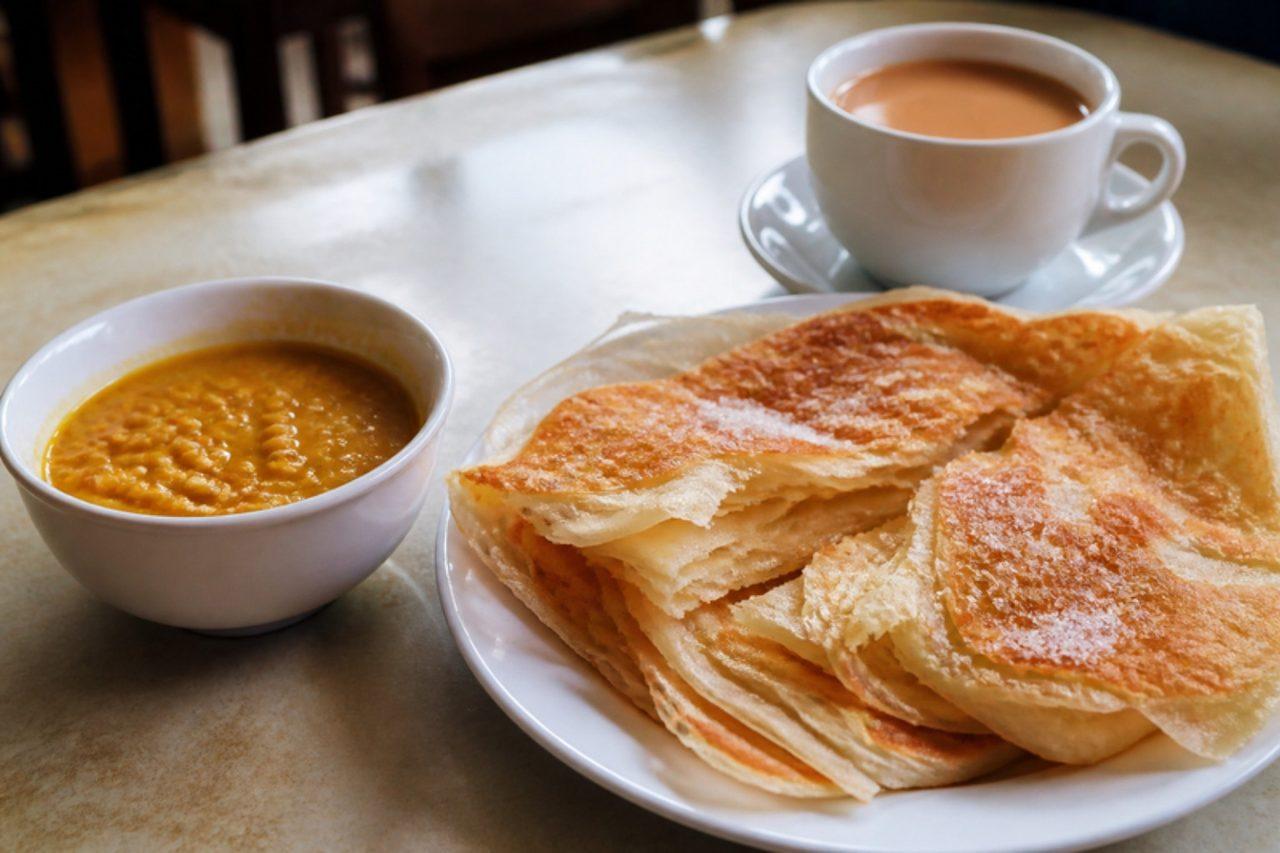
AI-generated image
Burmese palata
Layered flatbread
Palata (ပလာတာ): flaky, buttery layered flatbread from the Yangon tea shop griddle
 Burmese
Indian-Burmese tea shops around Yangon's Sule Pagoda and Mandalay's 84th Street fry palata from early morning until late at night on wide, oiled griddles, the cook stretching each ball of dough until you can see through it before folding it into coils of layers. The bread comes out crisp and blistered outside, soft and chewy within, and it is eaten two ways: sprinkled with sugar as a sweet snack with milky tea, or torn and dipped into a curry or a bowl of split-pea dal. Rushing the rest is where it fails; dough that hasn't relaxed in oil for at least an hour tears when you stretch it, and the layers never form. Chef's tip: once the palata is cooked, scrunch it between your palms while still hot; it breaks the coils apart into flaky layers.
- Total time
- 55 min
- Difficulty
- medium
- Serves
- 6
Ingredients
For the dough
- 14 oz plain flourplus extra for dusting
- 1 tsp salt
- 1 tsp sugar
- 1 cup warm water
- 4 tbsp vegetable oildivided
For layering and frying
- 6 tbsp ghee or melted butterdivided
To serve
- 3 tbsp sugar (optional)for sprinkling
- 1 ¾ cups split-pea dal or a vegetable curry (optional)warm
Shop this recipe on Amazon
Links open Amazon in a new tab. As an Amazon Associate, WhatToEat.Today earns from qualifying purchases.
Method
0/10 doneStep 1: Mix 14 oz plain flour, 1 tsp salt and 1 tsp sugar in a bowl. Add 1 cup warm water and a quarter of the 1 tbsp vegetable oil and mix to a shaggy dough.
Step 2: Knead on the worktop for 8–10 minutes, until smooth, soft and springy; it should feel like an earlobe. Add a splash more water if it feels stiff.
10 minStep 3: Divide into 6 equal balls. Coat each generously with the rest of the 3 tbsp vegetable oil, cover and leave at room temperature for at least 1 hour, or up to 4. Well-rested dough is what lets you stretch it thin.
60 minStep 4: Oil your worktop and hands. Press one ball flat, then push and stretch it out from the centre with your fingertips into a very thin sheet about 35 cm across. Small tears are fine.
Step 5: Brush the sheet with a little of the 3 tbsp ghee or melted butter and dust lightly with flour.
Step 6: Gather the sheet into loose pleats like a fan, then roll the pleated rope into a tight coil and tuck the end underneath. Repeat with the other balls and rest the coils for 10 minutes.
10 minStep 7: Press each coil out with oiled fingers into an 18 cm round about 5 mm thick.
Step 8: Heat a heavy frying pan or flat griddle over a medium heat and add a little of the remaining 3 tbsp ghee or melted butter. Cook one palata for 2–3 minutes per side, pressing the edges down, until crisp, blistered and golden brown in patches.
5 minStep 9: While still hot, scrunch the palata between your palms (or two clean cloths) to open up the layers. Keep warm under a cloth while you cook the rest.
15 minStep 10: Serve warm, sprinkled with 3 tbsp sugar for a tea-shop snack, or with 1 ¾ cups split-pea dal or a vegetable curry for a meal.
Nutrition per serving
- Calories
- 390 kcal
- Protein
- 7 g
- Carbs
- 50 g
- Fat
- 18 g
- Fibre
- 2 g
Nutrition values are estimates.
KrazyBadal
Good to know
- How long does burmese palata take?
- About 55 minutes in total: 30 minutes to prepare and 25 minutes to cook.
- How many people does it serve?
- 6 as written. Change the servings above the ingredients and every amount scales to match.
- Is it vegetarian?
- Yes. It has no meat or fish.
- What can I use instead of plain flour?
- Self-raising flour, same amount (then leave out the baking powder).
- What can I use instead of sugar?
- Caster sugar, same amount.
Reviews
No reviews yet. Be the first to cook it.
Rate this recipe
Sign in to rate and review this recipe.
You might also like
SalufPuffy flatbread
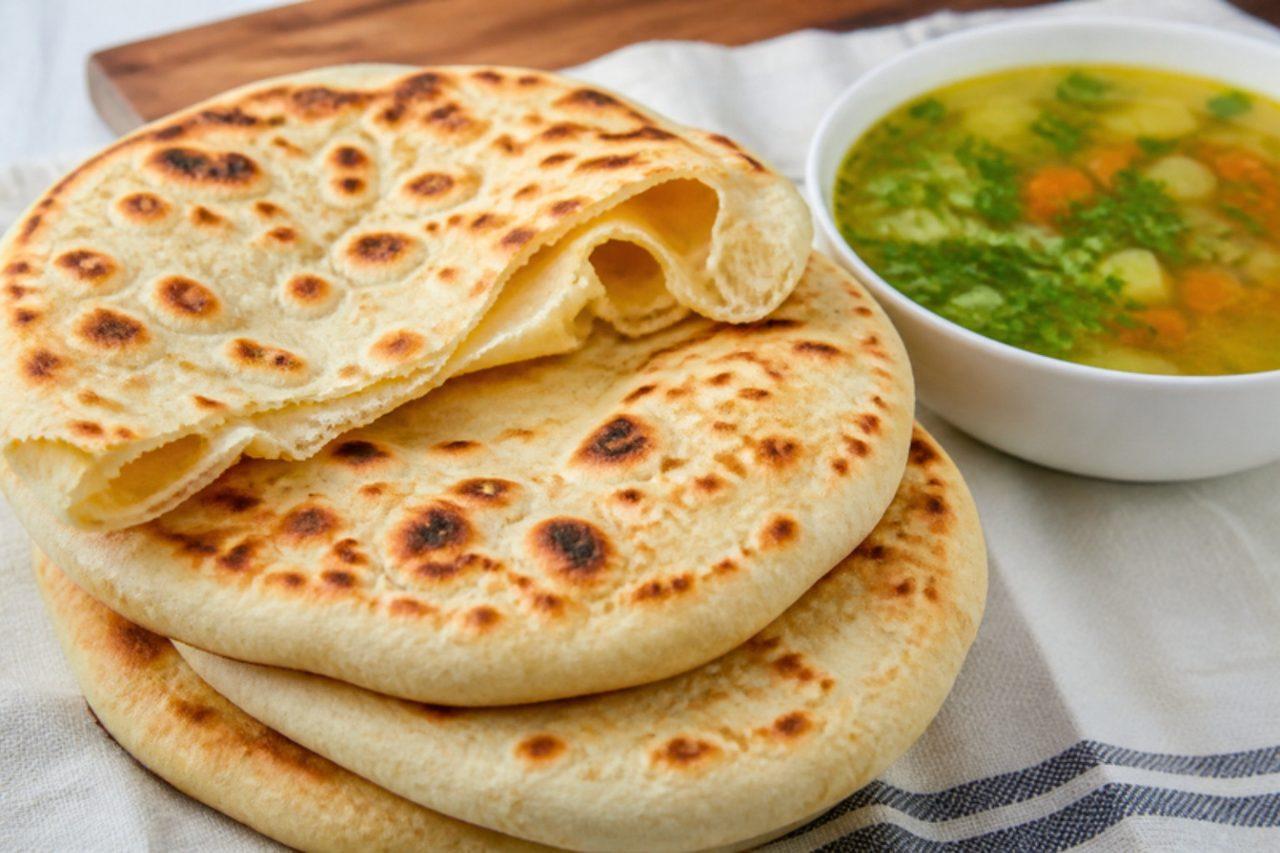
Saluf is the everyday bread of Yemenite Israelis, slapped onto a hot pan or taboon in Rosh HaAyin and Sha'arayim in Rehovot and eaten with marak temani, hilbe and zhug. It is soft and blistered, thicker than pita and with no pocket, made to tear and dunk. Home cooks often roll it too thin, which gives a cracker; it should be about 1 cm thick so it stays pillowy. Chef's tip: cook it under a lid on a very hot dry pan for the first minute, which traps steam and puffs it the way a taboon does.
 Israeli


ChipaCheese bread rings
In Paraguay you hear 'chipa, chipa!' called by vendors with big baskets on buses and street corners, and every family bakes it for Holy Week, when chipa is the food of Good Friday. Cassava starch, a little cornmeal, butter, eggs and a lot of hard cheese are kneaded into a dough scented with aniseed, shaped into rings or small rolls and baked in a hot oven, traditionally a domed clay tatakua. It's chewy, crisp outside and best warm with cocido (toasted yerba tea). Chef's tip: the dough should feel soft and slightly greasy; add milk a spoon at a time, as too much makes the chipa spread flat.
 Paraguayan

Kyar zan hingaGlass noodle soup with chicken
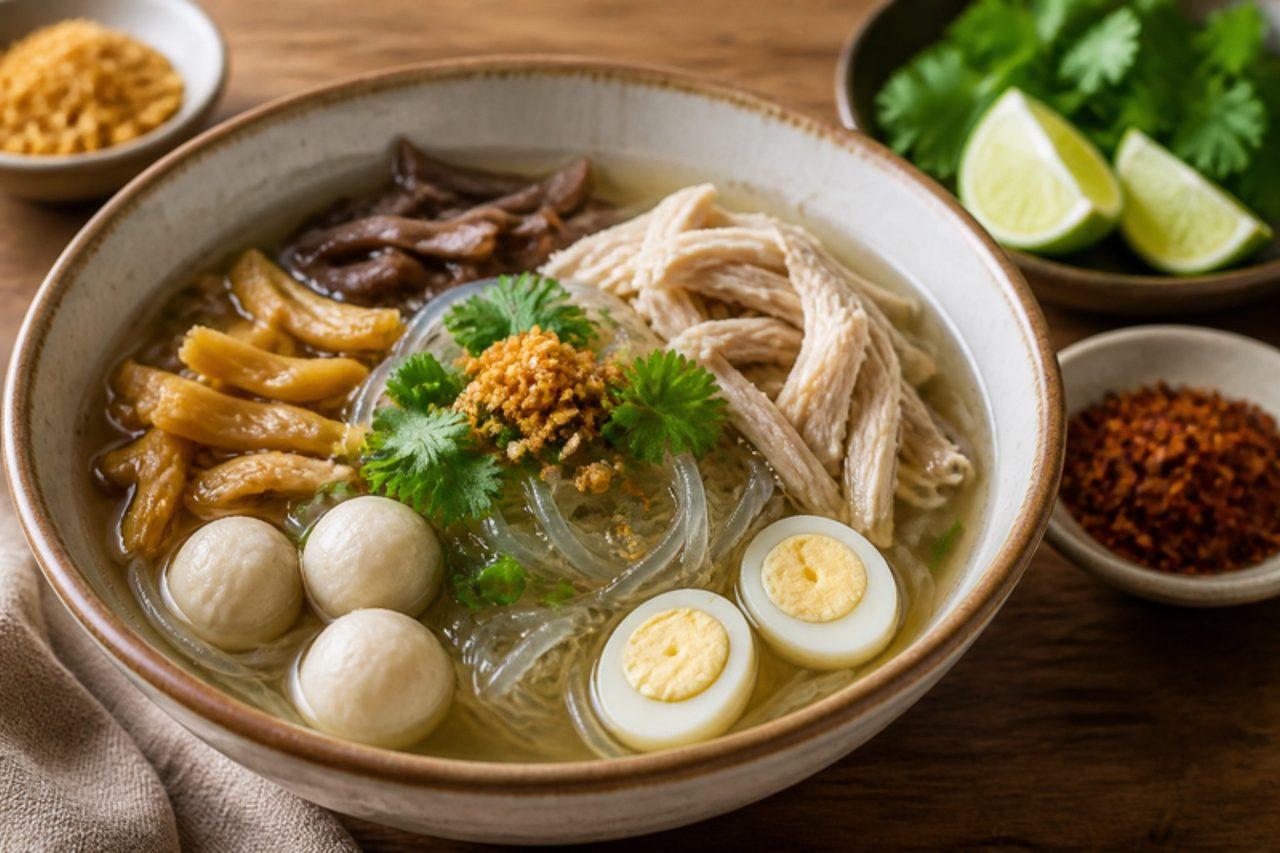
Lighter than mohinga and a favourite with children, kyar zan hinga turns up at Yangon donation feasts, at evening noodle stalls and on the family table when someone needs something soothing. Slippery glass noodles swim in a clear, peppery chicken broth with shredded chicken, crunchy wood-ear mushroom, chewy knots of dried lily buds, bouncy fish balls and whole quail eggs. Each bowl is finished at the table with lime, chilli flakes, fried garlic and coriander, and crisp split-pea fritters are often torn in on top. Simmering the glass noodles in the pot is the classic error: they swell, go soft and drink up the broth, so add them straight to the bowls instead. Chef's tip: knot each softened lily bud before it goes into the soup; it keeps them from shredding and gives every spoonful a little chewy bite.