
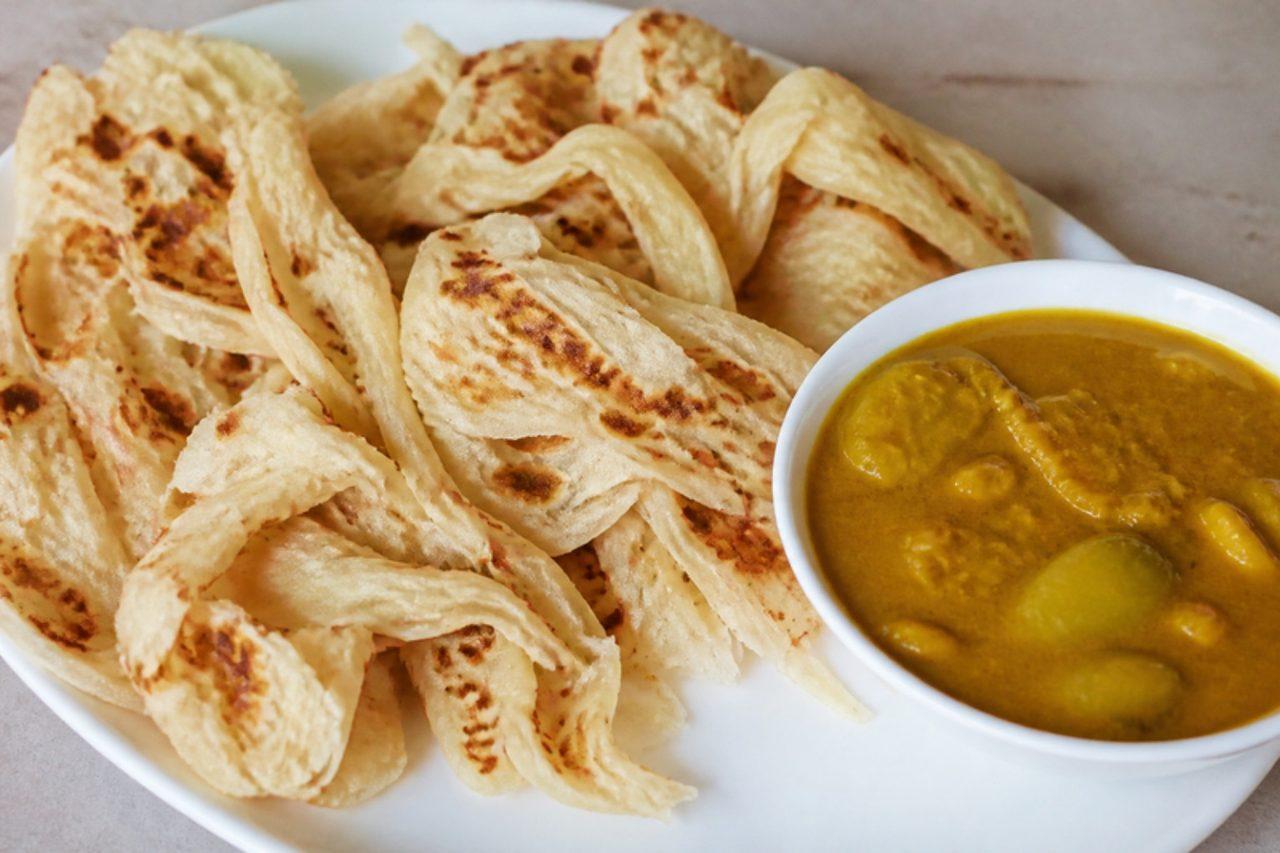
AI-generated image
Buss-up-shut
Torn paratha roti
Flaky, buttery layered paratha roti, cooked on a tawa and beaten until it shreds like a 'burst-up shirt'
 Trinidadian
Buss-up-shut is the paratha roti of Trinidad, so called because the torn, flaky pieces look like a 'burst-up shirt'. A soft dough is spread with butter and oil, rolled into a coil to build layers, cooked on a hot tawa, then clapped and beaten with wooden paddles until it breaks into soft, buttery, flaky shreds. It's served in roti shops across Trinidad for scooping up curries, and is always at Hindu weddings and Divali feasts. Chef's tip: beat the roti while it's still scalding hot. The steam inside is what separates the layers, so the moment it leaves the tawa, clap it between your hands (in clean oven gloves) or bash it with two wooden spatulas until it shreds.
- Total time
- 60 min
- Difficulty
- medium
- Serves
- 6
Ingredients
For the dough
- 1 ⅛ lb plain flourplus extra for dusting
- 2 tsp baking powder
- 1 tsp sugar
- ½ tsp salt
- 1 ½ cups lukewarm waterroughly
For the layers
- 2 ⅛ oz buttermelted
- ¼ cup vegetable oil
- 3 tbsp plain flourfor sprinkling
Shop this recipe on Amazon
What you'll need
Spices & pantry
Fresh ingredients (1)
Links open Amazon in a new tab. As an Amazon Associate, WhatToEat.Today earns from qualifying purchases.
Method
0/8 doneStep 1: Mix 1 ⅛ lb plain flour, 2 tsp baking powder, 1 tsp sugar and ½ tsp salt. Add 1 ½ cups lukewarm water gradually and knead for 5 minutes to a soft, smooth dough, softer than bread dough. Cover and rest for 20 minutes.
25 minStep 2: Mix 2 ⅛ oz butter and ¼ cup vegetable oil. Divide the dough into 6 balls. Roll one out on a floured surface into a thin round about 25 cm across.
Step 3: Brush the round generously with the butter and oil, then sprinkle lightly with 3 tbsp plain flour. The flour between the layers helps them stay separate and flaky.
Step 4: Make one cut from the centre to the edge. Starting at one cut edge, roll the dough round and round into a cone, then stand it on its wide end and push the tip down into the middle to make a coiled ball. Repeat with the rest, cover and rest for 15–20 minutes so the gluten relaxes.
20 minStep 5: Heat a tawa or large flat cast-iron pan over a medium-high heat. Roll one coiled ball out gently into a 25–30 cm round, about 3 mm thick; don't press too hard or you'll squash the layers.
Step 6: Cook on the tawa for 30–40 seconds until bubbles appear, flip and brush with the butter-oil mixture, flip again and brush the other side. Keep cooking and turning for about 2 minutes, until golden brown patches appear and the roti puffs and feels crisp at the edges.
3 minStep 7: While it's still on the tawa or the moment it comes off, beat it hard with two wooden spatulas, or clap it repeatedly between gloved hands, scrunching it inwards, until it breaks up into soft, flaky shreds.
Step 8: Wrap in a clean tea towel to keep warm and soft while you cook the rest, and serve warm with curries.
15 min
Nutrition per serving
- Calories
- 470 kcal
- Protein
- 9 g
- Carbs
- 62 g
- Fat
- 21 g
- Fibre
- 3 g
Nutrition values are estimates.
KrazyBadal
Good to know
- How long does buss-up-shut take?
- About 60 minutes in total: 30 minutes to prepare and 30 minutes to cook.
- How many people does it serve?
- 6 as written. Change the servings above the ingredients and every amount scales to match.
- Is it vegetarian?
- Yes. It has no meat or fish.
- What can I use instead of plain flour?
- Self-raising flour, same amount (then leave out the baking powder).
- What can I use instead of baking powder?
- ¼ tsp bicarbonate of soda + ½ tsp cream of tartar per 1 tsp.
Reviews
No reviews yet. Be the first to cook it.
Rate this recipe
Sign in to rate and review this recipe.
You might also like
SalufPuffy flatbread
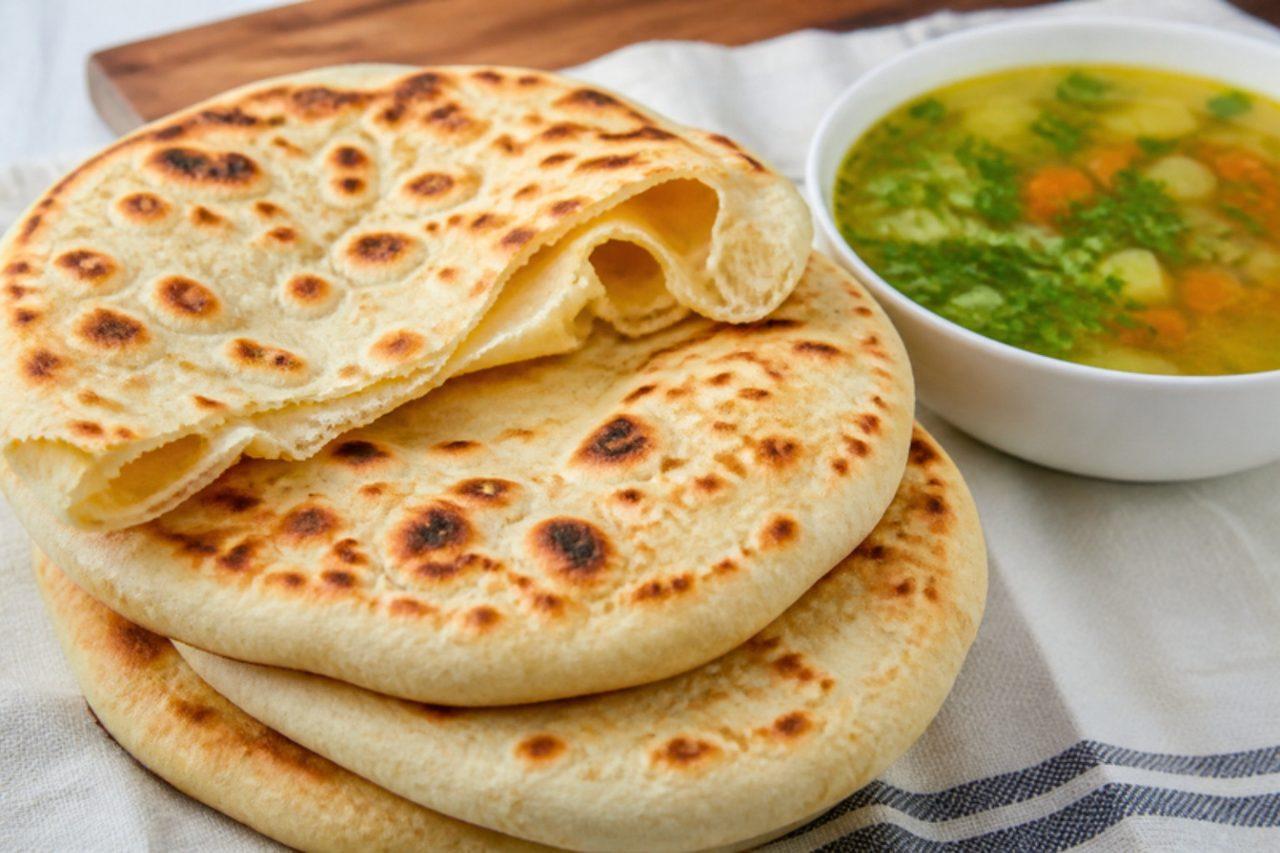
Saluf is the everyday bread of Yemenite Israelis, slapped onto a hot pan or taboon in Rosh HaAyin and Sha'arayim in Rehovot and eaten with marak temani, hilbe and zhug. It is soft and blistered, thicker than pita and with no pocket, made to tear and dunk. Home cooks often roll it too thin, which gives a cracker; it should be about 1 cm thick so it stays pillowy. Chef's tip: cook it under a lid on a very hot dry pan for the first minute, which traps steam and puffs it the way a taboon does.
 Israeli


ChipaCheese bread rings
In Paraguay you hear 'chipa, chipa!' called by vendors with big baskets on buses and street corners, and every family bakes it for Holy Week, when chipa is the food of Good Friday. Cassava starch, a little cornmeal, butter, eggs and a lot of hard cheese are kneaded into a dough scented with aniseed, shaped into rings or small rolls and baked in a hot oven, traditionally a domed clay tatakua. It's chewy, crisp outside and best warm with cocido (toasted yerba tea). Chef's tip: the dough should feel soft and slightly greasy; add milk a spoon at a time, as too much makes the chipa spread flat.
 Paraguayan

SaheenaDasheen leaf fritters
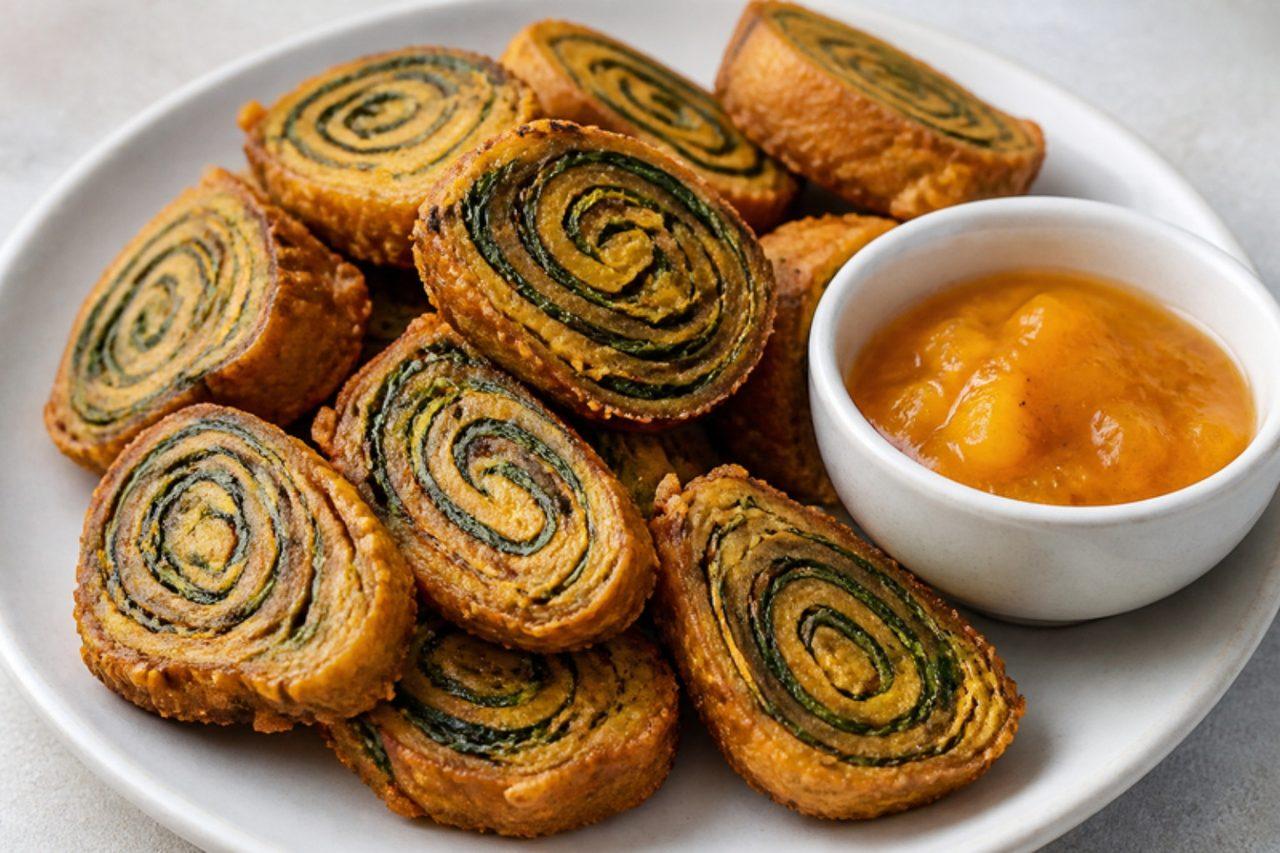
Saheena is an old Indo-Trinidadian snack sold by street vendors and doubles men, especially in Central and South Trinidad. Young dasheen (taro) leaves are spread with a spiced batter of ground split peas, garlic, turmeric and pepper, rolled up like a Swiss roll, steamed, then sliced into rounds and fried until crisp. Each slice shows green spirals of leaf and gold batter, and tastes earthy, savoury and garlicky. Serve with tamarind sauce or mango chutney. If you can't get dasheen leaves, large spinach or Swiss chard leaves work. Chef's tip: always cook dasheen leaves thoroughly. They contain crystals that make your throat itch if undercooked, which is why the rolls are steamed right through before frying.