
 American
Buttermilk pancakes
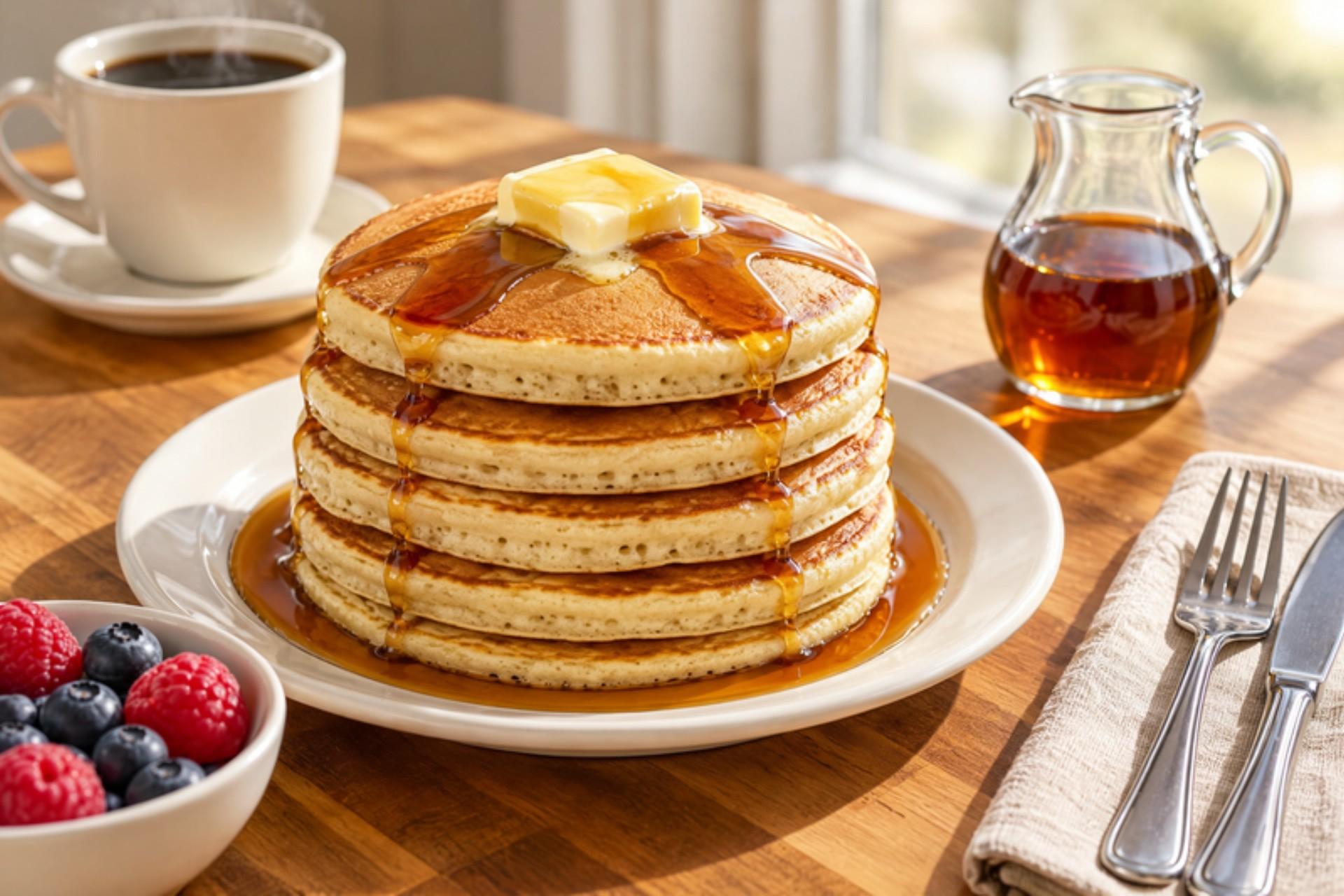
Buttermilk pancakes: tall, fluffy diner-style flapjacks stacked with butter and maple syrup
Every American diner, from New Jersey truck stops to California brunch spots, serves a short stack of buttermilk pancakes, and at home they are the classic slow Saturday or Sunday breakfast. Tangy buttermilk reacts with bicarbonate of soda to make them rise tall and soft, with a lacy golden outside and a tender, cakey middle. They contain wheat, egg and milk. Serve with a pat of butter and warm maple syrup, with blueberries or with crisp hash browns on the side. The most common mistake is beating the batter until smooth: that develops gluten and gives flat, rubbery pancakes. Stir only until the flour disappears, and leave the lumps. Chef's tip: let the batter rest for 10 minutes while the pan heats; the bubbles start forming in the bowl and the pancakes come out noticeably thicker.
- Prep
- 10 min
- Cook
- 20 min
- Difficulty
- Easy
- Serves
- 4
- Per serving
- 480 kcal
Ingredients
For the batter
- 9 oz plain flour
- 2 tbsp caster sugar
- 2 tsp baking powder
- ½ tsp bicarbonate of soda
- ½ tsp salt
- 2 cups buttermilk
- 2 eggslarge
- 1 ⅝ oz unsalted buttermelted and slightly cooled
To cook and serve
- 1 tbsp butter or neutral oilfor the pan
- ½ cup maple syrupwarmed
Tick what you have; the rest goes in the basket.
Method
0/7 doneStep 1: Whisk 9 oz plain flour, 2 tbsp caster sugar, 2 tsp baking powder, ½ tsp bicarbonate of soda and ½ tsp salt together in a large bowl.
Step 2: In a jug, whisk 2 cups buttermilk, 2 eggs and 1 ⅝ oz unsalted butter until combined.
Step 3: Pour the wet mixture into the dry and stir gently with a fork or spatula just until no dry flour shows. The batter should be thick and lumpy. Rest it for 10 minutes.
10 minStep 4: Heat a large non-stick frying pan or griddle over a medium heat and brush with a little 1 tbsp butter or neutral oil. It is ready when a drop of water skitters across the surface.
2 minStep 5: Pour in about 60 ml of batter per pancake, leaving space between them. Cook for 2–3 minutes, until bubbles pop on the surface, the holes stay open and the edges look dry and matt.
3 minStep 6: Flip and cook for 1–2 minutes more, until golden underneath and the centre springs back when pressed. Keep warm in a low oven while you cook the rest, adding more butter as needed.
2 minStep 7: Serve in stacks of three with a knob of butter and ½ cup maple syrup.
KrazyBadal
Reviews
No reviews yet. Be the first to cook it.
Rate this recipe
Sign in to rate and review this recipe.
You might also like

Sabudana khichdiSago with peanuts and potato
Sabudana khichdi is the dish that sees Maharashtra through every vrat (fast), from Navratri to Ekadashi, but it's so good that people eat it any day of the week. Soaked sago pearls are tossed in a pan with crushed roasted peanuts, cubes of potato, cumin and green chilli until each pearl turns glassy and separate, then finished with lemon and coriander. It's soft, chewy, nutty and gently hot. Fasting rules vary from family to family, so check yours; this version uses rock salt and no asafoetida, onion or garlic. Traditionally it's cooked in ghee; use ghee instead of oil if you aren't keeping it vegan. Chef's tip: soak the sago in just enough water to cover by the height of the pearls themselves, no more; too much water is the reason khichdi turns into one sticky lump.
 Indian


Rava upmaSavoury semolina porridge
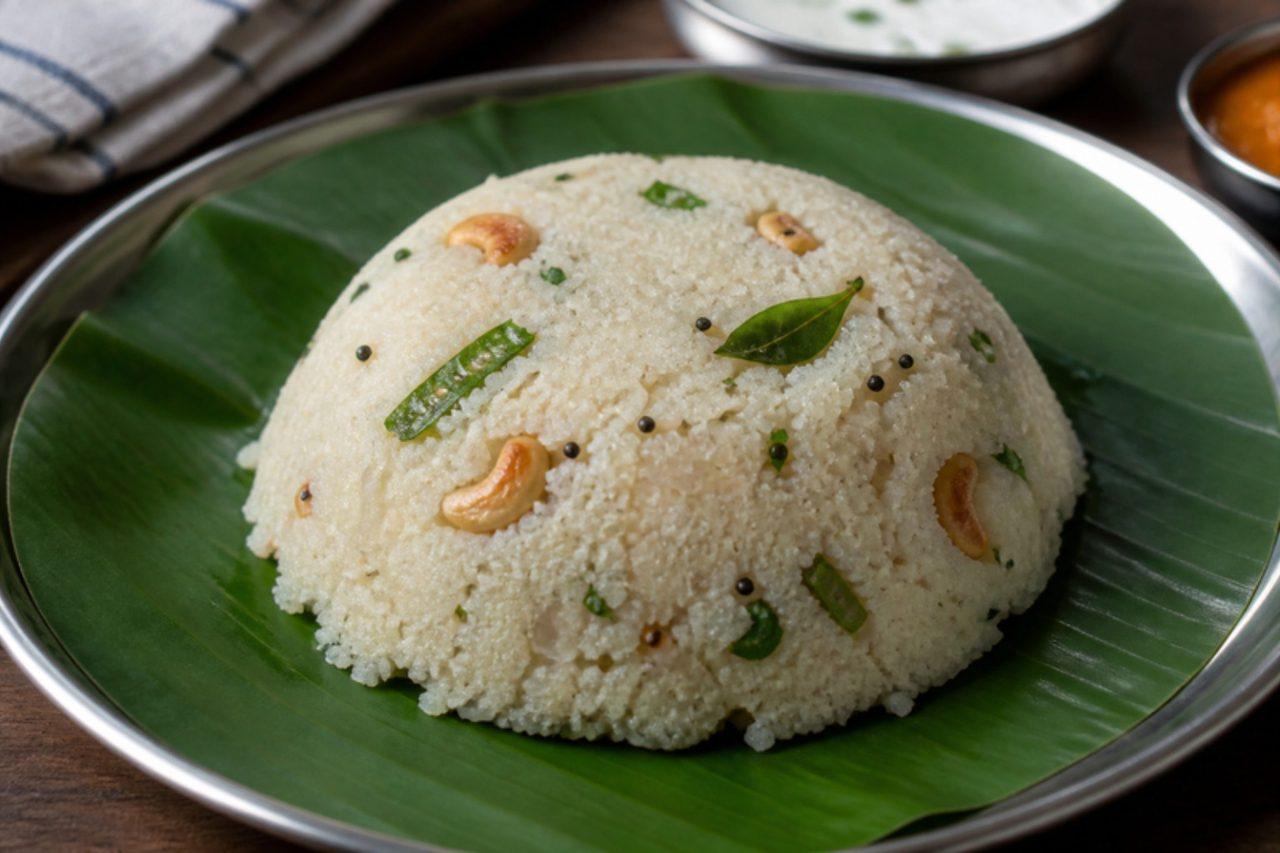
Rava upma is breakfast in countless homes across Tamil Nadu, Karnataka, Andhra Pradesh and Kerala, and the dish every South Indian student learns to cook first. Semolina is roasted until it smells nutty, then stirred into boiling water flavoured with a tempering of mustard seeds, urad and chana dal, curry leaves, ginger and green chilli, so it swells into a soft, fluffy, savoury porridge. Serve it with coconut chutney, a little pickle or a banana. The classic mistake is pouring the rava into water that is not boiling, or all at once, which gives lumps. Chef's tip: roast the rava in advance and keep it in a jar; roasted rava makes lump-free upma in ten minutes on a busy morning.
Doi chiraFlattened rice with curd
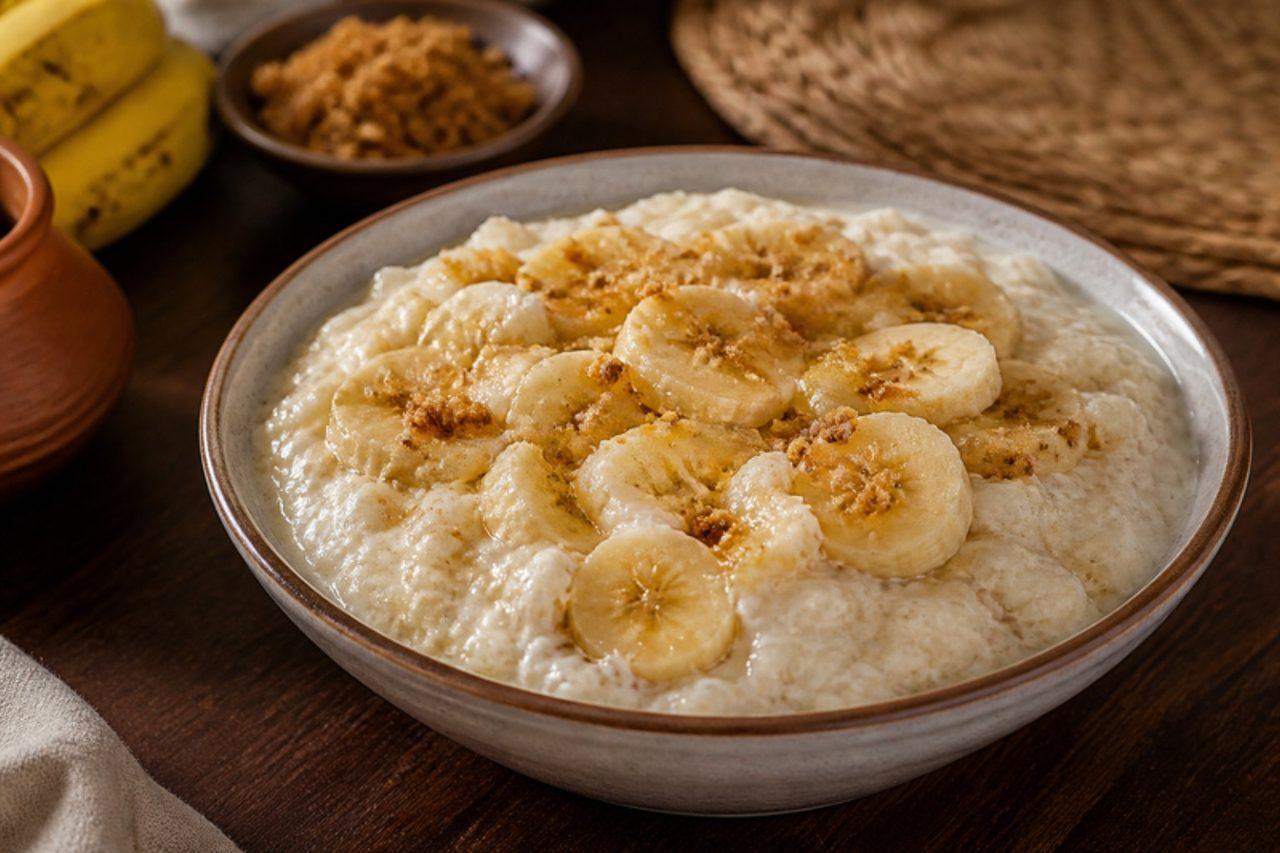
Nothing is cooked for doi chira, which is why it has been the breakfast of farmers and fishermen in Barisal for generations: flattened rice is rinsed, softened in thick, slightly sour curd and sweetened with jaggery or sugar, then mashed together with a ripe banana. The texture is soft and creamy with a little chew from the rice flakes, and the taste is cool, sweet and tangy. It is eaten on hot summer mornings, at village fairs and as part of the Pohela Boishakh spread, and it is a favourite of children and of anyone fasting who wants something gentle. The usual misstep is soaking the chira for too long, which turns it to paste; a quick rinse is all it needs before the curd does the rest. Chef's tip: use thick-cut chira, not the thin kind for frying, so the flakes hold their shape.
 Bangladeshi