 Cameroonian
 Vegan
 Gluten free
Bobolo
Leaf-wrapped cassava loaf
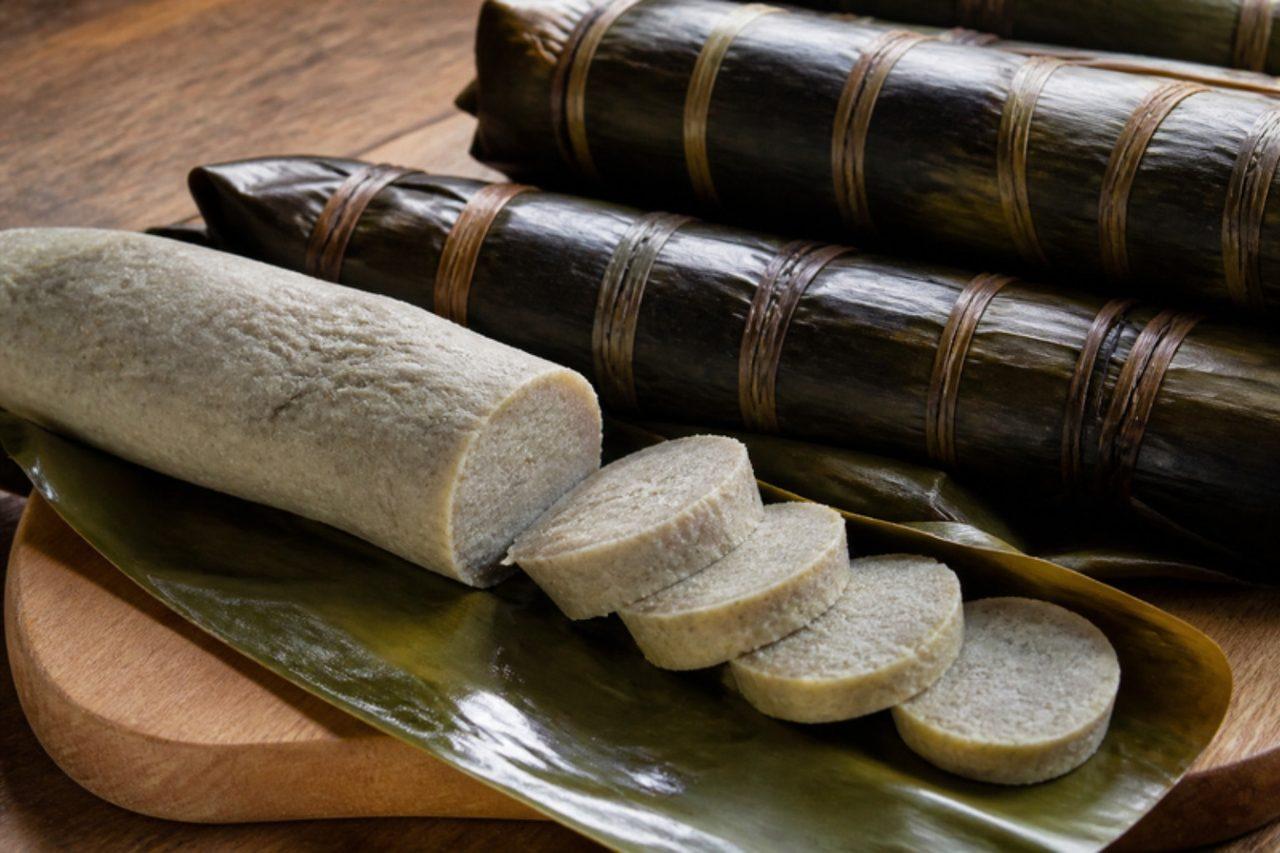
Bobolo: the long, leaf-wrapped cassava loaf of the Beti country around Yaoundé
Ask anyone from the Beti country around Yaoundé what goes with okok and the answer is bobolo, the long, leaf-wrapped cassava loaf sold in tied stacks at Mvog-Mbi market. Fatter and more elastic than the miondo sticks of the coast, it is made from soaked, soured cassava that is ground, steamed, kneaded until stretchy and then boiled for hours in its leaf. Sliced into rounds, it is chewy and faintly sour and keeps for days, so it travels well from the villages to the city. Eat it with okok, grilled fish, groundnut sauce or simply a fiery pepper paste. The soaking takes 4 days, so start early in the week. Chef's tip: knead the steamed dough while it is still hot; once cool it stiffens and never becomes properly smooth.
- Prep
- 60 min
- Cook
- 150 min
- Difficulty
- Hard
- Serves
- 10
- Per serving
- 290 kcal
This recipe may be AI-generated and is for general information only. Read it through before you cook, check every label for allergens, and make sure food is cooked through. Report a problem with this recipe
Ingredients
- 5 ½ lb fresh cassava rootssweet cassava; or 1.8 kg ready-fermented cassava paste (skip steps 1–3)
- 25 cups cold waterfor soaking, changed daily
- 8 banana leavesor the traditional large forest leaves; softened over a flame
- 16 ¾ cups waterfor steaming and boiling
Tick what you have; the rest goes in the basket.
Tools you'll need
As an Amazon Associate we earn from qualifying purchases.
Method
0/9 doneStep 1: Peel the 5 ½ lb fresh cassava roots, removing the brown skin and the pink layer beneath, and cut it into large chunks. Rinse well.
15 minStep 2: Cover the cassava with 25 cups cold water in a large bucket and leave it at room temperature for 4 days, changing the water every day, until the pieces are very soft and smell sour. Soaking followed by long cooking is what makes cassava safe; never eat it raw.
Step 3: Drain and pick out every piece of the hard central fibre. Missed fibres are the most common fault: they run through the finished loaf like threads.
10 minStep 4: Grind the cassava in batches to a smooth paste, then tie it in a cloth and press under a weight for 2–3 hours until firm and no longer dripping.
Step 5: Break the dough into fist-sized lumps, set them in a steamer over some of the 16 ¾ cups water and steam, covered, for 30 minutes until the outsides look translucent.
30 minStep 6: Tip the hot dough into a large bowl and knead with a wooden pestle or the heel of a wet hand for 10 minutes until smooth, elastic and slightly stretchy.
10 minStep 7: Soften the 8 banana leaves over a flame. Shape the dough into logs about 20 cm long and 5 cm thick, roll each tightly in leaves and tie with kitchen string.
15 minStep 8: Lay the loaves in a large pot, cover with the remaining boiling water and simmer, covered, over a medium-low heat for 2 hours, topping up the water, until the loaves feel very firm and the dough is greyish-white and glossy right to the centre.
120 minStep 9: Cool for 15 minutes, then unwrap and slice into thick rounds. Bobolo keeps for a week in the fridge in its leaves; steam to reheat.
KrazyBadal
Reviews
No reviews yet. Be the first to cook it.
Rate this recipe
Sign in to rate and review this recipe.