
AI-generated image
Cebu-style lechon belly
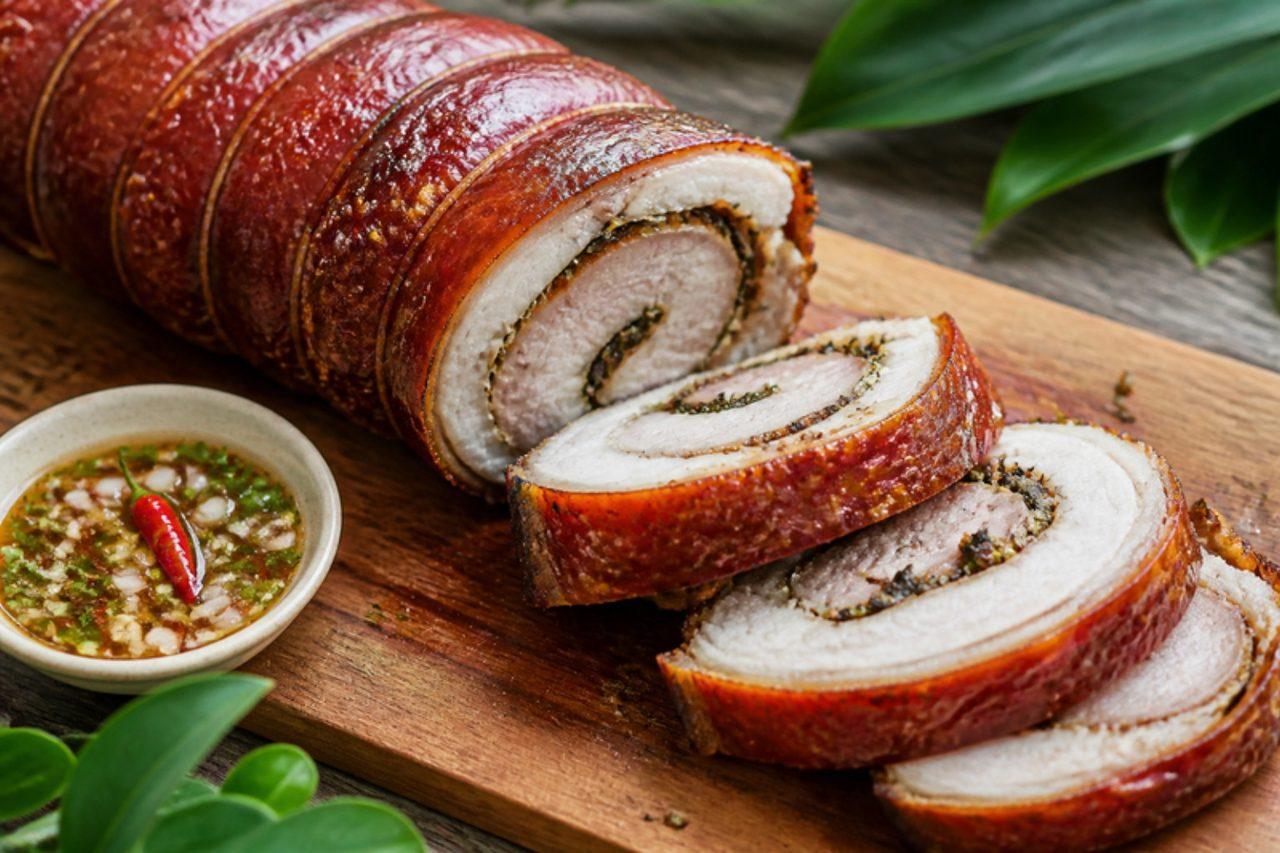
Lechon belyo: Cebu-style rolled pork belly stuffed with lemongrass, garlic and spring onion, roasted until crackling


Cebu claims the best lechon in the Philippines, and its whole roast pigs are stuffed with lemongrass, garlic and spring onion so the meat needs no sauce. Lechon belly (lechon belyo) brings that flavour to a home oven: a slab of pork belly is rolled around the same herbs, tied, and roasted slowly, then blasted with heat until the rind turns to crackling. It is the centrepiece for Cebuano fiestas, Christmas and big birthdays, carved at the table and eaten with rice and a little spiced vinegar. Chef's tip: score only the meat side, never the skin, and dry the rind in the fridge overnight; an unbroken, dry skin crackles evenly.
- Total time
- 250 min
- Difficulty
- hard
- Serves
- 8
Ingredients
For the pork
- 5 ½ lb skin-on pork bellyone rectangular slab, about 30 x 35 cm
- 2 tbsp coarse salt
- 2 tsp black peppercoarsely ground
For the stuffing
- 6 lemongrass stalksbruised and halved
- 2 bulbs garliccloves peeled and crushed
- 1 bunch spring onionscut into lengths
- 4 shallotssliced
For the rind
- 2 tbsp cane vinegar
- 1 tsp fine salt
To serve
- ½ cup spiced vinegar with garlic and chilli (optional)
Shop this recipe on Amazon
What you'll need
Spices & pantry
Fresh ingredients (4)
Links open Amazon in a new tab. As an Amazon Associate, WhatToEat.Today earns from qualifying purchases.
Method
0/7 doneStep 1: Lay 5 ½ lb skin-on pork belly skin-side down. Score the meat side in a criss-cross 1 cm deep, without cutting through to the skin. Rub the meat with 2 tbsp coarse salt and 2 tsp black pepper.
10 minStep 2: Spread 6 lemongrass stalks, 2 bulbs garlic, 1 bunch spring onions, 4 shallots, 4 bay leaves and 2 star anise along the middle. Roll the belly up tightly, skin outside, and tie with kitchen string every 3 cm.
15 minStep 3: Pat the rind dry, rub it with 2 tbsp cane vinegar and then 1 tsp fine salt. Set on a rack over a tray and chill uncovered for 12–24 hours to dry the skin. Wash your hands, board and knife after handling the raw pork.
10 minStep 4: Take the roll out of the fridge 30 minutes before cooking. Heat the oven to 325°F (275°F fan). Wipe the skin dry again and roast on the rack, with 200 ml water in the tray below, for 2½ hours.
150 minStep 5: Turn the oven up to 450°F (400°F fan) and roast for 25–35 minutes more, turning the tray, until the skin puffs and crackles all over. Watch it closely and cover any very dark patches with a scrap of foil. A common mistake is basting: any liquid on the skin keeps it leathery.
30 minStep 6: Check the thickest part: it should read at least 160°F (around 185°F makes the belly melt-in-the-mouth tender). Rest uncovered for 20 minutes; a cover traps steam and softens the crackling.
20 minStep 7: Snip off the string, remove the lemongrass, and slice into thick rounds with a serrated knife. Serve with ½ cup spiced vinegar with garlic and chilli.
5 min
Nutrition per serving
- Calories
- 860 kcal
- Protein
- 40 g
- Carbs
- 3 g
- Fat
- 76 g
- Fibre
- 0 g
Nutrition values are estimates.
KrazyBadal
Good to know
- How long does cebu-style lechon belly take?
- About 250 minutes in total: 40 minutes to prepare and 210 minutes to cook.
- How many people does it serve?
- 8 as written. Change the servings above the ingredients and every amount scales to match.
- Is it gluten free?
- Yes, as written. Check the labels on stock, sauces and spice mixes, which sometimes contain gluten.
- What can I use instead of garlic?
- ½ tsp garlic paste or ⅛ tsp garlic powder per clove.
- What can I use instead of spring onions?
- Chives, or a little finely sliced onion.
Reviews
No reviews yet. Be the first to cook it.
Rate this recipe
Sign in to rate and review this recipe.
You might also like
Tiyula itumBlack beef soup
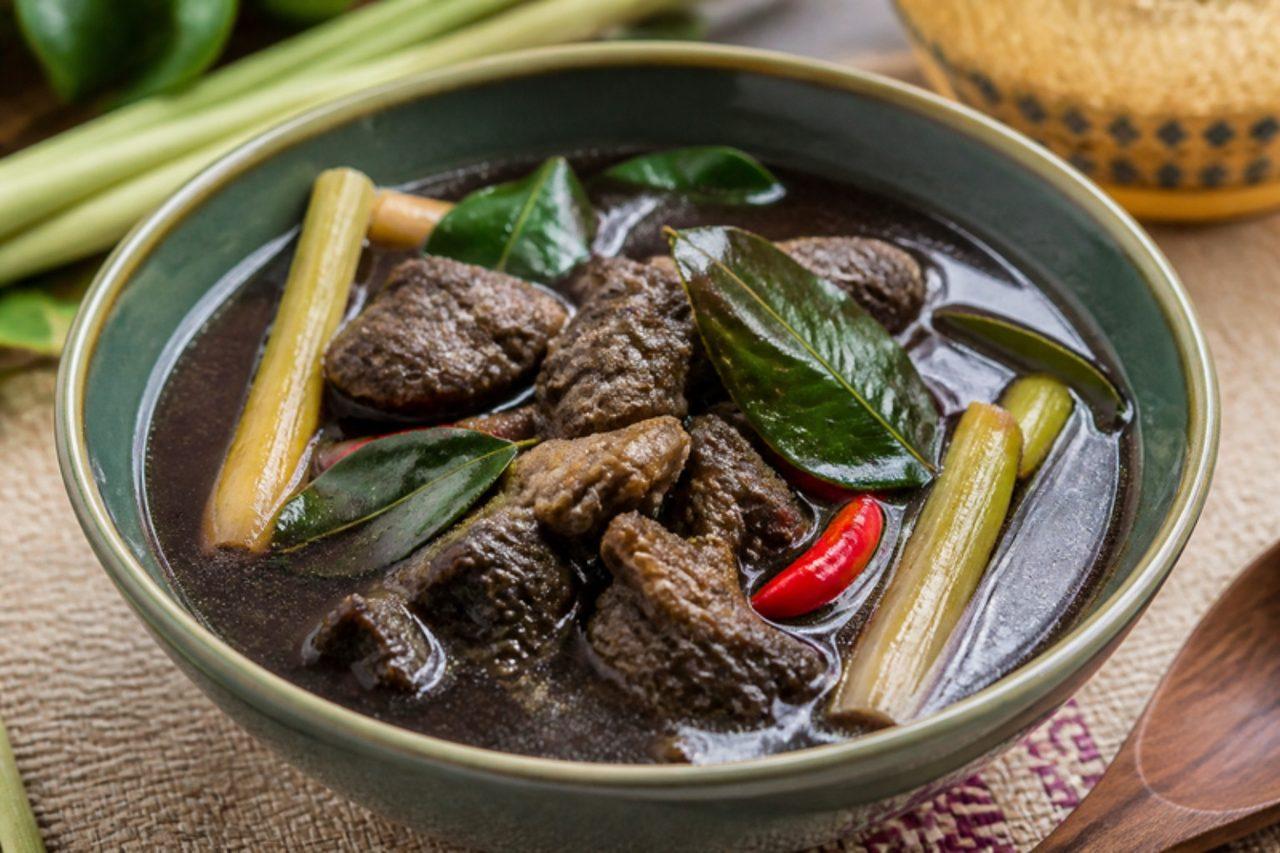
Tiyula itum, 'black soup', is the pride of the Tausug people of Sulu in the far south of the Philippines, cooked for weddings, Eid celebrations and when guests come home. Beef (it is a halal, pork-free dish) is simmered with ginger, lemongrass and turmeric, then darkened with pamapa itum, a paste of grated coconut toasted until almost black and pounded with spices. The broth looks dramatic but tastes smoky, earthy and gently peppery, with heat from chillies. Serve it with plain rice. Chef's tip: toast the coconut slowly, stirring all the time, until it is very dark brown but not ashy; burnt-to-ash coconut tastes bitter and ruins the soup.


Pork souvlaki
This is a pork recipe. Walk through any Greek town after dark, from Athens to Thessaloniki, and the smell of souvlaki stands drifts down the street; cubes of pork shoulder grilled on thin skewers are the country's favourite cheap supper, eaten standing up or at a plastic-table taverna. At home you marinate the meat in lemon, olive oil, garlic and dried oregano, grill it hard and fast, and pile it on warm pitta with tzatziki, tomato and red onion. Chef's tip: cut the pork into even 2.5 cm cubes and leave a little fat on; lean loin dries out, shoulder stays juicy over high heat.
 Greek
Pfälzer SaumagenStuffed pig's stomach
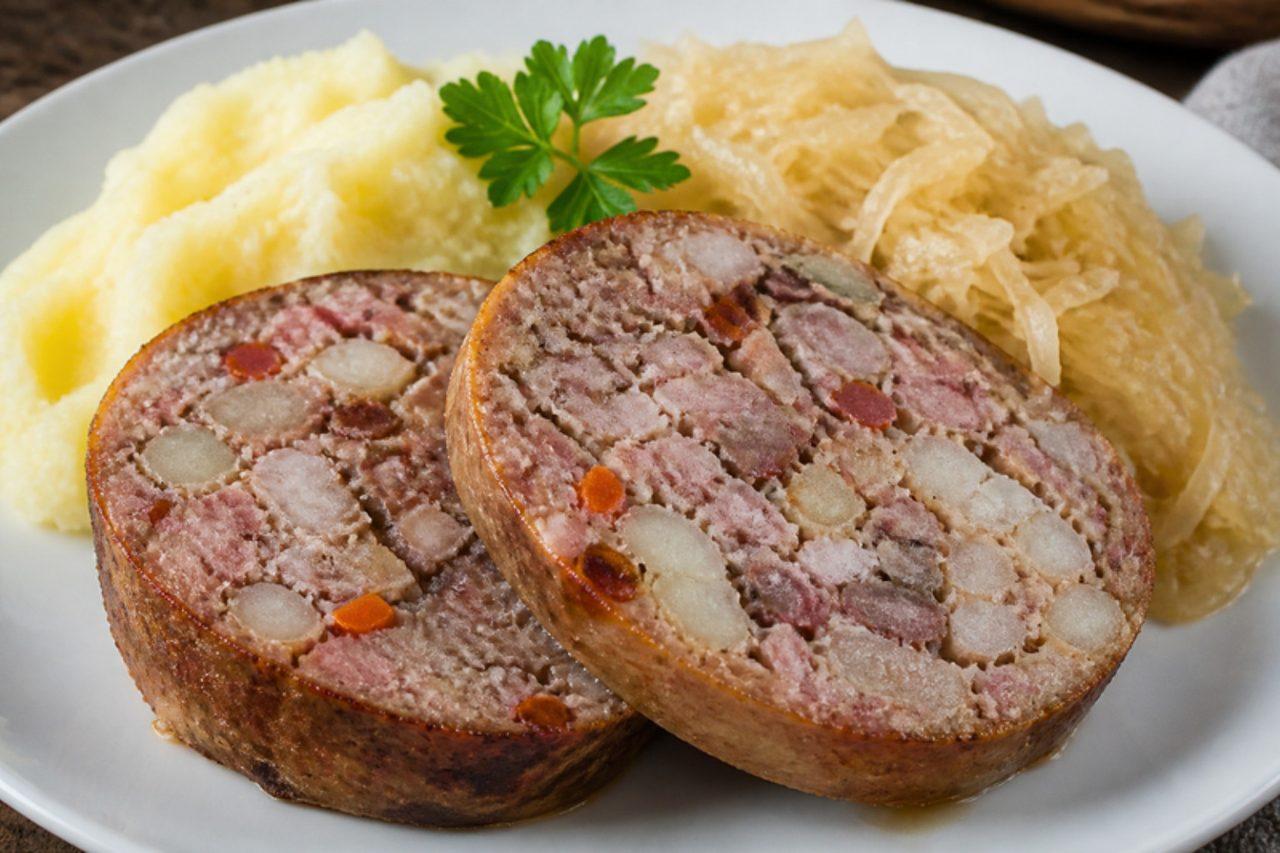
Saumagen is the pride of the Palatinate, served at wine-village festivals and family dinners from the Haardt hills to Ludwigshafen. A cleaned pig's stomach is stuffed with diced pork shoulder, pork sausage meat, potato and carrot seasoned with marjoram and nutmeg, poached slowly, then sliced thick and fried until crusty. The stomach works only as a casing and is ordered from a butcher; if you can't get one, bake the same filling in a covered terrine in a water bath. Serve with sauerkraut and mashed potato. Chef's tip: fill the stomach only three-quarters full, or it bursts as the potatoes swell.
 German