
AI-generated image
Cha ca La Vong
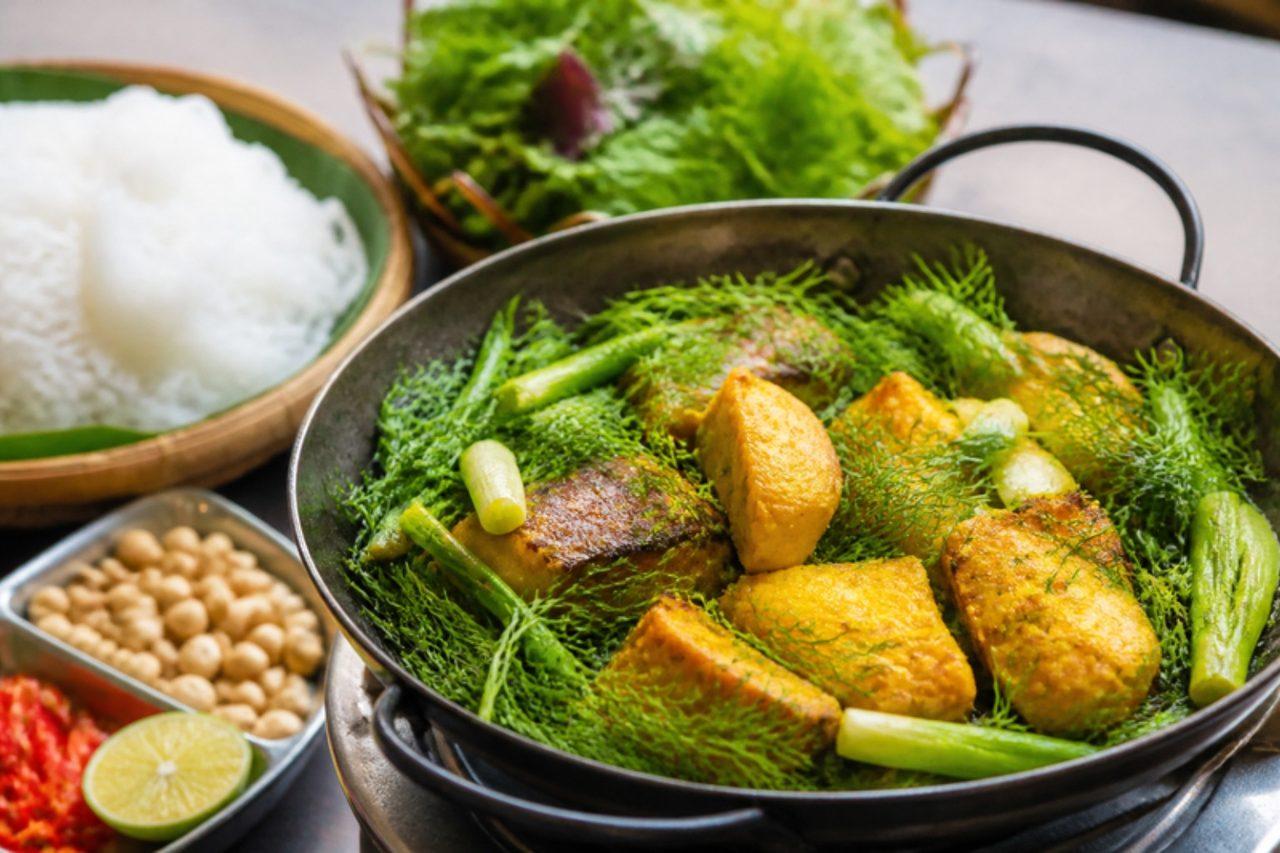
Chả cá Lã Vọng: Hanoi turmeric fish sizzled with dill and spring onions
A family restaurant in Hanoi's Old Quarter served this one dish for so long that the street itself was renamed Chả Cá, Grilled Fish Street. Chunks of white fish are marinated in turmeric and galangal, cooked until golden, then brought to the table in a pan of hot oil where everyone throws in handfuls of dill and spring onion to wilt. You eat it over rice vermicelli with peanuts, fresh herbs and a pungent shrimp-paste dip. Dill is rare elsewhere in Vietnamese cooking, which is why this dish tastes so distinct. Chef's tip: use a lot more dill than seems sensible; it is treated as a vegetable here, not a garnish.
- Total time
- 45 min
- Difficulty
- medium
- Serves
- 4
Ingredients
For the fish
For the greens
For the dip
To serve
Method
0/8 doneStep 1: Cut the 1 ⅓ lb firm white fish fillet (monkfish, cod loin or catfish) into 4 cm chunks and pat very dry with kitchen paper. Wet fish steams in the pan instead of browning.
Step 2: Mix the 2 tsp ground turmeric, ⅔ oz fresh galangal, 2 cloves garlic, 1 shallot, 1 ½ tbsp fish sauce, 1 tbsp rice vinegar, 1 tsp caster sugar and 1 tbsp of the 1 tbsp vegetable oil into a paste. Turn the fish in it until evenly yellow, cover and chill for 15 minutes.
15 minStep 3: Meanwhile cook the 10 ½ oz dried rice vermicelli following the packet, rinse in cold water and drain well. Put the noodles, 1 ¾ oz roasted peanuts and 1 oz coriander and Thai basil on the table.
5 minStep 4: For the dip, whisk the 1 tbsp fermented shrimp paste (mắm tôm), 2 tbsp lime juice and 2 tsp caster sugar in a small bowl until it turns pale and foamy, then add the 1 red bird's eye chilli. If shrimp paste is too strong for you, a bowl of everyday fish sauce dip works too.
Step 5: Heat 3 tbsp of the 3 tbsp vegetable oil in a large non-stick frying pan over a medium-high heat. Add the fish in a single layer and leave it alone for 2–3 minutes, until a golden crust forms underneath. Common mistake: stirring the fish. It breaks into flakes; turn each piece once with a fish slice or tongs.
3 minStep 6: Turn the pieces and cook for 2–3 minutes more, until the fish is opaque all the way through and flakes easily, 145°F/145 °F in the centre. Work in two batches if your pan is small.
4 minStep 7: Bring the pan to the table, on a portable burner if you have one. Add the remaining 1 tbsp vegetable oil, then pile the 2 ⅛ oz fresh dill and 6 spring onions on top of the fish and toss gently for 30–60 seconds, until just wilted and bright green.
1 minStep 8: Serve straight from the pan: put some noodles in each bowl, add fish and greens, a spoonful of peanuts and herbs, and a few drops of the dip.
Nutrition per serving
- Calories
- 540 kcal
- Protein
- 34 g
- Carbs
- 62 g
- Fat
- 17 g
- Fibre
- 3 g
Nutrition values are estimates.
KrazyBadal
Good to know
- How long does cha ca La Vong take?
- About 45 minutes in total: 25 minutes to prepare and 20 minutes to cook.
- How many people does it serve?
- 4 as written. Change the servings above the ingredients and every amount scales to match.
- What can I use instead of ground turmeric?
- Leave it out (it mostly adds colour).
- What can I use instead of garlic?
- ½ tsp garlic paste or ⅛ tsp garlic powder per clove.
Reviews
No reviews yet. Be the first to cook it.
Rate this recipe
Sign in to rate and review this recipe.
You might also like

Caramelised clay-pot tofu and mushrooms
Kho is the slow braise of the Mekong Delta: food simmered in a little clay pot (nồi đất) with dark caramel and seasoning until the sauce is sticky and the flavours go deep. This vegetarian cousin of cá kho tộ (braised fish) uses golden tofu and meaty mushrooms in place of fish, cooked in coconut water, as cooks do in the south, and finished with plenty of black pepper. Serve it bubbling in its pot with steamed rice and a sour soup or plain boiled vegetables. Chef's tip: take the caramel (nước màu) to a deep mahogany, darker than you think, just before it smokes; pale caramel only tastes sweet, while dark caramel gives the bittersweet, smoky flavour of a real kho.

Vegan nuoc cham
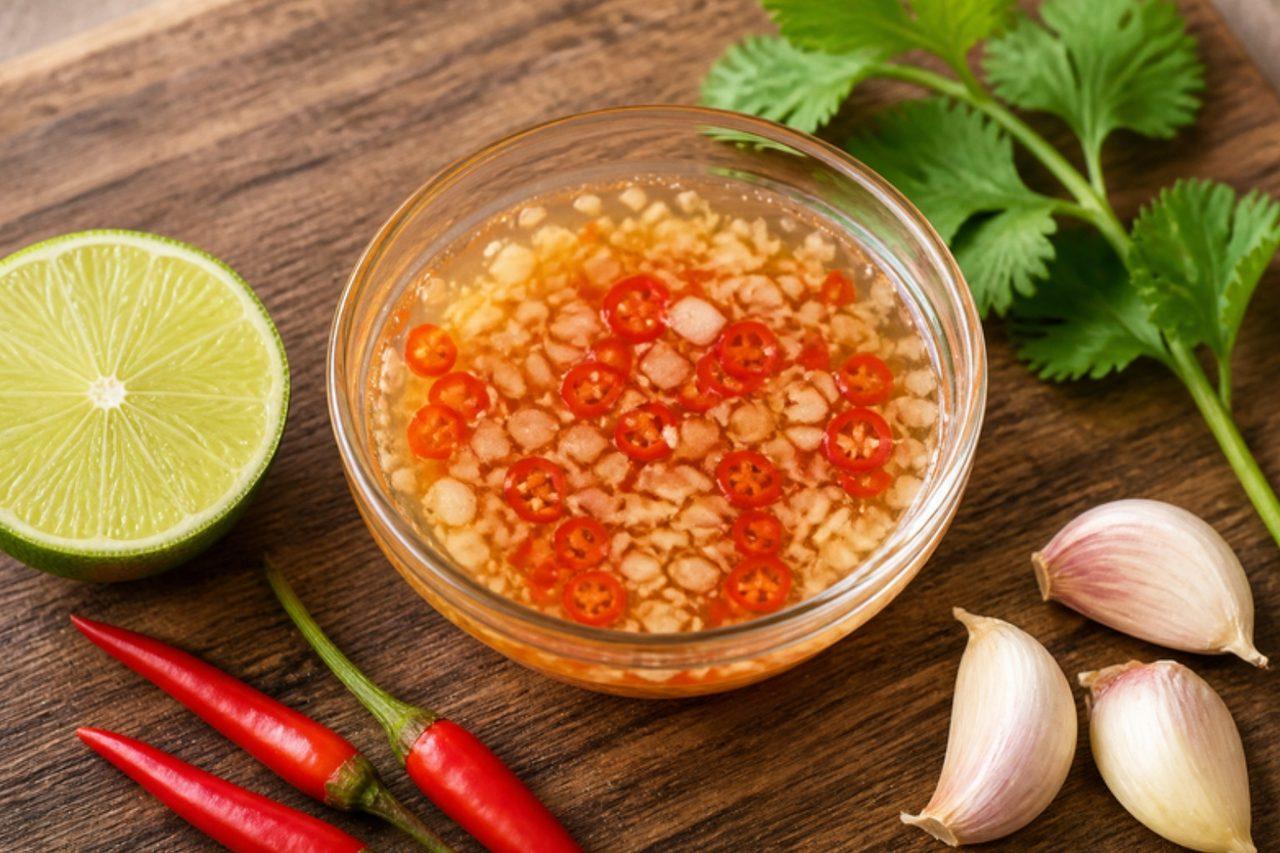
Nước chấm is the dipping sauce that goes with almost everything in Vietnam: spring rolls, bánh xèo, noodle salads and broken rice. Buddhist vegetarian cooks, all over the country, make it without fish sauce, using light soy sauce and a little coconut water for the deep, rounded taste. It should be thin, clear and pale amber, with flecks of garlic and chilli floating on top. Chef's tip: dissolve the sugar in the warm water first, then add the lime and soy, and stir in the garlic and chilli last, pounded with a pinch of sugar, so they float on the surface instead of sinking.
Vegetable pho
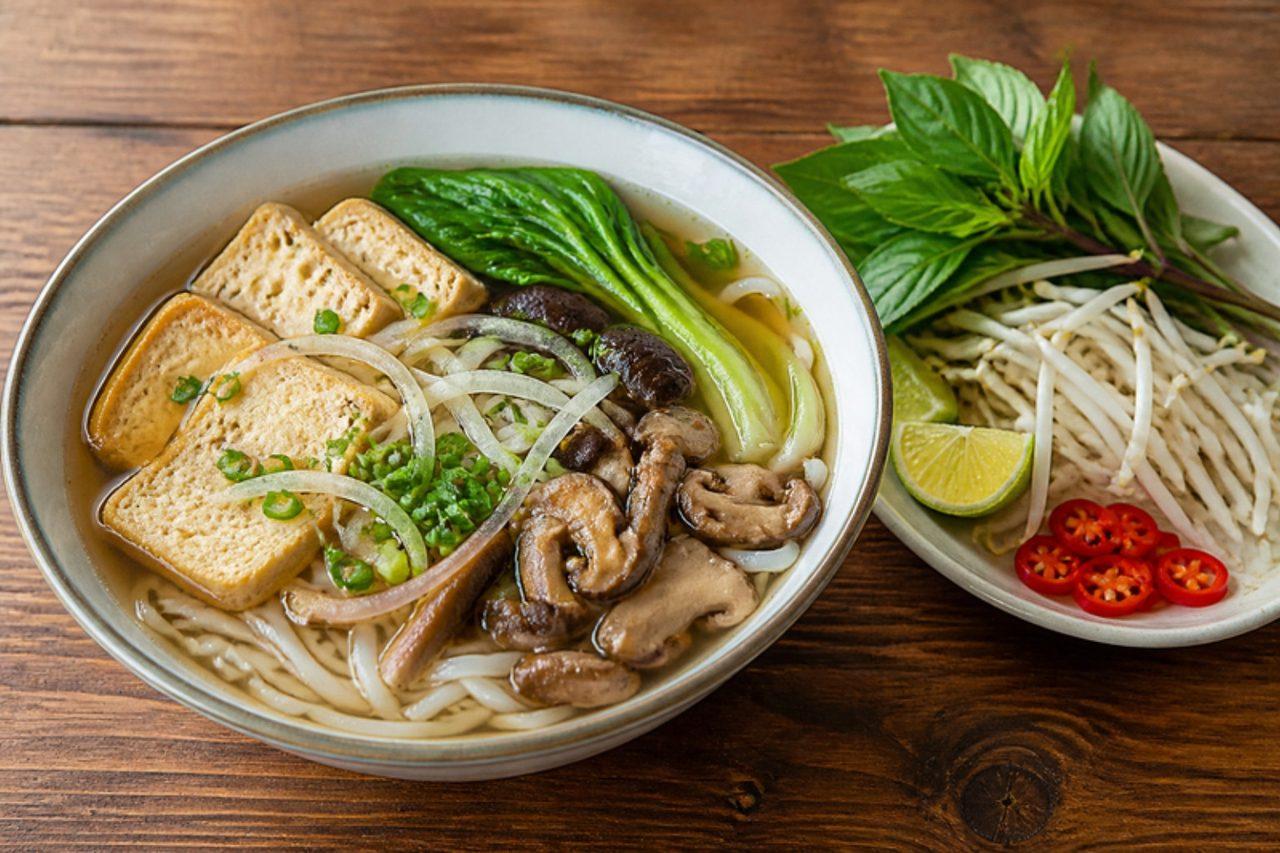
Pho began in the north, around Hanoi and Nam Định, and is now eaten all over Vietnam, often for breakfast. Phở chay is the Buddhist vegetarian version served in temple kitchens and chay restaurants: the deep, clear broth comes from charred onion and ginger, toasted star anise, cinnamon and cloves, simmered with daikon, carrot, sweetcorn and dried shiitake instead of beef bones. Silky flat rice noodles, golden tofu and mushrooms go in the bowl, and everyone adds their own bean sprouts, Thai basil, lime and chilli at the table. Chef's tip: char the onion and ginger until properly blackened in patches and toast the spices in a dry pan until they smell like warm Christmas cake; that smoky, perfumed base is what makes the broth taste like pho and not vegetable soup.
