
AI-generated image
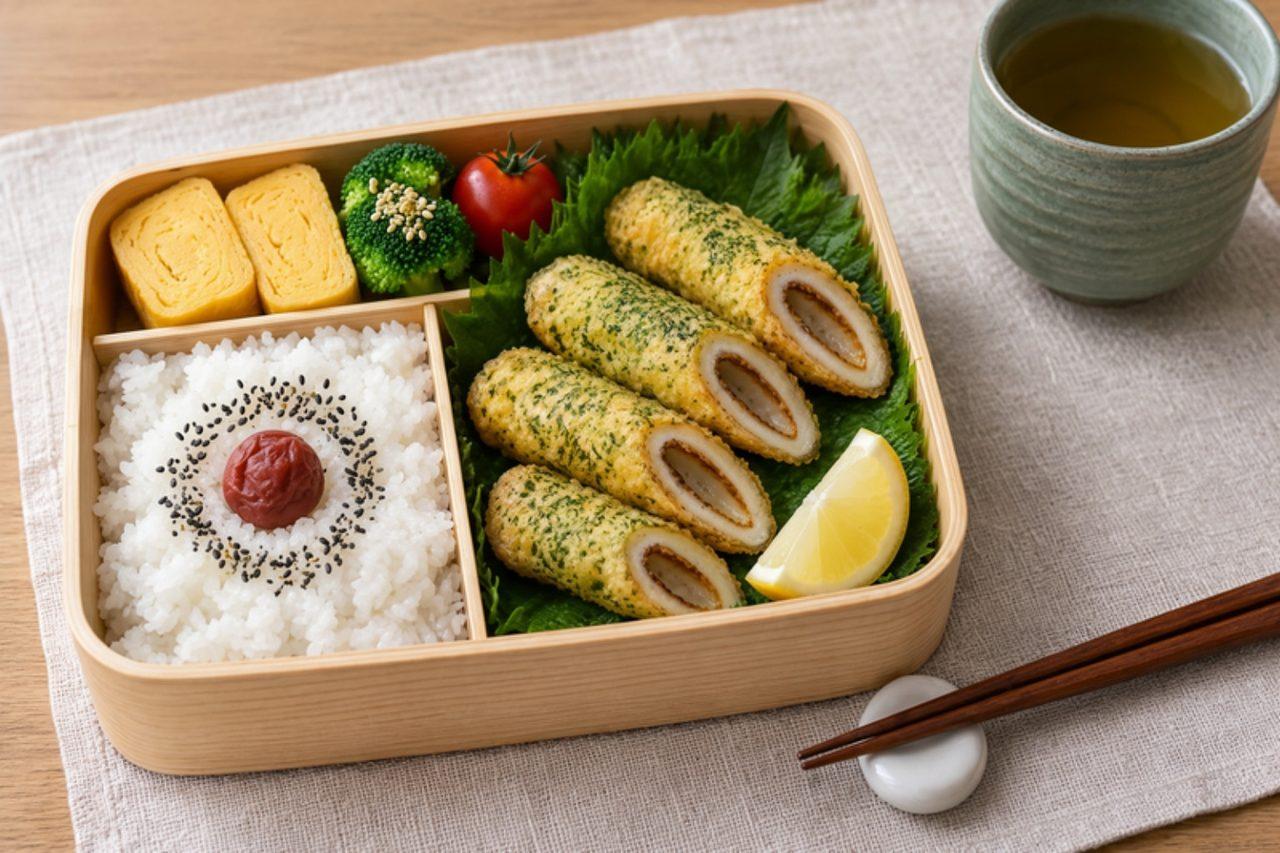
Chikuwa isobe-age
Seaweed-battered fish cake
Chikuwa no isobe-age (ちくわの磯辺揚げ): fish cake fried in an aonori seaweed batter

Isobe-age, "fried in the style of the rocky shore", means anything coated in a batter speckled with green aonori seaweed, and chikuwa isobe-age is the one every Japanese parent tucks into a bento: tubes of chikuwa fish cake fried until puffed and crisp. It is just as good cold and takes ten minutes. The common mistake is a thick batter, which turns bready; it should be like single cream. Chef's tip: dust the chikuwa with a little flour before dipping, so the batter clings and does not slide off in the oil.
- Total time
- 15 min
- Difficulty
- easy
- Serves
- 4
Ingredients
- 6 chikuwa fish cakeshalved lengthwise
- 1 ¾ oz plain flour
- ¼ cup cold water
- 1 pinch salt
- ¾ cup vegetable oilfor shallow frying
Shop this recipe on Amazon
Spices & pantry
Fresh ingredients (1)
Links open Amazon in a new tab. As an Amazon Associate, WhatToEat.Today earns from qualifying purchases.
Method
0/5 doneStep 1: Pat 6 chikuwa fish cakes dry and dust lightly with 1 tsp of 1 ¾ oz plain flour.
Step 2: Whisk the rest of the flour with ¼ cup cold water, 2 tsp aonori (green seaweed flakes) and 1 pinch salt into a smooth, thin batter.
Step 3: Heat ¾ cup vegetable oil in a frying pan to 350°F, or until a drop of batter sizzles straight away.
Step 4: Dip the chikuwa in the batter and fry for 2–3 minutes, turning, until crisp and lightly golden. Drain on a rack.
5 minStep 5: Eat hot, or cool fully and pack for bento.
Nutrition per serving
- Calories
- 190 kcal
- Protein
- 7 g
- Carbs
- 16 g
- Fat
- 11 g
- Fibre
- 1 g
Nutrition values are estimates.
KrazyBadal
Good to know
- How long does chikuwa isobe-age take?
- About 15 minutes in total: 5 minutes to prepare and 10 minutes to cook.
- How many people does it serve?
- 4 as written. Change the servings above the ingredients and every amount scales to match.
- What can I use instead of plain flour?
- Self-raising flour, same amount (then leave out the baking powder).
Reviews
No reviews yet. Be the first to cook it.
Rate this recipe
Sign in to rate and review this recipe.
You might also like

Moreton Bay bugsSlipper lobster with garlic butter
Moreton Bay bugs are the flat, shovel-nosed slipper lobsters caught off the Queensland coast around Brisbane and the Sunshine Coast, and for Queenslanders they are a summer treat, split and grilled at the beach house. The tail meat is sweet and rich, somewhere between lobster and prawn. Buy them raw, frozen or fresh, from a fishmonger and ask them to halve them if you like. A common mistake is overcooking, which makes the meat rubbery; it is ready the moment it turns white. Chef's tip: grill flesh side down first to mark it, then turn and baste in the shell.
 Australian


Yaki onigiriGrilled rice balls
Yaki onigiri (焼きおにぎり) are rice balls grilled until they form a crisp, toasty crust, then brushed with soy sauce glaze. They are eaten all over Japan, at izakaya, at barbecues and from the freezer section, as a snack or with miso soup. The inside stays soft and steamy while the outside crackles. Best eaten hot, straight from the pan. Chef's tip: let the shaped rice balls dry for 10 minutes before they go in the pan. A drier surface forms a better crust and won't stick, and the glaze goes on only at the end so it doesn't burn.


Miso soup
Miso soup (味噌汁) is drunk every day in homes all over Japan, at breakfast as well as dinner, beside a bowl of rice. The base is dashi; this vegan version uses kombu and dried shiitake instead of bonito, which gives it a deep, rounded flavour. Silken tofu and wakame seaweed are the classic fillings. It takes ten minutes; just remember not to boil the miso. Chef's tip: add the miso at the very end and never let it boil. Boiling kills the miso's fresh, fermented aroma; Japanese cooks say the soup should only 'smile', with the surface barely trembling.