
 Gluten free
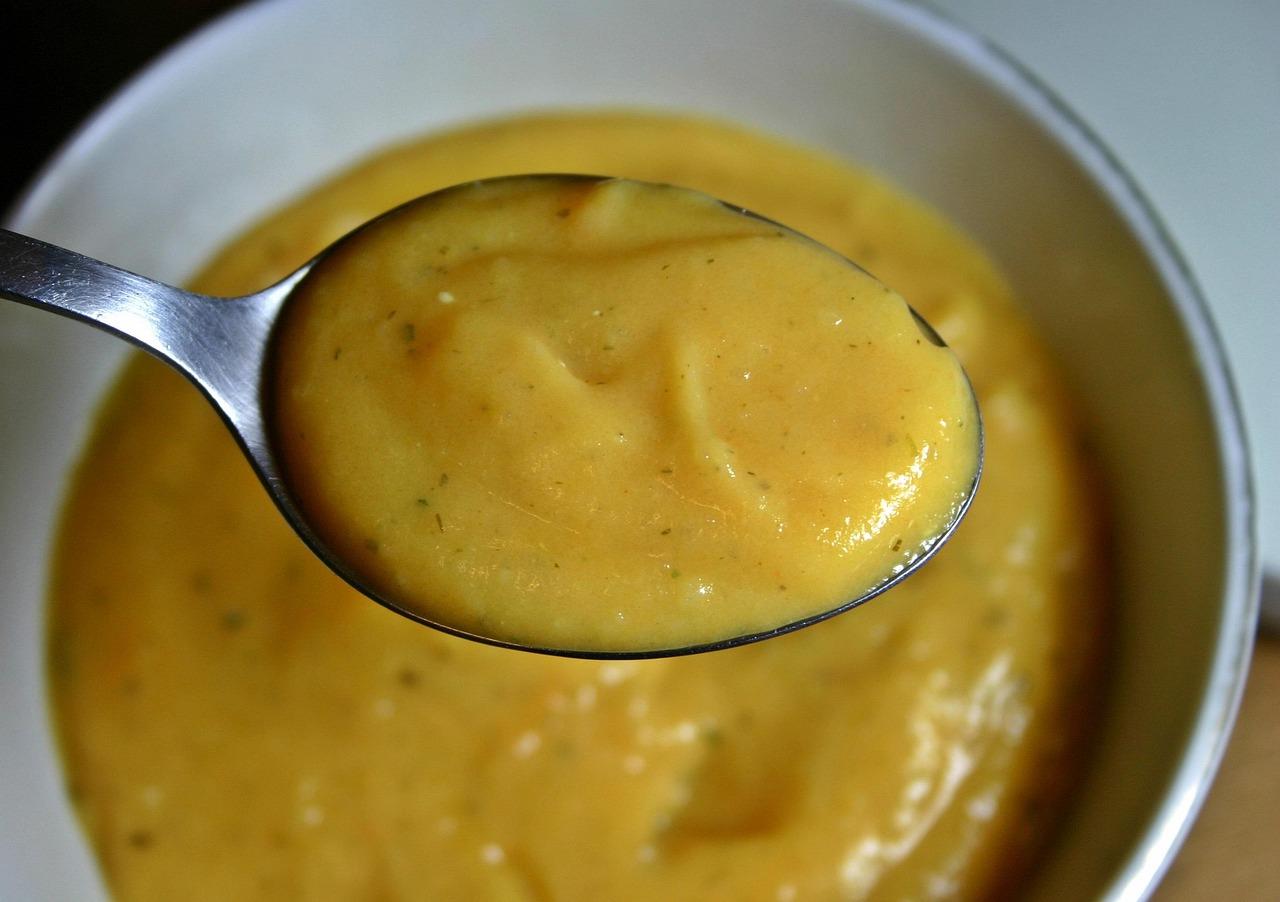
Cream of carrot & cauliflower
Creamy steamed vegetable puree for 4–8 months. Serves 1
Steamed carrots and cauliflower pureed and stirred into creamy baby rice for a smooth, mild meal for babies of 4–8 months. Steaming keeps the vegetables' colour and goodness. Serve lukewarm.
- Prep
- 5 min
- Cook
- 18 min
- Difficulty
- Easy
- Serves
- 1
- Per serving
- 150 kcal
Baby & toddler safety
- Age: first foods are for babies from around 6 months who are already eating solids.
- Allergens: contains milk. Offer one new allergen at a time, in the morning, so you can watch for a reaction.
- Texture and choking: purée or mash smoothly for 6–9 months, then soft, finger-sized pieces that squash between your fingers. Cut round foods such as grapes and cherry tomatoes into quarters lengthways, never give whole nuts, and always stay with your child while they eat.
- Under 1: no honey, no added salt or stock cubes, and no added sugar.
Every child is different. If you are unsure, especially about allergies, check with your health visitor or paediatrician.
Ingredients
- 8 oz carrotssliced
- 3 ½ oz cauliflowerflorets
- 1 tbsp boiled water
- 2 tbsp baby riceready made
- 4 tbsp baby's milk
Shop this recipe on Amazon
Spices & pantry
Fresh ingredients (3)
Links open Amazon in a new tab. As an Amazon Associate we earn from qualifying purchases.
Method
0/5 doneStep 1: Steam 8 oz carrots for 10 minutes.
10 minStep 2: Add 3 ½ oz cauliflower and steam for about 8 minutes more, until both vegetables are tender.
8 minStep 3: Drain the carrots and cauliflower and puree with 1 tbsp boiled water.
Step 4: Mix 2 tbsp baby rice with 4 tbsp baby's milk until smooth.
Step 5: Stir the rice mixture into the vegetable puree. Serve lukewarm.
Nutrition per serving
- Calories
- 150 kcal
- Protein
- 5 g
- Carbs
- 25 g
- Fat
- 3 g
- Fibre
- 7 g
Nutrition values are estimates.
KrazyBadal
Good to know
- How long does cream of carrot & cauliflower take?
- About 23 minutes in total: 5 minutes to prepare and 18 minutes to cook.
- How many people does it serve?
- 1 as written. Change the servings above the ingredients and every amount scales to match.
- Is it vegetarian?
- Yes. It has no meat or fish.
- Is it gluten free?
- Yes, as written. Check the labels on stock, sauces and spice mixes, which sometimes contain gluten.
- What can I use instead of carrots?
- Parsnip or sweet potato, same weight.
- What can I use instead of cauliflower?
- Broccoli, same weight.
Reviews
No reviews yet. Be the first to cook it.
Rate this recipe
Sign in to rate and review this recipe.
You might also like

TacachoMashed roasted green plantain balls
Tacacho is the breakfast of the Peruvian Amazon, from Tarapoto to Iquitos: green plantains roasted over coals, mashed with fat and salt and shaped into balls. There it comes with cecina (smoked pork) and is mashed with lard and crackling; this vegan tacacho uses good oil and a pinch of smoked paprika for the same savoury, smoky depth. The balls are dense, chewy and starchy, crisp at the edges where the plantain charred, and they are eaten hot with a fiery chilli sauce or alongside stews. Use plantains that are fully green and firm. Chef's tip: mash the plantains while they are still very hot; as green plantain cools its starch sets and it won't bind into a smooth ball.
 Peruvian

Jamaican callalooSteamed callaloo greens
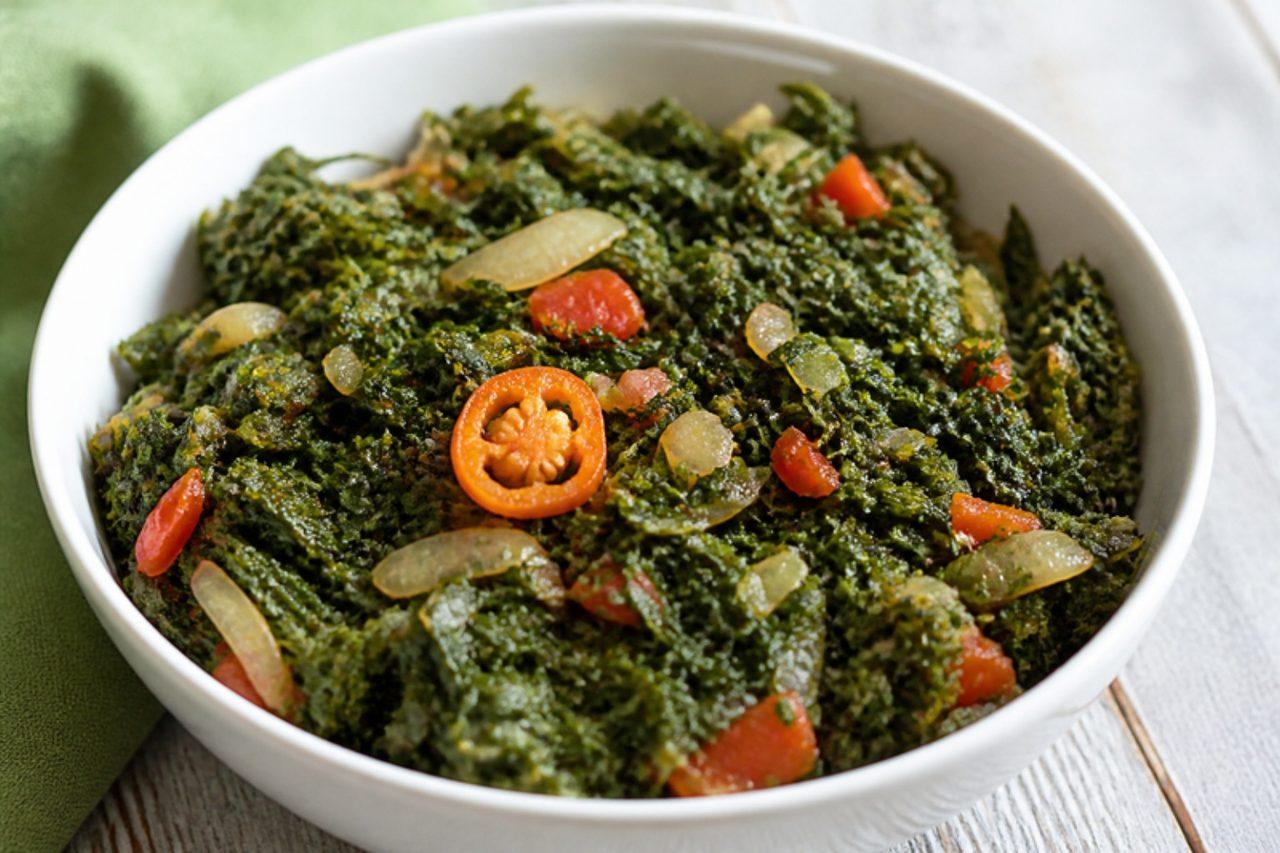
In Jamaica, callaloo means the leaves and tender stems of a type of amaranth, sold in big bundles in every market from Coronation Market in Kingston to Santa Cruz in St Elizabeth. It's steamed down with onion, tomato, garlic and thyme into soft, savoury greens with a mild mineral sweetness, and eaten at breakfast with fried dumplings, boiled green bananas or hard dough bread, or as a side at dinner. Spinach or Swiss chard can stand in if you can't find callaloo. Chef's tip: peel the fibrous skin from the thicker stems with a small knife and slice the stems and leaves finely across, about 1 cm wide. That's how Jamaican cooks get callaloo that's tender all the way through rather than stringy.
 Jamaican
TashmijabiMashed potatoes with stretchy cheese
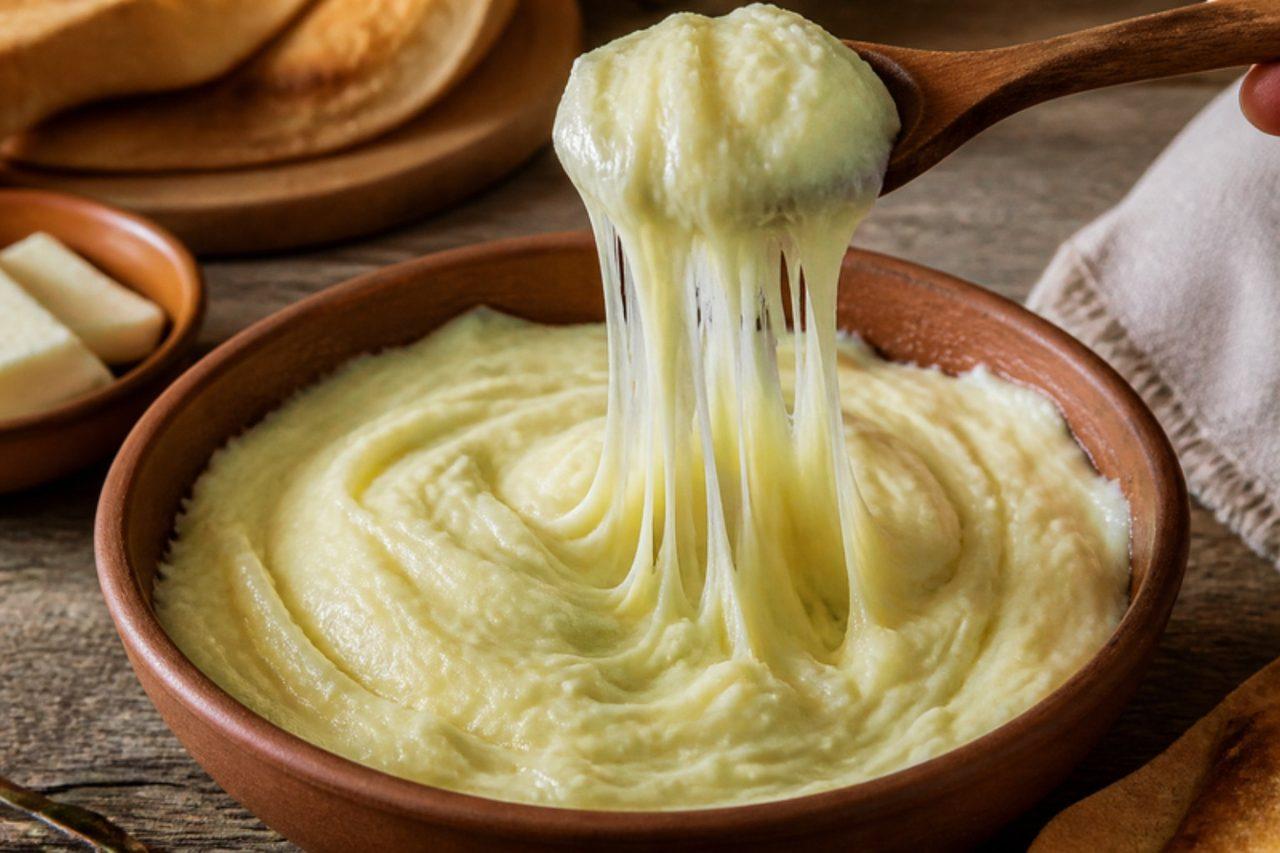
Potatoes grow well in the cold valleys of Svaneti, and tashmijabi is how families around Mestia turn them into a feast dish: they are mashed hot, then beaten with handfuls of young sulguni until the purée becomes glossy and stretches from the spoon in long strands. It is served with grilled meat, kubdari or simply with pickles and Svan salt. A common mistake is letting the potatoes cool before adding the cheese; they must be piping hot for the cheese to melt and stretch. Chef's tip: keep the pan on a low heat while you beat, and use a firm wooden spoon. Most sulguni uses animal rennet; choose a vegetarian one or use mozzarella.
 Georgian