
AI-generated image
Curd and treacle
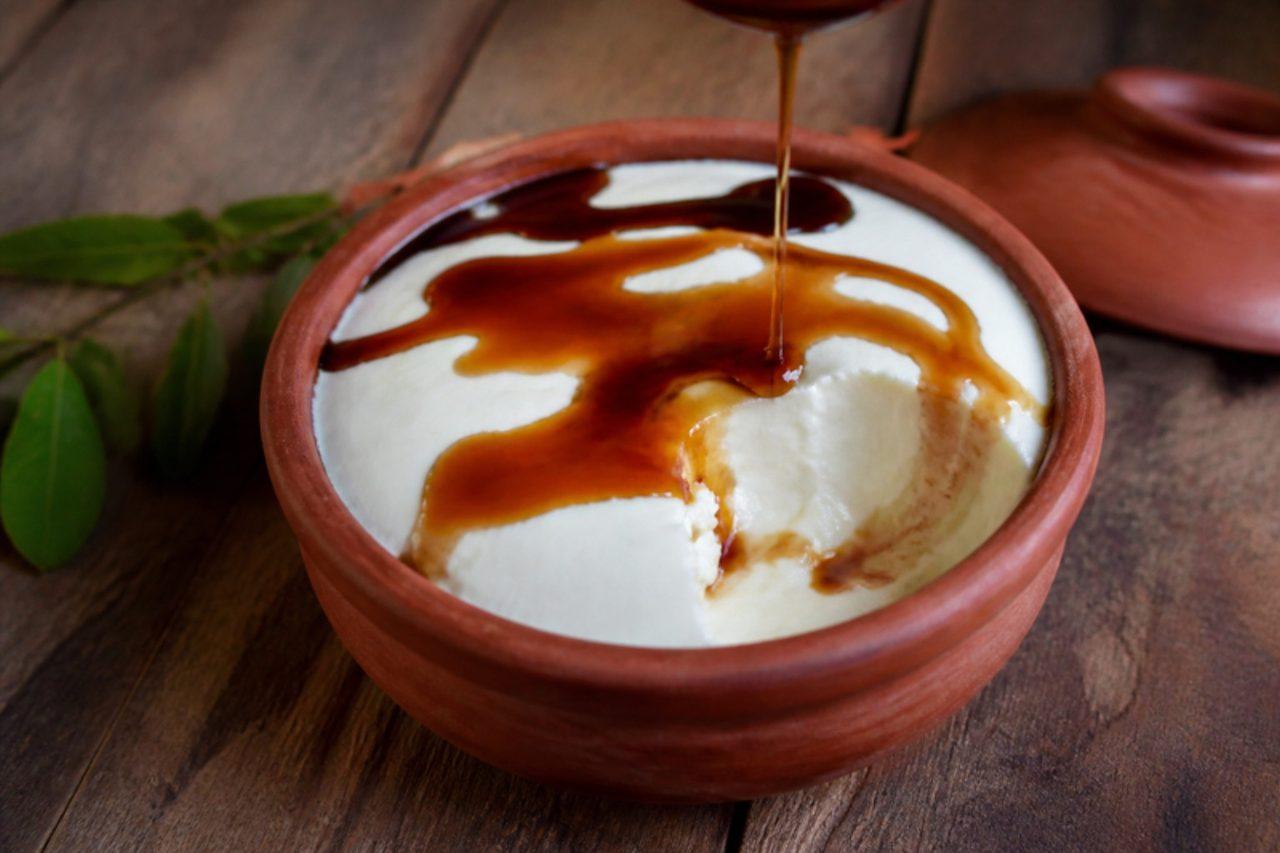
මී කිරි සහ කිතුල් පැණි (meekiri saha kithul pani): thick buffalo milk curd set in clay pots, drenched in kithul palm treacle (plus 8 hours setting)


Driving the southern coast road past Tangalle towards Hambantota, you pass stall after stall stacked with round clay chatties of meekiri, the firm, slightly sour curd made from buffalo milk, with bottles of dark kithul treacle hanging beside them. Turned out into a bowl and flooded with treacle, it is the South's great dessert: cool, rich and tangy against the smoky, toffee-like sweetness of the palm syrup, eaten after lunch or as a snack in the heat of the day. Setting it at home is easy with pasteurised buffalo milk or creamy whole cow's milk, a spoon of live curd and a warm spot overnight. The mistake that ruins most first batches is adding the starter while the milk is still too hot, which kills the culture and leaves you with warm milk in the morning. Chef's tip: unglazed clay pots draw out a little whey, which is why traditional curd is so thick; soak them in water and dry them well before using.
- Total time
- 25 min
- Difficulty
- easy
- Serves
- 4
Ingredients
For the curd
- 4 ¼ cups pasteurised buffalo milkor whole cow's milk plus 100 ml double cream
- 2 tbsp live plain curd or yogurtat room temperature
To serve
- ½ cup kithul treacleor palm jaggery melted with a little water
Shop this recipe on Amazon
Spices & pantry
Fresh ingredients (2)
Links open Amazon in a new tab. As an Amazon Associate, WhatToEat.Today earns from qualifying purchases.
Method
0/5 doneStep 1: Bring 4 ¼ cups pasteurised buffalo milk to the boil in a heavy pan, then simmer over a low heat for 10 minutes, stirring, until reduced by about a tenth and slightly thickened.
15 minStep 2: Take off the heat and cool to about 43–113°F, when you can keep a finger in it for 10 seconds; this takes about 30 minutes.
30 minStep 3: Whisk 2 tbsp live plain curd or yogurt with a ladle of the warm milk until smooth, then stir it back into the pan.
Step 4: Pour into clean, dry clay pots or a ceramic bowl, cover with a cloth or plate and leave in a warm, draught-free place for 6–8 hours until set and wobbly, like soft custard.
Step 5: Chill for at least 2 hours. Serve straight from the pot or turned out, with plenty of ½ cup kithul treacle poured over.
Nutrition per serving
- Calories
- 340 kcal
- Protein
- 10 g
- Carbs
- 32 g
- Fat
- 19 g
- Fibre
- 0 g
Nutrition values are estimates.
KrazyBadal
Good to know
- How long does curd and treacle take?
- About 25 minutes in total: 10 minutes to prepare and 15 minutes to cook.
- How many people does it serve?
- 4 as written. Change the servings above the ingredients and every amount scales to match.
- Is it vegetarian?
- Yes. It has no meat or fish.
- Is it gluten free?
- Yes, as written. Check the labels on stock, sauces and spice mixes, which sometimes contain gluten.
- Can I make it ahead?
- Yes. It keeps well, so you can cook it earlier in the day or the day before and reheat it.
- What can I use instead of pasteurised buffalo milk?
- Oat, soy or almond milk, same amount (use unsweetened for savoury dishes).
- What can I use instead of live plain curd or yogurt?
- Sour cream or buttermilk, same amount.
Reviews
No reviews yet. Be the first to cook it.
Rate this recipe
Sign in to rate and review this recipe.
You might also like

Kartoshka cake
Soviet cafés and school canteens sold these knobbly brown 'potatoes' for a few kopecks, and they began as a thrifty way to use up sponge and biscuit trimmings at the bakery. Crumbs are bound with butter and sweetened condensed milk, flavoured with cocoa and vanilla, shaped into little potatoes, rolled in cocoa and finished with two dabs of pale butter cream for the sprouts. They are fudgy and dense like a brownie truffle, need no oven, and children love making them. Traditional bakers added a spoonful of rum, an optional extra for adult batches only; this version is alcohol-free with vanilla. The usual slip is coarse crumbs, which make the potatoes crack, so blitz them as fine as sand. Chef's tip: chill the shaped potatoes for at least 20 minutes so they hold their shape and slice cleanly.
 Russian

Undu walalu
Walalu means bangles, and these dark, sticky rings of fried urad dal soaked in kithul treacle are a sweet that Sinhala families bring out for Avurudu and for special almsgivings, often made in large batches by an aunt known for her steady hand. A thick, fluffy paste of ground black gram is piped into loops and fried until crisp, then plunged straight into warm treacle, so the rings stay crunchy on the outside while drinking up the syrup. They taste a little like a darker, smokier jalebi, with a toffee finish from the palm treacle. Watery batter is what ruins them; it spreads into flat blobs, so grind the soaked dal with as little water as possible and beat it until light. This recipe uses no asafoetida, so it is naturally gluten free. Chef's tip: pipe the rings onto small squares of baking paper and lower them into the oil paper and all; the paper peels away in seconds.



Polos curry
Polos is the tiny unripe jackfruit picked in the Western and Sabaragamuwa provinces long before it sweetens, and cooked low and slow it becomes one of the island's most loved festival curries, especially at Sinhala and Tamil New Year in April and at wedding lunches. The firm, pale flesh soaks up a very dark roasted curry powder, garlic, ginger, goraka (a smoky souring fruit) and coconut milk until it turns almost black-brown and tastes rich, sour and meaty. Fresh polos is hard to find abroad; tinned young green jackfruit in brine works well. A frequent mistake is not cooking it long enough, which leaves it squeaky; the pieces must be soft enough to break with a spoon. Chef's tip: oil your hands and knife before cutting fresh jackfruit; the sticky white sap washes off oiled skin but not dry skin.
