
AI-generated image
Dak hanmari
닭한마리 (dak hanmari): Dongdaemun's whole-chicken hot pot with potatoes, rice cakes and chilli-vinegar dip

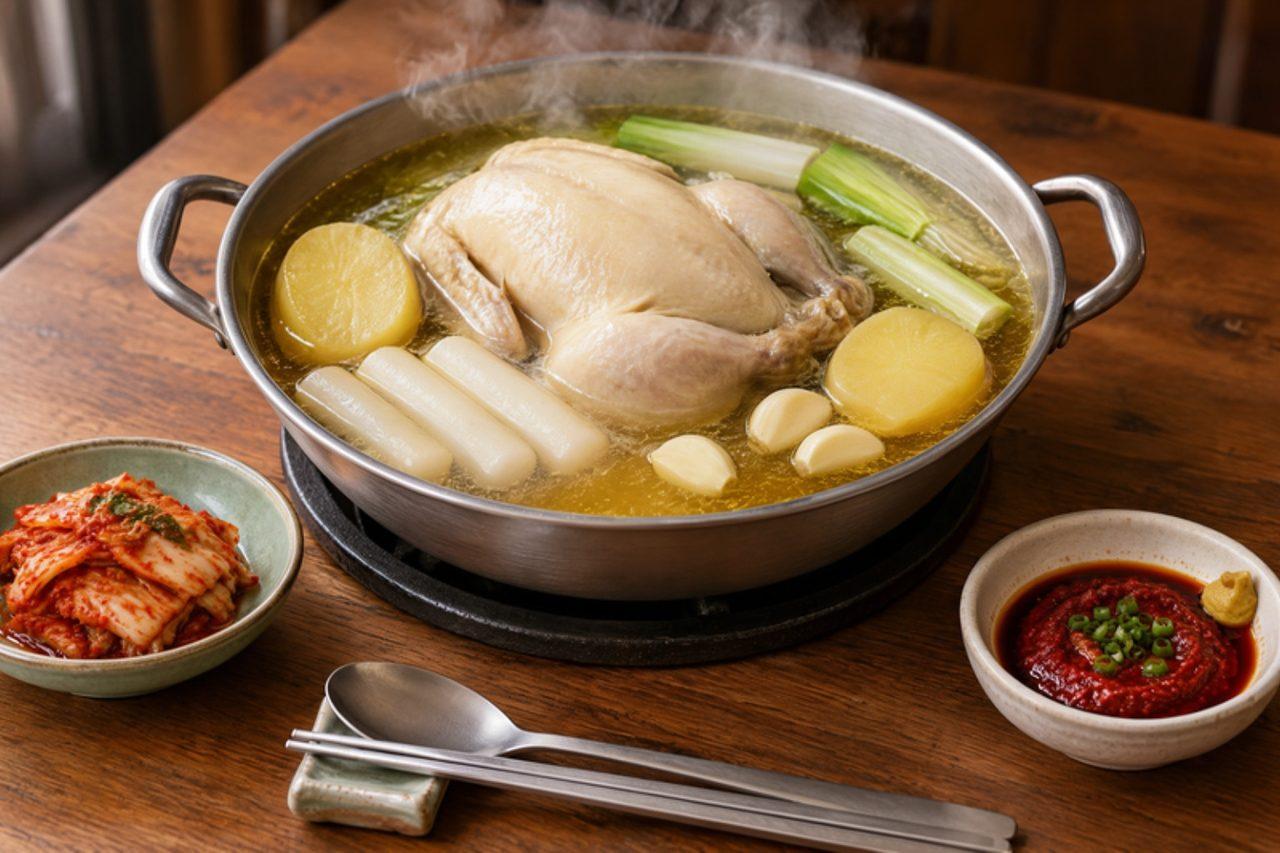
Dak hanmari, literally 'one chicken', comes from the alley of restaurants beside Dongdaemun market in Seoul, where a whole chicken arrives in a basin of pale broth and finishes cooking on a burner at the table. Potatoes and chewy rice cakes simmer alongside, and each piece is dunked in a sharp dipping sauce of chilli, soy, vinegar and mustard that you mix to your own taste. When the chicken is gone, knife-cut noodles go into the broth. The usual mistake is rushing the first simmer: the broth needs its full time with garlic and leek to taste of chicken. Chef's tip: let everyone build their own dip, adding a spoon of hot broth so the chilli flakes bloom.
- Total time
- 75 min
- Difficulty
- easy
- Serves
- 4
Ingredients
For the pot
- 3 ⅛ lb whole chickenrinsed, cut in half
- 10 ½ cups water
- 10 cloves garlic
- 1 ⅛ in fresh gingersliced
- 1 leekcut into 5 cm lengths
- 3 potatoespeeled and thickly sliced
- 7 oz Korean rice cakes (garaetteok)soaked in cold water
- 1 tsp salt
- 10 ½ oz fresh kalguksu or udon noodles (optional)to finish
For the dipping sauce
- 3 tbsp soy sauce
- 3 tbsp rice vinegar
- 2 cloves garliccrushed
- 1 ¾ oz garlic chivescut into 3 cm lengths
Shop this recipe on Amazon
Spices & pantry
Fresh ingredients (6)
Links open Amazon in a new tab. As an Amazon Associate, WhatToEat.Today earns from qualifying purchases.
Method
0/6 doneStep 1: Put the 3 ⅛ lb whole chicken, 10 ½ cups water, 10 cloves garlic, 1 ⅛ in fresh ginger and half the ½ leek in a wide shallow pot. Bring to the boil, skim, then simmer for 35 minutes.
40 minStep 2: Meanwhile mix the 3 tbsp Korean chilli flakes (gochugaru), 3 tbsp soy sauce, 3 tbsp rice vinegar, 1 tsp English or Korean mustard and 2 cloves garlic with 3 tbsp of hot broth for the dipping sauce. Put the 1 ¾ oz garlic chives in a separate bowl.
5 minStep 4: Drain the 7 oz Korean rice cakes (garaetteok) and add them. Simmer 5 minutes until they are soft and chewy. The chicken is done when the thigh juices run clear and the thickest part reads 165°F.
5 minStep 5: Cut the chicken into pieces with scissors in the pot. Each person tops their dip with chives, then dunks chicken, potato and rice cakes into it.
5 minStep 6: To finish, add the 10 ½ oz fresh kalguksu or udon noodles to the remaining broth and simmer 4–5 minutes until tender, adding water if the broth is low.
5 min
Nutrition per serving
- Calories
- 640 kcal
- Protein
- 52 g
- Carbs
- 58 g
- Fat
- 20 g
- Fibre
- 4 g
Nutrition values are estimates.
KrazyBadal
Good to know
- How long does dak hanmari take?
- About 75 minutes in total: 15 minutes to prepare and 60 minutes to cook.
- How many people does it serve?
- 4 as written. Change the servings above the ingredients and every amount scales to match.
- What can I use instead of garlic?
- ½ tsp garlic paste or ⅛ tsp garlic powder per clove.
- What can I use instead of fresh ginger?
- ¼ tsp ground ginger per tbsp fresh (add it with the spices).
Reviews
No reviews yet. Be the first to cook it.
Rate this recipe
Sign in to rate and review this recipe.
You might also like
Tteokbokki
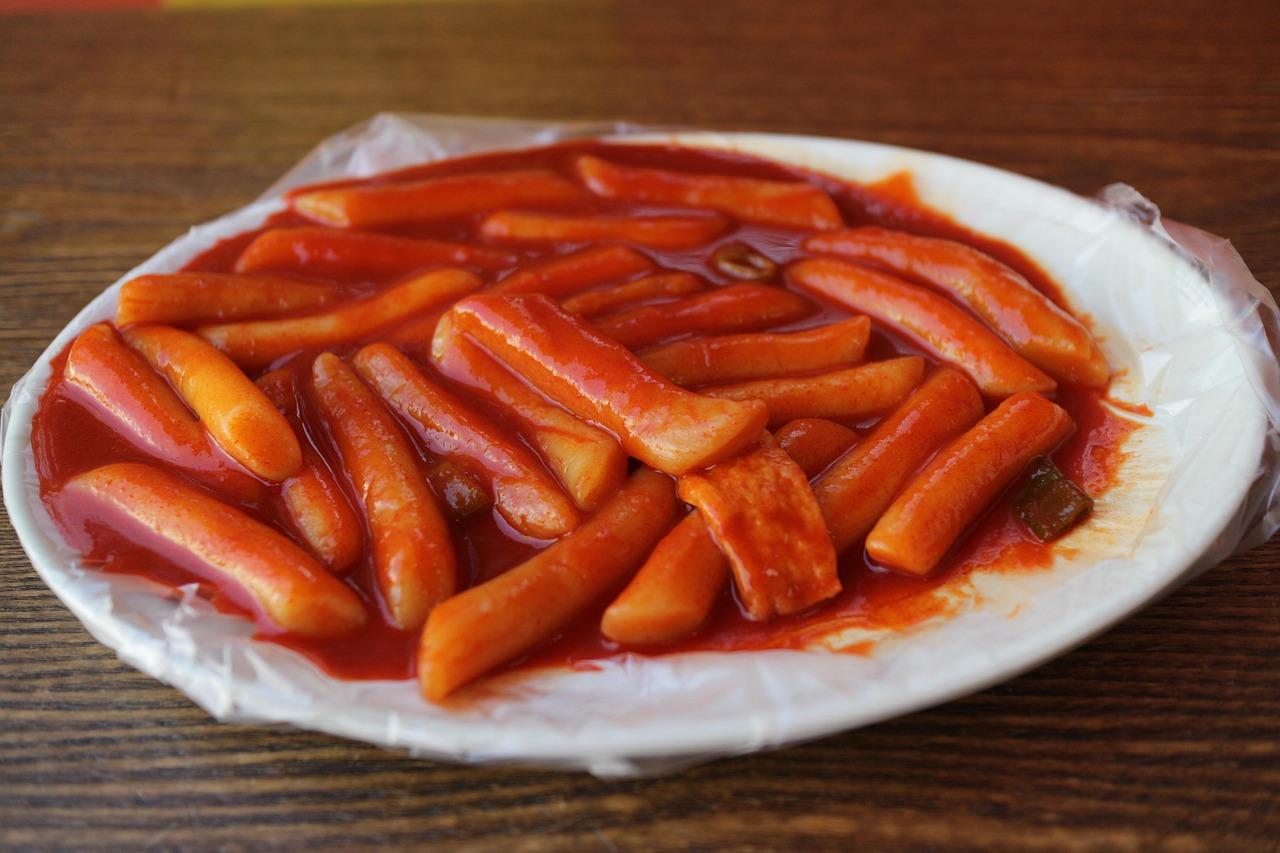
Tteokbokki (떡볶이) is Korea's best-loved street snack: chewy cylinders of rice cake simmered in a thick, glossy, sweet and spicy red sauce. It became a classic in Seoul, where it is sold from street stalls and snack bars in every neighbourhood. Street versions use anchovy stock and fish cakes; this vegan version uses a quick kelp and shiitake stock with cabbage and spring onions, and has all the same punch. Eat it hot, while the rice cakes are soft and stretchy. Chef's tip: keep stirring and scrape the bottom; the rice cakes release starch that thickens the sauce but also catches. The sauce is right when it clings to the spoon in a glossy coat.



Tteokgalbi
Tteokgalbi is rib meat chopped finely, pressed back into neat slabs and grilled, so it's soft enough to eat without struggling with a bone. Two places in South Jeolla claim it: Damyang, the bamboo county, where all-beef patties come with rice steamed in bamboo tubes, and Gwangju's Songjeong district, whose restaurant street near the railway station mixes beef with pork. This home version uses minced beef and pork, seasoned with soy, garlic and pear, then brushed with a soy and honey glaze as it cooks. Serve with rice, lettuce and a few banchan; leftovers are good cold in a lunchbox. Chef's tip: slap the mince against the bowl for a few minutes; it turns sticky and the patties hold together on the grill without any breadcrumbs.
Chicken kdra with almonds
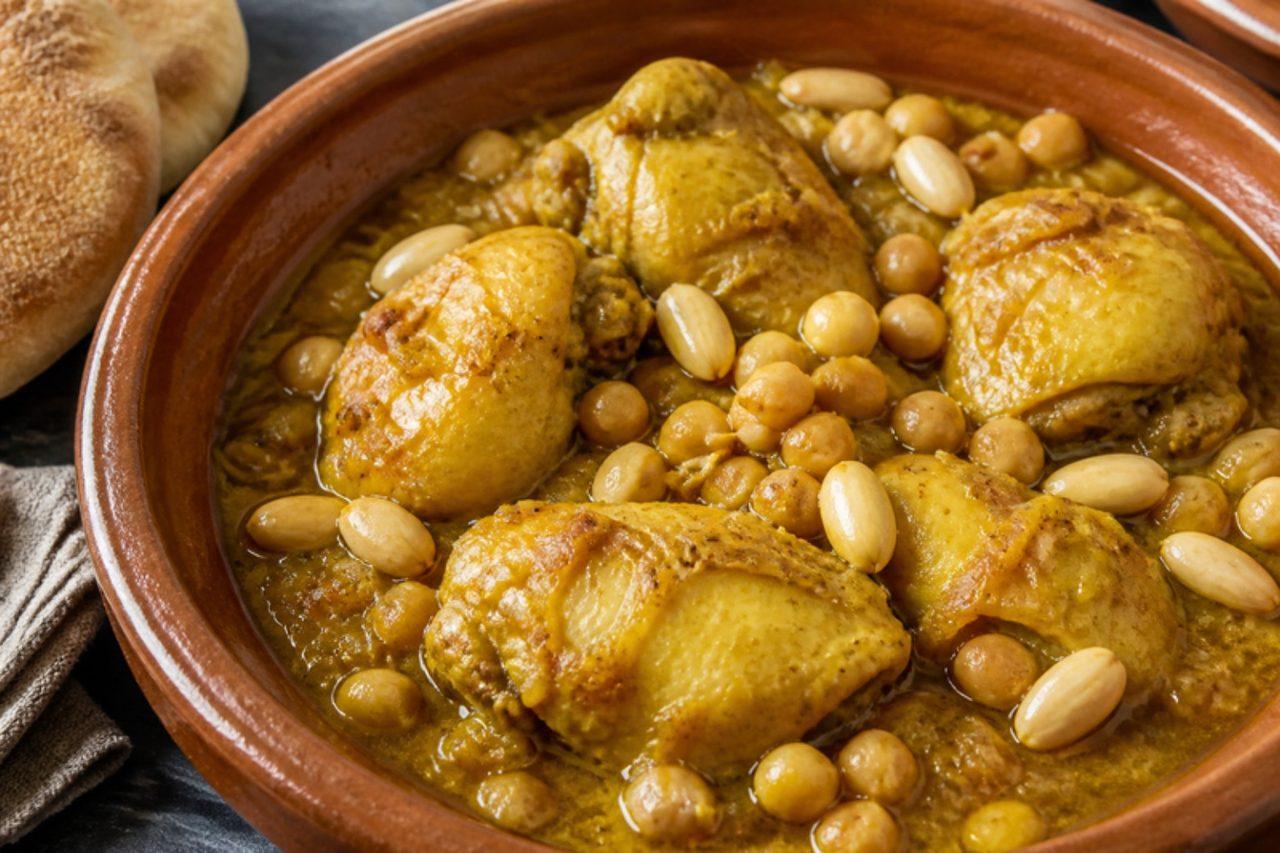
Kdra takes its name from the tall copper pot it was cooked in, and in Fez it is a festive dish for weddings and family gatherings rather than an everyday tagine. The sauce is the point: kilos of onion melted down with smen, saffron, white pepper and cinnamon until it turns pale gold and creamy, with no tomato or paprika at all. Soft chickpeas and almonds simmered until tender go into it, and the whole thing is scooped up with bread. Expect a mellow, perfumed, buttery richness rather than heat. Chef's tip: soak and simmer the blanched almonds with the chicken; they lose their crunch and become creamy like the chickpeas, which is how Fassi cooks like them.
 Moroccan
