
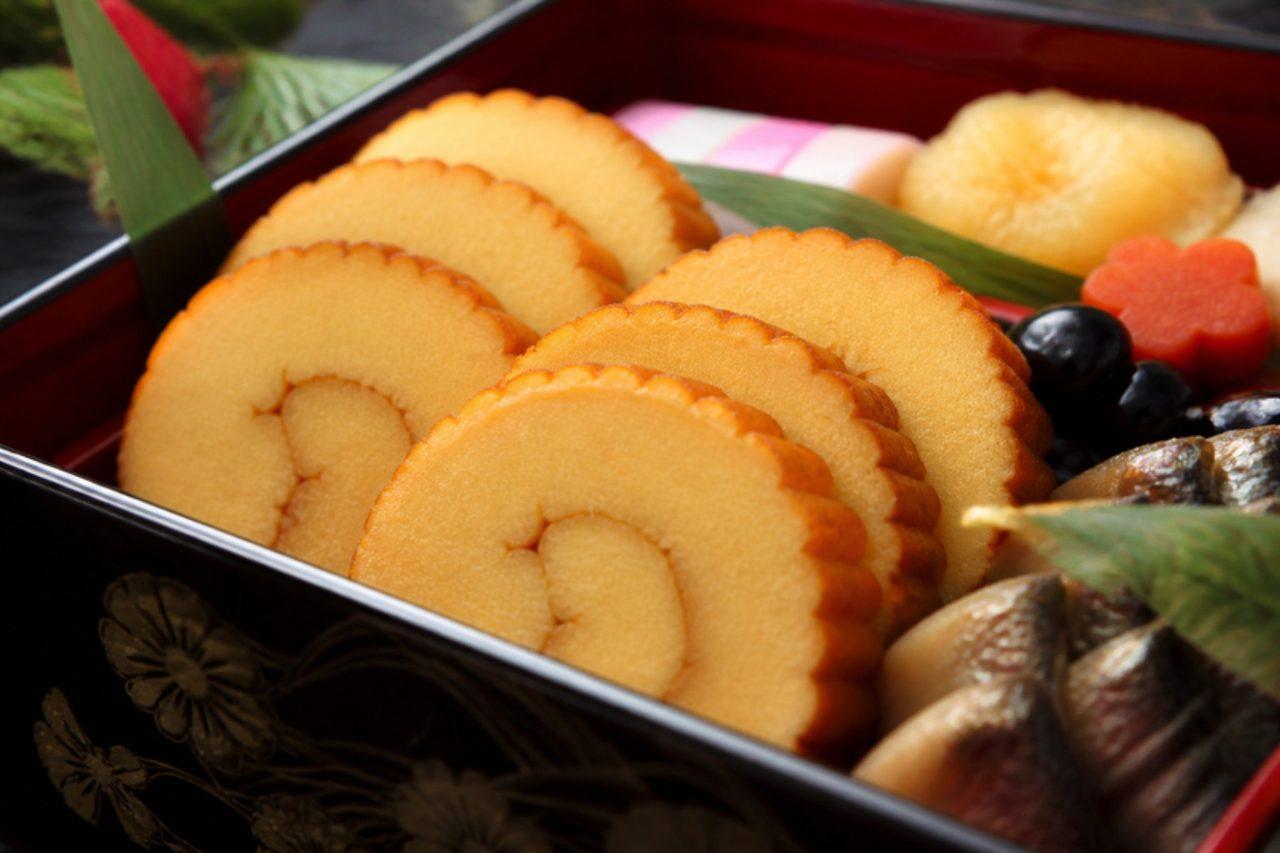
AI-generated image
Datemaki (sweet rolled omelette)
Golden, ridged swirls of sweet egg and fish paste baked and rolled for New Year

Datemaki is the sunny spiral every Shōgatsu osechi box in Japan is built around. Its rolled shape looks like an old scroll, a wish for learning and good fortune in studies, while 'date' means stylish or showy, fitting its bright gold colour. Blending the eggs with fish paste makes it bouncy and spongy rather than eggy, more like a sweet, savoury cake, and the bamboo mat leaves pretty ridges on the outside. It uses mirin, a sweet rice wine; for no alcohol, use 1 tbsp water plus 1 tsp sugar. Slice and serve cold in the osechi box, or with green tea for a New Year breakfast. Chef's tip: roll it while it is still warm and floppy; once it cools it cracks.
- Total time
- 60 min
- Difficulty
- medium
- Serves
- 8
Ingredients
- 5 eggslarge, at room temperature
- 3 ½ oz hanpen or white fish paste (surimi)hanpen torn into pieces
- 3 tbsp sugar
- 1 tbsp honey
- 1 tbsp mirinor 1 tbsp water + 1 tsp sugar for no alcohol
- 1 pinch salt
- 1 tsp neutral oilfor the tin
Shop this recipe on Amazon
Fresh ingredients (1)
Links open Amazon in a new tab. As an Amazon Associate, WhatToEat.Today earns from qualifying purchases.
Method
0/7 doneStep 1: Heat the oven to 375°F (350°F fan). Line a 20 x 20 cm square tin with baking paper and brush it with 1 tsp neutral oil.
5 minStep 2: Blend 3 ½ oz hanpen or white fish paste (surimi) with 3 tbsp sugar, 1 tbsp honey, 1 tbsp mirin, 1 tsp light soy sauce (usukuchi) and 1 pinch salt until completely smooth, then add 5 eggs one at a time and blend for 1 minute until the batter is pale and silky with no lumps.
5 minStep 3: Pour into the tin, tap it on the worktop to burst big bubbles and bake for 18–22 minutes, until the top is deep golden brown, the centre springs back when pressed and a skewer comes out clean. The egg must be fully set.
20 minStep 4: Turn the omelette out browned side down onto an oni-sudare (thick bamboo mat) or a sushi mat, peel off the paper and make 3–4 shallow cuts across the pale side near the end where you start rolling, so it curls easily.
3 minStep 5: Roll it up tightly in the mat from the cut end while warm, pressing firmly. Common mistake: waiting until it has cooled; the omelette becomes stiff and splits instead of rolling.
2 minStep 6: Secure the mat with rubber bands and leave it seam-side down until cool, about 15 minutes, then wrap in cling film and chill for at least 1 hour to set the spiral.
15 minStep 7: Unroll, slice into 1.5–2 cm rounds with a sharp knife and serve cold. It keeps 3 days in the fridge. For a variation without fish, use 100 g firm tofu, pressed and patted dry, instead of the hanpen.
3 min
Nutrition per serving
- Calories
- 110 kcal
- Protein
- 6 g
- Carbs
- 11 g
- Fat
- 4 g
- Fibre
- 0 g
Nutrition values are estimates.
KrazyBadal
Good to know
- How long does datemaki (sweet rolled omelette) take?
- About 60 minutes in total: 15 minutes to prepare and 45 minutes to cook.
- How many people does it serve?
- 8 as written. Change the servings above the ingredients and every amount scales to match.
- Can I make it ahead?
- Yes. It keeps well, so you can cook it earlier in the day or the day before and reheat it.
- What can I use instead of eggs?
- 1 tbsp ground flaxseed + 3 tbsp water per egg, left for 5 minutes (baking only; vegan).
- What can I use instead of sugar?
- Caster sugar, same amount.
Reviews
No reviews yet. Be the first to cook it.
Rate this recipe
Sign in to rate and review this recipe.
You might also like

Miso soup
Miso soup (味噌汁) is drunk every day in homes all over Japan, at breakfast as well as dinner, beside a bowl of rice. The base is dashi; this vegan version uses kombu and dried shiitake instead of bonito, which gives it a deep, rounded flavour. Silken tofu and wakame seaweed are the classic fillings. It takes ten minutes; just remember not to boil the miso. Chef's tip: add the miso at the very end and never let it boil. Boiling kills the miso's fresh, fermented aroma; Japanese cooks say the soup should only 'smile', with the surface barely trembling.


Yaki onigiriGrilled rice balls
Yaki onigiri (焼きおにぎり) are rice balls grilled until they form a crisp, toasty crust, then brushed with soy sauce glaze. They are eaten all over Japan, at izakaya, at barbecues and from the freezer section, as a snack or with miso soup. The inside stays soft and steamy while the outside crackles. Best eaten hot, straight from the pan. Chef's tip: let the shaped rice balls dry for 10 minutes before they go in the pan. A drier surface forms a better crust and won't stick, and the glaze goes on only at the end so it doesn't burn.

Sabudana khichdiSago with peanuts and potato
Sabudana khichdi is the dish that sees Maharashtra through every vrat (fast), from Navratri to Ekadashi, but it's so good that people eat it any day of the week. Soaked sago pearls are tossed in a pan with crushed roasted peanuts, cubes of potato, cumin and green chilli until each pearl turns glassy and separate, then finished with lemon and coriander. It's soft, chewy, nutty and gently hot. Fasting rules vary from family to family, so check yours; this version uses rock salt and no asafoetida, onion or garlic. Traditionally it's cooked in ghee; use ghee instead of oil if you aren't keeping it vegan. Chef's tip: soak the sago in just enough water to cover by the height of the pearls themselves, no more; too much water is the reason khichdi turns into one sticky lump.
 Indian
