
AI-generated image
Dulceață de nuci verzi
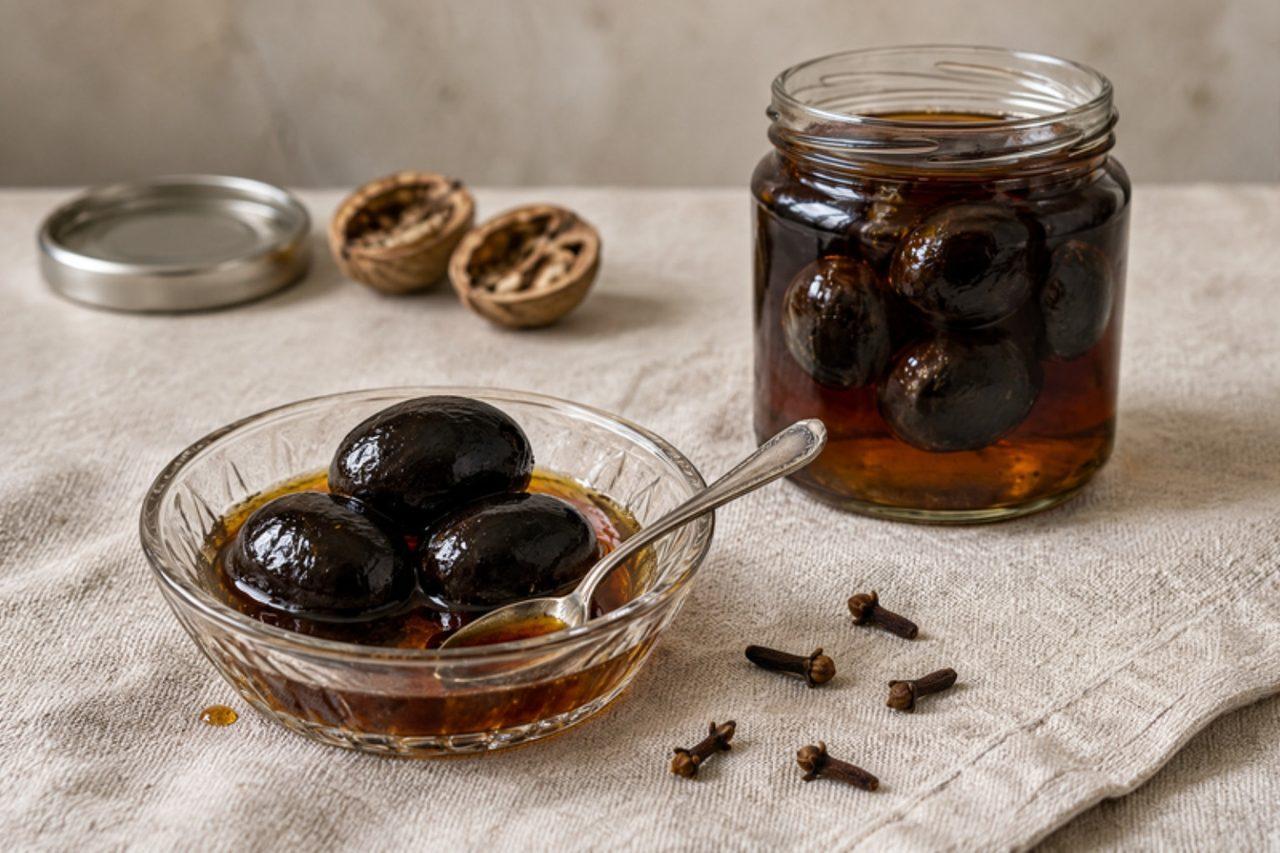
Dulceață de nuci verzi: unripe walnuts soaked for a week, then candied whole in clove syrup until black, glossy and tender



Around Sânziene in late June, families in Moldavia and Transylvania climb the walnut trees to gather nuts that are still green and soft, before the shell has begun to form. A week of patient work follows: peeling, pricking and soaking in water changed morning and evening until the harsh bitterness leaches out, then slow simmering in a syrup scented with cloves and lemon until the nuts turn glossy black. The finished dulceață is offered the old way, one walnut on a small glass saucer with a teaspoon and a glass of cold water for a visitor, or with coffee on a winter afternoon. Each nut is tender all the way through with a faint crunch at the heart, tasting of caramel, cloves and something resinous and bittersweet. The decisive mistake is picking too late: if a darning needle no longer slides easily through the centre, the shell is hardening and the nuts will stay woody whatever you do. The syrup is done when a drop holds its shape on a cold plate. Chef's tip: wear gloves for every stage, as green walnut juice stains skin brown-black for days.
- Total time
- 175 min
- Difficulty
- hard
- Serves
- 24
Ingredients
For the walnuts
- 2 ¼ lb green walnutsabout 50–60, picked late June; a needle must pass straight through
- cold water, for soaking and blanchingseveral litres over the week
For the syrup
- 2 ⅝ lb sugar
- 2 ½ cups water
- 20 cloves
- 1 lemonjuice only; or 1 tsp citric acid
- 1 vanilla pod (optional)split
Shop this recipe on Amazon
What you'll need
Spices & pantry
Fresh ingredients (1)
Links open Amazon in a new tab. As an Amazon Associate, WhatToEat.Today earns from qualifying purchases.
Method
0/10 doneStep 1: Put on rubber gloves. Test a few 2 ¼ lb green walnuts with a needle; it should pass through the centre with no grit. Peel off the thin green skin with a vegetable peeler and drop each nut straight into a bowl of cold cold water, for soaking and blanching so it does not blacken unevenly.
40 minStep 2: Prick each nut 3–4 times right through with a skewer or fork, which lets the bitterness out and the syrup in.
15 minStep 3: Cover the nuts with fresh cold water and leave them in a cool place or the fridge for 6–7 days, changing the water morning and evening. The water starts out brown as strong tea; the nuts are ready when it stays almost clear and a thin slice tastes only gently bitter.
Step 4: Drain, cover with fresh water in a large pan, bring to a boil and boil for 10 minutes. Drain and repeat twice more with fresh water each time, until the nuts are soft enough for a skewer to go in easily.
35 minStep 5: Make the syrup: bring the 2 ⅝ lb sugar and 2 ½ cups water to a boil in a wide pan over a medium heat, stirring until clear, then boil for 5 minutes.
8 minStep 6: Add the drained nuts, the 20 cloves and the 1 vanilla pod if using. Simmer gently for 10 minutes, then take off the heat, cover with a clean cloth and leave for 12 hours so the nuts drink in the syrup.
10 minStep 7: Next day, bring back to a gentle simmer and cook for 30–40 minutes, stirring carefully, until the nuts are black and glossy and the syrup is thick: a drop on a cold plate should hold its shape (about 225°F). Stir in the 1 lemon juice for the last 5 minutes; it keeps the syrup from crystallising and adds the acidity it needs for keeping.
40 minStep 8: Meanwhile, wash 4–5 jars of 300 ml and their lids in hot soapy water, rinse, and dry the jars in a 250°F oven for 10 minutes; simmer the lids for 5 minutes.
15 minStep 9: Pack the hot nuts into the hot jars and pour in syrup to cover them completely, leaving 1 cm headspace. Wipe the rims and close. For cupboard storage, boil the closed jars covered by 3 cm of water for 10 minutes, then leave to cool undisturbed.
15 minStep 10: Let them rest for 2 weeks before eating. Sealed jars keep a year in a cool, dark place; once opened, keep in the fridge for 2–3 months and always use a clean, dry spoon. Discard if you see mould, the syrup fizzes or smells fermented, or the lid bulges.
Nutrition per serving
- Calories
- 175 kcal
- Protein
- 1 g
- Carbs
- 40 g
- Fat
- 2 g
- Fibre
- 1 g
Nutrition values are estimates.
KrazyBadal
Good to know
- How long does dulceață de nuci verzi take?
- About 175 minutes in total: 75 minutes to prepare and 100 minutes to cook.
- How many people does it serve?
- 24 as written. Change the servings above the ingredients and every amount scales to match.
- Is it vegan?
- Yes. It has no meat, fish, dairy or eggs.
- Is it gluten free?
- Yes, as written. Check the labels on stock, sauces and spice mixes, which sometimes contain gluten.
- Can I make it ahead?
- Yes. It keeps well, so you can cook it earlier in the day or the day before and reheat it.
- What can I use instead of green walnuts?
- Pecans or chocolate chips, same amount.
- What can I use instead of sugar?
- Caster sugar, same amount.
Reviews
No reviews yet. Be the first to cook it.
Rate this recipe
Sign in to rate and review this recipe.
You might also like
Kartoshka cake
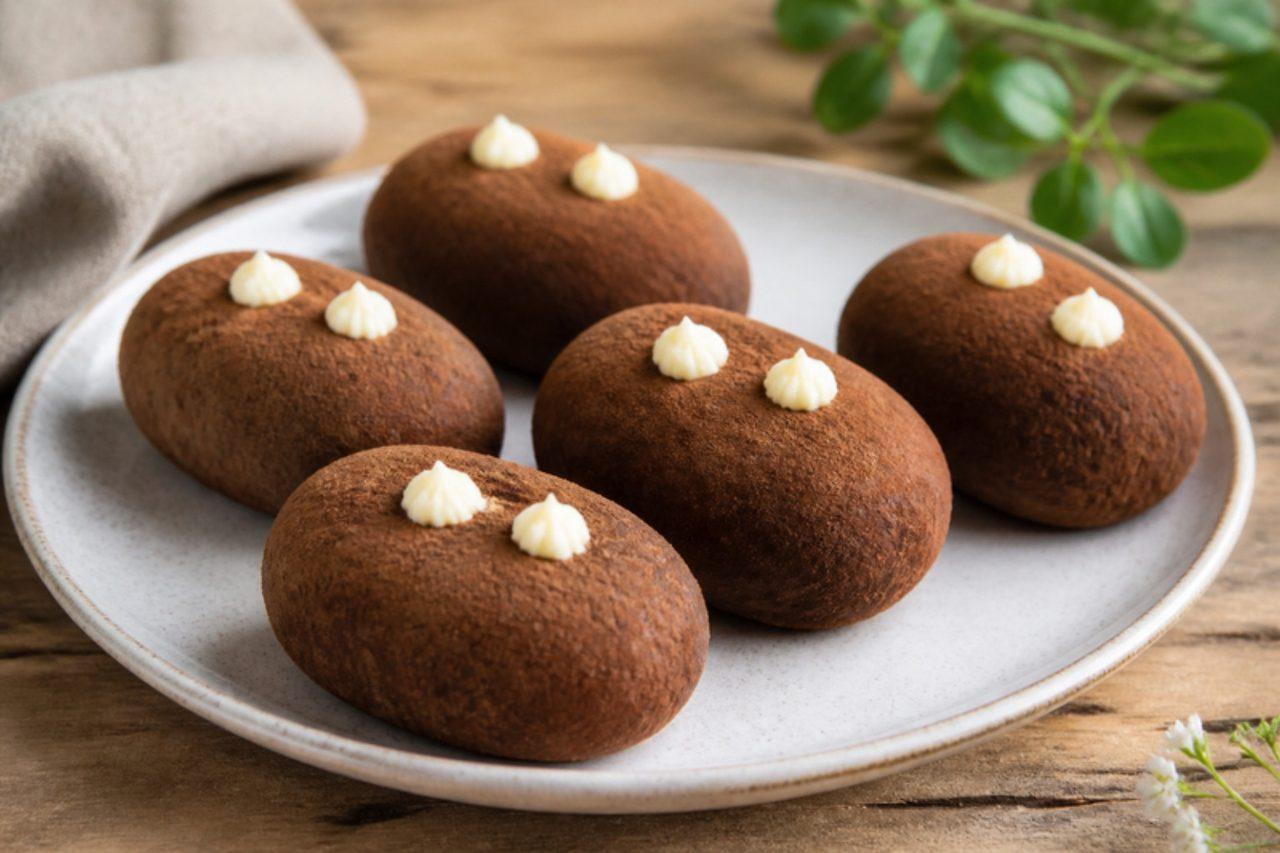
Soviet cafés and school canteens sold these knobbly brown 'potatoes' for a few kopecks, and they began as a thrifty way to use up sponge and biscuit trimmings at the bakery. Crumbs are bound with butter and sweetened condensed milk, flavoured with cocoa and vanilla, shaped into little potatoes, rolled in cocoa and finished with two dabs of pale butter cream for the sprouts. They are fudgy and dense like a brownie truffle, need no oven, and children love making them. Traditional bakers added a spoonful of rum, an optional extra for adult batches only; this version is alcohol-free with vanilla. The usual slip is coarse crumbs, which make the potatoes crack, so blitz them as fine as sand. Chef's tip: chill the shaped potatoes for at least 20 minutes so they hold their shape and slice cleanly.
 Russian

Undu walalu
Walalu means bangles, and these dark, sticky rings of fried urad dal soaked in kithul treacle are a sweet that Sinhala families bring out for Avurudu and for special almsgivings, often made in large batches by an aunt known for her steady hand. A thick, fluffy paste of ground black gram is piped into loops and fried until crisp, then plunged straight into warm treacle, so the rings stay crunchy on the outside while drinking up the syrup. They taste a little like a darker, smokier jalebi, with a toffee finish from the palm treacle. Watery batter is what ruins them; it spreads into flat blobs, so grind the soaked dal with as little water as possible and beat it until light. This recipe uses no asafoetida, so it is naturally gluten free. Chef's tip: pipe the rings onto small squares of baking paper and lower them into the oil paper and all; the paper peels away in seconds.
 Sri Lankan



Marquesitas
Evening in Mérida's Plaza Grande means the smell of marquesitas: thin batter pressed in hot hinged irons until crisp, then rolled like a cigar around grated Edam cheese and a sweet filling such as cajeta, chocolate-hazelnut spread or jam. Edam came to the Yucatán through the port trade with the Netherlands and became part of the local cooking, and the salty-sweet combination is the whole point. At home you can cook them in a thin, wide frying pan. Edam is usually made with animal rennet, so check the label or use a vegetarian Gouda-style cheese. Chef's tip: roll while the crêpe is still in the pan and hot; within seconds it hardens and will crack.
 Mexican