
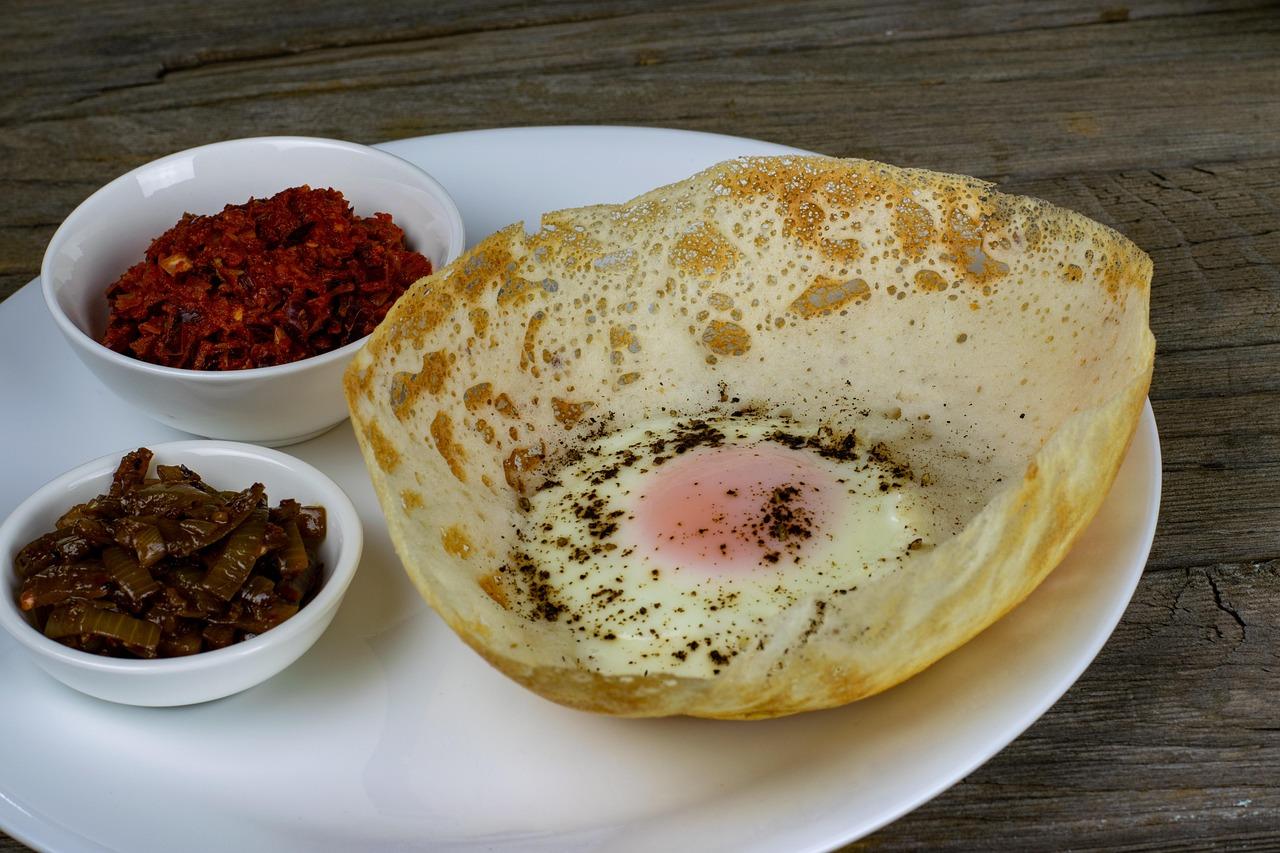
Egg hoppers
Biththara appa: bowl-shaped Sri Lankan rice and coconut pancakes with an egg set in the middle


Hoppers (appa) are the crisp-edged, bowl-shaped pancakes that street cooks in Colombo, Kandy and Jaffna make in rows of small round pans every evening; an egg hopper has an egg cracked into the soft centre so it steams to a runny yolk. The batter of rice flour, coconut milk and yeast (traditionally toddy) is left to ferment until it's light and slightly sour, which gives the lacy, golden rim and the spongy middle. They're eaten hot with pol sambol and lunu miris, and plain hoppers come with sweet jaggery for dessert. Kerala's appam is a cousin, but Sri Lankan hoppers are thinner and crisper and the egg version is their own. The common mistake is a batter that's too thick, which gives heavy, pale hoppers; it should flow like single cream. Chef's tip: swirl the pan in one quick full turn the moment the batter goes in, then cover at once.
- Total time
- 60 min
- Difficulty
- medium
- Serves
- 4
Ingredients
For the batter
For cooking
To serve
Shop this recipe on Amazon
What you'll need
Spices & pantry
Fresh ingredients (1)
Links open Amazon in a new tab. As an Amazon Associate, WhatToEat.Today earns from qualifying purchases.
Method
0/9 doneStep 1: Mix 1 tsp instant dried yeast and 2 tsp sugar into ¾ cup warm water and leave for 5 minutes until foamy.
5 minStep 2: In a large bowl mix 9 oz fine white rice flour, 2 tbsp cooked white rice and the yeast water, then beat in ¾ cup coconut milk to make a smooth, thick batter with no lumps.
5 minStep 3: Cover and leave in a warm place for 4–6 hours (or overnight in a cool kitchen), until it has doubled, smells pleasantly sour and is full of bubbles.
300 minStep 4: Stir in the rest of ¾ cup coconut milk, ¾ tsp salt and ¼ tsp bicarbonate of soda. The batter should be thinner than pancake batter and flow like single cream; add water a tablespoon at a time if needed. Rest for 10 minutes.
10 minStep 5: Heat a hopper pan (appachatti) or a small 18–20 cm non-stick wok with a lid over a medium heat. Wipe it with a little 1 tbsp vegetable oil on kitchen paper. It's ready when a drop of batter sizzles gently.
Step 6: Pour in about 60 ml batter, lift the pan off the heat and swirl it in one quick, full circle so a thin layer coats the sides and the rest pools in the middle. Put it back on the heat.
Step 7: Crack one of the 8 eggs into the centre, sprinkle with a pinch of ½ tsp ground black pepper and a little salt, cover and cook over a medium-low heat for 3–4 minutes, until the edges are golden brown and lift away from the pan and the egg white is set but the yolk still wobbles.
4 minStep 8: Ease the hopper out with a thin spatula and keep warm while you make the rest, wiping the pan with oil between each one. If the edges stay pale, the pan isn't hot enough; if they burn before the centre sets, turn it down.
25 minStep 9: Serve straight away, while the rims are crisp, with 5 ½ oz pol sambol and lunu miris.
Nutrition per serving
- Calories
- 410 kcal
- Protein
- 13 g
- Carbs
- 52 g
- Fat
- 17 g
- Fibre
- 2 g
Nutrition values are estimates.
KrazyBadal
Good to know
- How long does egg hoppers take?
- About 60 minutes in total: 20 minutes to prepare and 40 minutes to cook.
- How many people does it serve?
- 4 as written. Change the servings above the ingredients and every amount scales to match.
- Is it vegetarian?
- Yes. It has no meat or fish.
- Is it gluten free?
- Yes, as written. Check the labels on stock, sauces and spice mixes, which sometimes contain gluten.
- What can I use instead of sugar?
- Caster sugar, same amount.
- What can I use instead of cooked white rice?
- Any long-grain rice, same amount.
Reviews
No reviews yet. Be the first to cook it.
Rate this recipe
Sign in to rate and review this recipe.
You might also like

Polos curry
Polos is the tiny unripe jackfruit picked in the Western and Sabaragamuwa provinces long before it sweetens, and cooked low and slow it becomes one of the island's most loved festival curries, especially at Sinhala and Tamil New Year in April and at wedding lunches. The firm, pale flesh soaks up a very dark roasted curry powder, garlic, ginger, goraka (a smoky souring fruit) and coconut milk until it turns almost black-brown and tastes rich, sour and meaty. Fresh polos is hard to find abroad; tinned young green jackfruit in brine works well. A frequent mistake is not cooking it long enough, which leaves it squeaky; the pieces must be soft enough to break with a spoon. Chef's tip: oil your hands and knife before cutting fresh jackfruit; the sticky white sap washes off oiled skin but not dry skin.



Sabudana khichdi
Sabudana khichdi is the dish that sees Maharashtra through every vrat (fast), from Navratri to Ekadashi, but it's so good that people eat it any day of the week. Soaked sago pearls are tossed in a pan with crushed roasted peanuts, cubes of potato, cumin and green chilli until each pearl turns glassy and separate, then finished with lemon and coriander. It's soft, chewy, nutty and gently hot. Fasting rules vary from family to family, so check yours; this version uses rock salt and no asafoetida, onion or garlic. Traditionally it's cooked in ghee; use ghee instead of oil if you aren't keeping it vegan. Chef's tip: soak the sago in just enough water to cover by the height of the pearls themselves, no more; too much water is the reason khichdi turns into one sticky lump.
 Indian
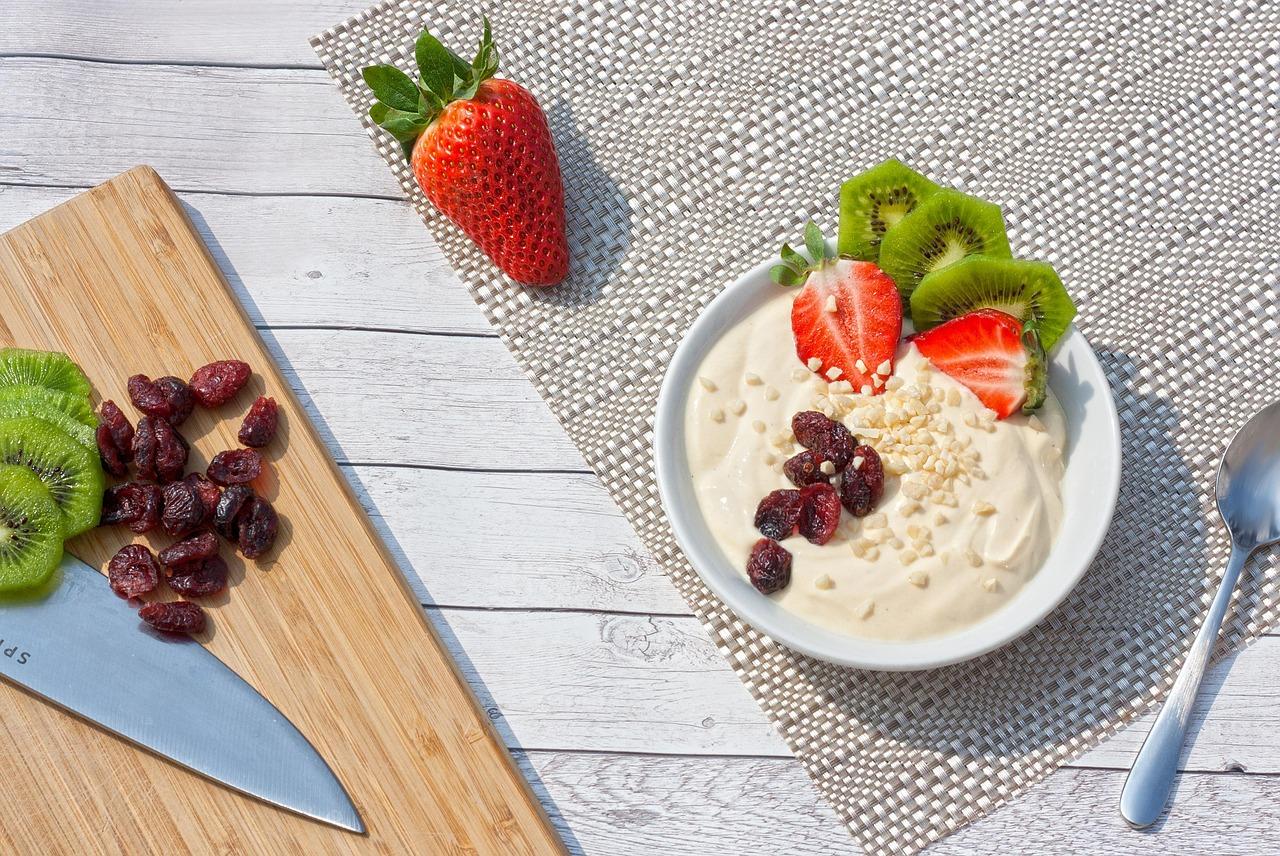
Muesli
A soaked, Bircher-style muesli you stir together the night before. The oats soften in the yogurt overnight and the grated apple keeps it fresh and juicy. In the morning, add the strawberries and breakfast is ready. Any berries work in place of the strawberries.