

AI-generated image
Mombar (rice-stuffed beef casings)
Mombar: beef casings filled with herby tomato rice, simmered until tender and fried until crisp

Mombar is festival food: in the days after Eid al-Adha, when the butchers have plenty of cleaned casings, families across Cairo and the Delta settle down to stuff them together, and street cooks in popular neighbourhoods sell crisp coils of it by weight. The filling is Egyptian short-grain rice with tomato, onion, dill, parsley and coriander, which swells inside the casing as it simmers, so each bite is soft, herby rice wrapped in a thin, crackling skin. It is eaten hot as a main dish or a side to roast meat, with lemon and a plate of pickles. Buy the casings ready-cleaned from a butcher; this recipe assumes they have been. The commonest mistake is overfilling the casings; packed full, the rice swells and they burst in the pot. Chef's tip: fill each length only two-thirds full; the rice doubles in size and an overstuffed casing bursts in the pot.
- Total time
- 145 min
- Difficulty
- hard
- Serves
- 6
Ingredients
For the casings
- 1 ⅛ lb beef casingsabout 4 m, cleaned by the butcher
- 4 tbsp white vinegar
- 3 tbsp plain flourfor rubbing the casings
For the filling
- 14 oz short-grain riceEgyptian or pudding-style rice, rinsed and drained
- 2 onionsgrated
- 3 tomatoesgrated, skins discarded
- 2 tbsp tomato paste
- ½ oz dillfinely chopped
- ½ oz flat-leaf parsleyfinely chopped
- ½ oz coriander leavesfinely chopped
- 1 tsp dried mint
- 1 tsp ground cumin
- 1 tsp ground coriander
- ½ tsp chilli flakes
- 2 ½ tsp saltdivided
- ½ tsp ground black pepper
- 4 tbsp vegetable oilfor the filling
For simmering and frying
- 1 onionhalved
- ¾ cup vegetable oilfor shallow-frying
- 1 lemon (optional)cut into wedges, to serve
Shop this recipe on Amazon
Spices & pantry
Fresh ingredients (9)
Links open Amazon in a new tab. As an Amazon Associate, WhatToEat.Today earns from qualifying purchases.
Method
0/9 doneStep 1: Turn 1 ⅛ lb beef casings inside out under running cold water and rinse well, then rub them with 3 tbsp plain flour and rinse again; this lifts off any remaining film. Soak in cold water with 4 tbsp white vinegar and 1 tsp of 1 tsp salt for 20 minutes, then rinse once more and turn right side out. Keep them in the fridge until the filling is ready.
20 minStep 2: Mix 14 oz short-grain rice, 2 onions, 3 tomatoes, 2 tbsp tomato paste, ½ oz dill, ½ oz flat-leaf parsley, ½ oz coriander leaves, 1 tsp dried mint, 1 tsp ground cumin, 1 tsp ground coriander, ½ tsp chilli flakes, ½ tsp ground black pepper, 4 tbsp vegetable oil and 1 tsp of 1 tsp salt in a bowl. It should look loose and wet.
Step 3: Cut the casings into 50 cm lengths and tie one end of each with kitchen string. Fit the open end over a wide funnel or the cut-off neck of a plastic bottle and push the filling in, squeezing it down the casing with your fingers.
Step 4: Stop when each casing is only two-thirds full; it should feel floppy, not tight. Tie the open end. Prick each length 5–6 times with a needle so steam can escape.
Step 5: Put the casings in a wide pot with 1 onion, 4 green cardamom pods, 2 bay leaves and the rest of ½ tsp salt and cover with cold water by 3 cm. Bring slowly to the boil over a medium heat.
10 minStep 6: Simmer gently, half-covered, for 50–60 minutes, until the rice inside is completely soft when you squeeze a casing and the skin is tender. A rolling boil can split them, so keep the bubbles lazy.
55 minStep 7: Lift out the casings and drain on a rack for 10 minutes so the skins dry; wet skins spit badly in the oil. Cut into 10 cm pieces or leave as coils. They can be chilled for up to 2 days at this stage.
10 minStep 8: Heat ¾ cup vegetable oil in a wide frying pan over a medium-high heat. Fry the mombar in batches, turning, for 6–8 minutes until deep brown, blistered and crisp all over. Stand back and use a splatter guard.
15 minStep 9: Drain on kitchen paper and serve hot with 1 lemon.
Nutrition per serving
- Calories
- 470 kcal
- Protein
- 14 g
- Carbs
- 62 g
- Fat
- 18 g
- Fibre
- 3 g
Nutrition values are estimates.
KrazyBadal
Good to know
- How long does mombar (rice-stuffed beef casings) take?
- About 145 minutes in total: 60 minutes to prepare and 85 minutes to cook.
- How many people does it serve?
- 6 as written. Change the servings above the ingredients and every amount scales to match.
- Can I make it ahead?
- Yes. It keeps well, so you can cook it earlier in the day or the day before and reheat it.
- What can I use instead of white vinegar?
- Cider vinegar or rice vinegar, same amount.
- What can I use instead of plain flour?
- Self-raising flour, same amount (then leave out the baking powder).
Reviews
No reviews yet. Be the first to cook it.
Rate this recipe
Sign in to rate and review this recipe.
You might also like
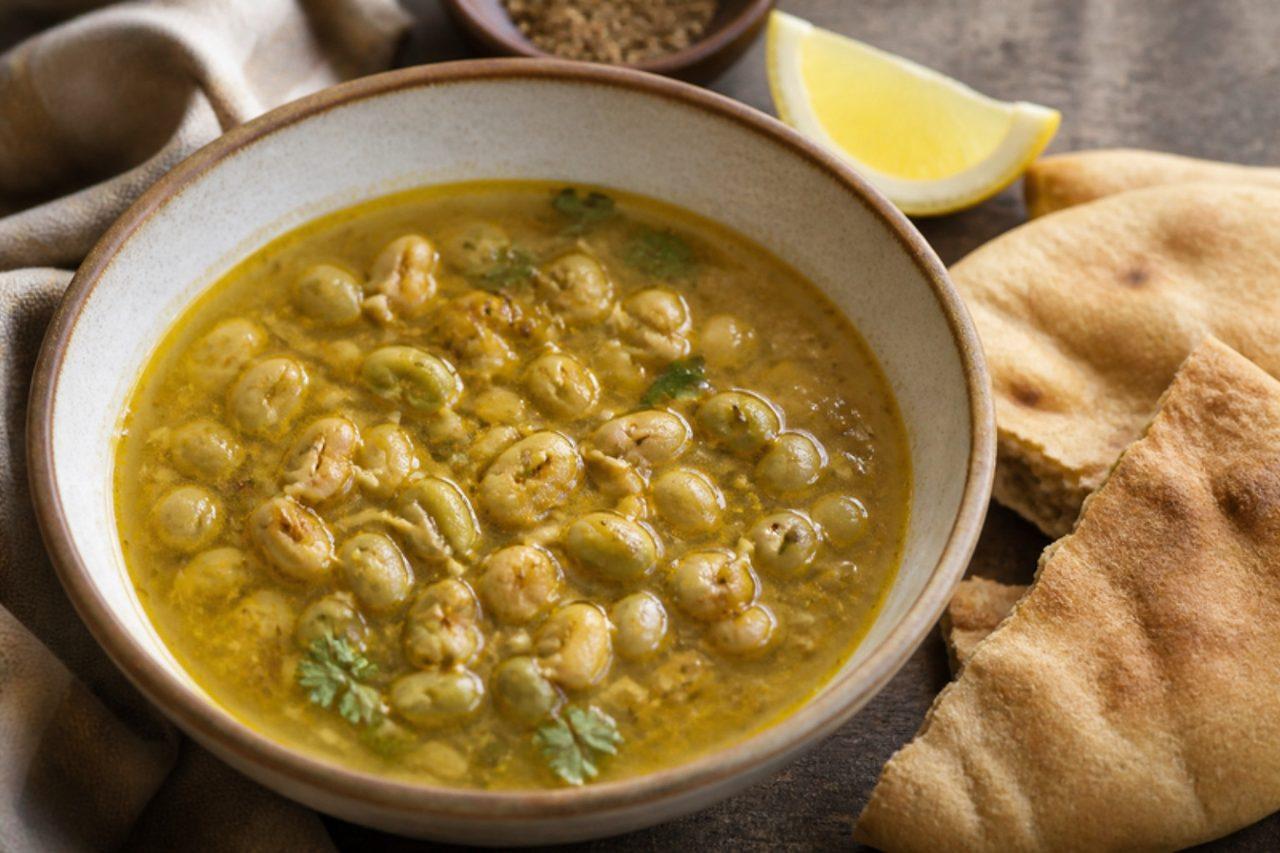
Ful nabitSprouted fava bean soup
Sprouted beans are ladled out with their cooking liquor in Cairo homes when the weather turns cold or someone is feeling run down, and Egyptians swear by the broth as a pick-me-up. The beans are soaked and left to sprout for a few days, then simmered with onion, garlic and cumin into a light, earthy soup that is sharpened at the table with plenty of lemon. You can eat the beans with a spoon or pop them from their skins. Allow 3 to 4 days for sprouting, although the hands-on work is only about 20 minutes. People with G6PD deficiency (favism) must not eat fava beans. Chef's tip: stop the sprouting when the shoots are about 1 cm long; longer sprouts taste grassy and bitter.



Pfälzer SaumagenStuffed pig's stomach
Saumagen is the pride of the Palatinate, served at wine-village festivals and family dinners from the Haardt hills to Ludwigshafen. A cleaned pig's stomach is stuffed with diced pork shoulder, pork sausage meat, potato and carrot seasoned with marjoram and nutmeg, poached slowly, then sliced thick and fried until crusty. The stomach works only as a casing and is ordered from a butcher; if you can't get one, bake the same filling in a covered terrine in a water bath. Serve with sauerkraut and mashed potato. Chef's tip: fill the stomach only three-quarters full, or it bursts as the potatoes swell.
 German

Pork souvlaki
This is a pork recipe. Walk through any Greek town after dark, from Athens to Thessaloniki, and the smell of souvlaki stands drifts down the street; cubes of pork shoulder grilled on thin skewers are the country's favourite cheap supper, eaten standing up or at a plastic-table taverna. At home you marinate the meat in lemon, olive oil, garlic and dried oregano, grill it hard and fast, and pile it on warm pitta with tzatziki, tomato and red onion. Chef's tip: cut the pork into even 2.5 cm cubes and leave a little fat on; lean loin dries out, shoulder stays juicy over high heat.
 Greek