
AI-generated image
Termes
Brined lupin beans
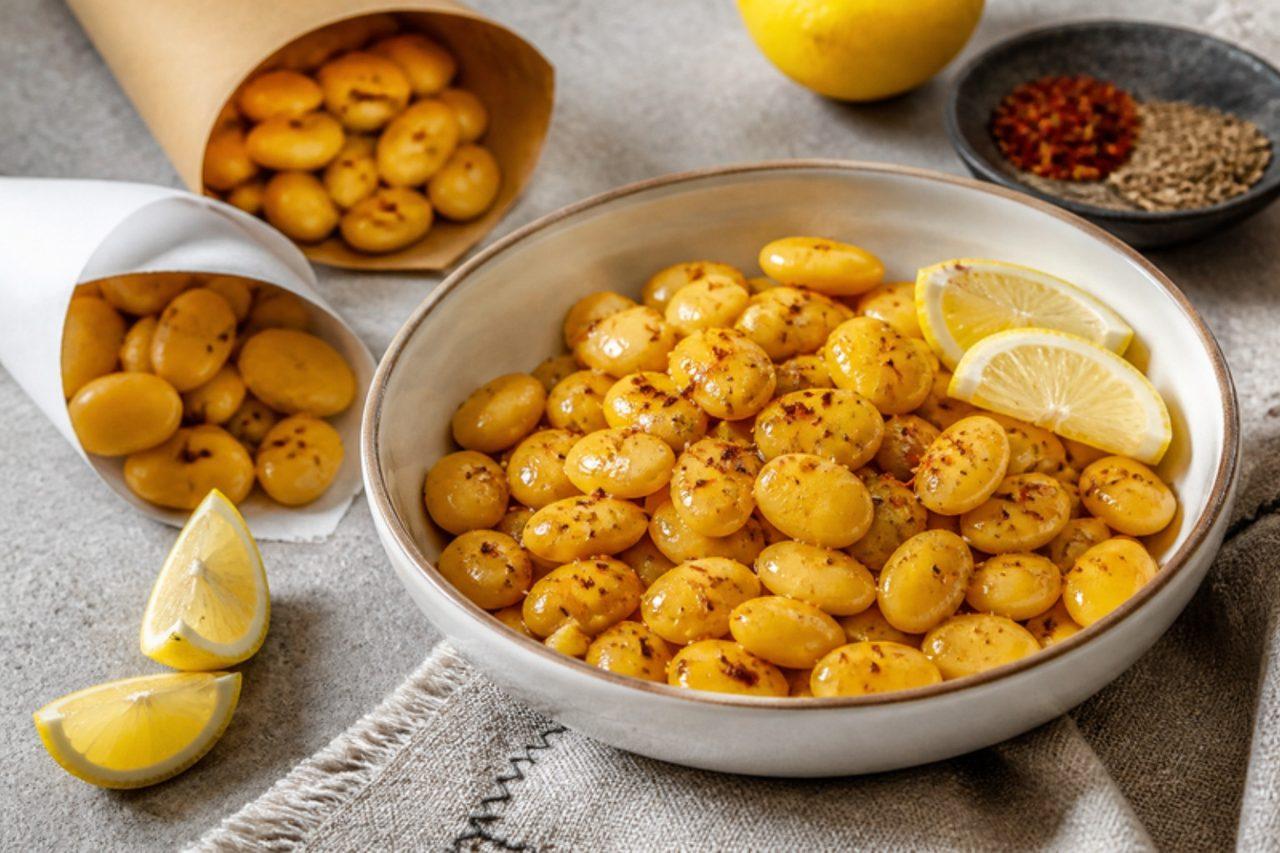
Termes: brined lupin beans with lemon, cumin and chilli, sold in paper cones across Egypt



Termes sellers push their carts along the Nile corniche and outside schools and mosques, scooping the plump yellow beans into paper cones, especially around Sham el-Nessim in spring. You nip the skin with your teeth and pop out the firm, salty, nutty bean, with lemon, cumin and chilli on top. Dried lupins are naturally very bitter and must be soaked, cooked and then soaked again for about a week before they are safe to eat, so the hands-on time is short but the process is long. Never skip the debittering: badly prepared lupins can cause poisoning, so taste one before serving and keep soaking if any bitterness remains. Lupin is also a common allergen, especially for people allergic to peanuts. Chef's tip: once debittered, store them in salted water in the fridge, where they keep for two weeks.
- Total time
- 105 min
- Difficulty
- easy
- Serves
- 6
Ingredients
- 9 oz dried lupin beans
- 2 tbsp saltfor the storage brine
- 4 ¼ cups waterfor the storage brine
To serve
- 1 lemoncut into wedges
- 1 tsp ground cumin
- ½ tsp chilli flakes (optional)
Shop this recipe on Amazon
Spices & pantry
Fresh ingredients (1)
Links open Amazon in a new tab. As an Amazon Associate, WhatToEat.Today earns from qualifying purchases.
Method
0/6 doneStep 1: Soak 9 oz dried lupin beans in a large bowl of cold water for 24 hours; they will double in size.
Step 2: Drain, put them in a large pot with fresh water to cover by 5 cm, bring to the boil and simmer until tender but still firm, topping up with water as needed.
75 minStep 3: Drain and cover with fresh cold water in a large bowl. Keep in the fridge and change the water twice a day for 5 to 7 days.
Step 4: From day 5, taste one bean each day. They are ready only when there is no bitterness at all. If in doubt, keep soaking.
Step 5: Bring 4 ¼ cups water and 2 tbsp salt to the boil, cool, and pour over the drained lupins in a jar. Refrigerate for at least a day before eating.
Step 6: To serve, drain a portion and toss with a squeeze of 1 lemon, 1 tsp ground cumin and ½ tsp chilli flakes, if using. Eat by pinching each bean out of its skin.
Nutrition per serving
- Calories
- 150 kcal
- Protein
- 15 g
- Carbs
- 9 g
- Fat
- 4 g
- Fibre
- 5 g
Nutrition values are estimates.
KrazyBadal
Good to know
- How long does termes take?
- About 105 minutes in total: 30 minutes to prepare and 75 minutes to cook.
- How many people does it serve?
- 6 as written. Change the servings above the ingredients and every amount scales to match.
- Is it vegan?
- Yes. It has no meat, fish, dairy or eggs.
- Is it gluten free?
- Yes, as written. Check the labels on stock, sauces and spice mixes, which sometimes contain gluten.
- What can I use instead of lemon?
- Lime, or 2 tbsp bottled lemon juice per lemon (no zest from bottled juice).
- What can I use instead of ground cumin?
- Cumin seeds, toasted and ground.
Reviews
No reviews yet. Be the first to cook it.
Rate this recipe
Sign in to rate and review this recipe.
You might also like

SakarpadaSweet fried dough diamonds
Sakarpada (shakarpara) are little sweet diamonds of a rich dough made with ghee, milk and sugar, fried until golden and crunchy. They are a Diwali favourite with tea, and the cubes go into bhusu too. They keep for weeks in an air-tight tin.
 Indian
Ful nabitSprouted fava bean soup
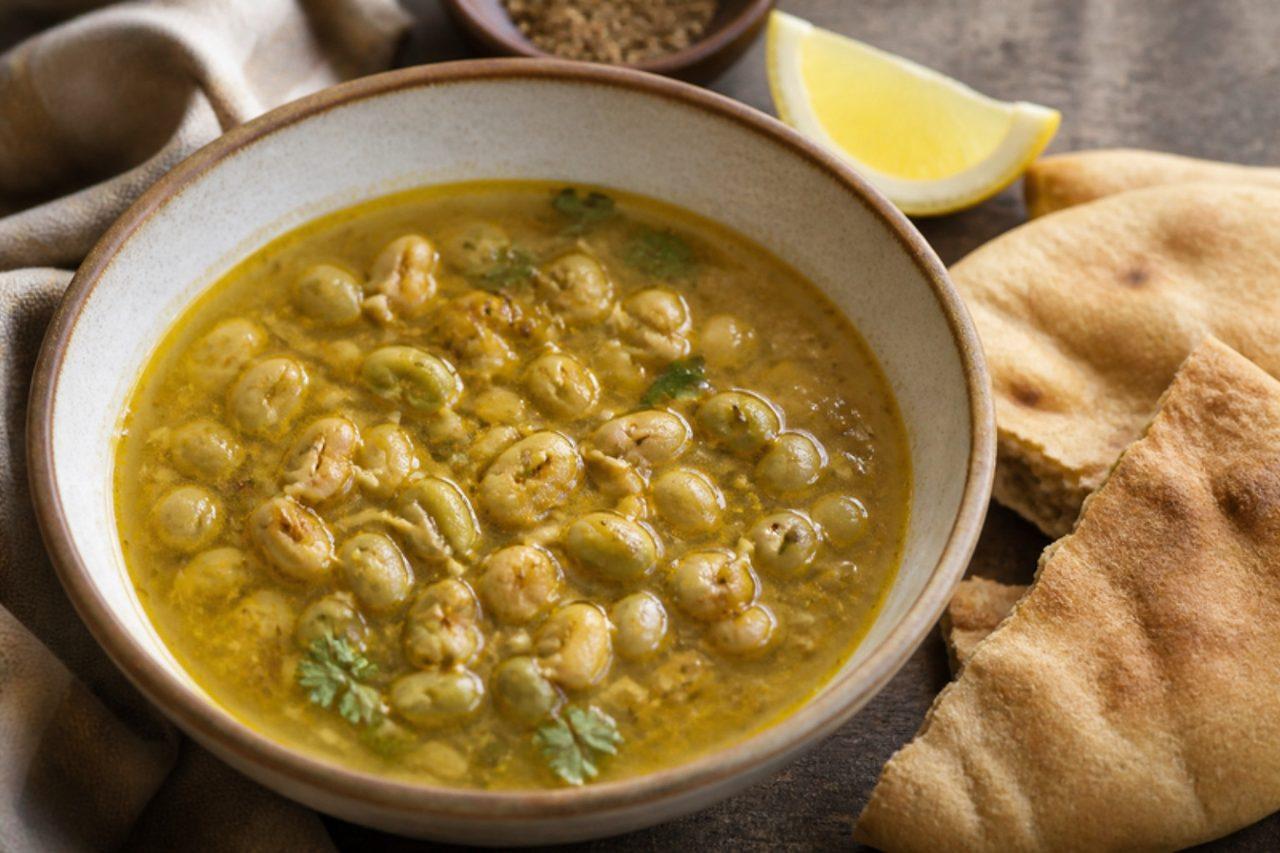
Sprouted beans are ladled out with their cooking liquor in Cairo homes when the weather turns cold or someone is feeling run down, and Egyptians swear by the broth as a pick-me-up. The beans are soaked and left to sprout for a few days, then simmered with onion, garlic and cumin into a light, earthy soup that is sharpened at the table with plenty of lemon. You can eat the beans with a spoon or pop them from their skins. Allow 3 to 4 days for sprouting, although the hands-on work is only about 20 minutes. People with G6PD deficiency (favism) must not eat fava beans. Chef's tip: stop the sprouting when the shoots are about 1 cm long; longer sprouts taste grassy and bitter.



Yaki onigiriGrilled rice balls
Yaki onigiri (焼きおにぎり) are rice balls grilled until they form a crisp, toasty crust, then brushed with soy sauce glaze. They are eaten all over Japan, at izakaya, at barbecues and from the freezer section, as a snack or with miso soup. The inside stays soft and steamy while the outside crackles. Best eaten hot, straight from the pan. Chef's tip: let the shaped rice balls dry for 10 minutes before they go in the pan. A drier surface forms a better crust and won't stick, and the glaze goes on only at the end so it doesn't burn.
 Japanese