
AI-generated image
Empal gepuk
Empal gepuk: Bandung sweet spiced beef, simmered, pounded flat and fried


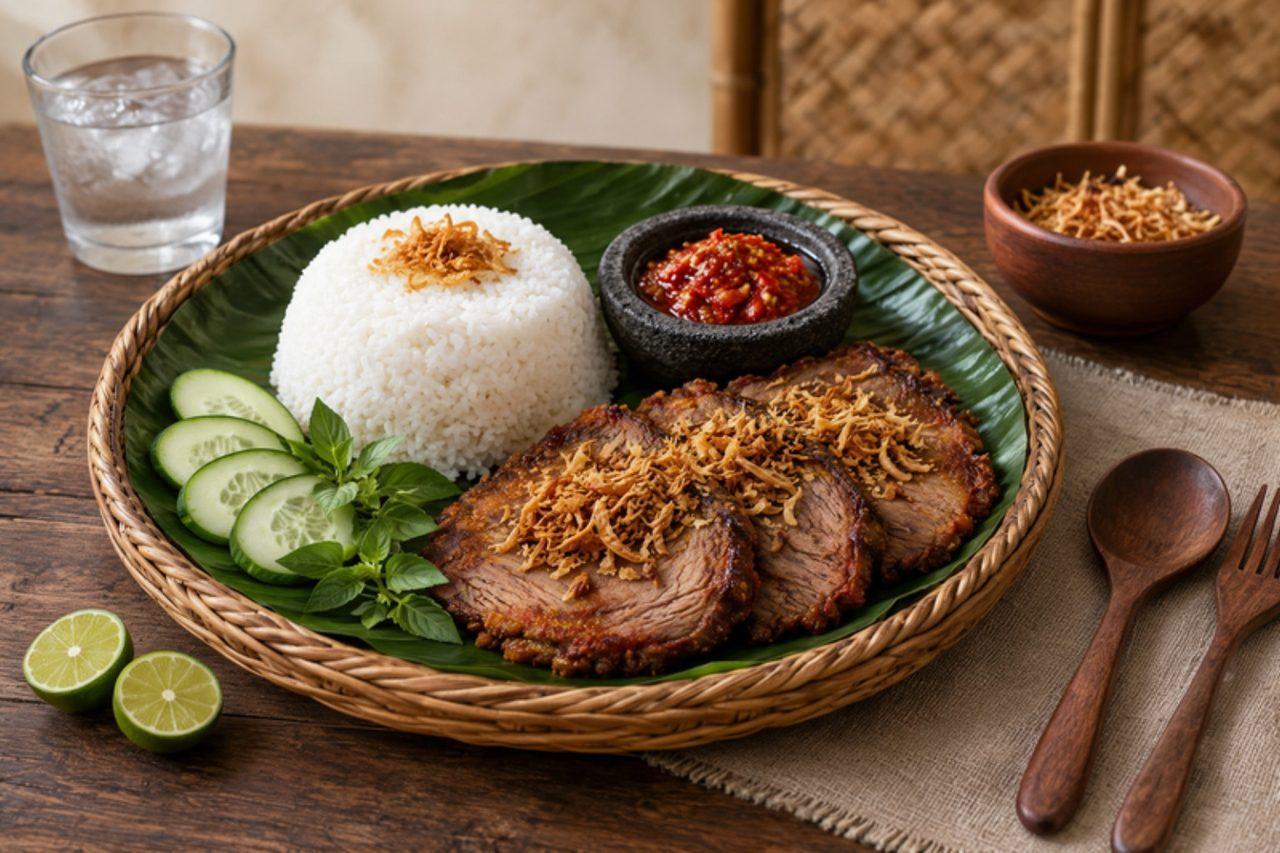
Empal gepuk is a Sundanese speciality from Bandung in West Java: beef simmered in coconut water and spices with palm sugar until the liquid is gone, pounded (gepuk) to loosen the fibres, then fried until the edges are crisp and sweet. Because it is dry and keeps for days, it is a classic in Indonesian bekal lunchboxes with rice, sambal and raw vegetables. The common mistake is cutting the beef with the grain, which makes it stringy; slice it across the grain before pounding. Chef's tip: pound gently with a pestle just until the slices fan out, then fry quickly; too long in the oil and they turn hard.
- Total time
- 120 min
- Difficulty
- medium
- Serves
- 4
Ingredients
For the spice paste
- 6 shallots
- 1 tbsp coriander seedstoasted
- 1 ⅛ in galangal
- 1 ¾ oz palm sugar
- 1 tbsp tamarind paste
- 1 ½ tsp salt
For the beef
- 1 ⅓ lb beef brisket or topsidein one piece
- 1 litre coconut water or water
- 1 lemongrass stalkbruised
- ¾ cup vegetable oilfor frying
Shop this recipe on Amazon
What you'll need
Spices & pantry
Fresh ingredients (2)
Links open Amazon in a new tab. As an Amazon Associate, WhatToEat.Today earns from qualifying purchases.
Method
0/6 doneStep 1: Blend 6 shallots, 4 garlic cloves, 1 tbsp coriander seeds, 1 ⅛ in galangal, 1 ¾ oz palm sugar, 1 tbsp tamarind paste and 1 ½ tsp salt into a paste.
Step 2: Put 1 ⅓ lb beef brisket or topside, the paste, 1 litre coconut water or water, 3 salam leaves or bay leaves and 1 lemongrass stalk in a pot. Bring to the boil, then simmer, partly covered, for 80–90 minutes, turning the beef now and then, until tender and the liquid has reduced to a thick glaze.
90 minStep 3: Lift out the beef, cool slightly and cut across the grain into slices 1 cm thick.
Step 4: Lay each slice on a board and tap with a pestle or rolling pin until it spreads and the fibres separate, without falling apart. Brush with the leftover glaze.
Step 5: Heat ¾ cup vegetable oil in a frying pan over a medium heat and fry the slices for 1–2 minutes a side until dark and caramelised at the edges. Drain on paper.
6 minStep 6: Cool and keep in the fridge for up to 4 days. Pack with rice and sambal.
Nutrition per serving
- Calories
- 380 kcal
- Protein
- 34 g
- Carbs
- 14 g
- Fat
- 21 g
- Fibre
- 1 g
Nutrition values are estimates.
KrazyBadal
Good to know
- How long does empal gepuk take?
- About 120 minutes in total: 20 minutes to prepare and 100 minutes to cook.
- How many people does it serve?
- 4 as written. Change the servings above the ingredients and every amount scales to match.
- Is it gluten free?
- Yes, as written. Check the labels on stock, sauces and spice mixes, which sometimes contain gluten.
- Can I make it ahead?
- Yes. It keeps well, so you can cook it earlier in the day or the day before and reheat it.
- What can I use instead of shallots?
- Half an onion per 2 shallots.
- What can I use instead of garlic cloves?
- ½ tsp garlic paste or ⅛ tsp garlic powder per clove.
Reviews
No reviews yet. Be the first to cook it.
Rate this recipe
Sign in to rate and review this recipe.
You might also like

Sayur lodeh
Sayur lodeh is everyday cooking in Central Java, made in big pots in Solo and Semarang kitchens and ladled over rice, with lontong rice cakes at Lebaran, or alongside opor and sambal goreng on festive tables. It's soupy rather than thick: a fragrant broth of coconut milk, galangal, lemongrass and lime leaf that carries chunks of aubergine, long beans, chayote and sweetcorn, plus tempeh and tofu to make it a meal. The flavour is mellow and slightly sweet, so the heat comes from sambal on the side. Chef's tip: keep the pot at a gentle simmer once the coconut milk goes in and stir now and then — a rolling boil splits the coconut milk into oily curds.



Pork souvlaki
This is a pork recipe. Walk through any Greek town after dark, from Athens to Thessaloniki, and the smell of souvlaki stands drifts down the street; cubes of pork shoulder grilled on thin skewers are the country's favourite cheap supper, eaten standing up or at a plastic-table taverna. At home you marinate the meat in lemon, olive oil, garlic and dried oregano, grill it hard and fast, and pile it on warm pitta with tzatziki, tomato and red onion. Chef's tip: cut the pork into even 2.5 cm cubes and leave a little fat on; lean loin dries out, shoulder stays juicy over high heat.
 Greek

Soto Banjar
Along the rivers of Banjarmasin in South Kalimantan, breakfast often means soto Banjar eaten at a wooden riverside warung, sometimes after a dawn trip to the floating market. Unlike the turmeric sotos of Java, this broth is pale and clear, perfumed with the sweet spices that traders brought up the river centuries ago: cinnamon, cloves, star anise, cardamom and nutmeg. Shredded chicken, glass noodles, carrot and a boiled egg go into the bowl with rice cakes, and lime and a little chilli sharpen it at the table. Chef's tip: toast the whole spices in the pan for a minute before the paste goes in; it brings out their sweetness without the dusty edge of ground spice.