
AI-generated image
Fatteh with chickpeas
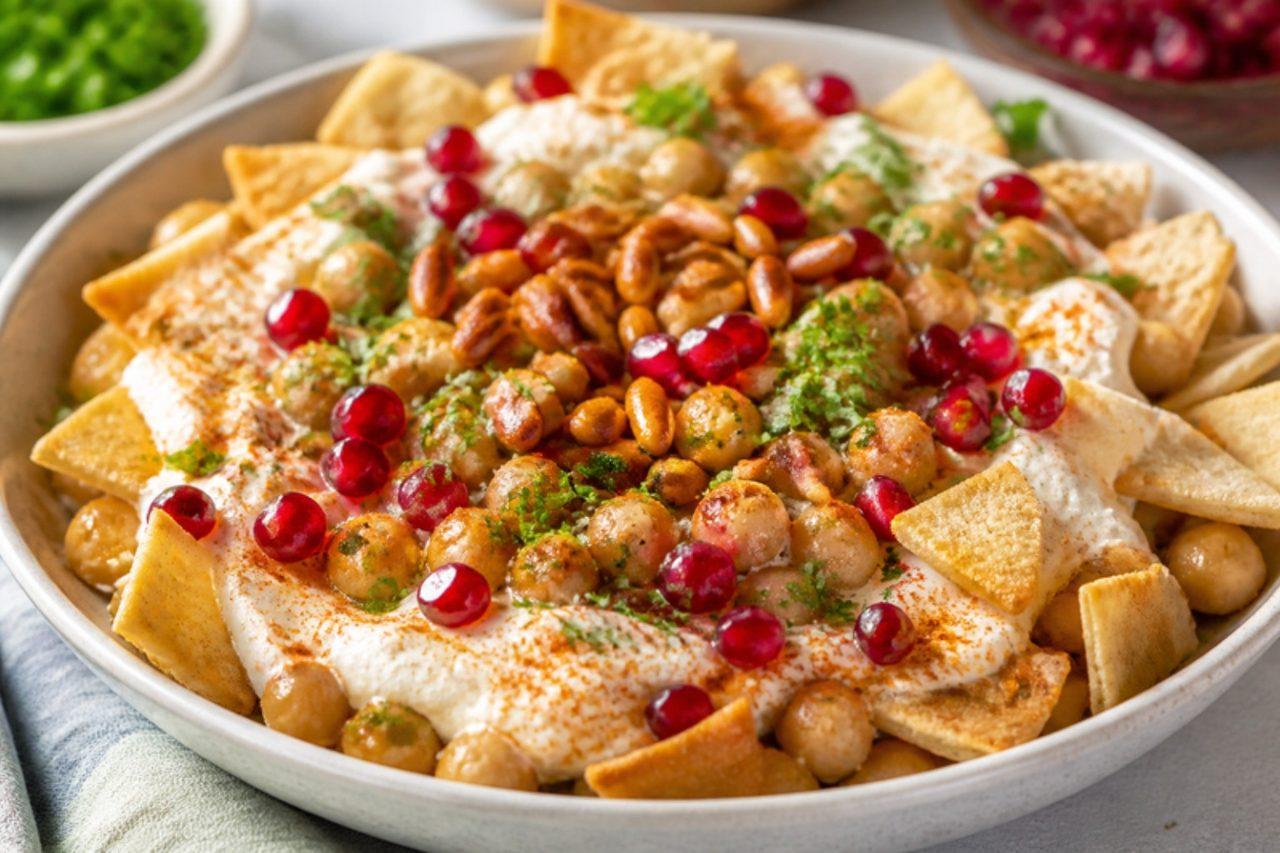
Fattet hummus: layers of crisp bread, warm chickpeas and garlicky tahini yogurt

Fattet hummus belongs to Damascus, where breakfast restaurants in the old city serve it in deep bowls on Friday mornings, and it has spread to Beirut's Sunday tables too. The name comes from fatt, to break up, for the toasted flatbread at the bottom, which is topped with warm chickpeas in their broth, then a thick, garlicky sauce of yogurt and tahini, and finally sizzling pine nuts in butter or oil with a dust of paprika and cumin. The contrast is the point: crunchy and soft, hot and cool. Assembling it too early is the common mistake, since the bread soaks up the sauce and goes soggy; build it just before eating. Chef's tip: let the yogurt come to room temperature first, so it doesn't cool the chickpeas down too much and the bowl stays warm.
- Total time
- 30 min
- Difficulty
- easy
- Serves
- 4
Ingredients
For the bread and chickpeas
- 2 pitta or Arabic flatbreadlarge, torn into bite-size pieces
- 2 tbsp olive oil
- 1 lb cooked chickpeas2 tins, with their liquid
- 1 tsp ground cumin
- ½ tsp salt
For the yogurt sauce
- 14 oz full-fat plain yogurtat room temperature
- 3 tbsp tahini
- 2 garlic clovescrushed
- 2 tbsp lemon juice
To finish
- 1 oz butter or olive oil
- 1 ⅜ oz pine nuts
- ½ tsp paprika
- 1 tbsp flat-leaf parsleychopped
- 2 tbsp pomegranate seeds (optional)
Shop this recipe on Amazon
Spices & pantry
Fresh ingredients (3)
Links open Amazon in a new tab. As an Amazon Associate, WhatToEat.Today earns from qualifying purchases.
Method
0/6 doneStep 1: Heat the oven to 400°F (350°F fan). Toss 2 pitta or Arabic flatbread with 2 tbsp olive oil on a tray and bake for 8–10 minutes, turning once, until golden and crisp enough to snap. (You can also fry it.)
10 minStep 2: Meanwhile tip 1 lb cooked chickpeas and their liquid into a pan with ½ tsp ground cumin and ½ tsp salt and warm over a medium heat for 5–7 minutes, until steaming. Lightly crush a spoonful against the side to thicken the broth.
7 minStep 3: Whisk 14 oz full-fat plain yogurt with 3 tbsp tahini, 2 garlic cloves and 2 tbsp lemon juice until smooth and thick, like double cream. Taste and add salt.
Step 4: Melt 1 oz butter or olive oil in a small frying pan over a medium-low heat, add 1 ⅜ oz pine nuts and stir for 2–3 minutes, until they are golden and smell nutty. Watch closely: they go from gold to burnt in seconds.
3 minStep 5: Assemble just before eating: scatter the crisp bread in a wide dish, spoon over the hot chickpeas with a little of their broth, then cover with the yogurt sauce.
Step 6: Pour the pine nuts and their sizzling fat over the top, dust with ½ tsp paprika and the rest of ½ tsp ground cumin, and finish with 1 tbsp flat-leaf parsley and 2 tbsp pomegranate seeds. Serve at once.
Nutrition per serving
- Calories
- 520 kcal
- Protein
- 21 g
- Carbs
- 46 g
- Fat
- 28 g
- Fibre
- 10 g
Nutrition values are estimates.
KrazyBadal
Good to know
- How long does fatteh with chickpeas take?
- About 30 minutes in total: 10 minutes to prepare and 20 minutes to cook.
- How many people does it serve?
- 4 as written. Change the servings above the ingredients and every amount scales to match.
- Is it vegetarian?
- Yes. It has no meat or fish.
- What can I use instead of cooked chickpeas?
- Cannellini or butter beans, same amount.
- What can I use instead of ground cumin?
- Cumin seeds, toasted and ground.
Reviews
No reviews yet. Be the first to cook it.
Rate this recipe
Sign in to rate and review this recipe.
You might also like

Bsissa
A tin of bsissa sits in many Tunisian kitchen cupboards, from Tunis flats to farmhouses in the south: a finely ground flour of roasted barley, roasted chickpeas and spices such as coriander, fennel and aniseed. In the morning a few spoonfuls are worked with olive oil and something sweet into a nutty, crumbly paste, or stirred with water into a thick drink, and it keeps you going until lunch. Travellers and pilgrims once carried it for the road. Roasting your own flour takes 15 minutes and makes a jar that lasts weeks. Sugar and dates keep it vegan; some families use honey. Chef's tip: roast the flours separately over a low heat and stir constantly; the moment they smell like toasted biscuits and turn light tan, tip them out of the pan.
 Tunisian


Sabudana khichdi
Sabudana khichdi is the dish that sees Maharashtra through every vrat (fast), from Navratri to Ekadashi, but it's so good that people eat it any day of the week. Soaked sago pearls are tossed in a pan with crushed roasted peanuts, cubes of potato, cumin and green chilli until each pearl turns glassy and separate, then finished with lemon and coriander. It's soft, chewy, nutty and gently hot. Fasting rules vary from family to family, so check yours; this version uses rock salt and no asafoetida, onion or garlic. Traditionally it's cooked in ghee; use ghee instead of oil if you aren't keeping it vegan. Chef's tip: soak the sago in just enough water to cover by the height of the pearls themselves, no more; too much water is the reason khichdi turns into one sticky lump.
 Indian


Mysore masala dosa
Mysuru in Karnataka gave its name to this bolder dosa: a slightly thicker, golden crêpe that is crisp outside and soft inside, painted with a hot red chutney of dried chillies, garlic and roasted chana dal before the potato palya goes in. The chutney melts into the dosa as it cooks, so every bite has a sweet-spicy, garlicky kick. In Mysuru's old cafés it's served flat and folded, with coconut chutney to cool things down. Chef's tip: use Byadagi or Kashmiri chillies for the chutney; they give a deep red colour without blowing your head off, so you can spread it generously.
