
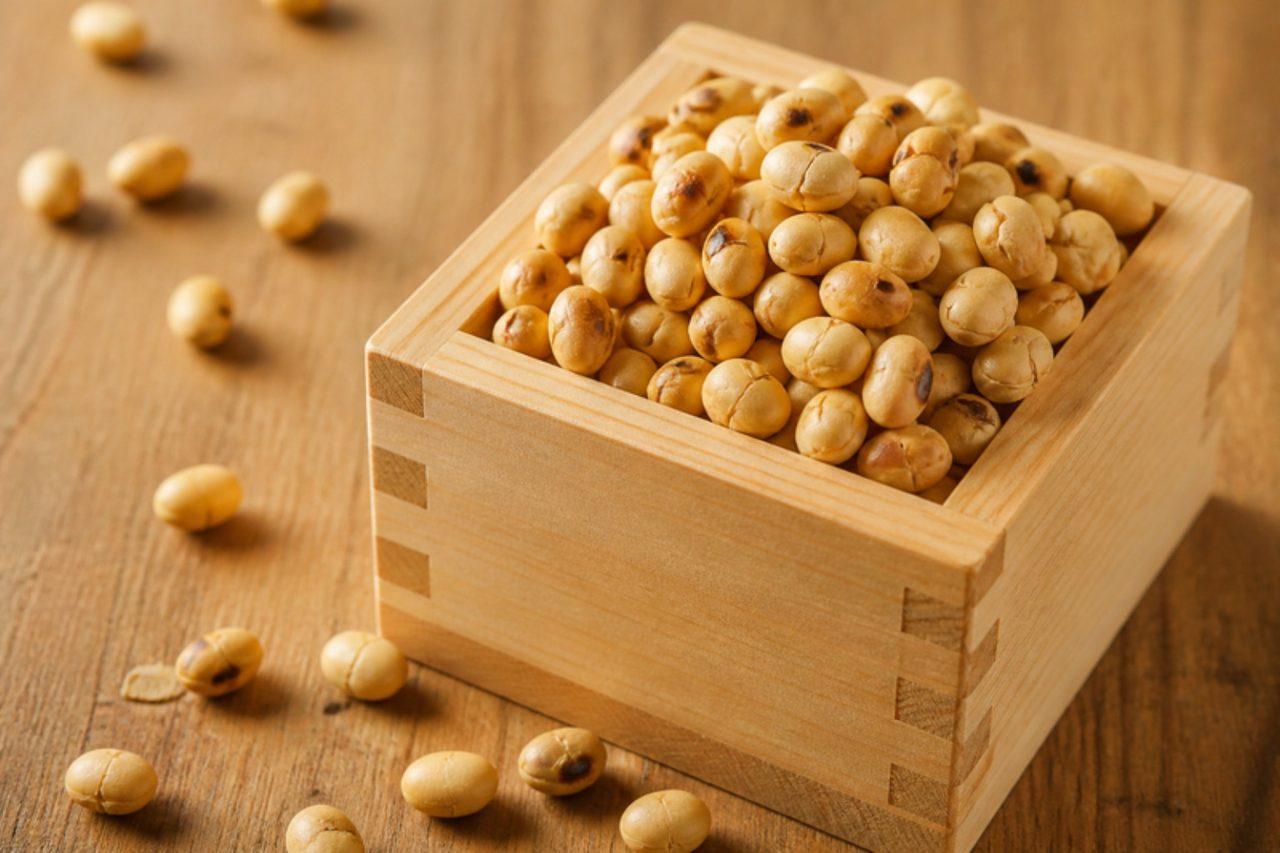
AI-generated image
Fukumame (roasted lucky soybeans)
Soaked soybeans dry-roasted until crunchy, for the Setsubun bean-throwing



On Setsubun, the eve of spring in early February, households all over Japan fling roasted soybeans out of the door shouting "Oni wa soto! Fuku wa uchi!" (demons out, luck in), then each person eats one bean for every year of their age, plus one for the year ahead. The beans are called fukumame, "fortune beans", and roasting them matters: a raw bean could sprout, and a demon's bean must not take root. Home-roasted ones are nutty, toasty and properly crunchy, far better than the packet kind, and they are good with green tea or scattered over a salad. Whole roasted beans are a choking hazard, so do not give them to children under five; grind theirs to a powder and sprinkle it on rice or yoghurt instead. Chef's tip: let a test bean cool for a minute before you judge it, because hot beans always feel softer than they will be.
- Total time
- 30 min
- Difficulty
- easy
- Serves
- 6
Ingredients
- 7 oz dried soybeansthe pale yellow kind
- 4 ¼ cups cold waterfor soaking
- ¼ tsp fine sea salt (optional)a light pinch, not traditional
Shop this recipe on Amazon
Spices & pantry
Links open Amazon in a new tab. As an Amazon Associate, WhatToEat.Today earns from qualifying purchases.
Method
0/6 doneStep 1: Rinse 7 oz dried soybeans, cover with 4 ¼ cups cold water in a large bowl and soak for 8–12 hours, until they have doubled in size and split cleanly into two halves when pressed.
5 minStep 2: Drain the beans, spread them on a clean tea towel and rub them completely dry, then leave them uncovered for 15 minutes. Common mistake: roasting damp beans. They steam instead of roasting and end up leathery rather than crisp.
15 minStep 3: Heat a large, heavy frying pan over a medium-low heat with no oil and tip in the beans in a single layer.
2 minStep 4: Roast, shaking the pan or stirring every minute, for 20–25 minutes. The skins will wrinkle and crack, the beans turn from cream to an even golden brown with a few darker freckles, and they start to rattle against the pan.
22 minStep 5: Take one bean off, cool it for a minute and bite it: it should snap and be dry right through. If the centre is still chewy, keep roasting for a few more minutes and test again.
2 minStep 6: Spread the beans on a tray to cool completely, when they crisp up further. Toss with ¼ tsp fine sea salt if you like, then pack into a small wooden box or bowl for the bean-throwing. Stored airtight, they keep for 2 weeks.
10 min
Nutrition per serving
- Calories
- 150 kcal
- Protein
- 12 g
- Carbs
- 10 g
- Fat
- 7 g
- Fibre
- 6 g
Nutrition values are estimates.
KrazyBadal
Good to know
- How long does fukumame (roasted lucky soybeans) take?
- About 30 minutes in total: 5 minutes to prepare and 25 minutes to cook.
- How many people does it serve?
- 6 as written. Change the servings above the ingredients and every amount scales to match.
- Is it vegan?
- Yes. It has no meat, fish, dairy or eggs.
- Is it gluten free?
- Yes, as written. Check the labels on stock, sauces and spice mixes, which sometimes contain gluten.
Reviews
No reviews yet. Be the first to cook it.
Rate this recipe
Sign in to rate and review this recipe.
You might also like

SakarpadaSweet fried dough diamonds
Sakarpada (shakarpara) are little sweet diamonds of a rich dough made with ghee, milk and sugar, fried until golden and crunchy. They are a Diwali favourite with tea, and the cubes go into bhusu too. They keep for weeks in an air-tight tin.
 Indian

Yaki onigiriGrilled rice balls
Yaki onigiri (焼きおにぎり) are rice balls grilled until they form a crisp, toasty crust, then brushed with soy sauce glaze. They are eaten all over Japan, at izakaya, at barbecues and from the freezer section, as a snack or with miso soup. The inside stays soft and steamy while the outside crackles. Best eaten hot, straight from the pan. Chef's tip: let the shaped rice balls dry for 10 minutes before they go in the pan. A drier surface forms a better crust and won't stick, and the glaze goes on only at the end so it doesn't burn.


Miso soup
Miso soup (味噌汁) is drunk every day in homes all over Japan, at breakfast as well as dinner, beside a bowl of rice. The base is dashi; this vegan version uses kombu and dried shiitake instead of bonito, which gives it a deep, rounded flavour. Silken tofu and wakame seaweed are the classic fillings. It takes ten minutes; just remember not to boil the miso. Chef's tip: add the miso at the very end and never let it boil. Boiling kills the miso's fresh, fermented aroma; Japanese cooks say the soup should only 'smile', with the surface barely trembling.