
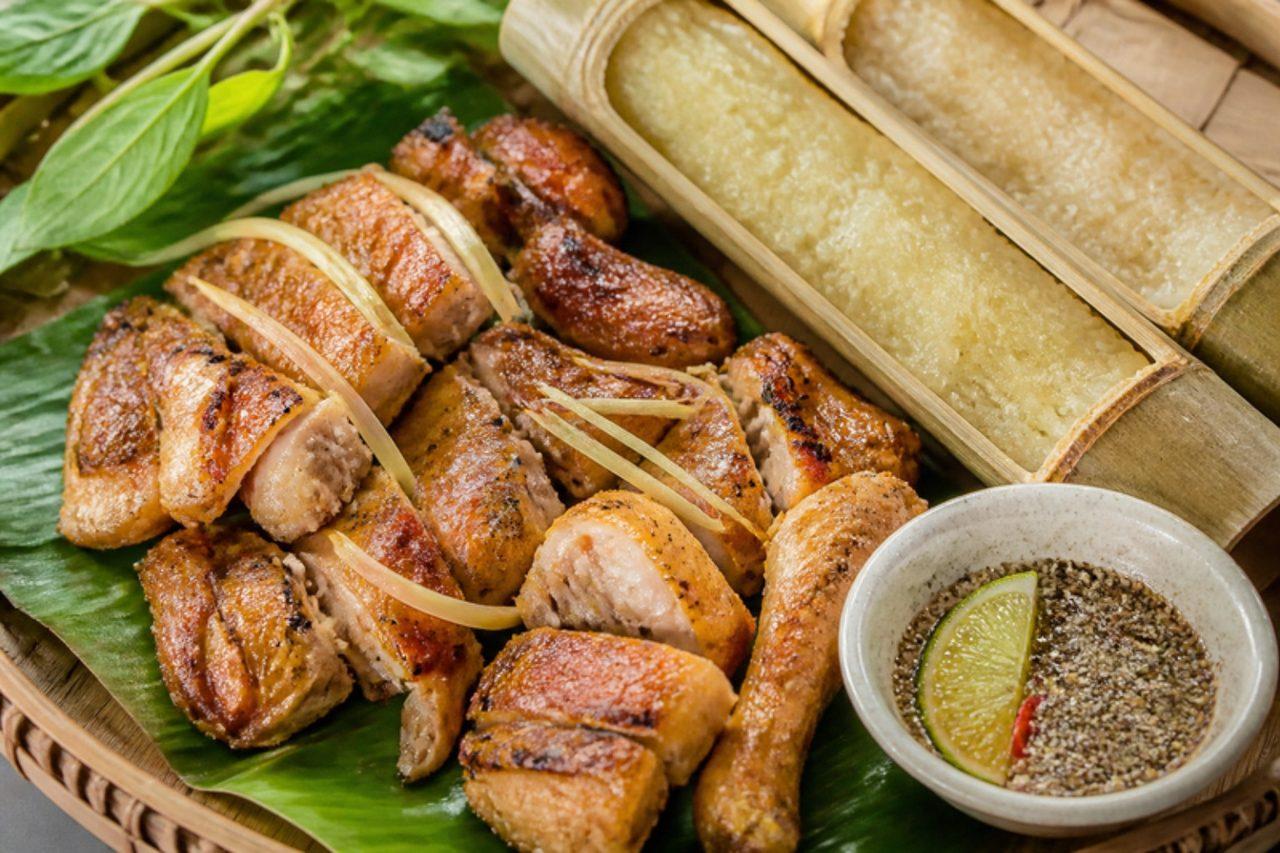
Ga nuong com lam (lemongrass chicken with bamboo rice)
Gà nướng cơm lam: Central Highlands grilled chicken with sticky rice cooked in bamboo

Up in the Central Highlands, around Kon Tum, Pleiku and Buôn Ma Thuột, roadside grills and village homestays serve this pair: chicken marinated in lemongrass and chilli, grilled slowly over charcoal, and cơm lam, sticky rice cooked inside green bamboo tubes laid in the fire. Splitting the charred bamboo reveals a cylinder of rice wrapped in a thin, fragrant skin of bamboo membrane. Both are eaten with the hands and dipped in salt, pepper and lime or a crushed peanut and sesame salt. Without fresh bamboo, rolling the rice in banana-leaf parcels gives a very similar result. Highland rice wine (rượu cần) is the usual drink, but cold jasmine tea goes just as well and is alcohol-free. Chef's tip: brush on the honey only in the last few minutes of grilling so it glazes without burning.
- Total time
- 60 min
- Difficulty
- medium
- Serves
- 4
Ingredients
For the chicken
For the rice
For the dipping salt
Method
0/9 doneStep 1: Soak 10 ½ oz glutinous (sticky) rice in cold water for at least 4 hours or overnight; this soaking is not included in the times. Drain well.
Step 2: Slash the thickest parts of 2 ¼ lb bone-in chicken thighs and drumsticks twice to the bone. Rub with 3 stalks lemongrass, 4 cloves garlic, 2 red chilli, 2 tbsp fish sauce, ½ tsp salt, 1 tsp ground black pepper and 2 tbsp vegetable oil, and leave for at least 15 minutes, or overnight in the fridge.
15 minStep 3: Mix the drained rice with ½ cup coconut milk and ½ tsp salt. Soften 4 banana leaves in hot water, then roll a quarter of the rice in each leaf into a firm 4 cm-wide log and tie the ends with string. If you have bamboo tubes, pack them two-thirds full, top up with water to just cover and plug with a twist of banana leaf.
Step 4: Steam the banana-leaf logs over boiling water for 30–35 minutes until the rice is glossy and tender, or lay bamboo tubes at the edge of the coals and turn them for 35–40 minutes until the outside is charred.
35 minStep 5: Meanwhile, grill the chicken over medium coals or under a medium grill, 12–15 cm from the heat, turning every 5 minutes, for 25–30 minutes. Move it to a cooler part of the grill if the skin darkens too fast.
28 minStep 6: Brush 2 tbsp honey over the chicken for the last 3–4 minutes and turn until glazed. Common mistake: adding honey at the start; the sugar burns black long before the meat is cooked.
4 minStep 7: Check that the thickest part of the chicken reaches 165°F/165 °F and the juices run clear, then rest it for 5 minutes.
5 minStep 8: Pound 1 ⅜ oz roasted peanuts, 2 tbsp toasted sesame seeds, 1 tsp salt and 1 tsp sugar to a coarse powder and put it in small dishes with 1 lime.
Step 9: Char the steamed rice logs briefly on the grill if you like, then unwrap and cut them into thick rounds; split bamboo tubes lengthways with a heavy knife. Serve with the chicken and the dipping salt.
Nutrition per serving
- Calories
- 690 kcal
- Protein
- 44 g
- Carbs
- 66 g
- Fat
- 27 g
- Fibre
- 3 g
Nutrition values are estimates.
KrazyBadal
Good to know
- How long does ga nuong com lam (lemongrass chicken with bamboo rice) take?
- About 60 minutes in total: 20 minutes to prepare and 40 minutes to cook.
- How many people does it serve?
- 4 as written. Change the servings above the ingredients and every amount scales to match.
- Is it gluten free?
- Yes, as written. Check the labels on stock, sauces and spice mixes, which sometimes contain gluten.
- What can I use instead of garlic?
- ½ tsp garlic paste or ⅛ tsp garlic powder per clove.
- What can I use instead of red chilli?
- Green chilli, same amount (same heat, greener taste).
Reviews
No reviews yet. Be the first to cook it.
Rate this recipe
Sign in to rate and review this recipe.
You might also like

Caramelised clay-pot tofu and mushrooms
Kho is the slow braise of the Mekong Delta: food simmered in a little clay pot (nồi đất) with dark caramel and seasoning until the sauce is sticky and the flavours go deep. This vegetarian cousin of cá kho tộ (braised fish) uses golden tofu and meaty mushrooms in place of fish, cooked in coconut water, as cooks do in the south, and finished with plenty of black pepper. Serve it bubbling in its pot with steamed rice and a sour soup or plain boiled vegetables. Chef's tip: take the caramel (nước màu) to a deep mahogany, darker than you think, just before it smokes; pale caramel only tastes sweet, while dark caramel gives the bittersweet, smoky flavour of a real kho.

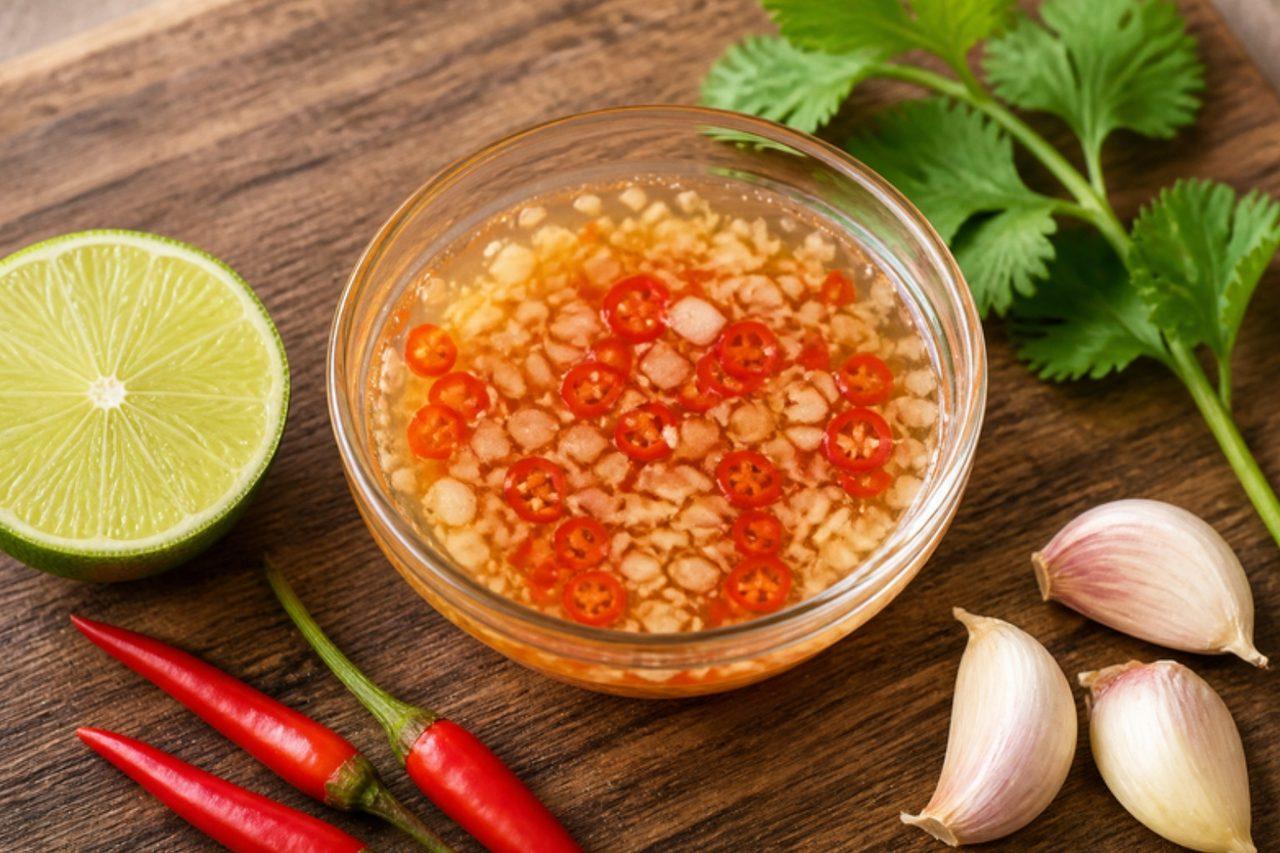
Vegan nuoc cham
Nước chấm is the dipping sauce that goes with almost everything in Vietnam: spring rolls, bánh xèo, noodle salads and broken rice. Buddhist vegetarian cooks, all over the country, make it without fish sauce, using light soy sauce and a little coconut water for the deep, rounded taste. It should be thin, clear and pale amber, with flecks of garlic and chilli floating on top. Chef's tip: dissolve the sugar in the warm water first, then add the lime and soy, and stir in the garlic and chilli last, pounded with a pinch of sugar, so they float on the surface instead of sinking.
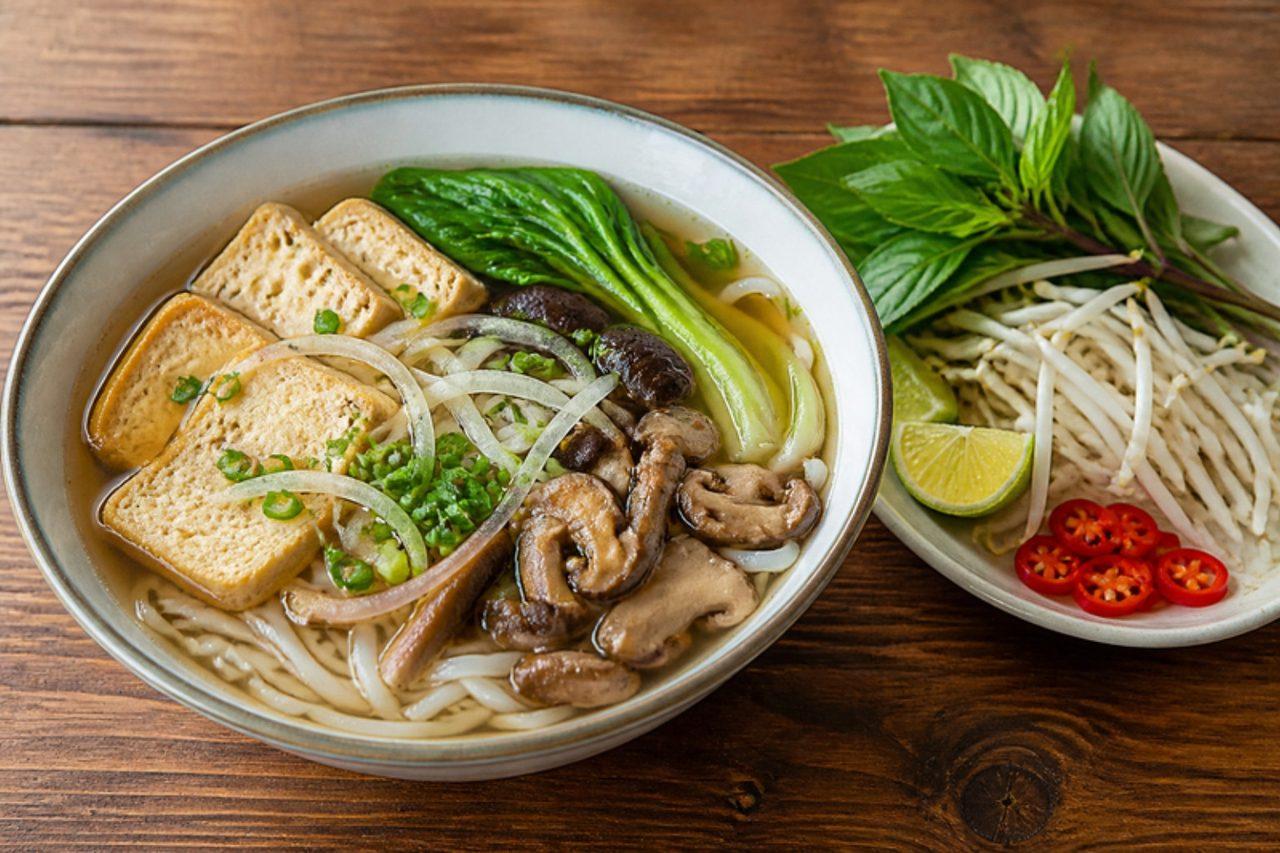
Vegetable pho
Pho began in the north, around Hanoi and Nam Định, and is now eaten all over Vietnam, often for breakfast. Phở chay is the Buddhist vegetarian version served in temple kitchens and chay restaurants: the deep, clear broth comes from charred onion and ginger, toasted star anise, cinnamon and cloves, simmered with daikon, carrot, sweetcorn and dried shiitake instead of beef bones. Silky flat rice noodles, golden tofu and mushrooms go in the bowl, and everyone adds their own bean sprouts, Thai basil, lime and chilli at the table. Chef's tip: char the onion and ginger until properly blackened in patches and toast the spices in a dry pan until they smell like warm Christmas cake; that smoky, perfumed base is what makes the broth taste like pho and not vegetable soup.
