
AI-generated image
Gamja jorim
Soy-braised baby potatoes
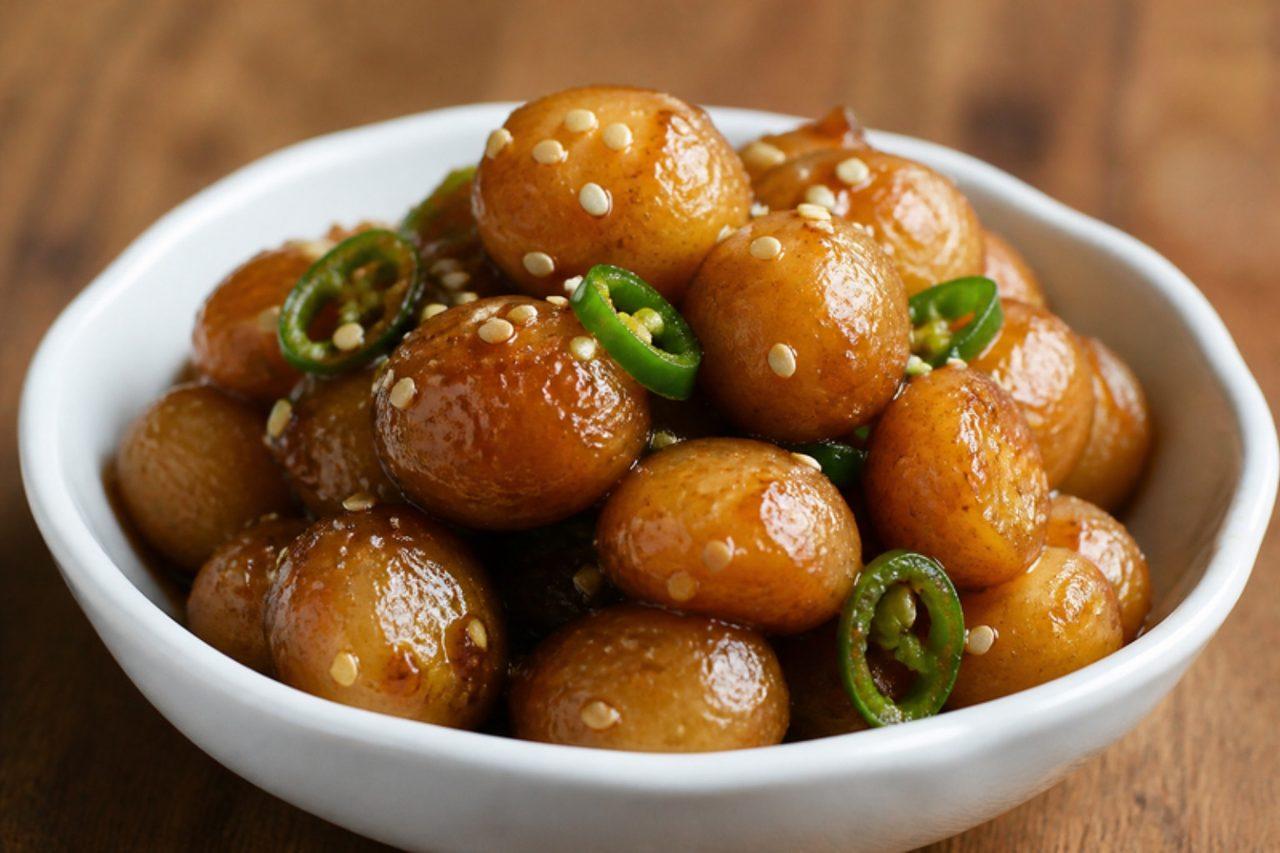
감자조림 · Baby potatoes braised in a sweet, glossy soy glaze


Gamja jorim (감자조림) are cubes or small potatoes simmered in soy sauce and sugar until the liquid reduces to a sticky, shiny glaze. They are a lunchbox and home-cooking favourite across Korea, loved by children for their sweet-salty taste. The potatoes turn soft inside but keep their shape, and they taste just as good cold the next day, so they are ideal to make ahead. Rice syrup gives the traditional shine; sugar alone works too. Chef's tip: add the syrup only at the end, when the potatoes are already tender. Added early it scorches and makes the potatoes tough on the outside.
- Total time
- 30 min
- Difficulty
- easy
- Serves
- 4
Ingredients
- 1 ⅛ lb baby potatoeshalved, or larger potatoes cut into 2.5 cm cubes
- 1 tbsp neutral oil
- 2 cloves garlicsliced
- 1 cup water
- 3 tbsp soy sauce
- 1 tbsp brown sugar
- 1 tbsp rice syrupor 2 tsp more sugar
- 1 tsp toasted sesame oil
- 1 tsp toasted sesame seeds
- 1 green chilli (optional)sliced
Shop this recipe on Amazon
Fresh ingredients (3)
Links open Amazon in a new tab. As an Amazon Associate, WhatToEat.Today earns from qualifying purchases.
Method
0/5 doneStep 1: Soak 1 ⅛ lb baby potatoes in cold water for 10 minutes to rinse off the surface starch, then drain and pat dry. This stops them sticking and helps them keep their shape.
10 minStep 2: Heat 1 tbsp neutral oil in a wide pan over a medium-high heat and fry the potatoes for 4–5 minutes, turning, until lightly golden at the edges.
5 minStep 3: Add 2 cloves garlic, 1 cup water, 3 tbsp soy sauce and 1 tbsp brown sugar. Bring to the boil, then cover and simmer over a medium-low heat for 10 minutes, until a knife slides into the potatoes easily.
10 minStep 4: Uncover, add 1 tbsp rice syrup and 1 green chilli and turn up the heat to medium-high. Cook for 3–5 minutes, stirring gently, until the liquid has reduced to a thick glaze that coats the potatoes.
5 minStep 5: Take off the heat and toss with 1 tsp toasted sesame oil and 1 tsp toasted sesame seeds. Serve warm or cold; it keeps for 4 days in the fridge.
Nutrition per serving
- Calories
- 150 kcal
- Protein
- 3 g
- Carbs
- 28 g
- Fat
- 4 g
- Fibre
- 3 g
Nutrition values are estimates.
KrazyBadal
Good to know
- How long does gamja jorim take?
- About 30 minutes in total: 10 minutes to prepare and 20 minutes to cook.
- How many people does it serve?
- 4 as written. Change the servings above the ingredients and every amount scales to match.
- Is it vegan?
- Yes. It has no meat, fish, dairy or eggs.
- Can I make it ahead?
- Yes. It keeps well, so you can cook it earlier in the day or the day before and reheat it.
- What can I use instead of baby potatoes?
- Sweet potato, same weight (sweeter, cooks a little faster).
- What can I use instead of garlic?
- ½ tsp garlic paste or ⅛ tsp garlic powder per clove.
Reviews
No reviews yet. Be the first to cook it.
Rate this recipe
Sign in to rate and review this recipe.
You might also like
DakjukChicken and rice porridge
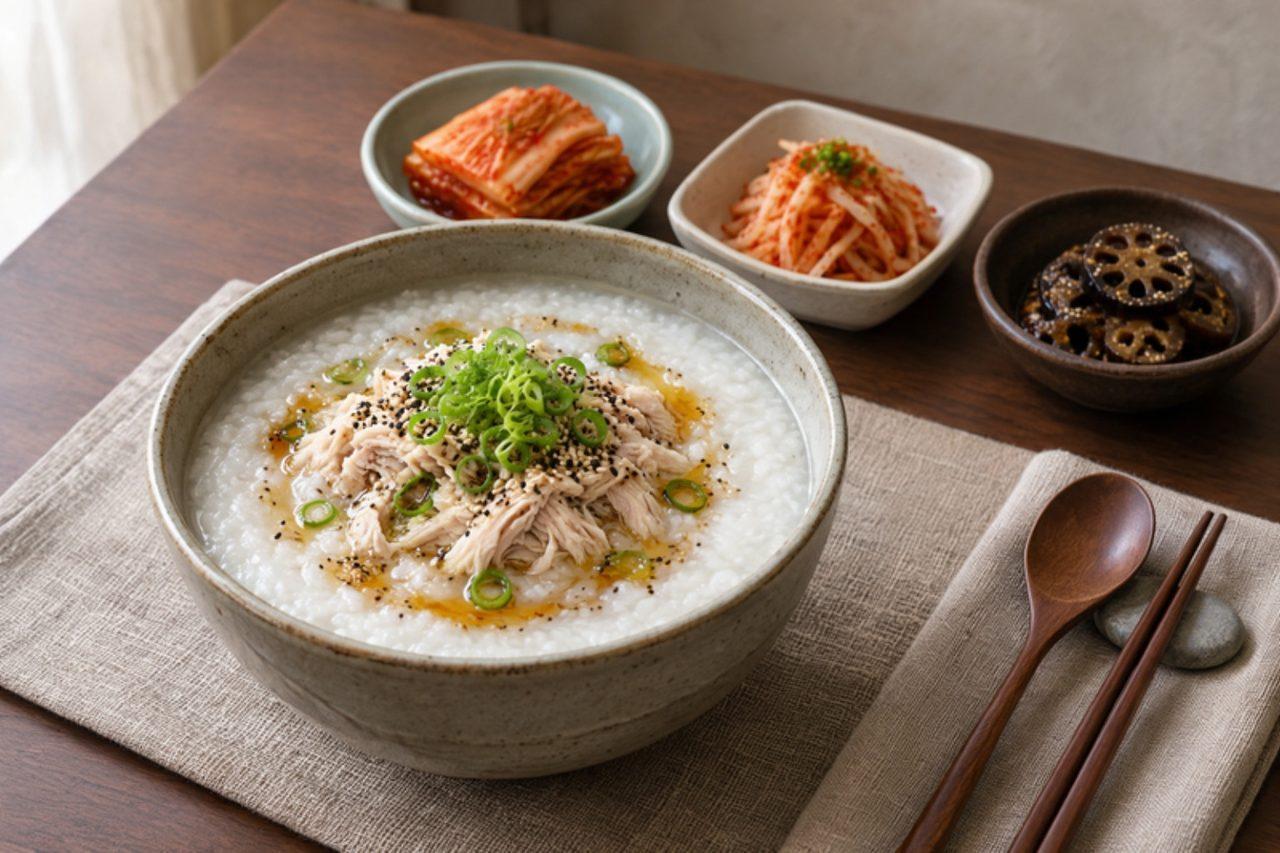
All over Korea, dakjuk is the bowl a mother makes on a cold morning or when someone is under the weather: chicken simmered with garlic and ginger, the meat pulled into shreds, and soaked rice cooked down in the broth until it turns into a soft, savoury porridge finished with sesame oil. It is eaten for breakfast or as a gentle lunch, with a little kimchi on the side. The usual mistake is boiling the chicken hard, which clouds the broth and toughens the meat; keep it at a lazy simmer. Chef's tip: fry the soaked rice in sesame oil for two minutes before the broth goes in, so the grains toast lightly and the porridge tastes nutty rather than flat.


TacachoMashed roasted green plantain balls
Tacacho is the breakfast of the Peruvian Amazon, from Tarapoto to Iquitos: green plantains roasted over coals, mashed with fat and salt and shaped into balls. There it comes with cecina (smoked pork) and is mashed with lard and crackling; this vegan tacacho uses good oil and a pinch of smoked paprika for the same savoury, smoky depth. The balls are dense, chewy and starchy, crisp at the edges where the plantain charred, and they are eaten hot with a fiery chilli sauce or alongside stews. Use plantains that are fully green and firm. Chef's tip: mash the plantains while they are still very hot; as green plantain cools its starch sets and it won't bind into a smooth ball.
 Peruvian

TteokbokkiRice cakes in spicy sauce
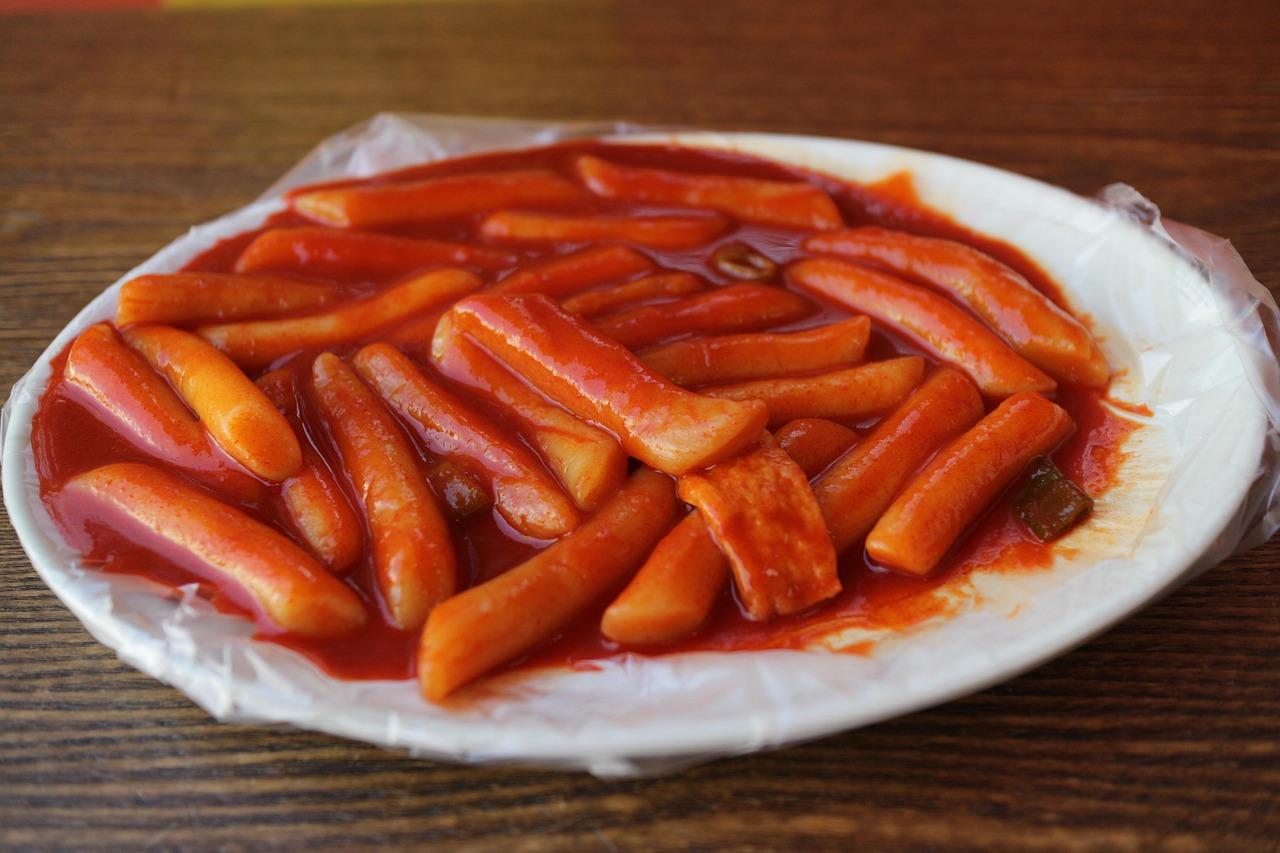
Tteokbokki (떡볶이) is Korea's best-loved street snack: chewy cylinders of rice cake simmered in a thick, glossy, sweet and spicy red sauce. It became a classic in Seoul, where it is sold from street stalls and snack bars in every neighbourhood. Street versions use anchovy stock and fish cakes; this vegan version uses a quick kelp and shiitake stock with cabbage and spring onions, and has all the same punch. Eat it hot, while the rice cakes are soft and stretchy. Chef's tip: keep stirring and scrape the bottom; the rice cakes release starch that thickens the sauce but also catches. The sauce is right when it clings to the spoon in a glossy coat.
