
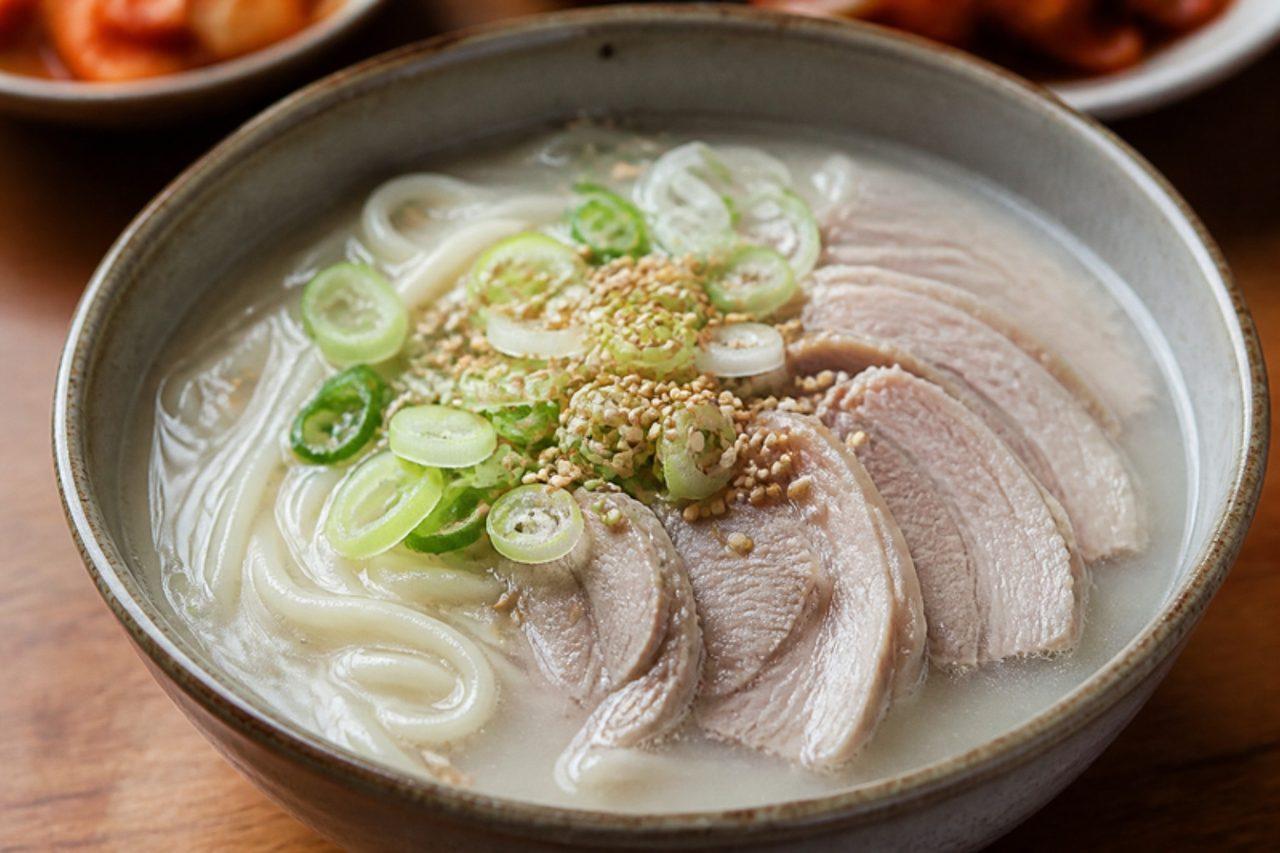
AI-generated image
Gogi guksu
고기국수: Jeju's thick wheat noodles in a rich pork broth, topped with sliced pork
Gogi guksu goes back to Jeju's village feasts, where a pig was slaughtered for a wedding or funeral and its bones were boiled into broth for noodles to feed everyone. In Jeju City there is now a street of noodle restaurants near Samseonghyeol shrine, popular for a quick lunch and with visitors fresh off the plane. The broth is cloudy and rich, the noodles are thick and chewy, and the slices of boiled pork on top are often from the island's black pigs. Diners add chilli flakes and spring onion as they like. Chef's tip: dip the cooked noodles into the hot broth in a sieve for 20 seconds before they go in the bowl; they heat through without going soft.
- Total time
- 180 min
- Difficulty
- hard
- Serves
- 4
Ingredients
For the broth
For the pork
For the bowls
Method
0/11 doneStep 1: Soak 2 ¼ lb pork back or neck bones and 1 pork trotter in cold water for 30 minutes to draw out the blood, then drain.
30 minStep 2: Cover the bones with fresh water in a large stockpot, bring to the boil and boil for 10 minutes. Drain, rinse each piece well under running water and clean the pot.
15 minStep 3: Return the bones to the pot with 16 ¾ cups water and bring to a hard boil over a high heat. Partly cover and boil steadily for 1 hour, topping up with boiling water if the bones poke out.
60 minStep 4: Add 1 ⅛ lb boneless pork belly or shoulder, 1 onion, 7 oz Korean radish or mooli, 8 cloves garlic, ⅔ oz ginger and 3 spring onion whites. Boil steadily for 1 hour more, until the pork is very tender when pierced with a skewer and the broth is cloudy.
60 minStep 5: Lift out the pork belly, wrap it in foil and leave it for 10 minutes; it slices more neatly once rested. Strain the broth, discard the bones and vegetables, and skim off some of the fat (leave a little for richness). You need about 1.8 litres.
Step 6: Season the broth with 1 tbsp Korean soup soy sauce (guk-ganjang) and 1 ½ tsp salt and keep it hot over a low heat. Cut the pork into slices about 5 mm thick.
Step 7: Cook 14 oz thick dried wheat noodles (jungmyeon) in a separate large pan of boiling water following the packet, usually 5 to 6 minutes for dried, stirring at first.
6 minStep 8: Common mistake: cooking the noodles in the broth. Their starch makes the broth thick and murky. Drain them, rinse under cold water and rub off the starch, so they're firm and springy.
Step 9: Put a portion of noodles in a sieve and dip it into the hot broth for 20 seconds, then tip into a deep bowl. Repeat for each bowl.
Step 10: Lay the pork slices over the noodles and ladle over the boiling broth. Top with 3 spring onions, a pinch of 2 tsp Korean chilli flakes (gochugaru), 1 sheet roasted seaweed (gim), 2 tsp toasted sesame seeds and ½ tsp black pepper, and serve with kimchi on the side.
Step 11: Cool leftover broth quickly and refrigerate it within 2 hours; it keeps for 3 days, or 3 months frozen.
Nutrition per serving
- Calories
- 740 kcal
- Protein
- 38 g
- Carbs
- 78 g
- Fat
- 30 g
- Fibre
- 3 g
Nutrition values are estimates.
KrazyBadal
Good to know
- How long does gogi guksu take?
- About 180 minutes in total: 30 minutes to prepare and 150 minutes to cook.
- How many people does it serve?
- 4 as written. Change the servings above the ingredients and every amount scales to match.
- Can I make it ahead?
- Yes. It keeps well, so you can cook it earlier in the day or the day before and reheat it.
- What can I use instead of onion?
- 2 shallots per onion.
- What can I use instead of garlic?
- ½ tsp garlic paste or ⅛ tsp garlic powder per clove.
Reviews
No reviews yet. Be the first to cook it.
Rate this recipe
Sign in to rate and review this recipe.
You might also like

Soto Banjar
Along the rivers of Banjarmasin in South Kalimantan, breakfast often means soto Banjar eaten at a wooden riverside warung, sometimes after a dawn trip to the floating market. Unlike the turmeric sotos of Java, this broth is pale and clear, perfumed with the sweet spices that traders brought up the river centuries ago: cinnamon, cloves, star anise, cardamom and nutmeg. Shredded chicken, glass noodles, carrot and a boiled egg go into the bowl with rice cakes, and lime and a little chilli sharpen it at the table. Chef's tip: toast the whole spices in the pan for a minute before the paste goes in; it brings out their sweetness without the dusty edge of ground spice.

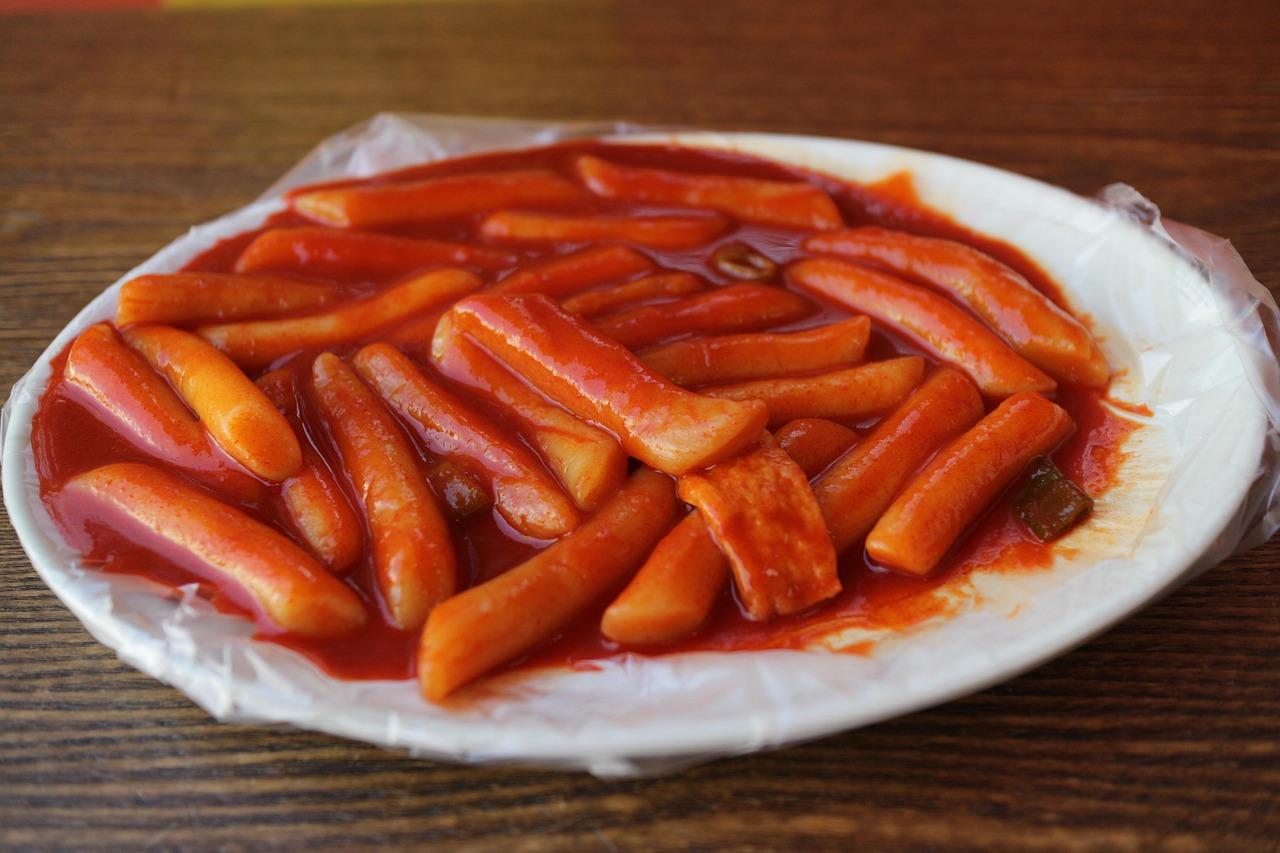
Tteokbokki
Tteokbokki (떡볶이) is Korea's best-loved street snack: chewy cylinders of rice cake simmered in a thick, glossy, sweet and spicy red sauce. It became a classic in Seoul, where it is sold from street stalls and snack bars in every neighbourhood. Street versions use anchovy stock and fish cakes; this vegan version uses a quick kelp and shiitake stock with cabbage and spring onions, and has all the same punch. Eat it hot, while the rice cakes are soft and stretchy. Chef's tip: keep stirring and scrape the bottom; the rice cakes release starch that thickens the sauce but also catches. The sauce is right when it clings to the spoon in a glossy coat.



Miso soup
Miso soup (味噌汁) is drunk every day in homes all over Japan, at breakfast as well as dinner, beside a bowl of rice. The base is dashi; this vegan version uses kombu and dried shiitake instead of bonito, which gives it a deep, rounded flavour. Silken tofu and wakame seaweed are the classic fillings. It takes ten minutes; just remember not to boil the miso. Chef's tip: add the miso at the very end and never let it boil. Boiling kills the miso's fresh, fermented aroma; Japanese cooks say the soup should only 'smile', with the surface barely trembling.