
 Turkish
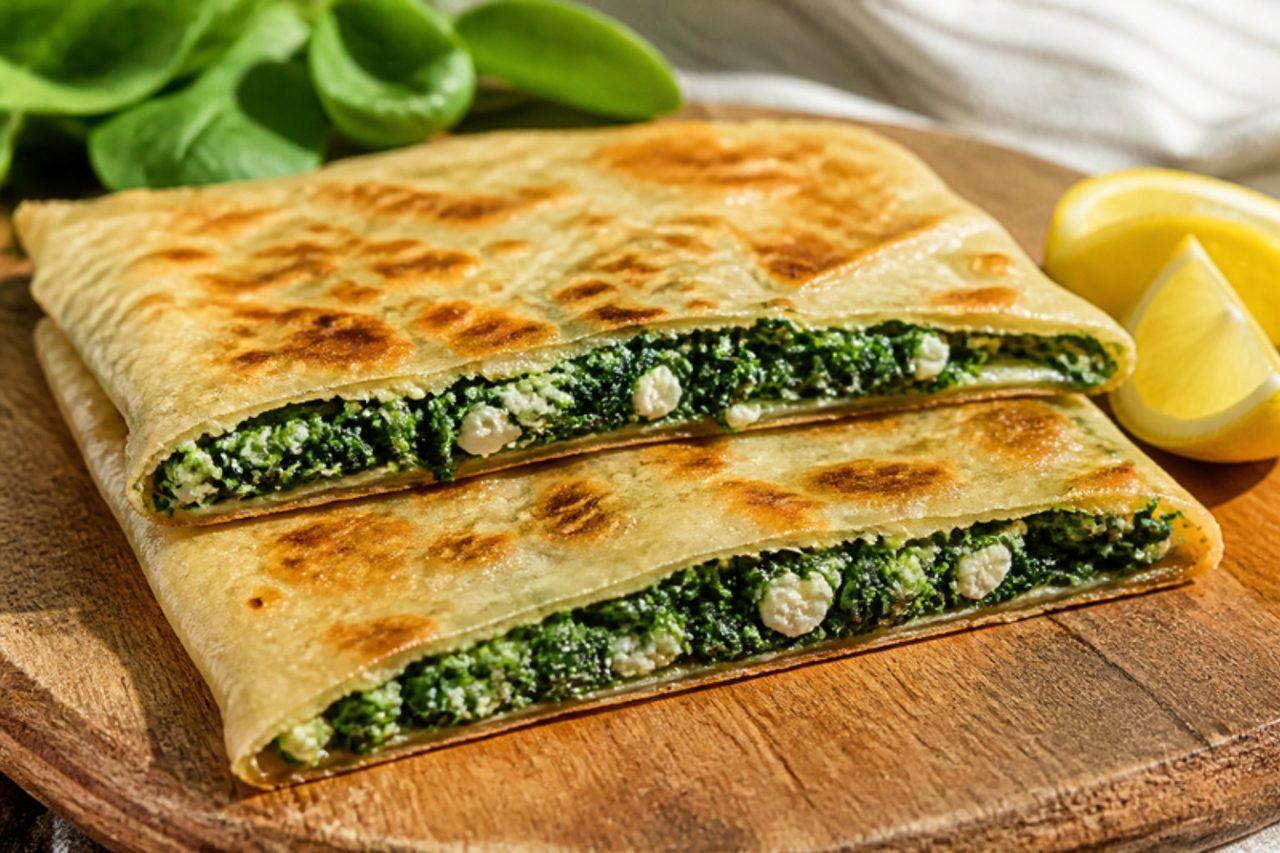
Gözleme with spinach and feta
Ispanaklı peynirli gözleme: thin griddled flatbread with a spinach and white cheese filling
On roadsides and at weekly village markets across central Anatolia, women sit cross-legged by a domed iron griddle (saç), rolling dough paper-thin with a long thin rolling pin (oklava), filling it and cooking it to order. This is gözleme: a soft, blistered parcel of unleavened dough wrapped round spinach and salty white cheese, brushed with butter as it comes off the heat. Eat it hot, folded in paper, with a glass of ayran. A big frying pan or flat griddle at home does the job. Chef's tip: roll the dough so thin you can almost see the worktop through it; thick gözleme tastes doughy and the filling stays cold.
- Prep
- 40 min
- Cook
- 20 min
- Difficulty
- Medium
- Serves
- 4
- Per serving
- 540 kcal
Ingredients
For the dough
- 14 oz plain flourplus extra for rolling
- 1 ½ tsp salt
- 1 cup warm water
- 2 tbsp olive oil
For the filling
- 10 ½ oz fresh spinachwashed, dried and finely chopped
- 1 onionsmall, finely chopped
- 7 oz Turkish white cheese (beyaz peynir) or fetacrumbled; choose one made with vegetarian rennet
- ¼ tsp ground black pepper
To cook
- 1 ⅜ oz buttermelted
Shop this recipe on Amazon
Search Amazon for the rest
Fresh ingredients (4)
Links open Amazon in a new tab. As an Amazon Associate we earn from qualifying purchases.
Method
0/9 doneStep 1: Mix 14 oz plain flour and ⅞ tsp salt in a bowl, add 1 cup warm water and 2 tbsp olive oil and bring together. Knead for 5 minutes until soft, smooth and slightly tacky, like an earlobe.
5 minStep 2: Divide into 4 balls, cover with a damp cloth and rest for 20 minutes. Resting relaxes the dough so it rolls out thin without shrinking back.
20 minStep 3: Meanwhile put 10 ½ oz fresh spinach and 1 onion in a bowl with the rest of ⅝ tsp salt and squeeze and rub them with your hands for 1–2 minutes until the spinach has shrunk by half. Squeeze out all the green juice. A wet filling is the most common mistake: it soaks and tears the thin dough.
3 minStep 4: Mix the squeezed spinach with 7 oz Turkish white cheese (beyaz peynir) or feta, 1 tsp Aleppo pepper (pul biber) and ¼ tsp ground black pepper.
Step 5: On a floured worktop roll one ball into a thin round about 40 cm across, turning and dusting it so it doesn't stick.
Step 6: Spread a quarter of the filling over one half, leaving a 2 cm border. Fold the other half over and press the edges to seal, giving a half-moon. Make the rest the same way, keeping finished ones under a cloth.
Step 7: Heat a large, dry frying pan or flat griddle over a medium-high heat for 3 minutes. Cook one gözleme for 2–3 minutes until it puffs in places and has brown blisters underneath.
3 minStep 8: Brush the top with 1 ⅜ oz butter, flip, and cook for 2 minutes more until spotted brown on the second side. Brush with a little more butter as it comes out. Repeat with the rest.
2 minStep 9: Cut into wide strips or squares and serve hot with lemon wedges and ayran.
Nutrition per serving
- Calories
- 540 kcal
- Protein
- 18 g
- Carbs
- 75 g
- Fat
- 19 g
- Fibre
- 4 g
Nutrition values are estimates.
KrazyBadal
Good to know
- How long does gözleme with spinach and feta take?
- About 60 minutes in total: 40 minutes to prepare and 20 minutes to cook.
- How many people does it serve?
- 4 as written. Change the servings above the ingredients and every amount scales to match.
- Is it vegetarian?
- Yes. It has no meat or fish.
- What can I use instead of plain flour?
- Self-raising flour, same amount (then leave out the baking powder).
- What can I use instead of fresh spinach?
- Frozen spinach, thawed and squeezed: about a third of the weight.
Reviews
No reviews yet. Be the first to cook it.
Rate this recipe
Sign in to rate and review this recipe.
You might also like
SalufPuffy flatbread
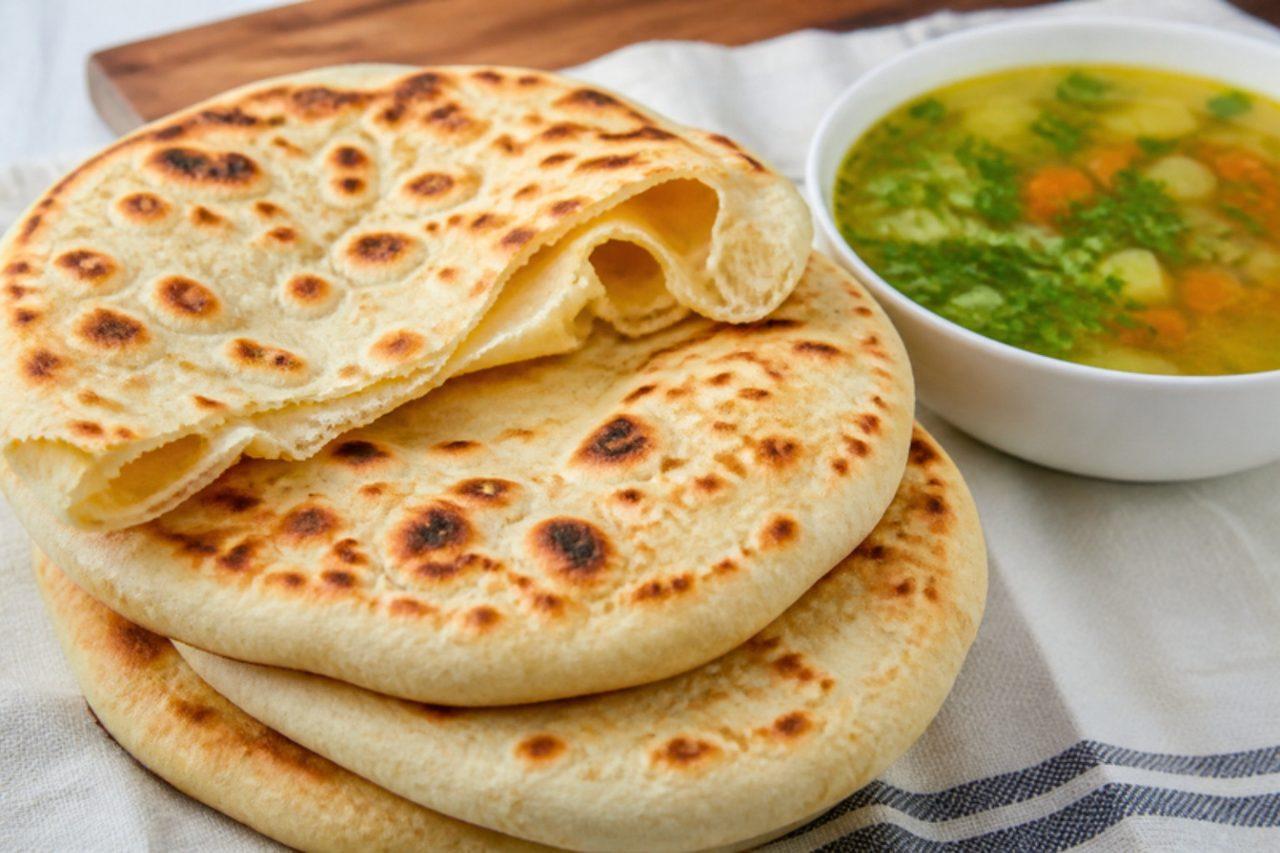
Saluf is the everyday bread of Yemenite Israelis, slapped onto a hot pan or taboon in Rosh HaAyin and Sha'arayim in Rehovot and eaten with marak temani, hilbe and zhug. It is soft and blistered, thicker than pita and with no pocket, made to tear and dunk. Home cooks often roll it too thin, which gives a cracker; it should be about 1 cm thick so it stays pillowy. Chef's tip: cook it under a lid on a very hot dry pan for the first minute, which traps steam and puffs it the way a taboon does.
 Israeli


ChipaCheese bread rings
In Paraguay you hear 'chipa, chipa!' called by vendors with big baskets on buses and street corners, and every family bakes it for Holy Week, when chipa is the food of Good Friday. Cassava starch, a little cornmeal, butter, eggs and a lot of hard cheese are kneaded into a dough scented with aniseed, shaped into rings or small rolls and baked in a hot oven, traditionally a domed clay tatakua. It's chewy, crisp outside and best warm with cocido (toasted yerba tea). Chef's tip: the dough should feel soft and slightly greasy; add milk a spoon at a time, as too much makes the chipa spread flat.
 Paraguayan

Firik pilavıSmoky green wheat pilaf
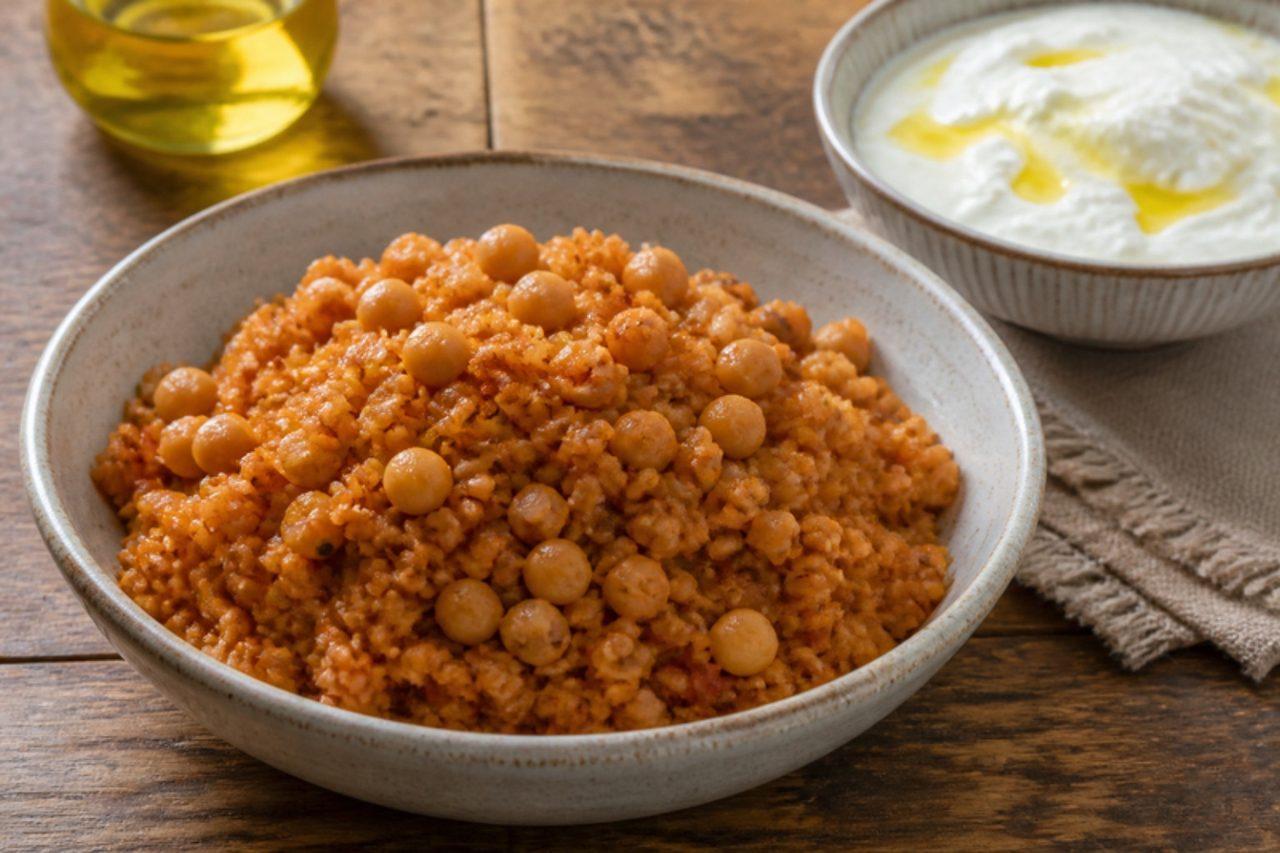
Each June farmers around Gaziantep cut wheat while it is still green and burn off the husks in the field, which gives firik its gentle campfire smell. Cooked as a pilaf with onion, pepper paste and a handful of chickpeas, it has a chewy, nutty bite that sits well beside grilled kebabs or simply a bowl of ayran and a tomato salad. It is the everyday grain of the region's home kitchens, cheaper than rice and more filling. Rinse the grains well: grit and bits of chaff are common in firik. Chef's tip: let it rest under a tea towel for ten minutes after cooking; the steam finishes the grains and they separate beautifully.