
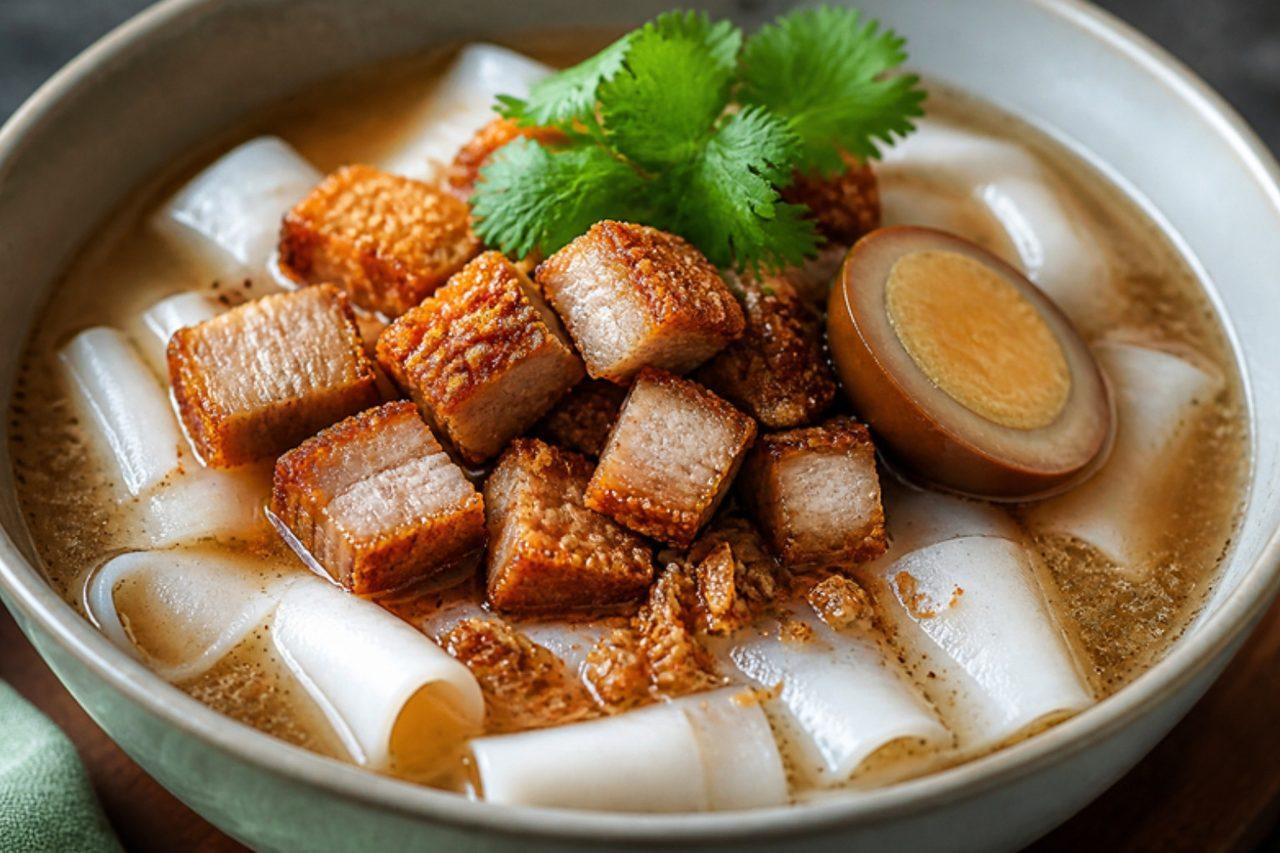
AI-generated image
Guay jub with crispy pork
ก๋วยจั๊บ (guay jub) — rolled rice noodles in peppery pork broth with crispy pork belly
After dark on Yaowarat Road in Bangkok's Chinatown, queues form at the guay jub stalls for bowls of curled rice noodles in a cloudy, peppery broth, topped with crackling pork belly and a soy-stained egg. The noodles roll into little tubes as they cook and turn slippery and soft, the broth bites with white pepper, and the pork shatters before it melts. This is Teochew comfort food, eaten as a late supper or to round off a night out, with a dish of chilli vinegar and extra pepper on the side. Chef's tip: grind white peppercorns fresh over each bowl at the end; ready-ground pepper has lost the floral heat that defines the soup.
- Total time
- 90 min
- Difficulty
- medium
- Serves
- 4
Ingredients
For the broth
For the crispy pork
For the bowls
Method
0/9 doneStep 1: Put 1 ½ lb pork spare ribs or bones and 1 ⅛ lb skin-on pork belly in a large pot, cover with cold water and bring to the boil. Boil for 5 minutes, then drain, rinse off the scum and clean the pot.
12 minStep 2: Return the bones and belly to the pot with 10 ½ cups water, 1 head garlic, 4 coriander roots and 1 ½ tbsp white peppercorns. Bring to the boil, then simmer gently over a low heat for 40 minutes, skimming now and then.
40 minStep 3: While the broth simmers, boil 4 eggs for 8 minutes, cool them in cold water and peel.
8 minStep 4: Lift out the pork belly; after 40 minutes' simmering it is well cooked through (far above 145°F / 145 °F). Pat it completely dry, prick the skin all over with a skewer, rub the skin with 1 tbsp white vinegar and 1 tsp salt, and leave it skin side up, uncovered, for 15 minutes to dry.
15 minStep 5: Meanwhile, season the broth with 3 tbsp light soy sauce, 1 tbsp dark soy sauce, 1 tsp sugar and 1 tsp salt. Add the peeled eggs and simmer for 20 minutes, until they turn a light tan.
20 minStep 6: Heat 2 cups vegetable oil in a wok or deep pan to 350°F. Lower in the pork belly skin side down, covering with a lid or splatter guard as it spits, and fry for 8–10 minutes, until the skin blisters and crackles. Turn and fry the meat side for 2 minutes. Wet skin is the usual reason it stays chewy and spits dangerously, so dry it well beforehand.
12 minStep 7: Drain the pork on a rack and rest it for 5 minutes, then chop it into 1.5 cm pieces with a heavy knife.
5 minStep 8: Cook 10 ½ oz dried rolled rice noodles (guay jub sen) in a separate pan of boiling water for 4–5 minutes, until they curl into tubes and are soft and slippery. Drain. Cooking them in a separate pan keeps their starch from making the broth gluey.
5 minStep 9: Divide the noodles between bowls, add a halved egg and a pile of crispy pork, then ladle over the hot broth. Finish with 2 spring onions, 3 tbsp crispy fried garlic, 1 tsp freshly ground white pepper and 1 handful coriander leaves.
Nutrition per serving
- Calories
- 720 kcal
- Protein
- 35 g
- Carbs
- 64 g
- Fat
- 36 g
- Fibre
- 1 g
Nutrition values are estimates.
KrazyBadal
Good to know
- How long does guay jub with crispy pork take?
- About 90 minutes in total: 20 minutes to prepare and 70 minutes to cook.
- How many people does it serve?
- 4 as written. Change the servings above the ingredients and every amount scales to match.
- What can I use instead of garlic?
- ½ tsp garlic paste or ⅛ tsp garlic powder per clove.
- What can I use instead of light soy sauce?
- Tamari, same amount (gluten free).
Reviews
No reviews yet. Be the first to cook it.
Rate this recipe
Sign in to rate and review this recipe.
You might also like

Soto Banjar
Along the rivers of Banjarmasin in South Kalimantan, breakfast often means soto Banjar eaten at a wooden riverside warung, sometimes after a dawn trip to the floating market. Unlike the turmeric sotos of Java, this broth is pale and clear, perfumed with the sweet spices that traders brought up the river centuries ago: cinnamon, cloves, star anise, cardamom and nutmeg. Shredded chicken, glass noodles, carrot and a boiled egg go into the bowl with rice cakes, and lime and a little chilli sharpen it at the table. Chef's tip: toast the whole spices in the pan for a minute before the paste goes in; it brings out their sweetness without the dusty edge of ground spice.


Miso soup
Miso soup (味噌汁) is drunk every day in homes all over Japan, at breakfast as well as dinner, beside a bowl of rice. The base is dashi; this vegan version uses kombu and dried shiitake instead of bonito, which gives it a deep, rounded flavour. Silken tofu and wakame seaweed are the classic fillings. It takes ten minutes; just remember not to boil the miso. Chef's tip: add the miso at the very end and never let it boil. Boiling kills the miso's fresh, fermented aroma; Japanese cooks say the soup should only 'smile', with the surface barely trembling.

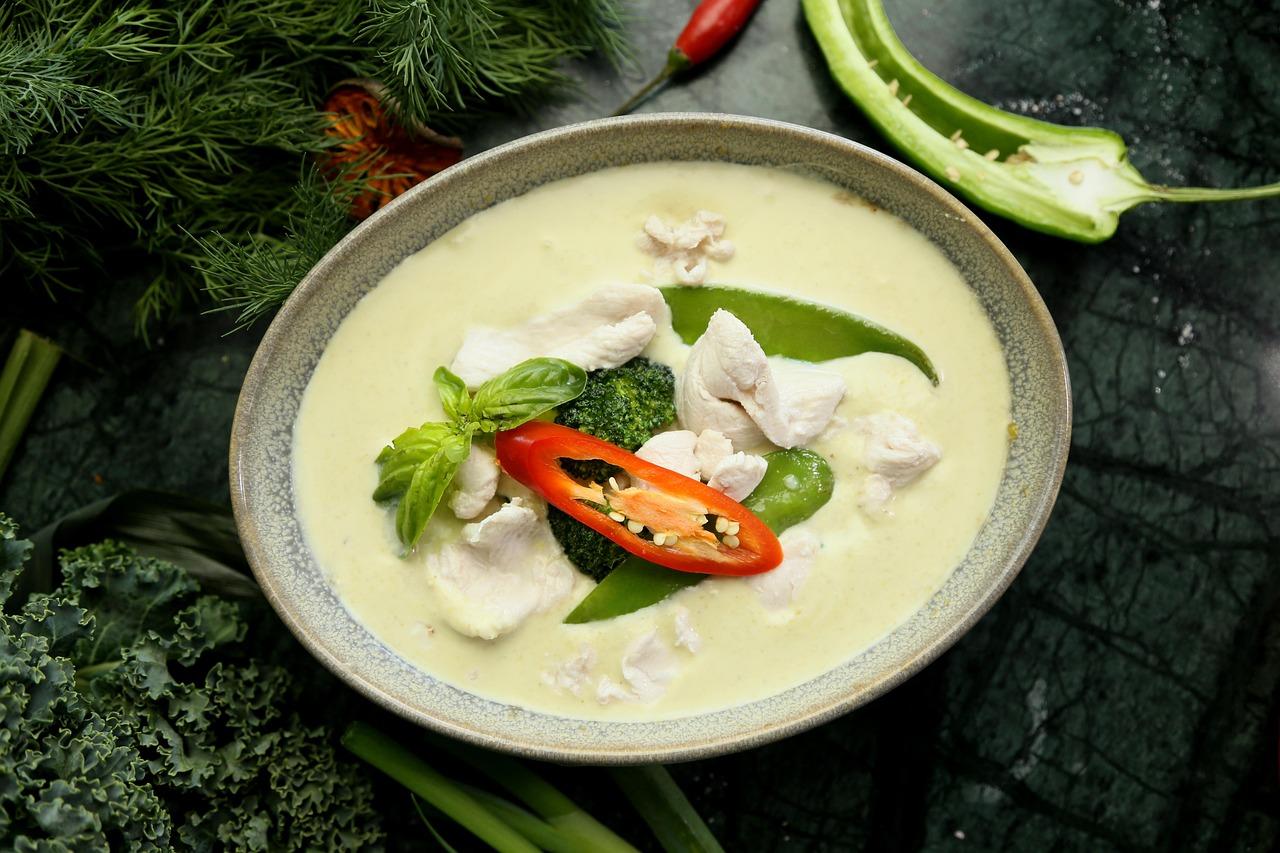
Thai green chicken curry
A weeknight green curry that tastes like a takeaway. Frying the paste in the thick top layer of coconut milk wakes up the lemongrass and chilli, and a last-minute balance of fish sauce, lime and a little sugar makes it sing.
