
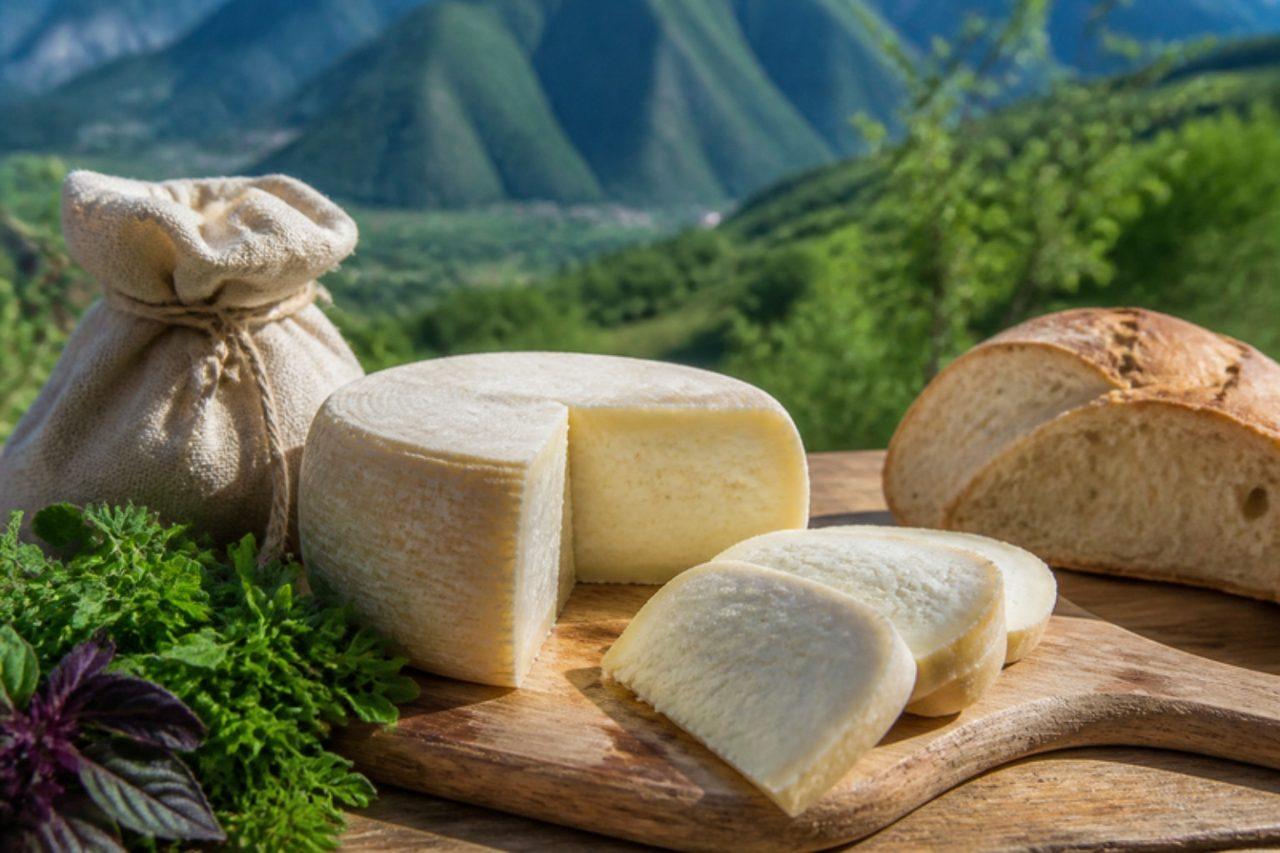
AI-generated image
Guda cheese
Guda: home-style Tusheti sheep's cheese, salted and ripened in a cloth bag


Tush shepherds make guda in summer huts high above the Alazani valley, pressing sheep's-milk curd into bags sewn from sheepskin, where it ripens into a crumbly, pungent cheese that travels down to Telavi markets in autumn. You cannot copy the sheepskin at home, but you can make a firm, salty sheep's-milk cheese and ripen it in a cloth in the fridge for two to three weeks, which gives a similar sharp, grassy bite. Traditionally the milk is set with animal rennet; vegetarian (microbial) rennet works the same way. A common mistake is cutting the curd before it gives a clean break, which leaves a soft, wet cheese that sours instead of ripening. Chef's tip: grate aged guda over hot ghomi or khinkali; its strong flavour goes a long way.
- Total time
- 120 min
- Difficulty
- hard
- Serves
- 10
Ingredients
For the cheese
- 16 ¾ cups pasteurised sheep's milkor half sheep's, half whole cow's milk (not UHT)
- 1 tsp calcium chloride solutionmixed with 50 ml cool water
- 2 tbsp live plain yogurtas the starter
- 1 tsp vegetarian liquid rennetor animal rennet, mixed with 50 ml cool water
- 2 ⅞ oz coarse saltnon-iodised, for salting the curd
Shop this recipe on Amazon
What you'll need
Spices & pantry
Fresh ingredients (2)
Links open Amazon in a new tab. As an Amazon Associate, WhatToEat.Today earns from qualifying purchases.
Method
0/8 doneStep 1: Warm 16 ¾ cups pasteurised sheep's milk in a large, very clean pan over a low heat to 90°F, stirring gently. Stir in 1 tsp calcium chloride solution and 2 tbsp live plain yogurt, cover and leave for 45 minutes at that temperature.
45 minStep 2: Stir in 1 tsp vegetarian liquid rennet for 30 seconds with an up-and-down motion, then stop the milk moving with the back of a spoon. Cover and leave undisturbed for 45–60 minutes.
Step 3: Check for a clean break: slide a knife into the curd and lift; it should split cleanly with clear, yellowish whey in the crack. If it is still soft, wait 10 more minutes.
Step 4: Cut the curd into 1.5 cm cubes. Rest 5 minutes, then warm slowly to 100°F over 30 minutes, stirring gently, until the curds shrink, firm up and feel springy when squeezed.
30 minStep 5: Pour into a colander lined with cheesecloth. Drain for 30 minutes, then work in a third of 1 ⅛ oz coarse salt, crumbling the curd with your fingers.
30 minStep 6: Pack the curd into a cloth-lined mould or a colander, fold the cloth over and press with a 3–4 kg weight for 6 hours, turning once.
Step 7: Unwrap, rub the outside with the rest of 1 ⅔ oz coarse salt and leave on a rack in the fridge for 2 days, turning daily, until the surface is dry.
Step 8: Wrap in a dry cheesecloth and ripen in a box in the fridge for 2–3 weeks, turning every few days and wiping off any moisture. It is ready when crumbly and sharp. Discard it if it smells rotten or grows pink, black or furry mould.
Nutrition per serving
- Calories
- 120 kcal
- Protein
- 8 g
- Carbs
- 1 g
- Fat
- 9 g
- Fibre
- 0 g
Nutrition values are estimates.
KrazyBadal
Good to know
- How long does guda cheese take?
- About 120 minutes in total: 60 minutes to prepare and 60 minutes to cook.
- How many people does it serve?
- 10 as written. Change the servings above the ingredients and every amount scales to match.
- Is it vegetarian?
- Yes. It has no meat or fish.
- Is it gluten free?
- Yes, as written. Check the labels on stock, sauces and spice mixes, which sometimes contain gluten.
- Can I make it ahead?
- Yes. It keeps well, so you can cook it earlier in the day or the day before and reheat it.
- What can I use instead of pasteurised sheep's milk?
- Oat, soy or almond milk, same amount (use unsweetened for savoury dishes).
- What can I use instead of live plain yogurt?
- Sour cream or buttermilk, same amount.
Reviews
No reviews yet. Be the first to cook it.
Rate this recipe
Sign in to rate and review this recipe.
You might also like

Vegetable brown stock
A hearty stock that's simmered for 2 hours, then blended and strained, so the potato gives it body. Its deeper flavour suits thick soups, gravies and stews. Freeze it in portions so it's ready when you need it.



Chaat masala
Chaat masala is the tangy, salty, slightly sulphurous sprinkle that makes chaat taste like chaat. Dried mango (amchur) gives the sourness and black salt the distinctive savoury edge. Sprinkle it over fruit, salads, raita, chips and street-food snacks.
 Indian

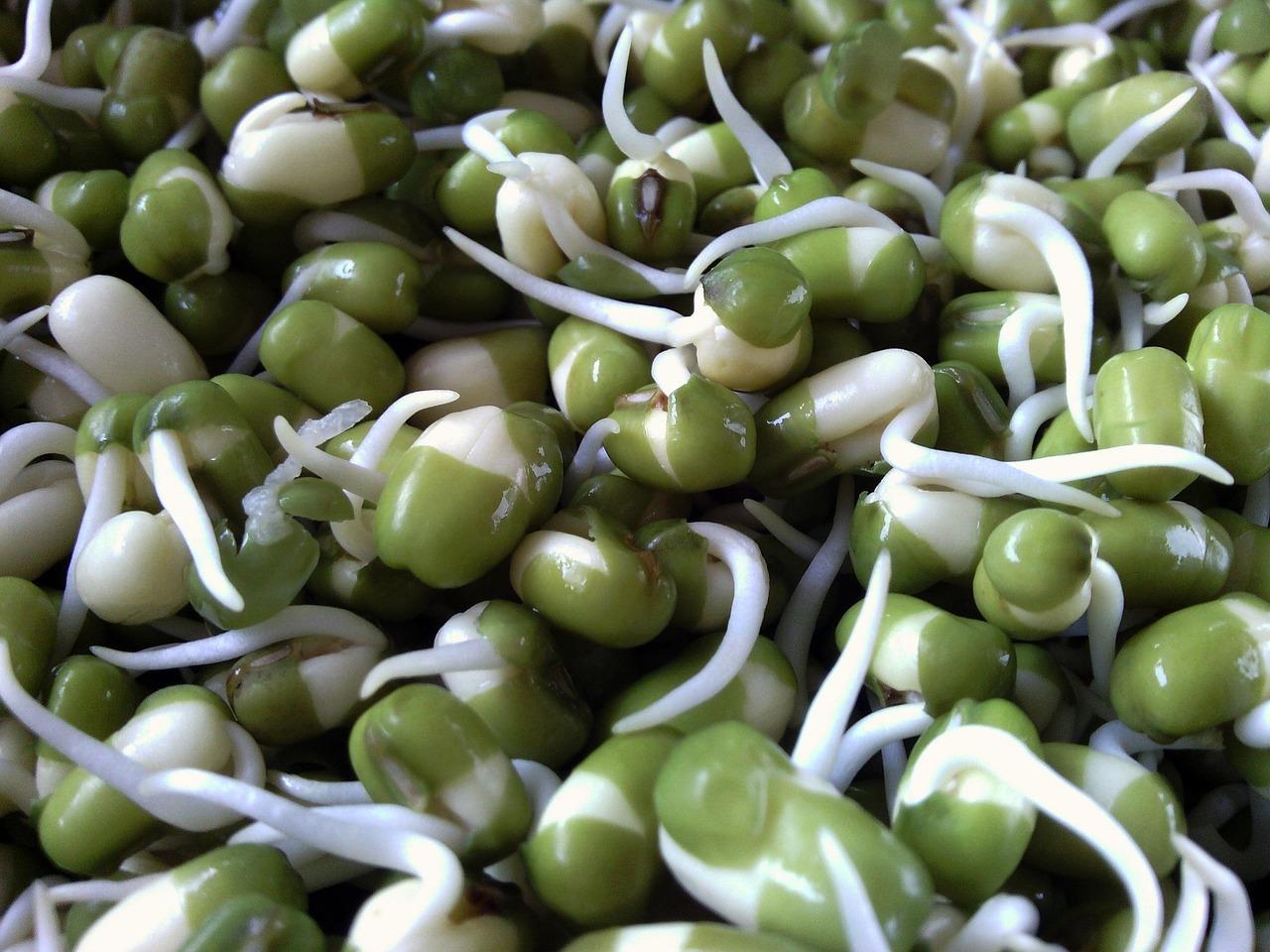
Bean sprouts
Sprouting whole green grams makes them crunchier, quicker to cook and more nutritious. All you need is muslin, water and a warm spot, and they're ready in 3–4 days. Use them in salads, bhel, usal and stir-fries. Any other whole pulse sprouts the same way.