
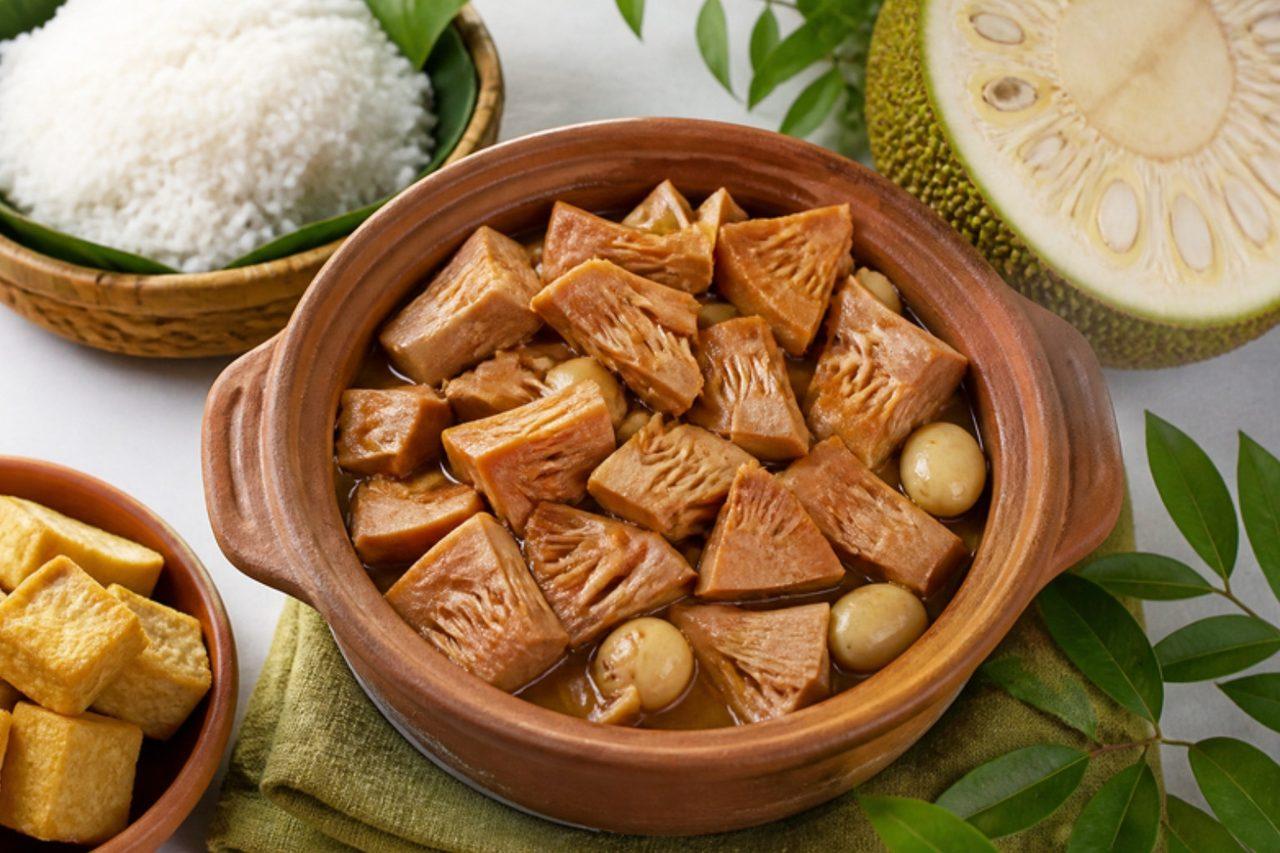
AI-generated image
Gudeg
Yogyakarta's young jackfruit, slow-cooked for hours in coconut milk and palm sugar until sweet, dark and tender


Gudeg is the signature of Yogyakarta: whole streets around Wijilan are lined with stalls selling it from dawn, and visitors carry it home in clay pots or woven baskets. Unripe jackfruit is cooked for hours with palm sugar, coconut milk, galangal and salam leaves until it turns reddish-brown, soft as pulled meat, and deeply sweet and savoury. The classic plate adds chicken, egg and spicy cattle-skin stew; this vegan plate pairs it with sticky-sweet tempeh and tofu and a sharp sambal to cut the sweetness. Chef's tip: let the pot cook down slowly until almost all the liquid is gone — drier gudeg keeps for days and tastes better on the second.
- Total time
- 240 min
- Difficulty
- hard
- Serves
- 6
Ingredients
For the spice paste
For the jackfruit
To serve
Method
0/7 doneStep 1: Rinse 2 ¼ lb young green jackfruit in brine well and cut into 3–4 cm chunks, keeping the soft core with the seeds. If using fresh, oil your hands and knife first; the sap is sticky.
10 minStep 2: Blitz 8 shallots, 6 cloves garlic, 4 candlenuts, 1 tbsp coriander seeds and ½ tsp ground cumin with a splash of water to a smooth paste.
3 minStep 3: Line a heavy pot (clay is traditional, cast iron works) with 4 dried teak or guava leaves, if using, then add the jackfruit, 2 in galangal, 5 Indonesian bay leaves (daun salam), 2 stalks lemongrass and the paste. Add 7 oz palm sugar, 1 tbsp tamarind paste, 2 ½ tsp salt, 3 ¼ cups coconut milk and 3 ¼ cups water; the liquid should just cover everything.
Step 4: Bring to a boil over a medium-high heat, then lower to the gentlest simmer, cover and cook for 1½ hours, stirring gently every 20 minutes so the bottom doesn't catch.
90 minStep 5: Uncover and keep simmering over a low heat for 1½–2 hours more, until the liquid has reduced to a thick, toffee-coloured sauce clinging to the jackfruit and the chunks shred easily with a spoon. Stir more often at the end, scraping the base; the sugar can scorch quickly once the pan is nearly dry. Taste for salt. Rushing this stage on a high heat is the one thing that ruins gudeg: the sugar burns before the jackfruit turns tender.
105 minStep 6: Meanwhile, heat 3 tbsp vegetable oil in a frying pan over a medium heat and fry 7 oz tempeh and 7 oz firm tofu for 3–4 minutes a side until golden. When the gudeg is nearly done, tuck them into the pot for the last 15 minutes to soak up the sweet sauce.
15 minStep 7: Serve warm (not hot) on 6 portions steamed rice with tofu, tempeh and a spoon of 3 tbsp sambal oelek. Gudeg keeps for 4 days in the fridge and freezes well; reheat gently with a splash of water.
Nutrition per serving
- Calories
- 520 kcal
- Protein
- 15 g
- Carbs
- 74 g
- Fat
- 21 g
- Fibre
- 9 g
Nutrition values are estimates.
KrazyBadal
Good to know
- How long does gudeg take?
- About 240 minutes in total: 30 minutes to prepare and 210 minutes to cook.
- How many people does it serve?
- 6 as written. Change the servings above the ingredients and every amount scales to match.
- Is it vegan?
- Yes. It has no meat, fish, dairy or eggs.
- Is it gluten free?
- Yes, as written. Check the labels on stock, sauces and spice mixes, which sometimes contain gluten.
- Can I make it ahead?
- Yes. It keeps well, so you can cook it earlier in the day or the day before and reheat it.
- What can I use instead of shallots?
- Half an onion per 2 shallots.
- What can I use instead of garlic?
- ½ tsp garlic paste or ⅛ tsp garlic powder per clove.
Reviews
No reviews yet. Be the first to cook it.
Rate this recipe
Sign in to rate and review this recipe.
You might also like

Soto Banjar
Along the rivers of Banjarmasin in South Kalimantan, breakfast often means soto Banjar eaten at a wooden riverside warung, sometimes after a dawn trip to the floating market. Unlike the turmeric sotos of Java, this broth is pale and clear, perfumed with the sweet spices that traders brought up the river centuries ago: cinnamon, cloves, star anise, cardamom and nutmeg. Shredded chicken, glass noodles, carrot and a boiled egg go into the bowl with rice cakes, and lime and a little chilli sharpen it at the table. Chef's tip: toast the whole spices in the pan for a minute before the paste goes in; it brings out their sweetness without the dusty edge of ground spice.


Sayur lodeh
Sayur lodeh is everyday cooking in Central Java, made in big pots in Solo and Semarang kitchens and ladled over rice, with lontong rice cakes at Lebaran, or alongside opor and sambal goreng on festive tables. It's soupy rather than thick: a fragrant broth of coconut milk, galangal, lemongrass and lime leaf that carries chunks of aubergine, long beans, chayote and sweetcorn, plus tempeh and tofu to make it a meal. The flavour is mellow and slightly sweet, so the heat comes from sambal on the side. Chef's tip: keep the pot at a gentle simmer once the coconut milk goes in and stir now and then — a rolling boil splits the coconut milk into oily curds.

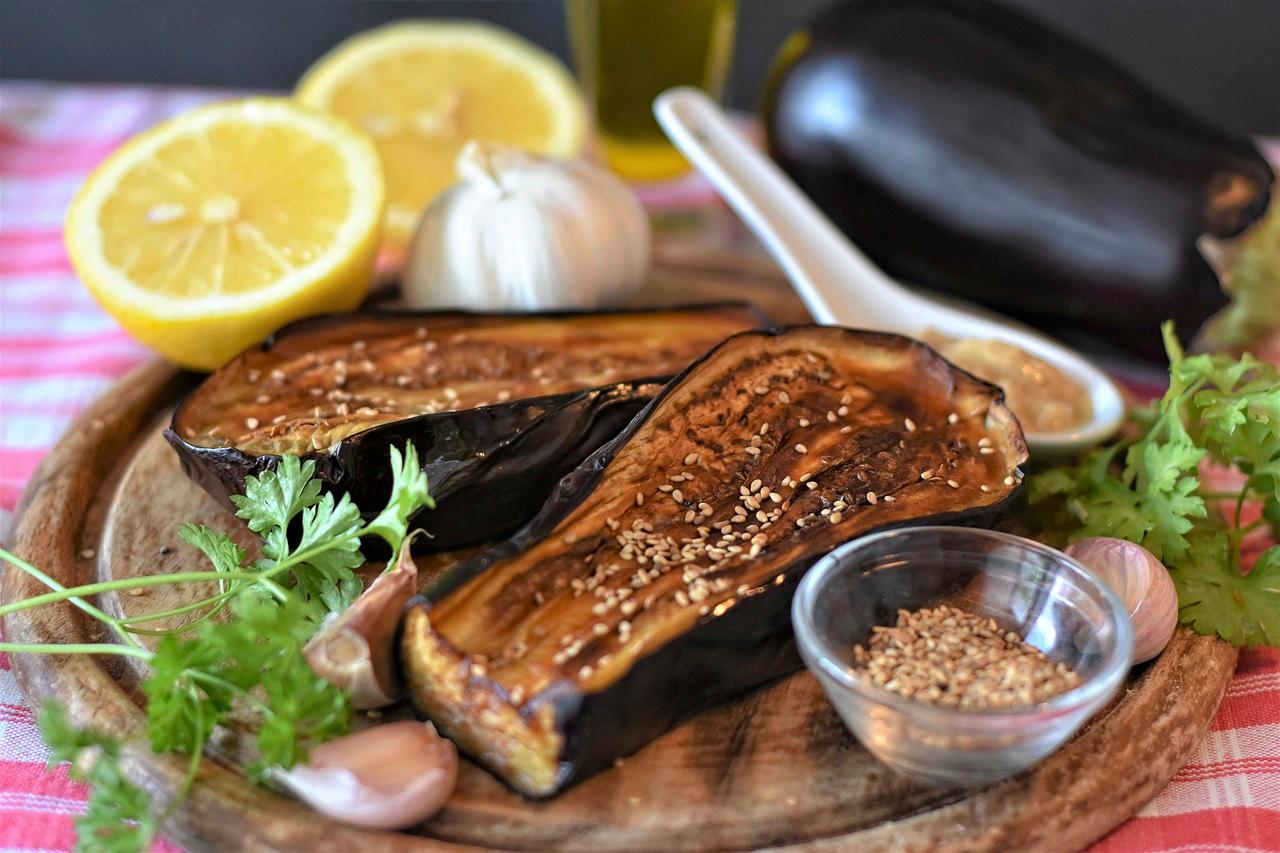
Smoky spiced aubergine
Whole aubergines charred over a flame until the skin blackens and the flesh turns soft and smoky, then chopped and tossed with onion, tomato, ginger, garlic and green chillies. A few black specks left in the flesh add to the smoky flavour. Serve hot with yogurt and millet rotla.

