
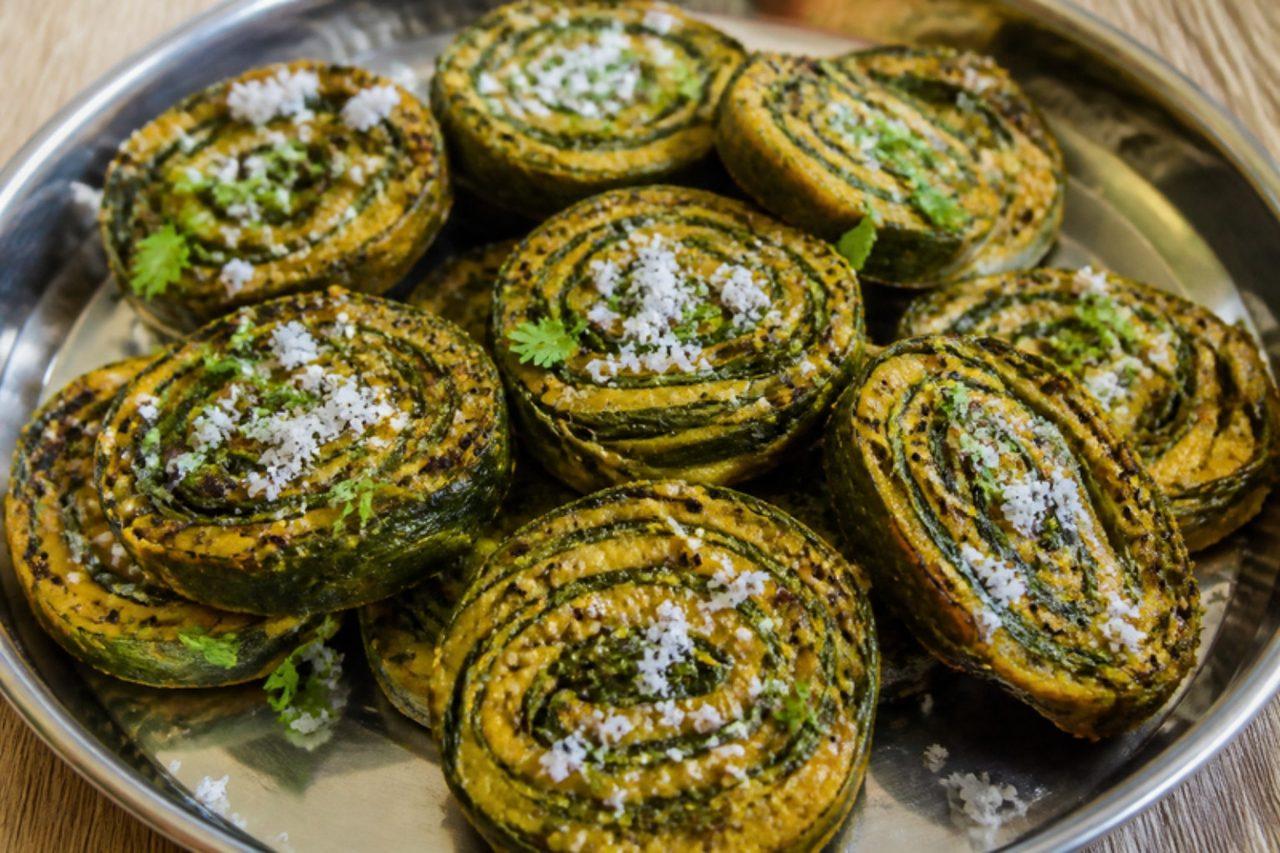
AI-generated image
Patra
Steamed colocasia leaf rolls
પાતરા: colocasia leaves spread with a sweet-sour besan paste, rolled, steamed, sliced and tempered with mustard and sesame



Arbi leaves (colocasia, sold as patra or alu leaves in Indian shops) are on every farsan counter from Surat to Ahmedabad, and steamed patra is the one Gujarati mothers make on a Sunday when the leaves look good at the market. Several leaves are glued together with a thick besan paste that is sour with tamarind, sweet with jaggery and warm with ginger and chilli, then rolled, steamed, cooled and cut into spirals. A final vaghar of mustard, sesame and curry leaves gives a crisp edge. The same dish in Maharashtra is alu vadi, where the slices are usually fried. Patra is a must on a wedding or Diwali farsan plate and is good cold in a dabba too, with green chutney or nothing at all. Tamarind matters for more than taste: raw colocasia makes the throat itch, and the acid in the paste stops it, so never skip it. Common mistake: slicing the rolls while hot, when they crumble; let them cool completely first. Chef's tip: choose medium leaves without holes, and shave the thick back veins flat with a knife so the leaves lie flat and roll tight.
- Total time
- 70 min
- Difficulty
- medium
- Serves
- 5
Ingredients
For the rolls
- 10 colocasia leaves (arbi/patra leaves)medium, about 20 cm long
- 7 oz gram flour (besan)
- 2 tbsp rice flour
- 3 tbsp thick tamarind pulp
- 2 ⅛ oz jaggerygrated
- 1 tbsp ginger-green chilli paste
- 1 ½ tsp red chilli powder
- ½ tsp ground turmeric
- 1 tbsp white sesame seeds
- 1 ¼ tsp salt
- 1 tbsp groundnut oil
- ¾ cup waterabout; add slowly
For the vaghar
- 3 tbsp groundnut oil
- 1 tsp black mustard seeds
- 1 tbsp white sesame seeds
- ¼ tsp gluten-free asafoetida
- 12 curry leaves
To serve
- 3 tbsp fresh coconut (optional)grated
- ⅓ oz fresh coriander (optional)chopped
Shop this recipe on Amazon
What you'll need
Spices & pantry
Fresh ingredients (2)
Links open Amazon in a new tab. As an Amazon Associate, WhatToEat.Today earns from qualifying purchases.
Method
0/10 doneStep 1: Wash 10 colocasia leaves (arbi/patra leaves) under running water, wipe them dry with a cloth and cut off the stalks. Lay each leaf shiny side down and shave the thick central and side veins flat with a small knife, without cutting through the leaf.
10 minStep 2: In a bowl mix 7 oz gram flour (besan), 2 tbsp rice flour, 3 tbsp thick tamarind pulp, 2 ⅛ oz jaggery, 1 tbsp ginger-green chilli paste, 1 ½ tsp red chilli powder, ½ tsp ground turmeric, 2 tsp ground coriander-cumin (dhana jeeru), 1 tbsp white sesame seeds, 1 ¼ tsp salt and 1 tbsp groundnut oil. Add ¾ cup water a little at a time to make a thick paste that spreads like soft butter and does not run off a tilted spoon.
5 minStep 3: Lay the largest leaf on the worktop, vein side up and tip pointing away from you. Spread a thin, even layer of paste over it with your fingers, right to the edges.
2 minStep 4: Lay a second leaf on top with its tip pointing the opposite way, spread with paste, and repeat to build a stack of 5 leaves, alternating the direction each time.
4 minStep 5: Fold the two long sides in by about 3 cm and spread paste on the folded flaps. Starting at the stem end, roll up tightly like a Swiss roll, smearing a little paste on the outside to seal. Make a second roll with the remaining leaves and paste.
5 minStep 6: Bring water to the boil in a steamer or a large pan with a rack. Set the rolls on a greased plate, cover and steam on a medium-high heat for 30–35 minutes, until a knife pushed into the centre comes out clean and the leaves have turned olive green.
35 minStep 7: Lift the rolls out and leave them to cool completely, at least 30 minutes (or chill them). Cut into 1 cm slices with a sharp knife.
Step 8: Heat 3 tbsp groundnut oil in a wide pan over a medium heat. Add 1 tsp black mustard seeds; when it pops, add 1 tbsp white sesame seeds, ¼ tsp gluten-free asafoetida and 12 curry leaves and let them crackle for a few seconds, until the sesame turns light gold.
2 minStep 9: Add the patra slices in a single layer and fry for 2–3 minutes, turning once, until the cut sides are lightly crisp.
3 minStep 10: Serve warm or at room temperature, scattered with 3 tbsp fresh coconut and ⅓ oz fresh coriander.
Nutrition per serving
- Calories
- 230 kcal
- Protein
- 8 g
- Carbs
- 30 g
- Fat
- 9 g
- Fibre
- 6 g
Nutrition values are estimates.
KrazyBadal
Good to know
- How long does patra take?
- About 70 minutes in total: 35 minutes to prepare and 35 minutes to cook.
- How many people does it serve?
- 5 as written. Change the servings above the ingredients and every amount scales to match.
- Is it vegan?
- Yes. It has no meat, fish, dairy or eggs.
- Is it gluten free?
- Yes, as written. Check the labels on stock, sauces and spice mixes, which sometimes contain gluten.
- What can I use instead of jaggery?
- Dark brown or muscovado sugar, same amount.
- What can I use instead of red chilli powder?
- Cayenne, half the amount (hotter).
Reviews
No reviews yet. Be the first to cook it.
Rate this recipe
Sign in to rate and review this recipe.
You might also like

Sabudana khichdiSago with peanuts and potato
Sabudana khichdi is the dish that sees Maharashtra through every vrat (fast), from Navratri to Ekadashi, but it's so good that people eat it any day of the week. Soaked sago pearls are tossed in a pan with crushed roasted peanuts, cubes of potato, cumin and green chilli until each pearl turns glassy and separate, then finished with lemon and coriander. It's soft, chewy, nutty and gently hot. Fasting rules vary from family to family, so check yours; this version uses rock salt and no asafoetida, onion or garlic. Traditionally it's cooked in ghee; use ghee instead of oil if you aren't keeping it vegan. Chef's tip: soak the sago in just enough water to cover by the height of the pearls themselves, no more; too much water is the reason khichdi turns into one sticky lump.


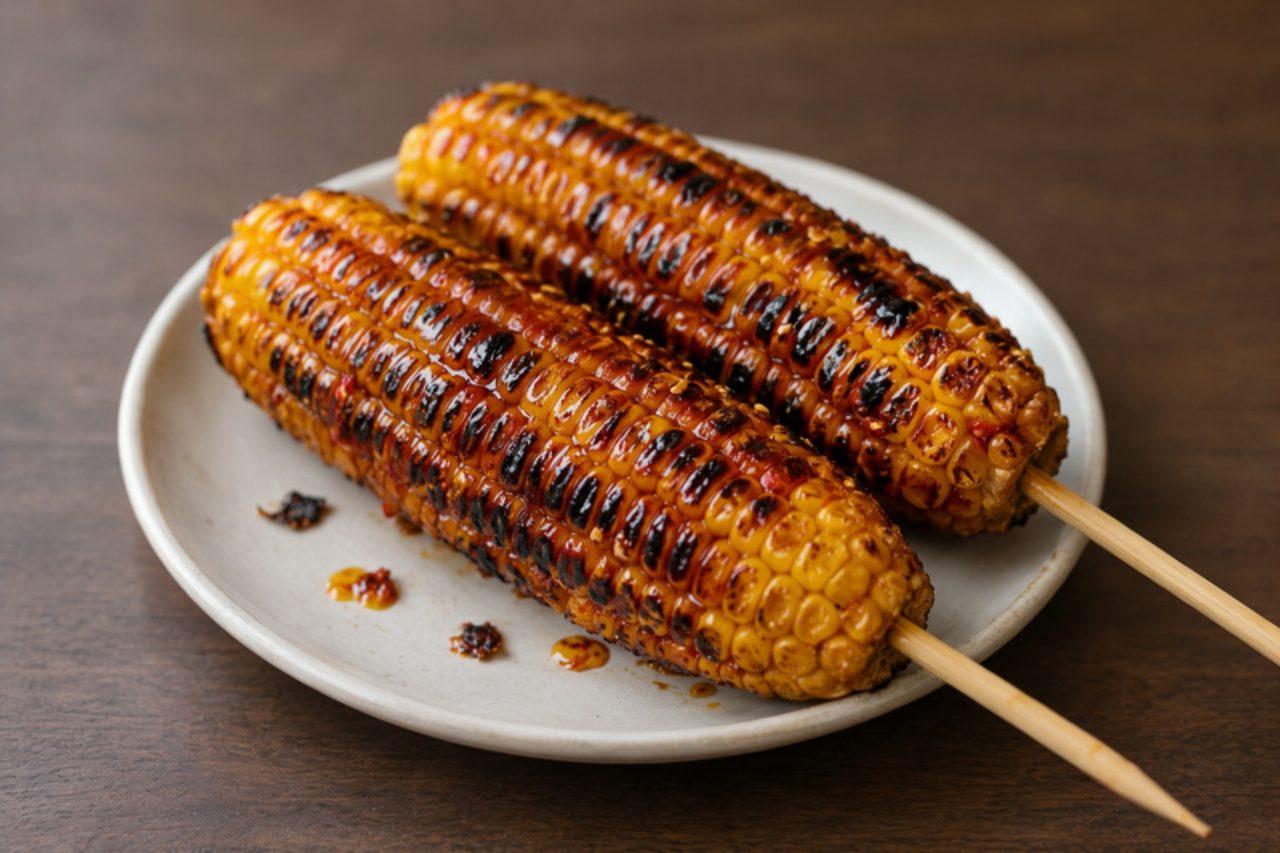
Taiwanese grilled corn
At Raohe and Shilin night markets the grilled-corn stalls are easy to find: look for the queue and the smoky, sweet smell. Cobs are par-cooked, then turned slowly over charcoal while the cook brushes them with a dark glaze of sacha sauce, thick soy paste, garlic and chilli, layer after layer, until the kernels are sticky, slightly charred and deeply savoury. It is eaten hot from a paper sleeve while walking the market. Sacha (shacha) sauce, a Taiwanese barbecue paste, usually contains dried fish and shrimp; vegetarian sacha is sold in Asian shops. Contains soy, wheat and fish. Chef's tip: brush thin coats and turn often; one thick coat burns before the corn chars.
 Taiwanese

Bagara bainganBaby aubergines in peanut sesame sauce
Bagara baingan is a Hyderabadi wedding dish of small aubergines cooked whole in a dark, tangy gravy of roasted peanuts, sesame, dried coconut and tamarind. Unlike a Gujarati stuffed brinjal, the aubergines here are only quartered at the base and fried until silky, then left to soak up a thin-but-rich sauce that is finished with a tempering, the 'baghar' that gives the dish its name. It's sour, nutty and gently spiced, and is served with biryani, bagara rice or plain rice. Chef's tip: choose small, glossy purple aubergines that feel heavy for their size; soft, light ones are full of seeds and turn mushy before the gravy has a chance to cling.