

Gyeran jjim
Steamed egg
Gyeran jjim (계란찜): fluffy steamed egg in a stone pot (vegetarian)


At Korean barbecue restaurants in Seoul and Busan, a bubbling stone pot of gyeran jjim arrives puffed high above the rim to soothe mouths burned by grilled meat and kimchi. At home it is a soft, savoury egg custard eaten with rice, especially by children. This vegetarian version uses kelp water instead of the usual salted shrimp or anchovy stock. The common mistake is keeping the heat high once the egg starts to set, which scorches the bottom and makes the top tough and full of holes. Chef's tip: stir constantly for the first minute as it heats, then cover with an upturned bowl over the lowest flame; trapped steam is what makes it rise like a soufflé.
- Total time
- 17 min
- Difficulty
- easy
- Serves
- 2
Ingredients
- 4 eggs
- 1 cup kelp water5 cm dried kelp soaked 30 minutes in the water, kelp removed
- ½ tsp salt
- 1 spring onionfinely chopped
- ½ tsp toasted sesame oil
- ½ tsp toasted sesame seeds (optional)
- ¼ tsp gochugaru (optional)
Shop this recipe on Amazon
What you'll need
Fresh ingredients (2)
Links open Amazon in a new tab. As an Amazon Associate, WhatToEat.Today earns from qualifying purchases.
Method
0/5 doneStep 2: Bring 1 cup kelp water to the boil in a small stone pot (ttukbaegi) or a small heavy saucepan over a medium heat.
3 minStep 3: Pour in the egg and stir constantly with a spoon, scraping the bottom, until it thickens into soft curds, about 1 minute.
1 minStep 4: Stir in most of 1 spring onion, turn the heat to its lowest and cover with a lid or an upturned heatproof bowl. Cook until puffed and set in the centre: a chopstick pushed in should come out clean.
6 minStep 5: Uncover, drizzle with ½ tsp toasted sesame oil, scatter the rest of the spring onion, plus ½ tsp toasted sesame seeds and ¼ tsp gochugaru, if using. Serve at once while it is still domed; it sinks within minutes.
Nutrition per serving
- Calories
- 160 kcal
- Protein
- 13 g
- Carbs
- 2 g
- Fat
- 11 g
- Fibre
- 0 g
Nutrition values are estimates.
KrazyBadal
Good to know
- How long does gyeran jjim take?
- About 17 minutes in total: 5 minutes to prepare and 12 minutes to cook.
- How many people does it serve?
- 2 as written. Change the servings above the ingredients and every amount scales to match.
- Is it vegetarian?
- Yes. It has no meat or fish.
- Is it gluten free?
- Yes, as written. Check the labels on stock, sauces and spice mixes, which sometimes contain gluten.
- What can I use instead of eggs?
- 1 tbsp ground flaxseed + 3 tbsp water per egg, left for 5 minutes (baking only; vegan).
- What can I use instead of spring onion?
- Chives, or a little finely sliced onion.
Reviews
No reviews yet. Be the first to cook it.
Rate this recipe
Sign in to rate and review this recipe.
You might also like
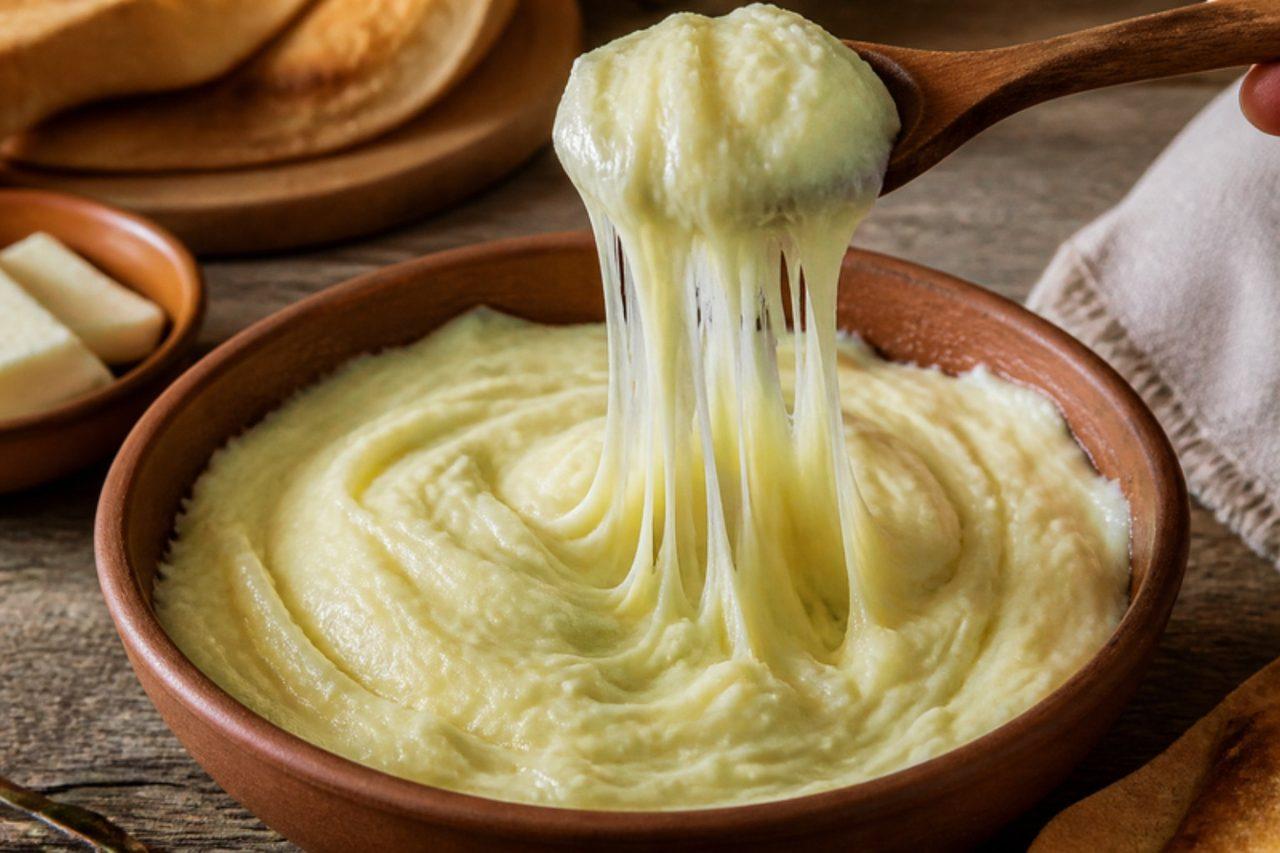
TashmijabiMashed potatoes with stretchy cheese
Potatoes grow well in the cold valleys of Svaneti, and tashmijabi is how families around Mestia turn them into a feast dish: they are mashed hot, then beaten with handfuls of young sulguni until the purée becomes glossy and stretches from the spoon in long strands. It is served with grilled meat, kubdari or simply with pickles and Svan salt. A common mistake is letting the potatoes cool before adding the cheese; they must be piping hot for the cheese to melt and stretch. Chef's tip: keep the pan on a low heat while you beat, and use a firm wooden spoon. Most sulguni uses animal rennet; choose a vegetarian one or use mozzarella.
 Georgian

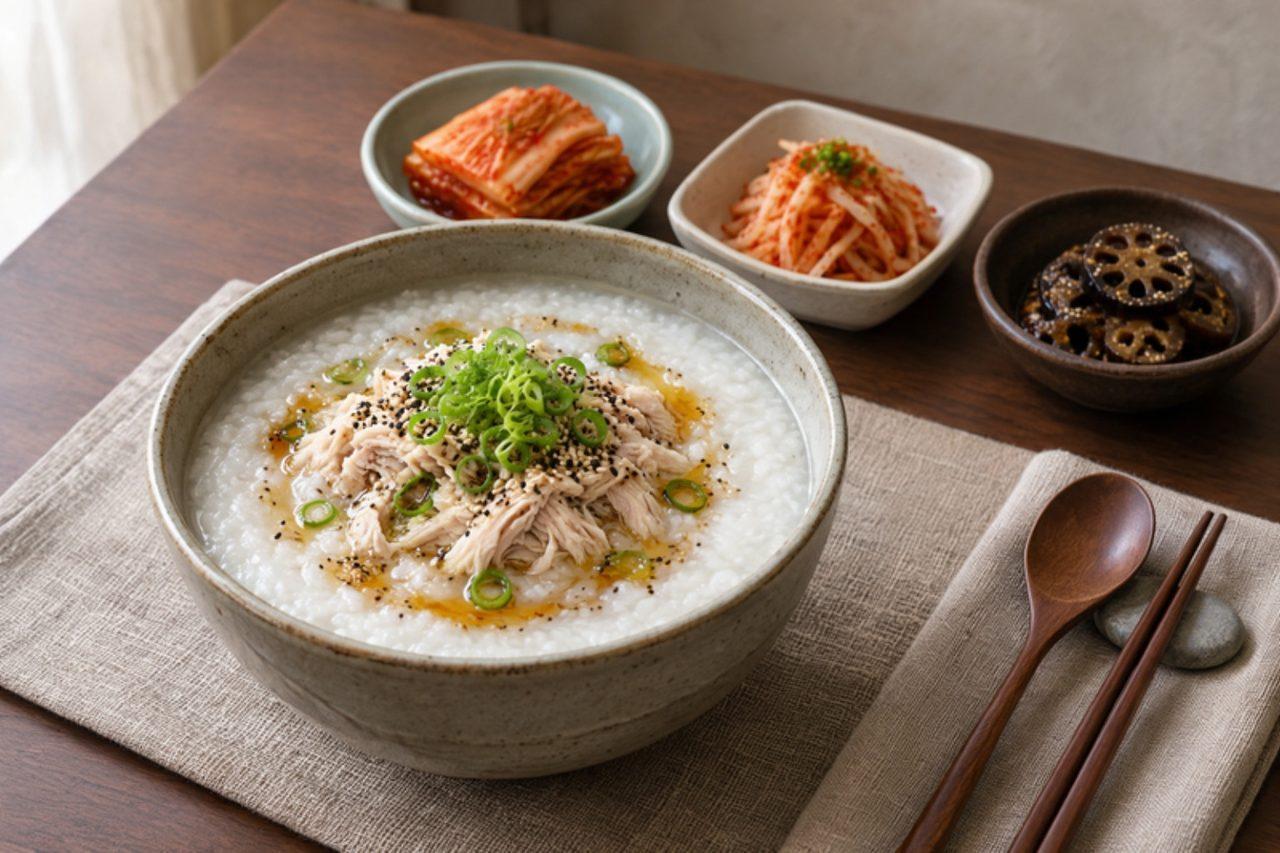
DakjukChicken and rice porridge
All over Korea, dakjuk is the bowl a mother makes on a cold morning or when someone is under the weather: chicken simmered with garlic and ginger, the meat pulled into shreds, and soaked rice cooked down in the broth until it turns into a soft, savoury porridge finished with sesame oil. It is eaten for breakfast or as a gentle lunch, with a little kimchi on the side. The usual mistake is boiling the chicken hard, which clouds the broth and toughens the meat; keep it at a lazy simmer. Chef's tip: fry the soaked rice in sesame oil for two minutes before the broth goes in, so the grains toast lightly and the porridge tastes nutty rather than flat.

Yorkshire puddings
In Yorkshire the pudding was once served first, on its own with gravy, to fill people up before the meat; today these puffed, crisp-edged cups sit beside the roast at Sunday lunch all over England. The batter is nothing but eggs, flour and milk, and the trick is in the heat: smoking-hot fat in the tin and a hot oven. Serve with onion gravy for a vegetarian roast. Chef's tip: rest the batter for at least 30 minutes, which helps the puddings rise tall and even.
 British