
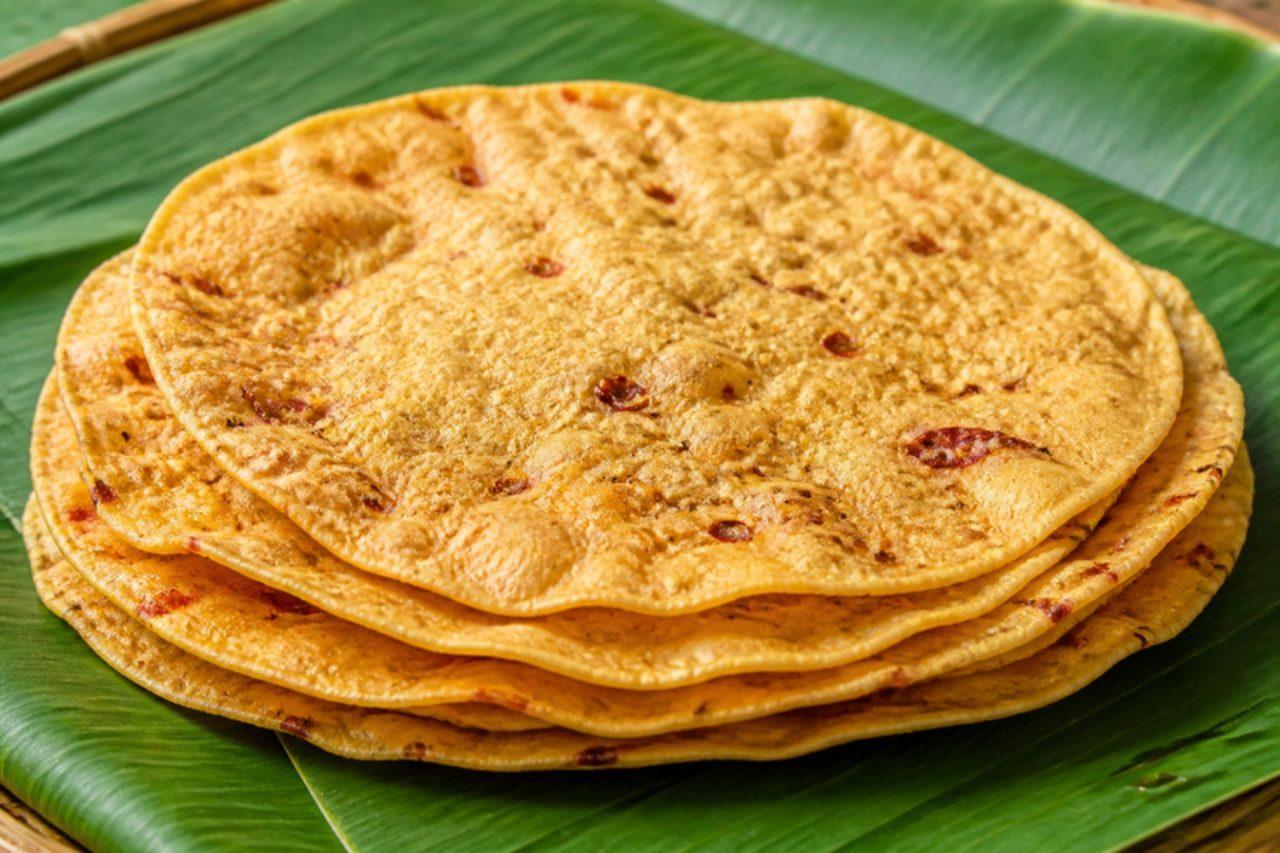
AI-generated image
Halasina happala
Jackfruit papads
ಹಲಸಿನ ಹಪ್ಪಳ: sun-dried raw jackfruit papads from Udupi and the Malnad hills (plus 2-3 days sun-drying)



In Udupi and the rainy Malnad hills, families turn the glut of summer jackfruit into happala: raw bulbs cooked soft, ground with chilli and cumin, pressed into thin rounds and dried on the terrace for the monsoon months. Fried in coconut oil they puff into a crisp, earthy papad with a gentle chilli heat, eaten with rice and saaru or on their own with tea. The common mistake is pressing them too thick; they stay leathery and won't puff. Aim for about 2 mm, thin enough to see light through the edges. Chef's tip: oil your hands, the plastic sheets and the press, because raw jackfruit latex is very sticky and will glue everything together.
- Total time
- 90 min
- Difficulty
- hard
- Serves
- 10
Ingredients
For the happala
- 2 ¼ lb raw (unripe) jackfruit bulbsseeds removed
- 1 ¼ cups water
- 2 tsp red chilli powder
- 1 tsp cumin seeds
- 2 tsp salt
- 2 tbsp coconut oilfor hands, sheets and press
For frying
- 2 cups coconut oilfor frying
Shop this recipe on Amazon
What you'll need
Links open Amazon in a new tab. As an Amazon Associate, WhatToEat.Today earns from qualifying purchases.
Method
0/7 doneStep 1: Oil your hands with a little ⅝ tbsp coconut oil, then pull the 2 ¼ lb raw (unripe) jackfruit bulbs bulbs off the core, remove the seeds and the thin skin around them.
30 minStep 2: Put the bulbs in a pressure cooker or pan with 1 ¼ cups water and cook until very soft and easily mashed: 3 whistles in a pressure cooker, or 20 minutes covered in a pan. Drain well; a wet paste makes soggy papads.
20 minStep 3: While still warm, grind the jackfruit with 2 tsp red chilli powder, 1 tsp cumin seeds, ¼ tsp gluten-free asafoetida (hing) and 2 tsp salt to a smooth, thick paste without adding water. It should feel like a stiff dough.
5 minStep 4: Grease two sheets of plastic and your hands with the rest of the 1 ⅜ tbsp coconut oil. Roll lime-sized balls, set one between the sheets and press with a flat-bottomed plate or a papad press into a 12 cm round about 2 mm thick.
25 minStep 5: Peel off the top sheet and lay the rounds on a clean cloth or mat in strong sun. Turn them after the first day and dry for 2-3 days until completely hard and brittle, with no soft centre. Store airtight; they keep for a year.
Step 6: To serve, fill a wide, deep pan with 2 cups coconut oil no more than a third full and heat to about 350°F, or until a small torn piece of papad sizzles and floats at once. Never leave the oil unattended.
5 minStep 7: Slide in one happala at a time and press gently with a slotted spoon for 5-10 seconds until it puffs and turns a shade darker, then lift out and drain upright. Or roast over a gas flame with tongs, turning constantly, until blistered.
10 min
Nutrition per serving
- Calories
- 120 kcal
- Protein
- 2 g
- Carbs
- 19 g
- Fat
- 5 g
- Fibre
- 2 g
Nutrition values are estimates.
KrazyBadal
Good to know
- How long does halasina happala take?
- About 90 minutes in total: 60 minutes to prepare and 30 minutes to cook.
- How many people does it serve?
- 10 as written. Change the servings above the ingredients and every amount scales to match.
- Is it vegan?
- Yes. It has no meat, fish, dairy or eggs.
- Is it gluten free?
- Yes, as written. Check the labels on stock, sauces and spice mixes, which sometimes contain gluten.
- Can I make it ahead?
- Yes. It keeps well, so you can cook it earlier in the day or the day before and reheat it.
- What can I use instead of red chilli powder?
- Cayenne, half the amount (hotter).
- What can I use instead of cumin seeds?
- Ground cumin, three quarters of the amount (add it with the other ground spices, not to hot oil first).
Reviews
No reviews yet. Be the first to cook it.
Rate this recipe
Sign in to rate and review this recipe.
You might also like

SakarpadaSweet fried dough diamonds
Sakarpada (shakarpara) are little sweet diamonds of a rich dough made with ghee, milk and sugar, fried until golden and crunchy. They are a Diwali favourite with tea, and the cubes go into bhusu too. They keep for weeks in an air-tight tin.

Yaki onigiriGrilled rice balls
Yaki onigiri (焼きおにぎり) are rice balls grilled until they form a crisp, toasty crust, then brushed with soy sauce glaze. They are eaten all over Japan, at izakaya, at barbecues and from the freezer section, as a snack or with miso soup. The inside stays soft and steamy while the outside crackles. Best eaten hot, straight from the pan. Chef's tip: let the shaped rice balls dry for 10 minutes before they go in the pan. A drier surface forms a better crust and won't stick, and the glaze goes on only at the end so it doesn't burn.
 Japanese

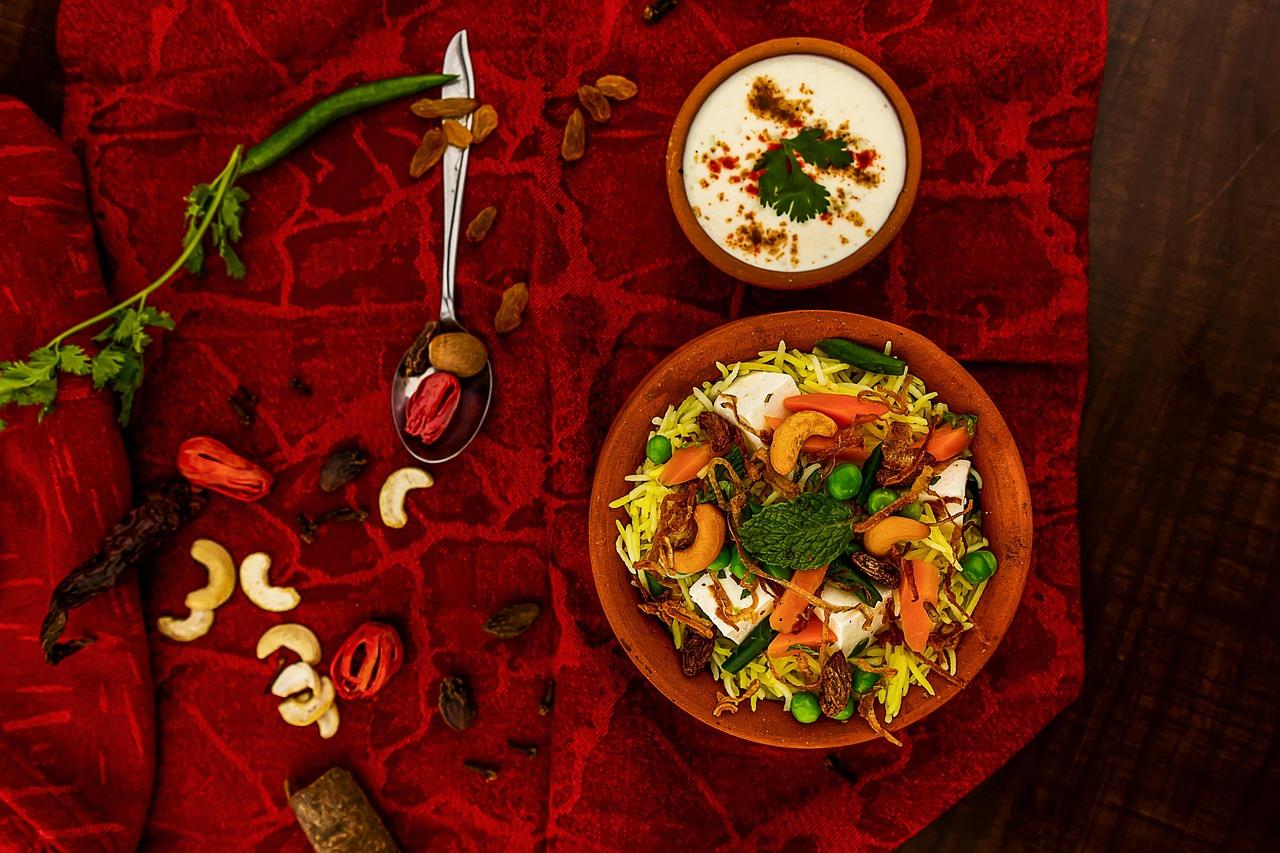
Paneer biryaniRice and moong dal in coconut milk
A mild, creamy biryani: rice and husked green gram roasted in ghee, then cooked in coconut milk with peas, carrots, potatoes, peanuts and cashews, and finished with soft fried paneer and a fresh coriander yogurt. Serve hot, garnished with more fried cashews and paneer.
