
Biltong
Biltong: vinegar-and-coriander cured beef, heated safely then dried at home


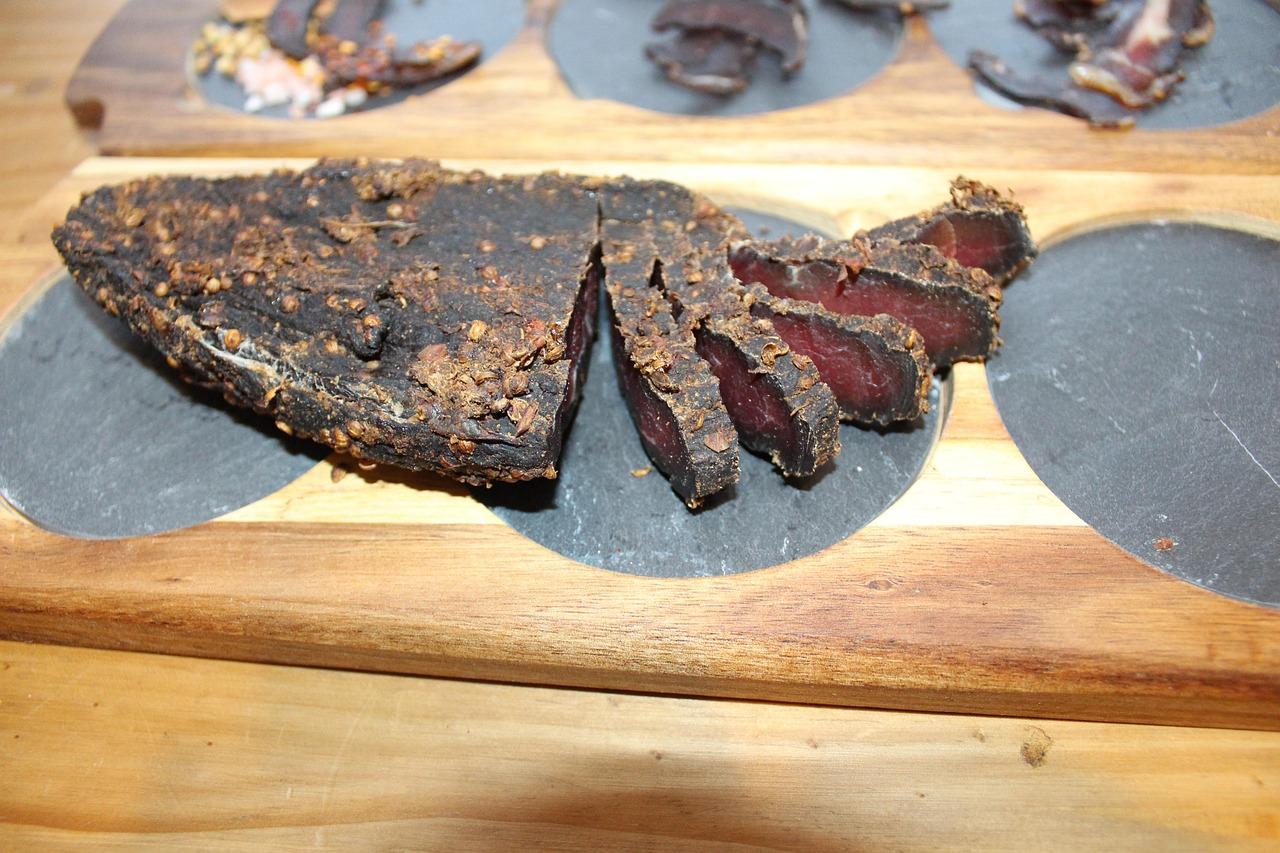
Rugby on the television, a paper bag of biltong passed round the room: few snacks say South Africa so plainly. Thick strips of beef are cured with vinegar, toasted coriander, salt and pepper, then dried until the outside is dark and firm and the inside still a little moist, ready to be sliced thin with a sharp knife. Farmers once hung it in the cold winter wind; this home method first heats the cured strips to 71 °C in a hot oven to make them safe, then dries them low and slow in the oven or a biltong box. Even so, home-dried meat is not for pregnant women, young children or anyone with a weakened immune system. The classic mistake is cutting the strips across the grain, so they crumble when you slice them. Chef's tip: toast the coriander seeds until they smell like orange peel before crushing them; that warm, citrusy note is what makes biltong taste right.
- Total time
- 525 min
- Difficulty
- medium
- Serves
- 14
Ingredients
- 3 ⅓ lb beef silverside or topsidein one piece, trimmed of sinew
- ¾ cup apple cider vinegaror red wine vinegar; malt vinegar contains gluten
- 3 tbsp coriander seeds
- 2 tbsp coarse salt
- 1 tbsp brown sugar
- ¼ tsp bicarbonate of soda (optional)optional, softens the vinegar edge
- 1 tsp dried chilli flakes (optional)optional
Shop this recipe on Amazon
What you'll need
Spices & pantry
Fresh ingredients (1)
Links open Amazon in a new tab. As an Amazon Associate, WhatToEat.Today earns from qualifying purchases.
Method
0/10 doneStep 1: Cut 3 ⅓ lb beef silverside or topside with the grain into strips about 2 cm thick, 5 cm wide and 20–25 cm long. Run your knife along the fibres, not across them, or the biltong will crumble later.
Step 2: Toast 3 tbsp coriander seeds in a dry pan over a medium heat, shaking, until the seeds darken a shade and smell warm and citrusy. Crush them coarsely in a mortar.
3 minStep 3: Mix the crushed coriander with 2 tbsp coarse salt, 1 tbsp brown sugar, 2 tsp coarsely ground black pepper and 1 tsp dried chilli flakes if using.
Step 4: Lay the strips in a glass or ceramic dish and sprinkle ¼ cup apple cider vinegar over them. Rub the spice mix into every side.
Step 5: Mix the rest of ¼ cup apple cider vinegar with ¼ tsp bicarbonate of soda if using and drizzle it over. Cover and cure in the fridge for 12–24 hours, turning the strips once or twice, until the surface looks darker and the meat feels firmer.
Step 6: Heat the oven to 350°F (325°F fan). Lift the strips out, shake off the liquid and pat lightly with kitchen paper, keeping the spices on.
Step 7: Lay the strips on a rack over a tray, not touching. Heat them in the oven until a thermometer in the thickest strip reads 160°F; this kills bacteria before drying. The outside will look grey-brown rather than red.
15 minStep 8: Turn the oven down to its lowest setting, 50–140°F, and wedge the door open a crack with a wooden spoon so moisture escapes. Leave the tray in, or hang the strips from the oven shelf with paper clips over the tray.
Step 9: Dry until the strips are dark, firm and only slightly giving in the thickest part, 6–10 hours depending on thickness and how wet you like it. Alternatively, move the heated strips to a biltong box with a fan and bulb and dry for 2–4 days.
480 minStep 10: Cool completely, then store in a paper bag in the fridge (plastic traps moisture and invites mould) and eat within 2 weeks. Slice thinly across the grain to serve. Remember: not for pregnant women, young children or anyone with a weakened immune system.
Nutrition per serving
- Calories
- 150 kcal
- Protein
- 28 g
- Carbs
- 2 g
- Fat
- 3 g
- Fibre
- 0 g
Nutrition values are estimates.
KrazyBadal
Good to know
- How long does biltong take?
- About 525 minutes in total: 30 minutes to prepare and 495 minutes to cook.
- How many people does it serve?
- 14 as written. Change the servings above the ingredients and every amount scales to match.
- Is it gluten free?
- Yes, as written. Check the labels on stock, sauces and spice mixes, which sometimes contain gluten.
- Can I make it ahead?
- Yes. It keeps well, so you can cook it earlier in the day or the day before and reheat it.
- What can I use instead of apple cider vinegar?
- Lemon juice, same amount.
- What can I use instead of coriander seeds?
- Ground coriander, same amount (add it later in the cooking; it burns faster).
Reviews
No reviews yet. Be the first to cook it.
Rate this recipe
Sign in to rate and review this recipe.
You might also like

SakarpadaSweet fried dough diamonds
Sakarpada (shakarpara) are little sweet diamonds of a rich dough made with ghee, milk and sugar, fried until golden and crunchy. They are a Diwali favourite with tea, and the cubes go into bhusu too. They keep for weeks in an air-tight tin.
 Indian

Yaki onigiriGrilled rice balls
Yaki onigiri (焼きおにぎり) are rice balls grilled until they form a crisp, toasty crust, then brushed with soy sauce glaze. They are eaten all over Japan, at izakaya, at barbecues and from the freezer section, as a snack or with miso soup. The inside stays soft and steamy while the outside crackles. Best eaten hot, straight from the pan. Chef's tip: let the shaped rice balls dry for 10 minutes before they go in the pan. A drier surface forms a better crust and won't stick, and the glaze goes on only at the end so it doesn't burn.
 Japanese

Taiwanese grilled corn
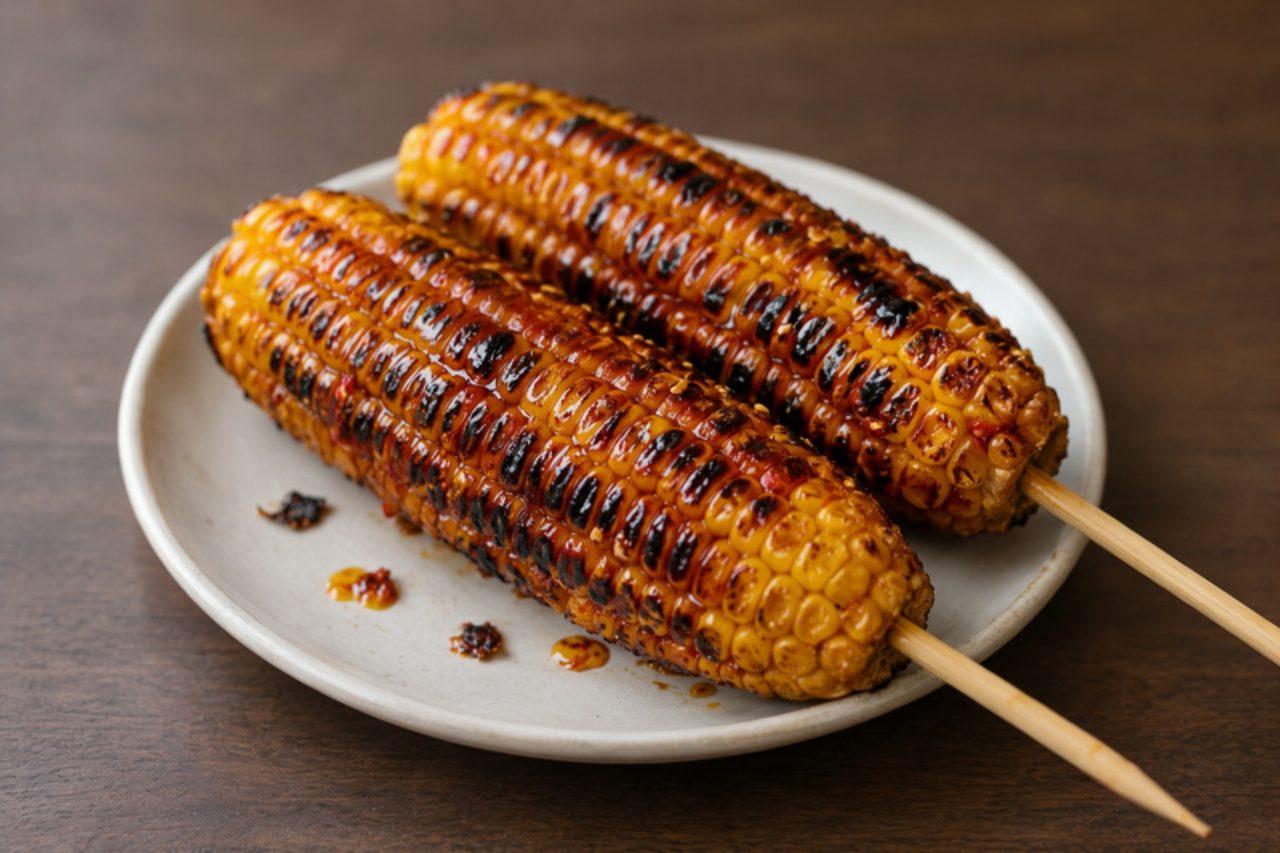
At Raohe and Shilin night markets the grilled-corn stalls are easy to find: look for the queue and the smoky, sweet smell. Cobs are par-cooked, then turned slowly over charcoal while the cook brushes them with a dark glaze of sacha sauce, thick soy paste, garlic and chilli, layer after layer, until the kernels are sticky, slightly charred and deeply savoury. It is eaten hot from a paper sleeve while walking the market. Sacha (shacha) sauce, a Taiwanese barbecue paste, usually contains dried fish and shrimp; vegetarian sacha is sold in Asian shops. Contains soy, wheat and fish. Chef's tip: brush thin coats and turn often; one thick coat burns before the corn chars.
 Taiwanese