
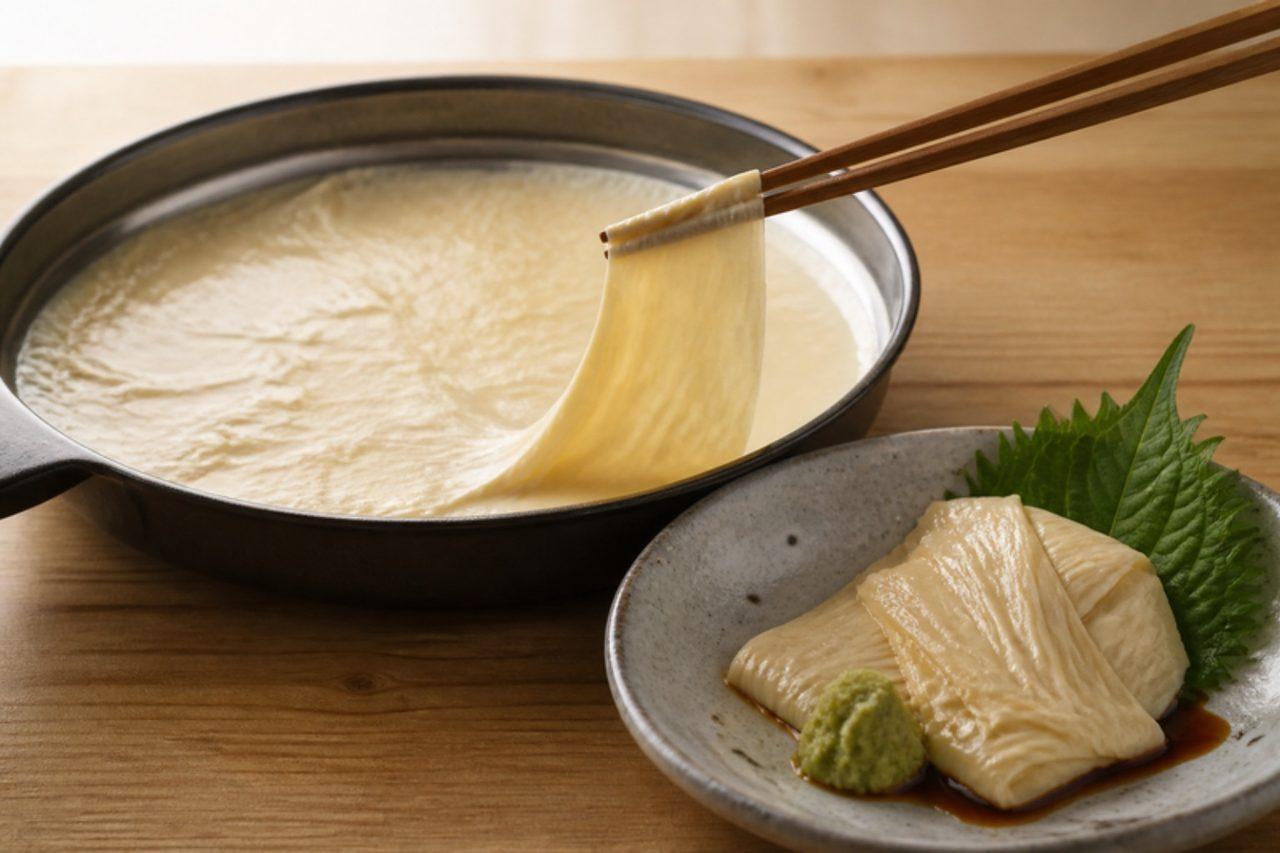
AI-generated image
Homemade fresh yuba
湯葉 (yuba): delicate tofu skins lifted from warm soy milk, eaten fresh with wasabi soy

Yuba is the thin skin that forms on soy milk as it heats, and in Kyoto and the temple town of Nikko it is a delicacy in its own right. Workshops in Kyoto's old streets have made it for centuries for monks' shojin ryori, the Buddhist vegetarian cuisine that relied on it for protein. Fresh yuba is soft, creamy and faintly sweet, and the first sheets of the day, eaten warm with a drop of soy, are prized above all. It needs patience rather than skill: just a wide pan, gentle heat and good soy milk. Serve as a starter with wasabi soy, or roll the sheets and slice them. Chef's tip: use unsweetened soy milk with at least 7% protein (check the label). Thin supermarket drinks won't form a skin.
- Total time
- 45 min
- Difficulty
- medium
- Serves
- 2
Ingredients
Method
0/7 doneStep 1: Pour 4 ¼ cups unsweetened soy milk, at least 7% protein into a wide frying pan or sauté pan, at least 24 cm across, to a depth of about 2 cm. The wider the surface, the bigger the sheets.
Step 2: Set it over low heat and warm to about 176°F: steam rises and the surface trembles, but nothing bubbles. Keep it there. On a gas hob, use a heat diffuser if you have one.
5 minStep 3: After 6–8 minutes a matt, wrinkled skin forms across the top. Run a knife round the edge of the pan to free it.
8 minStep 4: Slide a chopstick or thin skewer under the middle of the skin and lift it straight up so the sheet hangs in two halves. Drape it over a plate or a second chopstick laid across a bowl. A new skin will form in another 6–8 minutes.
25 minStep 5: Common mistake: turning up the heat to speed things up. The milk boils, the skin turns thick and blistered and the bottom scorches. Low and steady gives thin, silky sheets.
Step 6: Keep lifting sheets until the milk becomes thick and creamy and stops forming skins, usually 5–7 sheets. Pour the remaining rich milk into a cup to drink, or use it in a soup.
Step 7: Mix 2 tbsp soy sauce and 1 tsp wasabi paste. Fold the warm yuba onto small plates with 4 shiso or mitsuba leaves and ⅛ oz fresh ginger and eat straight away, dipped in the wasabi soy.
Nutrition per serving
- Calories
- 200 kcal
- Protein
- 18 g
- Carbs
- 10 g
- Fat
- 9 g
- Fibre
- 2 g
Nutrition values are estimates.
KrazyBadal
Good to know
- How long does homemade fresh yuba take?
- About 45 minutes in total: 5 minutes to prepare and 40 minutes to cook.
- How many people does it serve?
- 2 as written. Change the servings above the ingredients and every amount scales to match.
- Is it vegan?
- Yes. It has no meat, fish, dairy or eggs.
- What can I use instead of unsweetened soy milk, at least 7% protein?
- Oat, soy or almond milk, same amount (use unsweetened for savoury dishes).
- What can I use instead of soy sauce?
- Tamari, same amount (gluten free).
Reviews
No reviews yet. Be the first to cook it.
Rate this recipe
Sign in to rate and review this recipe.
You might also like
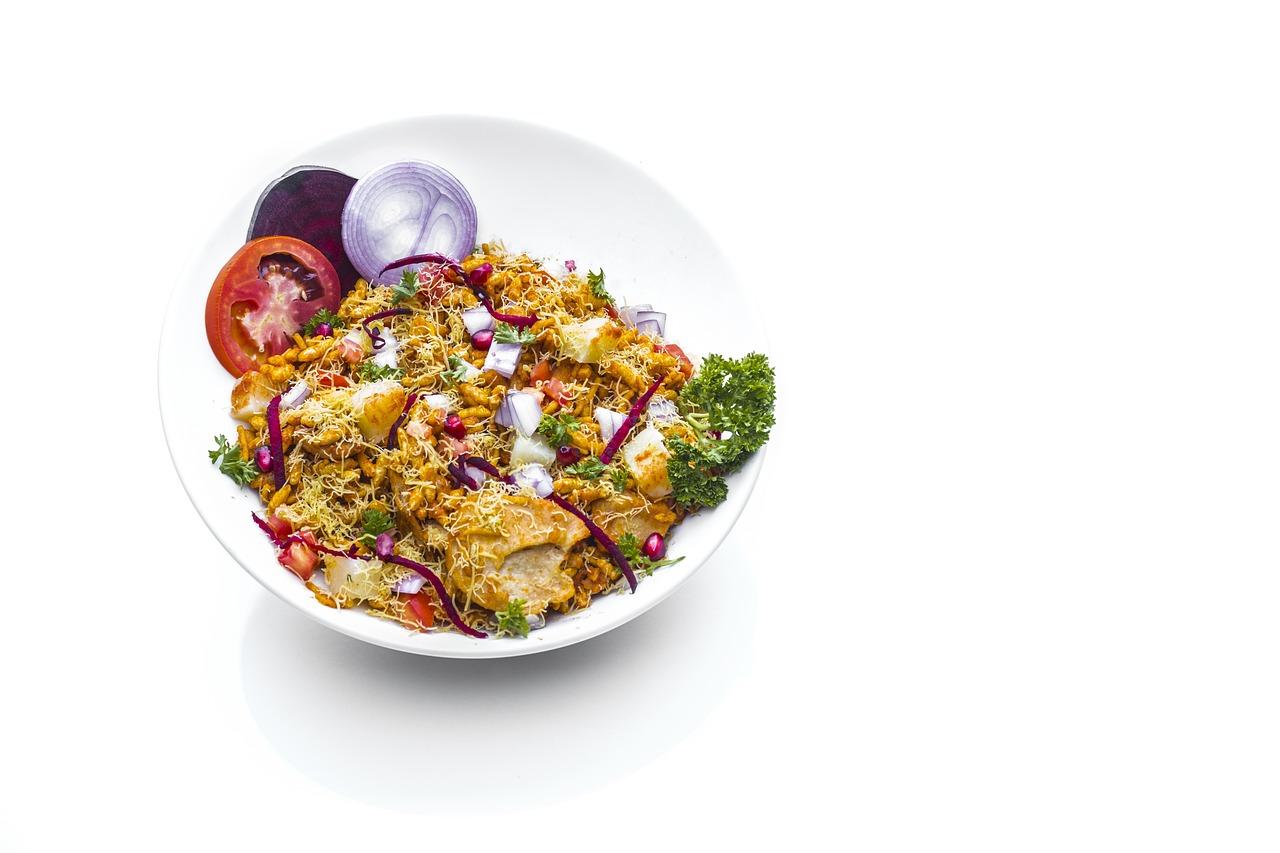
Coastal Mombasa mix
A Mombasa street-food bowl: chickpeas and potato simmered in coconut milk with raw mango and chilli, ladled into small bowls and topped with crisp lentil fritters, crunchy chevdo and red, green and tamarind chutneys. Make the fritters and chevdo ahead and assemble at the table. It's sweet, sour, hot and crunchy all at once.

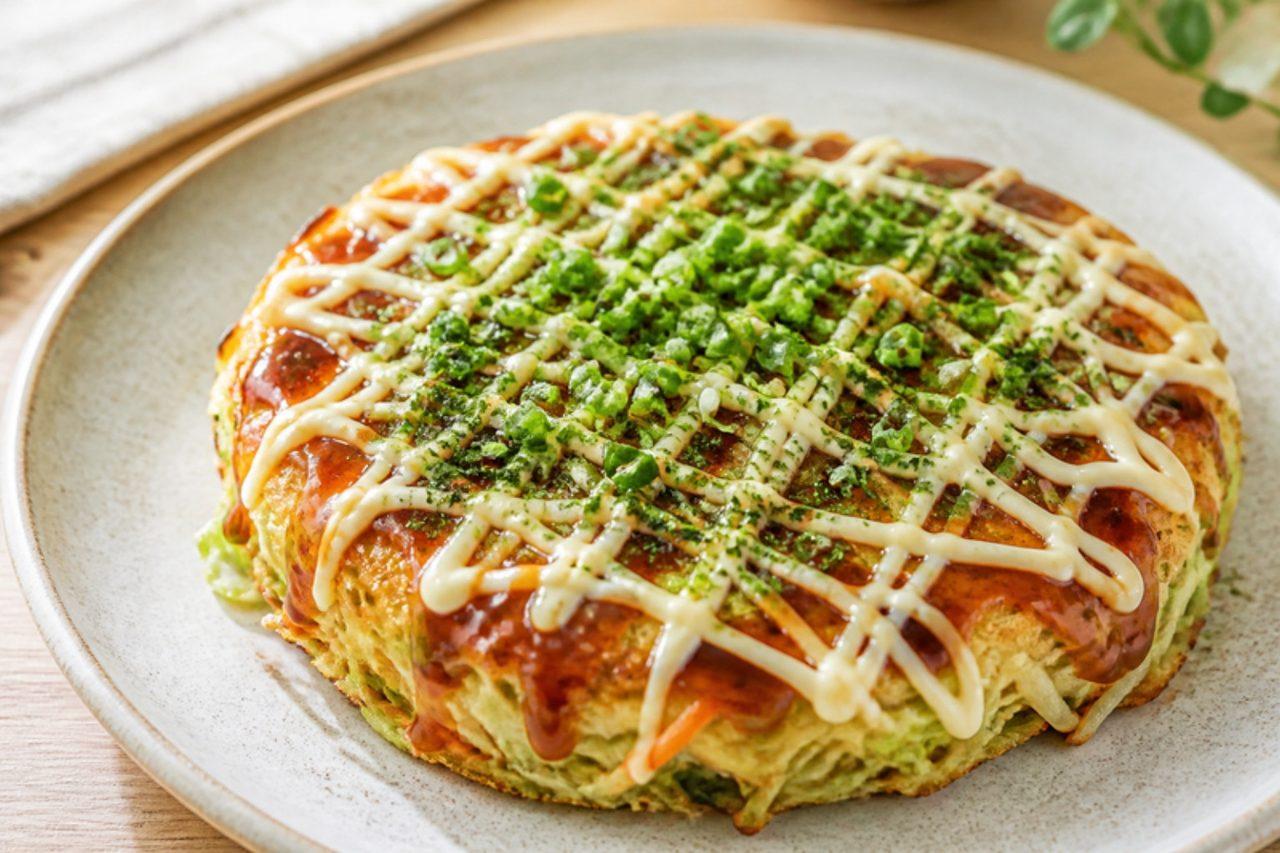
Okonomiyaki
Okonomiyaki (お好み焼き, 'grilled as you like it') is the pride of Osaka, where it's cooked on hot iron griddles in lively restaurants. Finely shredded cabbage is folded into a light batter with egg and spring onion, then fried into a thick, soft pancake with a crisp outside. It's painted with a fruity brown sauce and zigzagged with mayonnaise. Bonito flakes are usual on top; this vegetarian version uses seaweed flakes and pickled ginger instead. Chef's tip: don't press the pancake down with your spatula while it cooks. Osaka cooks leave it alone so the cabbage steams inside and stays light and fluffy; pressing squeezes out the air.

Masala khakhra
Khakhra are thin chapaties roasted slowly on a griddle until they turn crisp, like a cracker. This masala version adds gram flour, fresh fenugreek, turmeric and chilli to the wheat dough. They are a light Gujarati breakfast or tea-time snack, and lovely with pickle, chutney or a smear of butter. You can also make them in a roti maker.

