
AI-generated image
Japanese curry rice
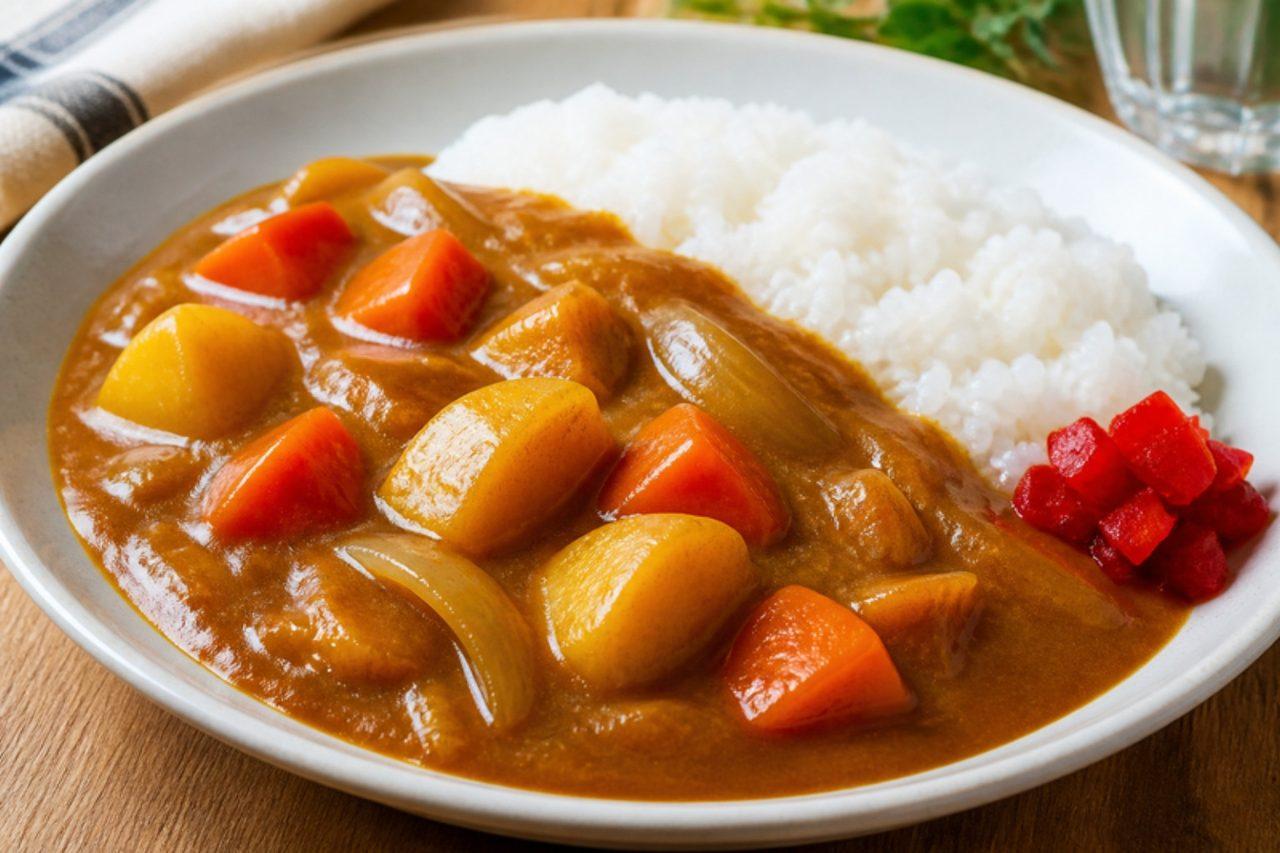
カレーライス (karē raisu): a mild, thick, gently sweet curry with potato, carrot and onion over rice

Japanese curry rice (カレーライス) arrived in Japan from Britain via the navy in the late 1800s and is now a national comfort food, cooked in homes from Hokkaido to Okinawa. It is nothing like an Indian curry: the sauce is thick, glossy and mild, made with a roux of butter, flour and curry powder, and sweetened with grated apple. This vegetarian version is packed with potato, carrot, onion and mushrooms. It tastes even better the next day, and children love it. Chef's tip: take the onions all the way to a deep golden brown before anything else goes in. Japanese home cooks swear by this step, as the caramelised onion gives the curry its rounded sweetness.
- Total time
- 50 min
- Difficulty
- easy
- Serves
- 4
Ingredients
For the curry
- 1 tbsp vegetable oil
- 2 onionsthinly sliced
- 2 cloves garlicgrated
- 1 tsp gingergrated
- 2 carrotscut into chunks
- 2 potatoesabout 400 g, cut into large chunks
- 5 ½ oz mushroomshalved
- 3 cups vegetable stock
- ½ applepeeled and finely grated
- 2 ⅞ oz frozen peas
For the roux
- 1 ⅜ oz butter
- 4 tbsp plain flour
- 2 tbsp mild curry powder
- ½ tsp garam masala
To season
- 1 tbsp soy sauce
- 2 tbsp tomato ketchup
- 1 tsp honey or sugar
- ½ tsp saltto taste
To serve
- 1 ⅓ lb cooked Japanese short-grain ricefrom about 300 g raw
- 2 tbsp fukujinzuke or pickled red ginger (optional)
Shop this recipe on Amazon
Spices & pantry
Fresh ingredients (10)
Links open Amazon in a new tab. As an Amazon Associate, WhatToEat.Today earns from qualifying purchases.
Method
0/7 doneStep 1: Heat 1 tbsp vegetable oil in a large heavy pan over a medium heat. Add 2 onions and fry slowly for 10 minutes, stirring often, until soft and golden. This sweetness is the base of the curry.
10 minStep 3: Pour in 3 cups vegetable stock and add ½ apple. Bring to the boil, skim off any foam, then cover and simmer for 15 minutes, until the potatoes are just tender.
15 minStep 4: Meanwhile make the roux: melt 1 ⅜ oz butter in a small frying pan over a low heat, stir in 4 tbsp plain flour and cook for 3–4 minutes, stirring, until it smells nutty and turns light brown. Stir in 2 tbsp mild curry powder and ½ tsp garam masala for 30 seconds, then take off the heat.
5 minStep 5: Ladle some of the hot cooking liquid into the roux and whisk to a smooth paste. Stir it back into the pan and simmer for 5 minutes, stirring, until the sauce is thick and glossy.
5 minStep 6: Season with 1 tbsp soy sauce, 2 tbsp tomato ketchup, 1 tbsp vegetarian Worcestershire sauce, 1 tsp honey or sugar and ½ tsp salt, add 2 ⅞ oz frozen peas and simmer for 2 minutes more.
2 minStep 7: Spoon 1 ⅓ lb cooked Japanese short-grain rice onto one side of each plate and ladle the curry beside it. Serve with 2 tbsp fukujinzuke or pickled red ginger. The curry keeps for 3 days in the fridge and thickens as it stands; loosen with a splash of water when reheating.
Nutrition per serving
- Calories
- 560 kcal
- Protein
- 12 g
- Carbs
- 96 g
- Fat
- 14 g
- Fibre
- 7 g
Nutrition values are estimates.
KrazyBadal
Good to know
- How long does japanese curry rice take?
- About 50 minutes in total: 15 minutes to prepare and 35 minutes to cook.
- How many people does it serve?
- 4 as written. Change the servings above the ingredients and every amount scales to match.
- Is it vegetarian?
- Yes. It has no meat or fish.
- Can I make it ahead?
- Yes. It keeps well, so you can cook it earlier in the day or the day before and reheat it.
- What can I use instead of onions?
- 2 shallots per onion.
- What can I use instead of garlic?
- ½ tsp garlic paste or ⅛ tsp garlic powder per clove.
Reviews
No reviews yet. Be the first to cook it.
Rate this recipe
Sign in to rate and review this recipe.
You might also like

Sayur lodehVegetables in coconut milk
Sayur lodeh is everyday cooking in Central Java, made in big pots in Solo and Semarang kitchens and ladled over rice, with lontong rice cakes at Lebaran, or alongside opor and sambal goreng on festive tables. It's soupy rather than thick: a fragrant broth of coconut milk, galangal, lemongrass and lime leaf that carries chunks of aubergine, long beans, chayote and sweetcorn, plus tempeh and tofu to make it a meal. The flavour is mellow and slightly sweet, so the heat comes from sambal on the side. Chef's tip: keep the pot at a gentle simmer once the coconut milk goes in and stir now and then — a rolling boil splits the coconut milk into oily curds.
 Indonesian



Yaki onigiriGrilled rice balls
Yaki onigiri (焼きおにぎり) are rice balls grilled until they form a crisp, toasty crust, then brushed with soy sauce glaze. They are eaten all over Japan, at izakaya, at barbecues and from the freezer section, as a snack or with miso soup. The inside stays soft and steamy while the outside crackles. Best eaten hot, straight from the pan. Chef's tip: let the shaped rice balls dry for 10 minutes before they go in the pan. A drier surface forms a better crust and won't stick, and the glaze goes on only at the end so it doesn't burn.

Miso soup
Miso soup (味噌汁) is drunk every day in homes all over Japan, at breakfast as well as dinner, beside a bowl of rice. The base is dashi; this vegan version uses kombu and dried shiitake instead of bonito, which gives it a deep, rounded flavour. Silken tofu and wakame seaweed are the classic fillings. It takes ten minutes; just remember not to boil the miso. Chef's tip: add the miso at the very end and never let it boil. Boiling kills the miso's fresh, fermented aroma; Japanese cooks say the soup should only 'smile', with the surface barely trembling.