
 Indonesian
 Gluten free
 Spicy
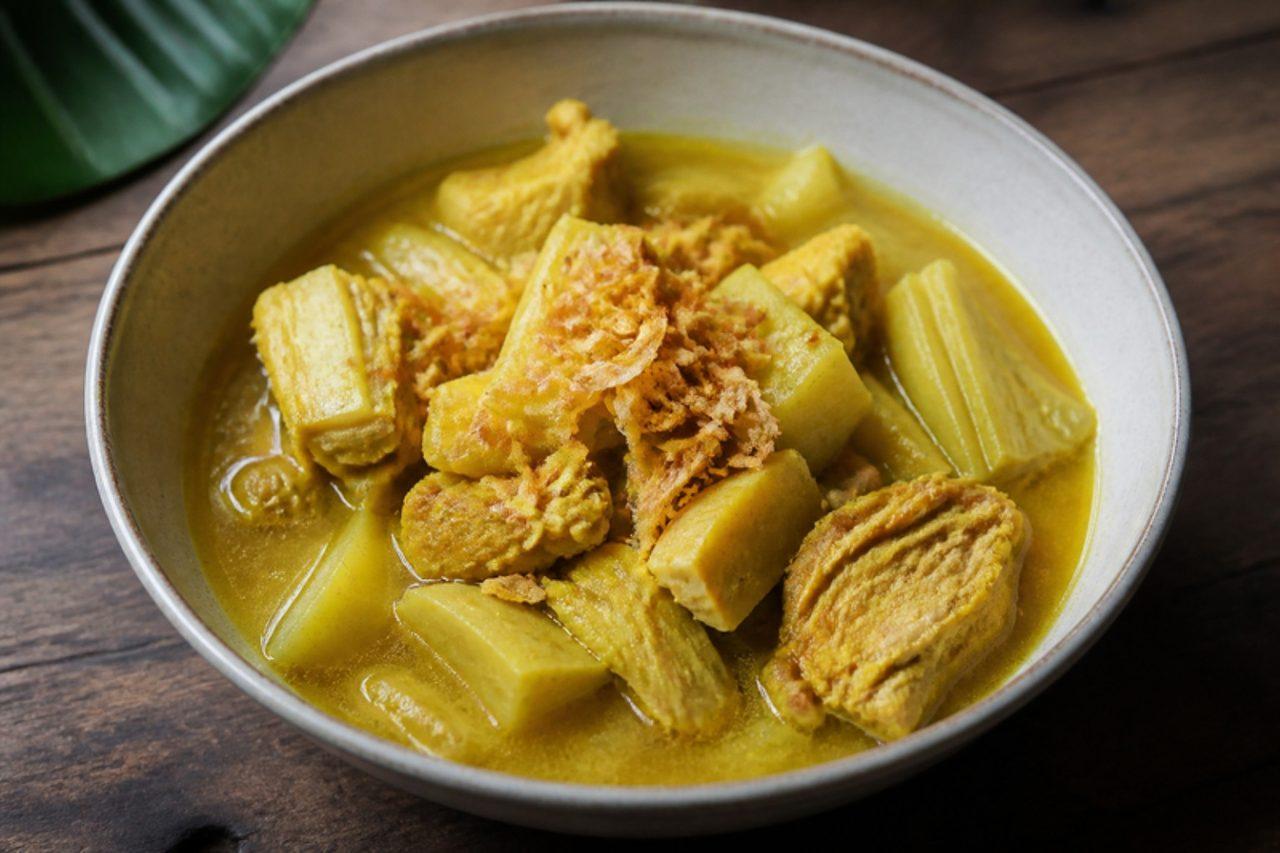
Jukut ares (Balinese banana stem soup with chicken)
Tender banana trunk and chicken simmered in a turmeric-gold base genep broth
Jukut ares is cooked in Bali for Galungan and the ceremonies around it, when families gather at home and the kitchen turns out dishes for days; the humble banana tree, which gives fruit, leaves and stem, stands for the generosity of the land. The soft white core of the trunk is sliced thin and simmered in a broth built on base genep, the island's master spice paste, until it is tender and slightly silky, like a cross between bamboo shoot and leek. Villages often use pork bones; this version uses chicken thighs, which make a lighter, golden, peppery broth. Serve it in bowls with steamed rice and sambal. Chef's tip: soak the sliced stem in salted water and pull off the stringy fibres as you go, or the soup turns grey and stringy.
- Prep
- 35 min
- Cook
- 55 min
- Difficulty
- Medium
- Serves
- 6
- Per serving
- 230 kcal
Ingredients
For the banana stem
- 1 ⅓ lb banana stem (ares)the white inner core; from Asian grocers, fresh or frozen
- 1 tbsp saltfor soaking
For the base genep paste
- 8 shallotspeeled
- 1 oz galangalsliced
- ⅔ oz fresh turmericpeeled, sliced
- ⅔ oz fresh gingersliced
- ½ oz kencur (aromatic ginger)or 10 g extra galangal
- 4 candlenutsor macadamia nuts
- 4 large red chilliesseeded
- 2 bird's eye chilliesfewer for a milder soup
- 1 tsp coriander seedstoasted
- 1 tsp black peppercorns
- 1 tsp shrimp pastetoasted
- 3 tbsp coconut oil
For the soup
- 1 ⅛ lb boneless chicken thighscut into bite-size pieces
- 2 lemongrass stalksbruised and knotted
- 3 makrut lime leavestorn
- 5 cups water
- 1 ½ tsp salt
- 1 tsp palm sugar
To serve
- 3 tbsp crispy fried shallots (optional)
- 1 lime (optional)in wedges
Shop this recipe on Amazon
What you'll need
Search Amazon for the rest
Fresh ingredients (8)
Links open Amazon in a new tab. As an Amazon Associate we earn from qualifying purchases.
Method
0/8 doneStep 1: Peel off the tough outer layers of the 1 ⅓ lb banana stem (ares) until you reach the pale core. Slice it into thin rounds, pulling away the stringy fibres with your fingers as you go.
15 minStep 2: Drop the slices straight into a bowl of water with 1 tbsp salt and leave for 15 minutes, then squeeze well and rinse. Common mistake: skipping the soak; the sap stays in and turns the soup grey and slightly bitter.
15 minStep 3: Blend 8 shallots, 6 garlic cloves, 1 oz galangal, ⅔ oz fresh turmeric, ⅔ oz fresh ginger, ½ oz kencur (aromatic ginger), 4 candlenuts, 4 large red chillies, 2 bird's eye chillies, 1 tsp coriander seeds, 1 tsp black peppercorns and 1 tsp shrimp paste with 2 tbsp water to a smooth paste.
5 minStep 4: Heat 3 tbsp coconut oil in a large pot over a medium heat and fry the paste, stirring, for 8–10 minutes until it darkens, smells sweet rather than raw, and the oil separates.
10 minStep 5: Add the 1 ⅛ lb boneless chicken thighs, 2 lemongrass stalks, 2 salam leaves (Indonesian bay) and 3 makrut lime leaves and stir for 3 minutes until the chicken is coated and turns opaque on the outside.
3 minStep 6: Pour in the 5 cups water, add 1 ½ tsp salt and 1 tsp palm sugar and bring to the boil, then simmer over a low heat for 15 minutes.
18 minStep 7: Add the banana stem and simmer for 20 minutes more, until the slices are tender and translucent and the chicken reaches 165°F in the thickest piece.
20 minStep 8: Taste for salt and serve hot, scattered with 3 tbsp crispy fried shallots, with 1 lime wedges, rice and sambal on the side.
Nutrition per serving
- Calories
- 230 kcal
- Protein
- 21 g
- Carbs
- 12 g
- Fat
- 11 g
- Fibre
- 3 g
Nutrition values are estimates.
KrazyBadal
Good to know
- How long does jukut ares (Balinese banana stem soup with chicken) take?
- About 90 minutes in total: 35 minutes to prepare and 55 minutes to cook.
- How many people does it serve?
- 6 as written. Change the servings above the ingredients and every amount scales to match.
- Is it gluten free?
- Yes, as written. Check the labels on stock, sauces and spice mixes, which sometimes contain gluten.
- Is it very spicy?
- It has some heat. Use less chilli for a milder version, or more if you like it hot.
- What can I use instead of shallots?
- Half an onion per 2 shallots.
- What can I use instead of garlic cloves?
- ½ tsp garlic paste or ⅛ tsp garlic powder per clove.
Reviews
No reviews yet. Be the first to cook it.
Rate this recipe
Sign in to rate and review this recipe.
You might also like

Sayur lodehVegetables in coconut milk
Sayur lodeh is everyday cooking in Central Java, made in big pots in Solo and Semarang kitchens and ladled over rice, with lontong rice cakes at Lebaran, or alongside opor and sambal goreng on festive tables. It's soupy rather than thick: a fragrant broth of coconut milk, galangal, lemongrass and lime leaf that carries chunks of aubergine, long beans, chayote and sweetcorn, plus tempeh and tofu to make it a meal. The flavour is mellow and slightly sweet, so the heat comes from sambal on the side. Chef's tip: keep the pot at a gentle simmer once the coconut milk goes in and stir now and then — a rolling boil splits the coconut milk into oily curds.

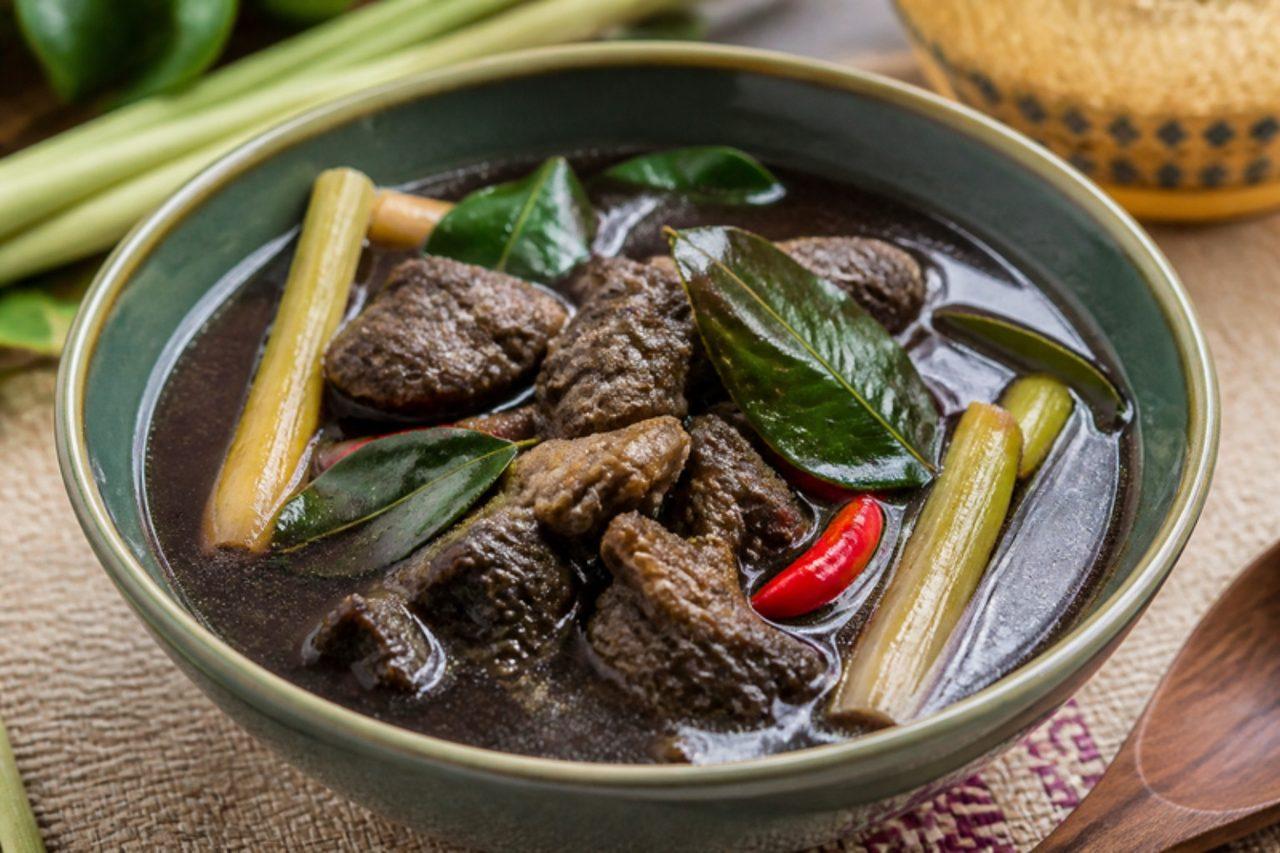
Tiyula itumBlack beef soup
Tiyula itum, 'black soup', is the pride of the Tausug people of Sulu in the far south of the Philippines, cooked for weddings, Eid celebrations and when guests come home. Beef (it is a halal, pork-free dish) is simmered with ginger, lemongrass and turmeric, then darkened with pamapa itum, a paste of grated coconut toasted until almost black and pounded with spices. The broth looks dramatic but tastes smoky, earthy and gently peppery, with heat from chillies. Serve it with plain rice. Chef's tip: toast the coconut slowly, stirring all the time, until it is very dark brown but not ashy; burnt-to-ash coconut tastes bitter and ruins the soup.
 Filipino
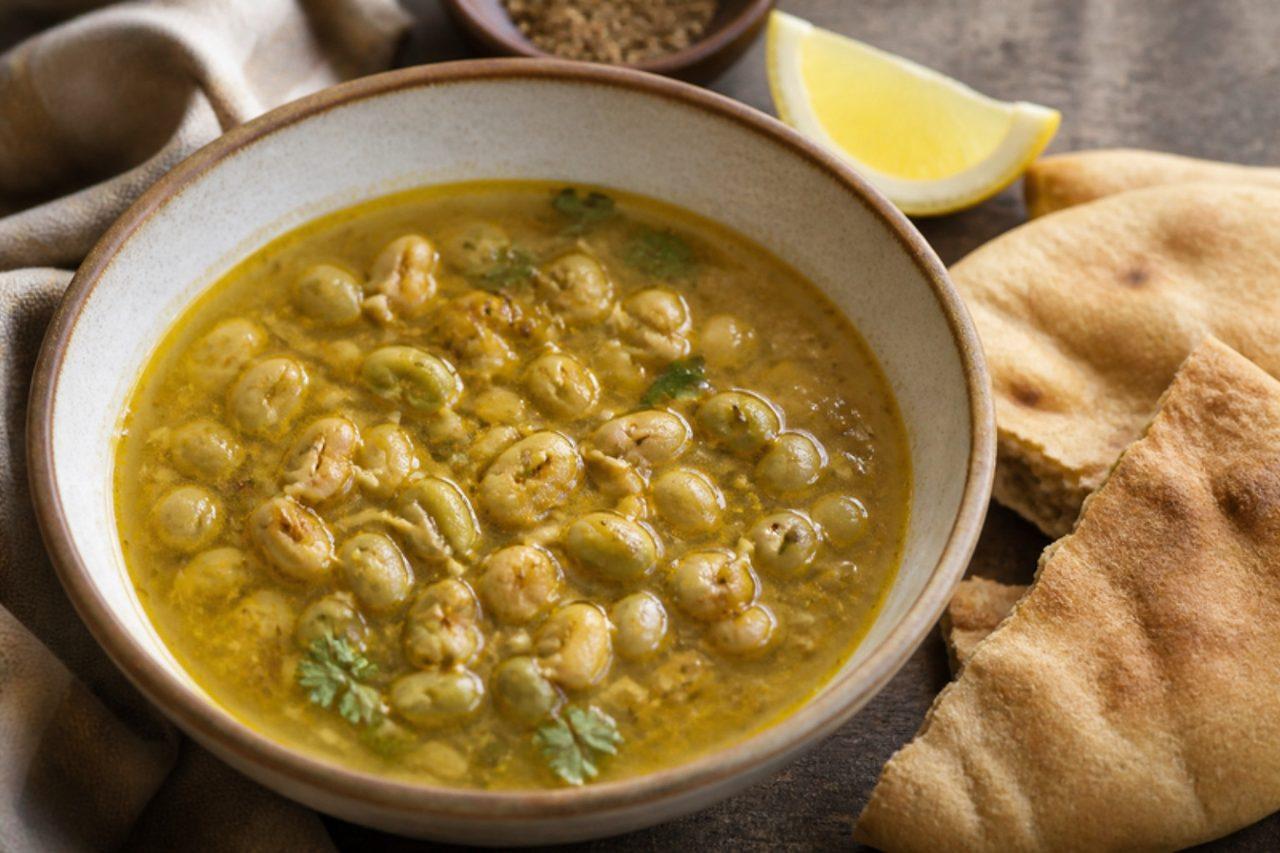
Ful nabitSprouted fava bean soup
Sprouted beans are ladled out with their cooking liquor in Cairo homes when the weather turns cold or someone is feeling run down, and Egyptians swear by the broth as a pick-me-up. The beans are soaked and left to sprout for a few days, then simmered with onion, garlic and cumin into a light, earthy soup that is sharpened at the table with plenty of lemon. You can eat the beans with a spoon or pop them from their skins. Allow 3 to 4 days for sprouting, although the hands-on work is only about 20 minutes. People with G6PD deficiency (favism) must not eat fava beans. Chef's tip: stop the sprouting when the shoots are about 1 cm long; longer sprouts taste grassy and bitter.
 Egyptian