
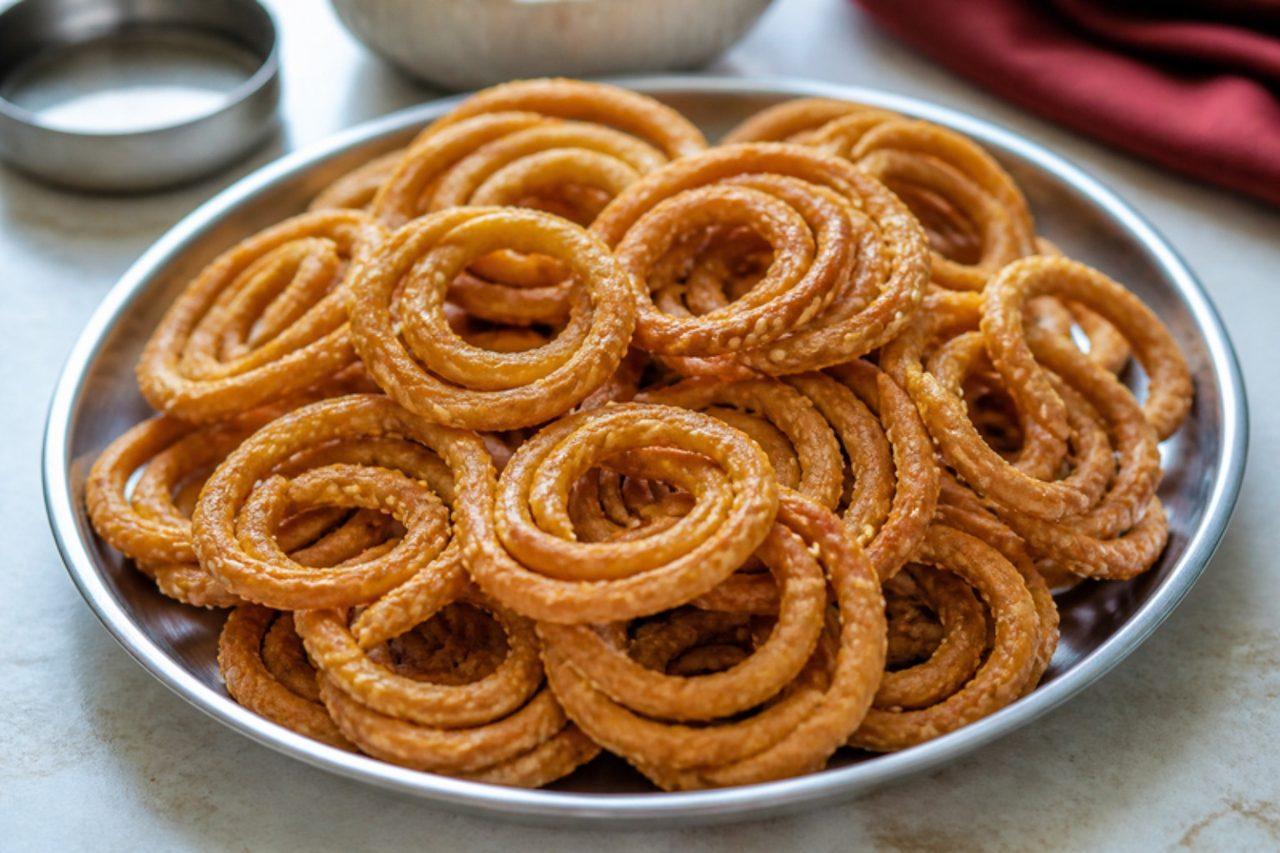
AI-generated image
Kadboli
Crunchy savoury rice and lentil rings
कडबोळी: hand-rolled rings of roasted rice-and-lentil bhajani with ajwain, sesame and chilli, fried crunchy for the Diwali faral


Kadboli is the Maharashtrian answer to chakli for people without a press: the same kind of roasted multi-grain flour, called bhajani, is rolled into ropes on a wooden board and twisted into rings by hand. Grandmothers in Kolhapur and Satara can turn out hundreds in an afternoon, each with the faint ridges of the board on it. The flavour is deeper and more toasty than a plain gram-flour snack, thanks to rice, chana, urad and moong all roasted before grinding, with coriander and cumin roasted in. They are hard-crunchy, spicy and moreish, eaten from the faral dabba with tea through Diwali week. Ready-made kadboli bhajani from a Maharashtrian grocer saves the roasting steps. Chef's tip: knead with water that is just off the boil; the heat partly cooks the starch and gives a pliable dough that rolls into smooth ropes without cracking.
- Total time
- 60 min
- Difficulty
- medium
- Serves
- 10
Ingredients
For the bhajani
- 3 ½ oz raw rice
- 3 ½ oz chana dal
- 1 ¾ oz urad dal
- ⅞ oz moong dal
- 1 tbsp coriander seeds
- 1 tsp cumin seeds
For the dough
- 1 ½ tsp red chilli powder
- ¼ tsp ground turmeric
- ½ tsp ajwain (carom seeds)
- 1 tbsp white sesame seeds
- ¼ tsp asafoetida
- 1 ¼ tsp salt
- 3 tbsp groundnut or sunflower oilhot
- ¾ cup waterjust off the boil, about
For frying
Shop this recipe on Amazon
Spices & pantry
Links open Amazon in a new tab. As an Amazon Associate, WhatToEat.Today earns from qualifying purchases.
Method
0/7 doneStep 1: Dry-roast 3 ½ oz raw rice, 3 ½ oz chana dal, 1 ¾ oz urad dal and ⅞ oz moong dal one by one in a heavy pan over a low-medium heat, 4–6 minutes each, until each smells toasted and turns a shade darker. Roast 1 tbsp coriander seeds and 1 tsp cumin seeds for 1 minute. Spread everything on a plate to cool.
22 minStep 2: Grind the cooled grains and spices to a fine flour in a dry grinder and sift. You need about 250 g of bhajani.
5 minStep 3: Mix the bhajani with 1 ½ tsp red chilli powder, ¼ tsp ground turmeric, ½ tsp ajwain (carom seeds), 1 tbsp white sesame seeds, ¼ tsp asafoetida and 1 ¼ tsp salt. Pour over the hot 3 tbsp groundnut or sunflower oil and rub it in.
Step 4: Add the hot ¾ cup water a little at a time and knead into a soft, smooth dough that doesn't crack when pressed. Common mistake: a dry dough; the rings split as you shape them and shatter in the oil. Keep it covered as you work.
Step 5: Take a walnut-sized piece and roll it under your fingertips on a wooden board into a rope about 12 cm long and as thick as a pencil. Bring the ends together, overlap and pinch to make a ring. Shape the rest on a sheet of paper.
Step 6: Heat 3 cups groundnut or sunflower oil, for deep-frying in a kadhai over a medium heat to about 325°F. Fry 8–10 kadboli at a time for 5–6 minutes, turning, until deep golden and the bubbling has nearly stopped.
25 minStep 7: Drain on kitchen paper and cool completely before storing airtight for up to 3 weeks.
Nutrition per serving
- Calories
- 180 kcal
- Protein
- 5 g
- Carbs
- 22 g
- Fat
- 8 g
- Fibre
- 3 g
Nutrition values are estimates.
KrazyBadal
Good to know
- How long does kadboli take?
- About 60 minutes in total: 30 minutes to prepare and 30 minutes to cook.
- How many people does it serve?
- 10 as written. Change the servings above the ingredients and every amount scales to match.
- Is it vegan?
- Yes. It has no meat, fish, dairy or eggs.
- Can I make it ahead?
- Yes. It keeps well, so you can cook it earlier in the day or the day before and reheat it.
- What can I use instead of raw rice?
- Any long-grain rice, same amount.
- What can I use instead of coriander seeds?
- Ground coriander, same amount (add it later in the cooking; it burns faster).
Reviews
No reviews yet. Be the first to cook it.
Rate this recipe
Sign in to rate and review this recipe.
You might also like

Yaki onigiriGrilled rice balls
Yaki onigiri (焼きおにぎり) are rice balls grilled until they form a crisp, toasty crust, then brushed with soy sauce glaze. They are eaten all over Japan, at izakaya, at barbecues and from the freezer section, as a snack or with miso soup. The inside stays soft and steamy while the outside crackles. Best eaten hot, straight from the pan. Chef's tip: let the shaped rice balls dry for 10 minutes before they go in the pan. A drier surface forms a better crust and won't stick, and the glaze goes on only at the end so it doesn't burn.
 Japanese

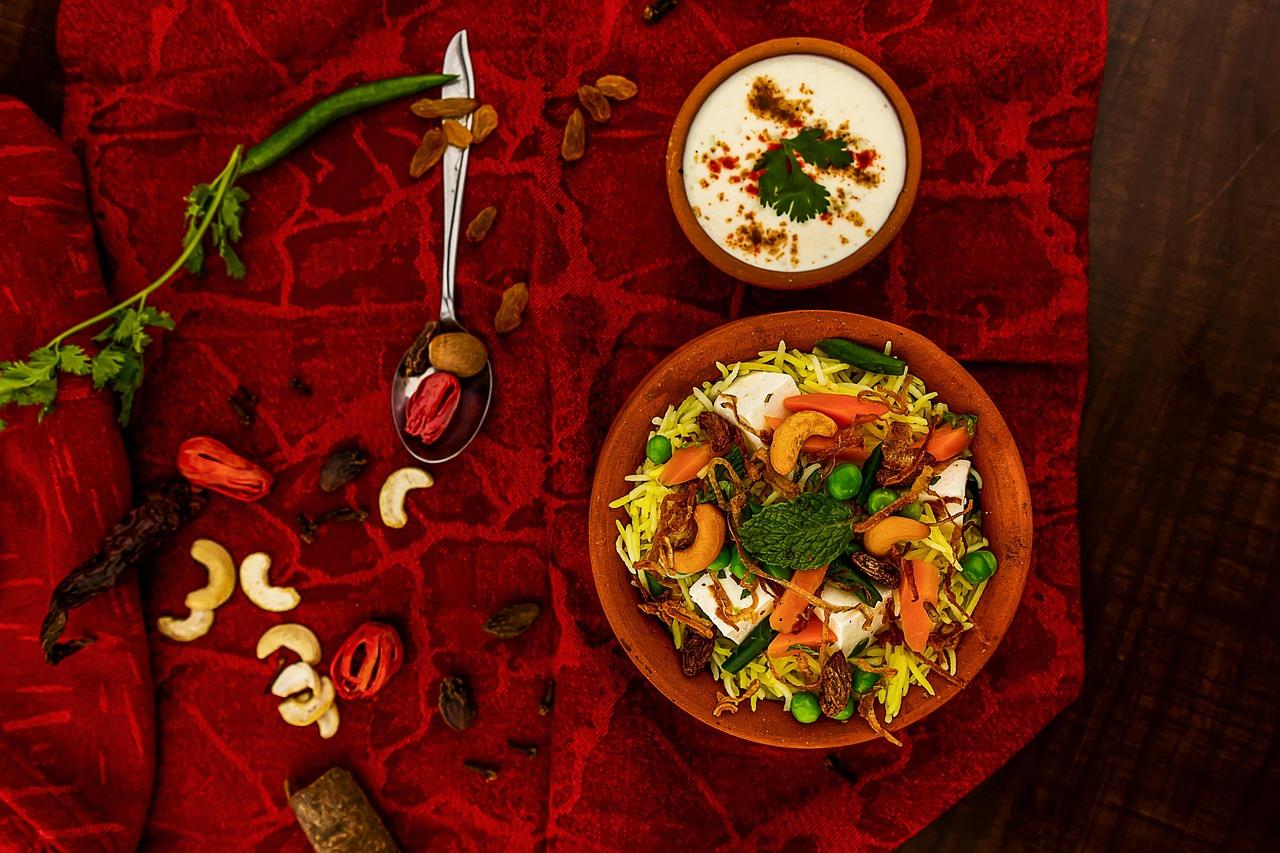
Paneer biryaniRice and moong dal in coconut milk
A mild, creamy biryani: rice and husked green gram roasted in ghee, then cooked in coconut milk with peas, carrots, potatoes, peanuts and cashews, and finished with soft fried paneer and a fresh coriander yogurt. Serve hot, garnished with more fried cashews and paneer.


Sabudana khichdiSago with peanuts and potato
Sabudana khichdi is the dish that sees Maharashtra through every vrat (fast), from Navratri to Ekadashi, but it's so good that people eat it any day of the week. Soaked sago pearls are tossed in a pan with crushed roasted peanuts, cubes of potato, cumin and green chilli until each pearl turns glassy and separate, then finished with lemon and coriander. It's soft, chewy, nutty and gently hot. Fasting rules vary from family to family, so check yours; this version uses rock salt and no asafoetida, onion or garlic. Traditionally it's cooked in ghee; use ghee instead of oil if you aren't keeping it vegan. Chef's tip: soak the sago in just enough water to cover by the height of the pearls themselves, no more; too much water is the reason khichdi turns into one sticky lump.
Perfect for:Diwali