
AI-generated image
Kalathappam
Rice and jaggery cake
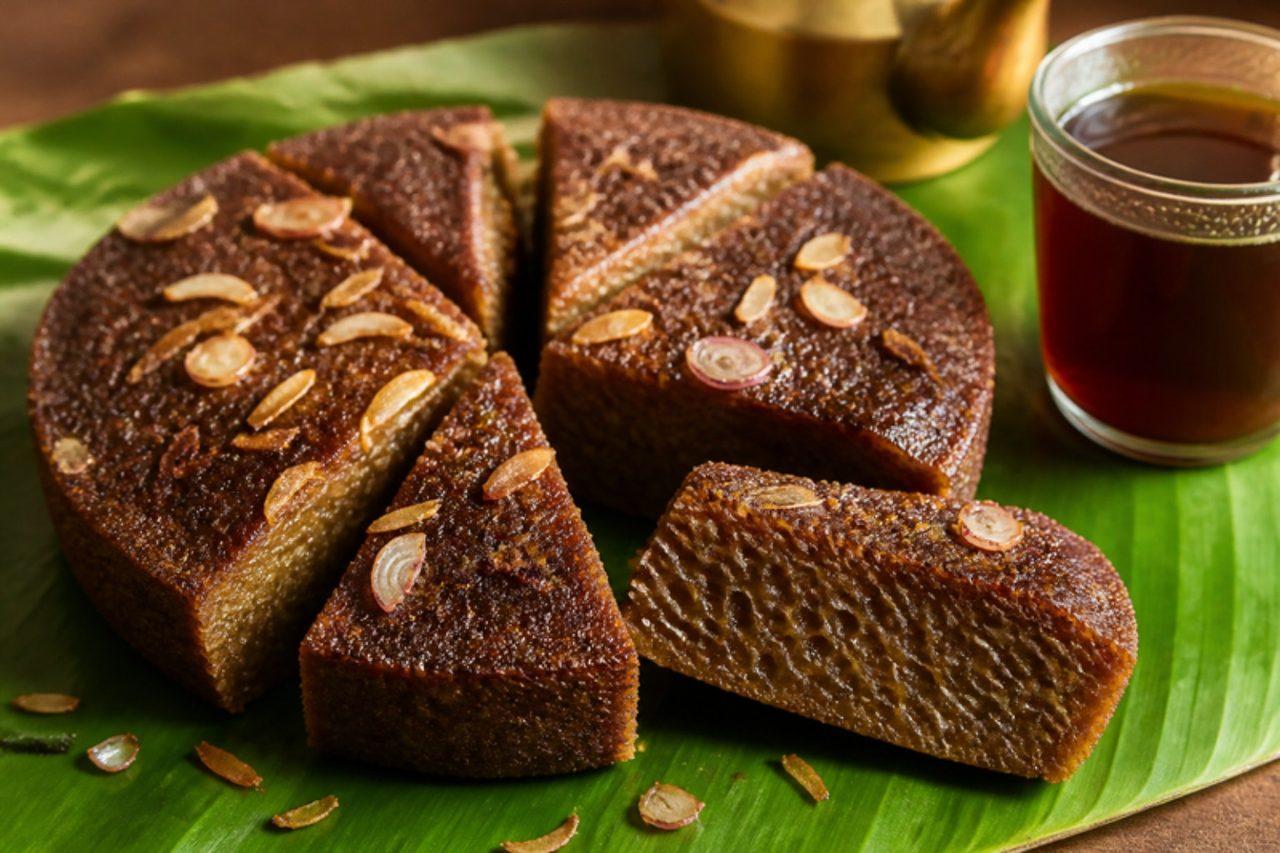
Malabar rice and jaggery cake with fried coconut and shallots


Kalathappam takes its name from the kalam, the heavy clay or metal pot it was once cooked in over a wood fire with embers heaped on the lid. In Malabar homes from Kozhikode to Kannur it appears at tea after the Ramadan fast and for family visits, cut into wedges and eaten warm with black tea. Soaked rice is ground with a little cooked rice and jaggery syrup, so the cake is naturally eggless and gluten free; ghee-fried coconut slivers and sliced shallots give it a crisp, savoury top and a sweet, chewy, gently bubbled middle. Grind the batter as smooth as you can: a gritty batter is the usual reason it turns out dense and sandy. Here it starts on the hob and finishes in the oven, which gives the heat from above that the embers once did. Chef's tip: let the shallots go only to light gold in the ghee; they keep cooking in the oven and turn bitter if they are already brown.
- Total time
- 250 min
- Difficulty
- medium
- Serves
- 8
Ingredients
For the batter
- 9 oz raw riceponni, sona masoori or other short raw rice
- 3 tbsp cooked rice
- 9 oz jaggerygrated
- 1 ¼ cups waterdivided
- 1 tsp ground cardamom
- ½ tsp cumin seeds
- ½ tsp bicarbonate of soda
- 1 pinch salt
For the topping
- 3 tbsp ghee
- 2 ⅛ oz fresh coconutcut into thin slivers
- 6 shallotsthinly sliced
Shop this recipe on Amazon
What you'll need
Fresh ingredients (1)
Links open Amazon in a new tab. As an Amazon Associate, WhatToEat.Today earns from qualifying purchases.
Method
0/10 doneStep 1: Rinse 9 oz raw rice twice and soak in plenty of water for 3 hours.
180 minStep 2: Heat 9 oz jaggery with 150 ml of the ¾ cup water over low heat, stirring, until melted. Strain to remove grit and leave to cool until lukewarm.
8 minStep 3: Drain the rice and grind it with 3 tbsp cooked rice and the rest of the 1 ¼ cups water to a very smooth, pourable batter, like single cream. Rub a drop between your fingers; it should feel almost silky.
Step 4: Stir the warm jaggery syrup, 1 tsp ground cardamom, ½ tsp cumin seeds and 1 pinch salt into the batter. Rest it while you make the topping.
Step 5: Heat the oven to 375°F (350°F fan).
Step 6: Heat 3 tbsp ghee in a heavy 20–22 cm ovenproof pot or cast-iron pan over medium heat. Fry 2 ⅛ oz fresh coconut until it starts to colour, about 3 minutes, then add 6 shallots and fry 3–4 minutes more until light gold.
7 minStep 7: Just before cooking, stir ½ tsp bicarbonate of soda into the batter; it will foam slightly.
Step 8: Pour the batter over the coconut and shallots in the hot pot. Turn the heat to low, cover and cook for 10 minutes, until the edges begin to set.
10 minStep 9: Uncover and move the pot to the oven. Bake for 35–40 minutes, until the top is deep golden and dotted with holes, the cake springs back when pressed and a skewer comes out clean.
38 minStep 10: Cool in the pot for at least 30 minutes; it is soft when hot and firms as it cools. Loosen the sides with a knife, turn out and cut into wedges.
30 min
Nutrition per serving
- Calories
- 300 kcal
- Protein
- 3 g
- Carbs
- 56 g
- Fat
- 7 g
- Fibre
- 1 g
Nutrition values are estimates.
KrazyBadal
Good to know
- How long does kalathappam take?
- About 250 minutes in total: 200 minutes to prepare and 50 minutes to cook.
- How many people does it serve?
- 8 as written. Change the servings above the ingredients and every amount scales to match.
- Is it vegetarian?
- Yes. It has no meat or fish.
- Is it gluten free?
- Yes, as written. Check the labels on stock, sauces and spice mixes, which sometimes contain gluten.
- Can I make it ahead?
- Yes. It keeps well, so you can cook it earlier in the day or the day before and reheat it.
- What can I use instead of raw rice?
- Any long-grain rice, same amount.
- What can I use instead of cooked rice?
- Any long-grain rice, same amount.
Reviews
No reviews yet. Be the first to cook it.
Rate this recipe
Sign in to rate and review this recipe.
You might also like

SakarpadaSweet fried dough diamonds
Sakarpada (shakarpara) are little sweet diamonds of a rich dough made with ghee, milk and sugar, fried until golden and crunchy. They are a Diwali favourite with tea, and the cubes go into bhusu too. They keep for weeks in an air-tight tin.
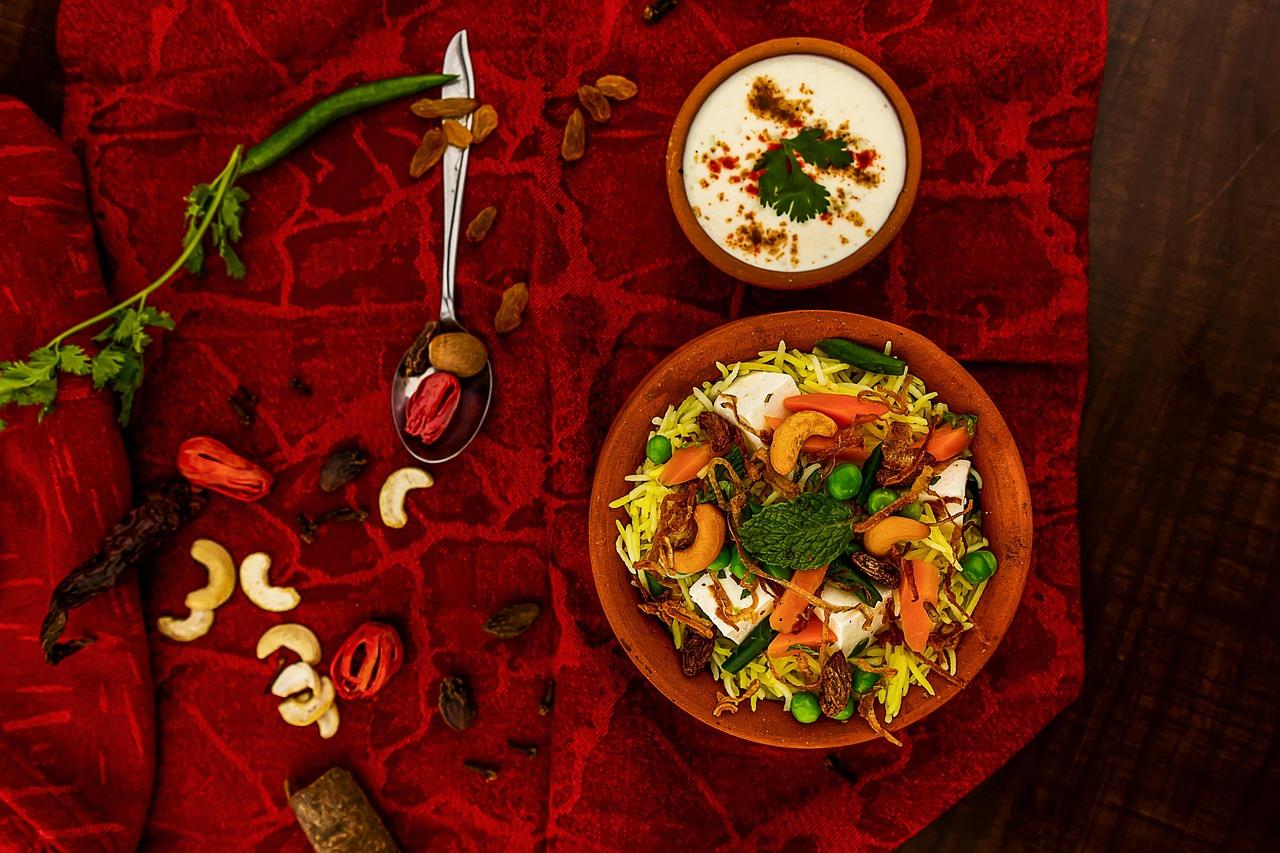
Paneer biryaniRice and moong dal in coconut milk
A mild, creamy biryani: rice and husked green gram roasted in ghee, then cooked in coconut milk with peas, carrots, potatoes, peanuts and cashews, and finished with soft fried paneer and a fresh coriander yogurt. Serve hot, garnished with more fried cashews and paneer.


Sabudana khichdiSago with peanuts and potato
Sabudana khichdi is the dish that sees Maharashtra through every vrat (fast), from Navratri to Ekadashi, but it's so good that people eat it any day of the week. Soaked sago pearls are tossed in a pan with crushed roasted peanuts, cubes of potato, cumin and green chilli until each pearl turns glassy and separate, then finished with lemon and coriander. It's soft, chewy, nutty and gently hot. Fasting rules vary from family to family, so check yours; this version uses rock salt and no asafoetida, onion or garlic. Traditionally it's cooked in ghee; use ghee instead of oil if you aren't keeping it vegan. Chef's tip: soak the sago in just enough water to cover by the height of the pearls themselves, no more; too much water is the reason khichdi turns into one sticky lump.
