
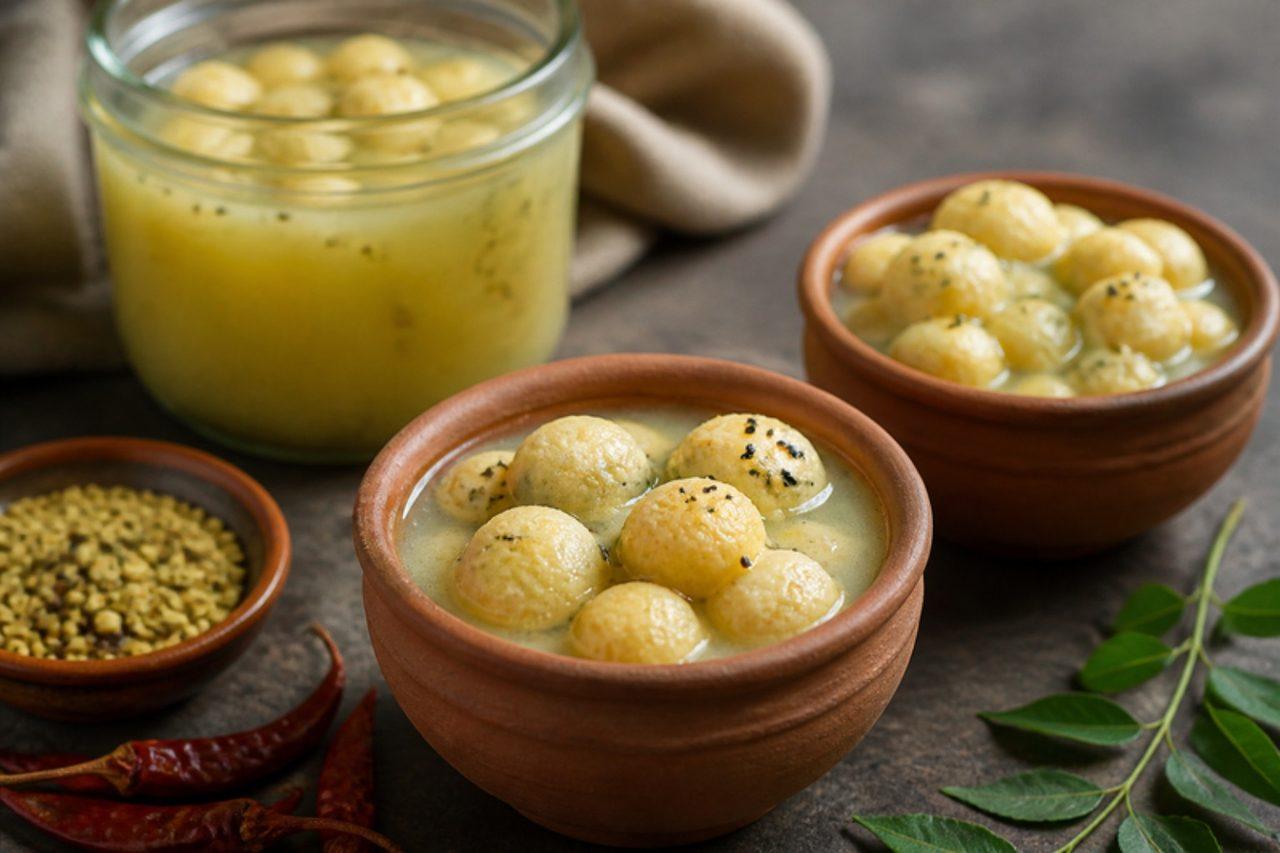
AI-generated image
Kanji vada
Lentil dumplings in mustard water
कांजी वड़ा: soft moong dal vadas soaking in sour, mustard-sharp fermented water, served chilled in kulhads (plus 4 hours soaking and 2–3 days in the sun)



Around Holi, glass jars of cloudy water sit on rooftops across Jaipur, Jodhpur and old Delhi, fermenting in the spring sun. That water is kanji: boiled water with ground mustard seed, salt and chilli, which turns sour, pungent and faintly fizzy in two or three days. Small moong dal fritters are soaked in hot water to soften, then dropped into the kanji, where they drink up its tang and turn spongy. Served chilled in clay kulhads with a vada or two in each, it is a cooling, appetite-sharpening drink-snack that cuts through the rich Holi sweets. Ferment only in a clean, sterilised glass or ceramic jar, stir with a clean dry spoon, and discard the batch if you see mould or it smells rotten rather than pleasantly sour. Chef's tip: grind the mustard seed coarsely and fresh; pre-ground mustard powder goes bitter and dull.
- Total time
- 65 min
- Difficulty
- medium
- Serves
- 8
Ingredients
For the kanji
- 8 ¼ cups waterboiled and cooled
- 3 tbsp black mustard seeds (rai)coarsely ground
- 1 tbsp salt
- 1 tsp black salt (kala namak)
- 1 tsp red chilli powder
- ¼ tsp gluten-free asafoetida
For the vadas
- 5 ½ oz split yellow moong dalsoaked for 4 hours
- ½ tsp salt
- 1 pinch gluten-free asafoetida
- 4 ¼ cups hot waterwith a pinch of salt
Shop this recipe on Amazon
What you'll need
Spices & pantry
Links open Amazon in a new tab. As an Amazon Associate, WhatToEat.Today earns from qualifying purchases.
Method
0/8 doneStep 1: Wash a 3-litre glass or ceramic jar in hot soapy water, rinse and dry it completely, or sterilise it in a 275°F oven for 15 minutes and let it cool.
15 minStep 2: Pour in the cooled 8 ¼ cups water and stir in 3 tbsp black mustard seeds (rai), 1 tbsp salt, 1 tsp black salt (kala namak), 1 tsp red chilli powder and ¼ tsp gluten-free asafoetida with a clean, dry spoon.
Step 3: Cover the mouth with muslin tied with string and set the jar in the sun for 2–3 days, bringing it indoors at night. Stir once a day with a clean, dry spoon. It is ready when it tastes clearly sour and sharp with mustard. If mould appears or it smells off, throw it away.
Step 4: On the day the kanji is ready, drain 5 ½ oz split yellow moong dal well and grind it to a thick, slightly coarse paste, adding only 1–2 tbsp water.
5 minStep 5: Beat the batter with your hand or a whisk for 3–4 minutes until light and fluffy; a drop should float in water. Mix in ½ tsp salt and 1 pinch gluten-free asafoetida. Common mistake: skipping the beating; dense vadas stay hard and won't soak up the kanji.
4 minStep 6: Heat 2 cups groundnut or sunflower oil, for deep-frying in a kadhai over a medium heat to about 350°F. Drop in small spoonfuls of batter and fry for 4–5 minutes, turning, until light golden and cooked through.
15 minStep 7: Drop the hot vadas straight into 4 ¼ cups hot water and leave for 15 minutes until soft and doubled in size. Squeeze each one gently between your palms.
15 minStep 8: Add the vadas to the kanji and refrigerate for at least 4 hours so they absorb the flavour. Serve chilled, a ladle of kanji with 2–3 vadas per glass. Keep in the fridge for up to 4 days.
Nutrition per serving
- Calories
- 110 kcal
- Protein
- 6 g
- Carbs
- 14 g
- Fat
- 4 g
- Fibre
- 3 g
Nutrition values are estimates.
KrazyBadal
Good to know
- How long does kanji vada take?
- About 65 minutes in total: 40 minutes to prepare and 25 minutes to cook.
- How many people does it serve?
- 8 as written. Change the servings above the ingredients and every amount scales to match.
- Is it vegan?
- Yes. It has no meat, fish, dairy or eggs.
- Is it gluten free?
- Yes, as written. Check the labels on stock, sauces and spice mixes, which sometimes contain gluten.
- Can I make it ahead?
- Yes. It keeps well, so you can cook it earlier in the day or the day before and reheat it.
- What can I use instead of black mustard seeds (rai)?
- Cumin seeds, same amount (different flavour, same crackle).
- What can I use instead of black salt (kala namak)?
- Ordinary salt, same amount (loses the tangy, sulphurous note).
Reviews
No reviews yet. Be the first to cook it.
Rate this recipe
Sign in to rate and review this recipe.
You might also like

Yaki onigiriGrilled rice balls
Yaki onigiri (焼きおにぎり) are rice balls grilled until they form a crisp, toasty crust, then brushed with soy sauce glaze. They are eaten all over Japan, at izakaya, at barbecues and from the freezer section, as a snack or with miso soup. The inside stays soft and steamy while the outside crackles. Best eaten hot, straight from the pan. Chef's tip: let the shaped rice balls dry for 10 minutes before they go in the pan. A drier surface forms a better crust and won't stick, and the glaze goes on only at the end so it doesn't burn.
 Japanese

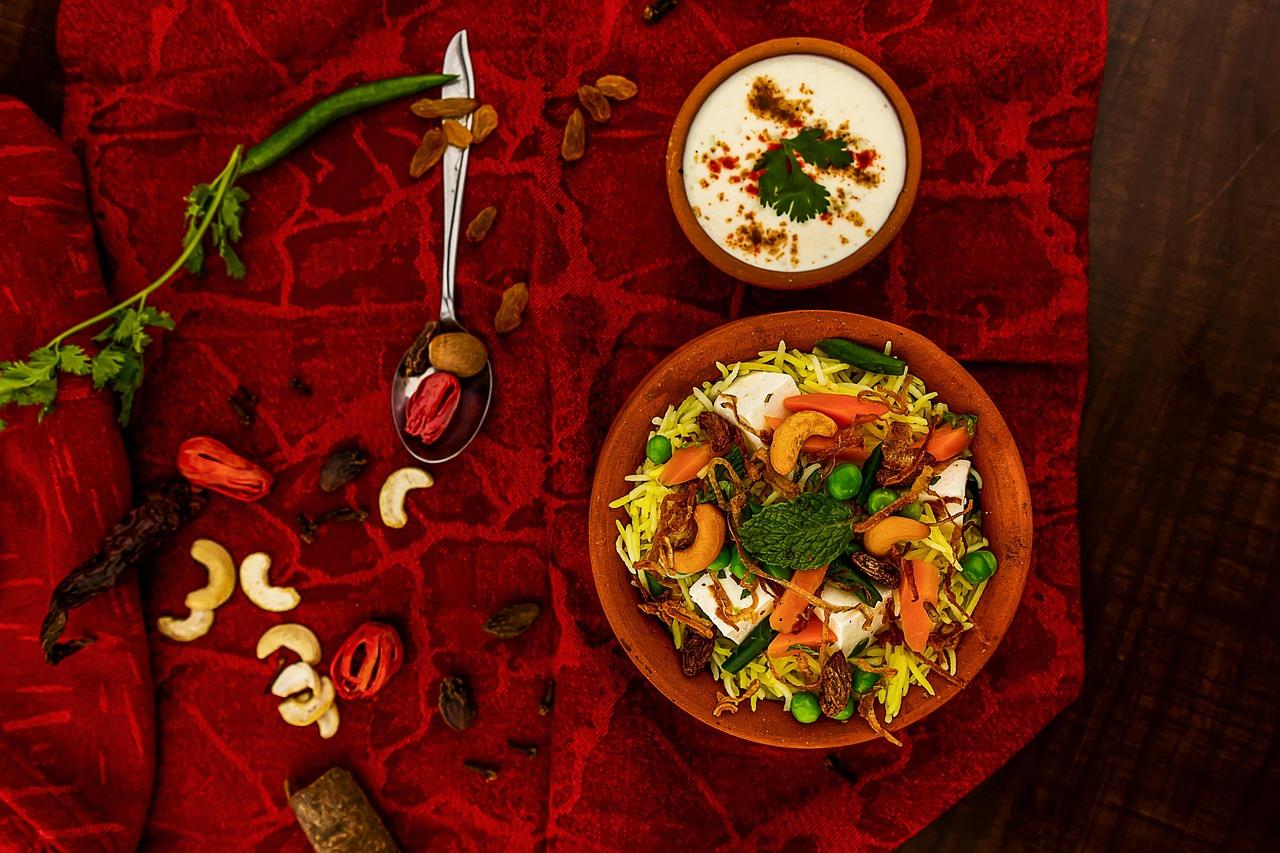
Paneer biryaniRice and moong dal in coconut milk
A mild, creamy biryani: rice and husked green gram roasted in ghee, then cooked in coconut milk with peas, carrots, potatoes, peanuts and cashews, and finished with soft fried paneer and a fresh coriander yogurt. Serve hot, garnished with more fried cashews and paneer.


Sabudana khichdiSago with peanuts and potato
Sabudana khichdi is the dish that sees Maharashtra through every vrat (fast), from Navratri to Ekadashi, but it's so good that people eat it any day of the week. Soaked sago pearls are tossed in a pan with crushed roasted peanuts, cubes of potato, cumin and green chilli until each pearl turns glassy and separate, then finished with lemon and coriander. It's soft, chewy, nutty and gently hot. Fasting rules vary from family to family, so check yours; this version uses rock salt and no asafoetida, onion or garlic. Traditionally it's cooked in ghee; use ghee instead of oil if you aren't keeping it vegan. Chef's tip: soak the sago in just enough water to cover by the height of the pearls themselves, no more; too much water is the reason khichdi turns into one sticky lump.
Perfect for:Holi