
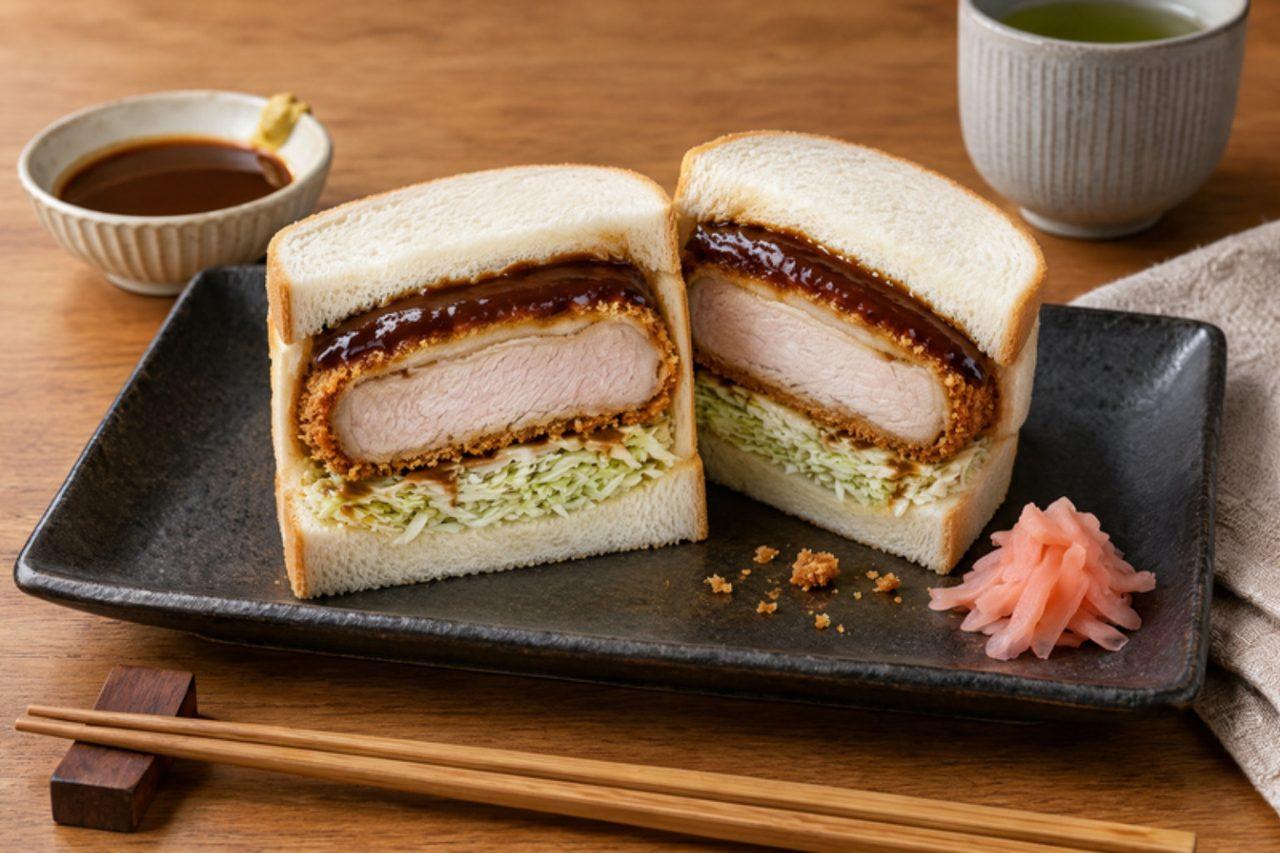
AI-generated image
Katsu sando
Katsu sando (カツサンド): Tokyo pork cutlet sandwich with tonkatsu sauce and cabbage
 Japanese
Katsu sando began in Tokyo tonkatsu shops in the 1930s as a cutlet you could carry, and is now a fixture of department-store food halls, train-station kiosks and lunchboxes all over Japan: a crisp panko pork loin cutlet soaked in sweet-sour tonkatsu sauce between pillowy white bread, crusts trimmed off. The common mistake is slicing it while hot, which squashes the bread and makes it soggy; let it rest under a light weight first. Pork loin is a whole cut, so cook it to 63 °C and rest it for 3 minutes. Chef's tip: butter the bread with a little mustard mixed in; it stops the sauce soaking through and adds a gentle kick.
- Total time
- 35 min
- Difficulty
- medium
- Serves
- 2
Ingredients
For the cutlets
- 2 boneless pork loin steaksabout 150 g each, 1.5 cm thick
- ½ tsp salt
- ¼ tsp ground black pepper
- 1 oz plain flour
- 1 eggbeaten
- 2 ⅛ oz panko breadcrumbs
- 2 cups vegetable oilfor frying
For the sandwiches
- 4 slices soft white sandwich bread (shokupan)
- ½ oz soft butter
- 1 tsp English mustard
- 4 tbsp tonkatsu sauce
- 2 ⅛ oz white cabbagevery finely shredded
Shop this recipe on Amazon
What you'll need
Spices & pantry
Fresh ingredients (4)
Links open Amazon in a new tab. As an Amazon Associate, WhatToEat.Today earns from qualifying purchases.
Method
0/6 doneStep 1: Snip the fat on the edge of 2 boneless pork loin steaks in 3–4 places so it stays flat, then beat lightly with a rolling pin. Season with ½ tsp salt and ¼ tsp ground black pepper.
Step 2: Coat in 1 oz plain flour, then 1 egg, then press firmly into 2 ⅛ oz panko breadcrumbs.
Step 3: Heat 2 cups vegetable oil in a deep pan to 350°F. Fry the cutlets for 3 minutes a side until deep golden and the centre reaches 145°F. Rest on a rack for 3 minutes.
8 minStep 4: Mix ½ oz soft butter with 1 tsp English mustard and spread on one side of each slice of 4 slices soft white sandwich bread (shokupan).
Step 5: Brush both sides of each cutlet with 4 tbsp tonkatsu sauce. Lay 2 ⅛ oz white cabbage on 2 slices, top with a cutlet and close with the other slices.
Step 6: Wrap tightly in cling film and press under a light board for 5 minutes, then cut off the crusts and slice into three fingers. Keep cold if packing.
Nutrition per serving
- Calories
- 780 kcal
- Protein
- 38 g
- Carbs
- 72 g
- Fat
- 36 g
- Fibre
- 3 g
Nutrition values are estimates.
KrazyBadal
Good to know
- How long does katsu sando take?
- About 35 minutes in total: 20 minutes to prepare and 15 minutes to cook.
- How many people does it serve?
- 2 as written. Change the servings above the ingredients and every amount scales to match.
- What can I use instead of ground black pepper?
- Black peppercorns, freshly ground, same amount.
- What can I use instead of plain flour?
- Self-raising flour, same amount (then leave out the baking powder).
Reviews
No reviews yet. Be the first to cook it.
Rate this recipe
Sign in to rate and review this recipe.
You might also like

Pork souvlaki
This is a pork recipe. Walk through any Greek town after dark, from Athens to Thessaloniki, and the smell of souvlaki stands drifts down the street; cubes of pork shoulder grilled on thin skewers are the country's favourite cheap supper, eaten standing up or at a plastic-table taverna. At home you marinate the meat in lemon, olive oil, garlic and dried oregano, grill it hard and fast, and pile it on warm pitta with tzatziki, tomato and red onion. Chef's tip: cut the pork into even 2.5 cm cubes and leave a little fat on; lean loin dries out, shoulder stays juicy over high heat.
 Greek
Okonomiyaki
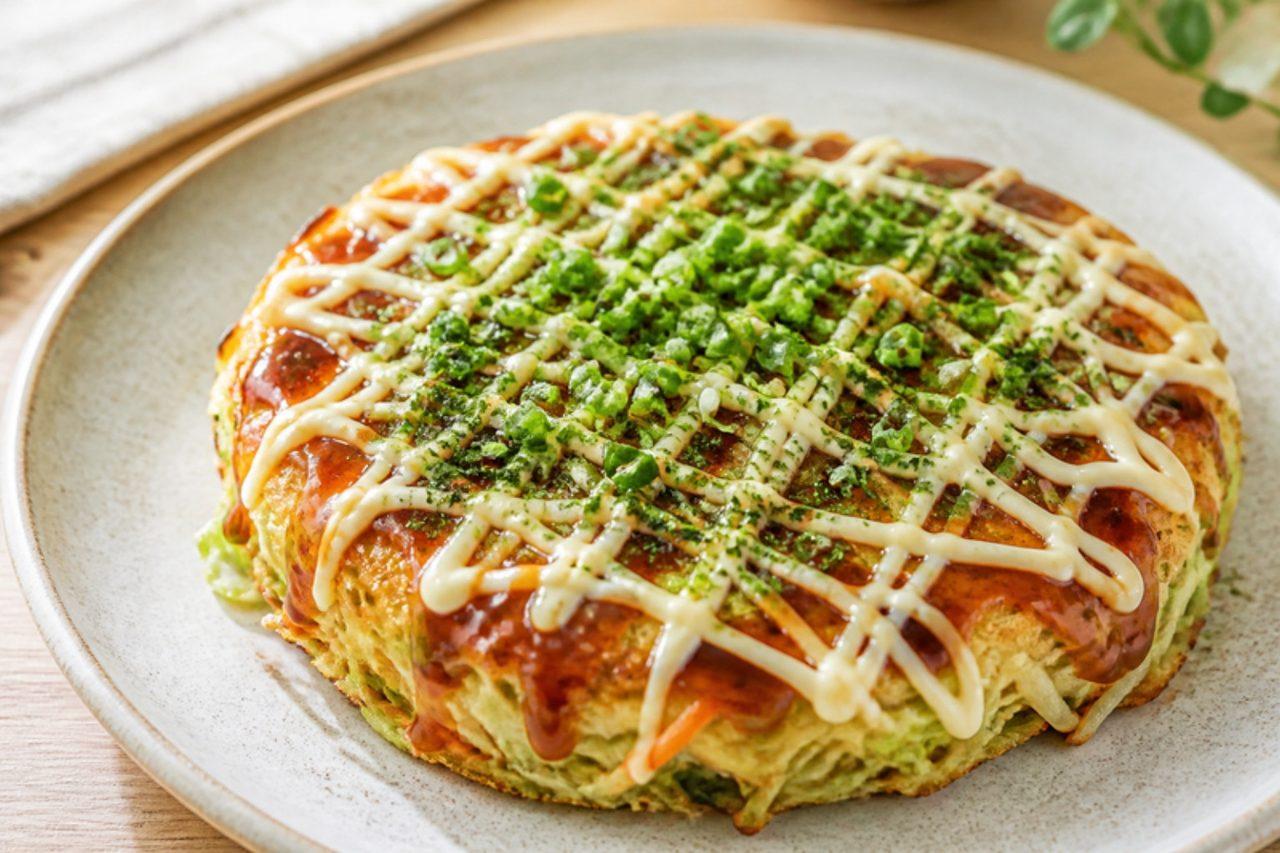
Okonomiyaki (お好み焼き, 'grilled as you like it') is the pride of Osaka, where it's cooked on hot iron griddles in lively restaurants. Finely shredded cabbage is folded into a light batter with egg and spring onion, then fried into a thick, soft pancake with a crisp outside. It's painted with a fruity brown sauce and zigzagged with mayonnaise. Bonito flakes are usual on top; this vegetarian version uses seaweed flakes and pickled ginger instead. Chef's tip: don't press the pancake down with your spatula while it cooks. Osaka cooks leave it alone so the cabbage steams inside and stays light and fluffy; pressing squeezes out the air.

Miso soup
Miso soup (味噌汁) is drunk every day in homes all over Japan, at breakfast as well as dinner, beside a bowl of rice. The base is dashi; this vegan version uses kombu and dried shiitake instead of bonito, which gives it a deep, rounded flavour. Silken tofu and wakame seaweed are the classic fillings. It takes ten minutes; just remember not to boil the miso. Chef's tip: add the miso at the very end and never let it boil. Boiling kills the miso's fresh, fermented aroma; Japanese cooks say the soup should only 'smile', with the surface barely trembling.
