
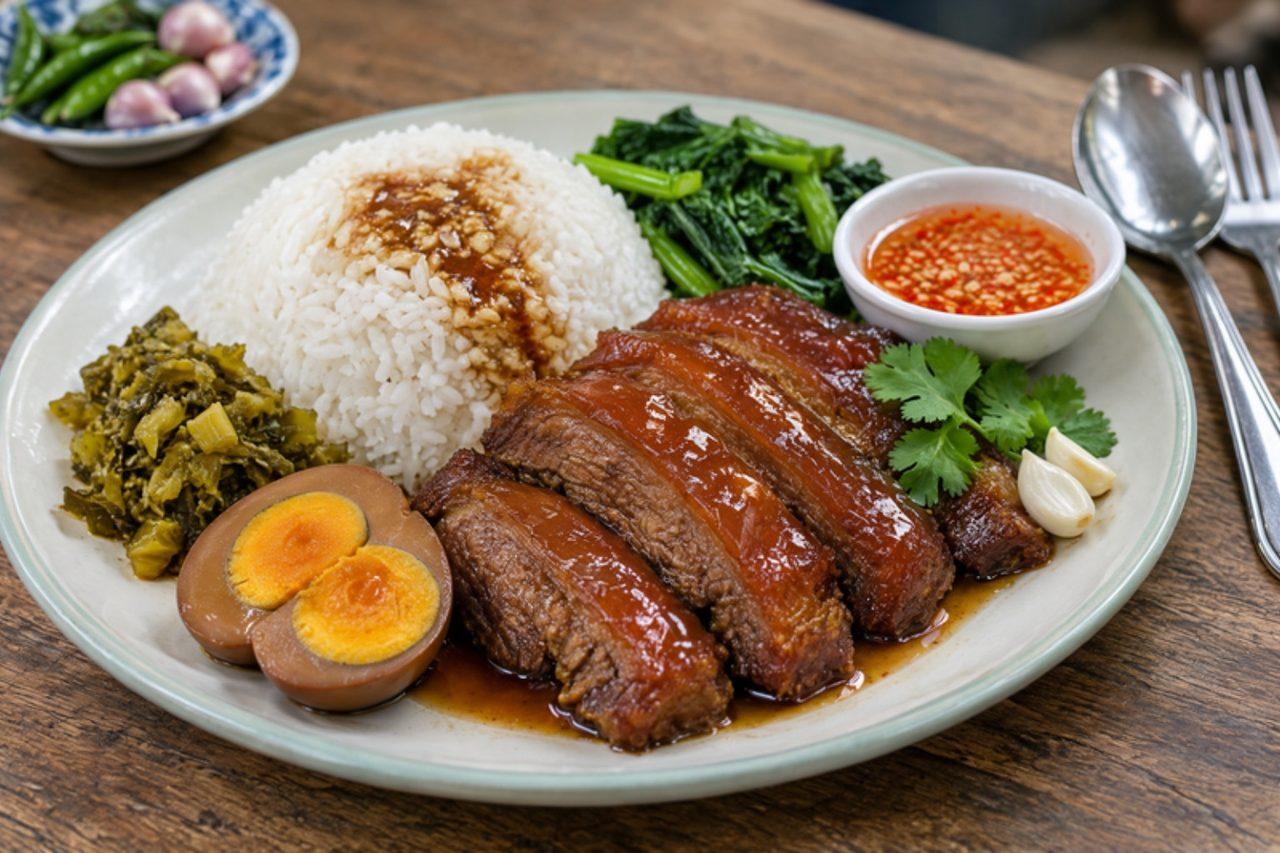
AI-generated image
Khao kha moo
Braised pork leg rice
ข้าวขาหมู: five-spice pork leg braised until it quivers, sliced over rice with egg, mustard greens and chilli vinegar

Khao kha moo is Bangkok's great one-plate lunch, and the shophouses along Charoen Krung Road in Bang Rak have been simmering pork leg in the same dark, star-anise-scented pots for decades. Fresh pork hock is braised in soy, palm sugar and five-spice until the skin turns glossy and gelatinous and the meat falls away in tender strands. It is sliced onto jasmine rice with a soy-stained boiled egg, pickled mustard greens, blanched Chinese kale and a fierce green chilli and garlic vinegar to cut the richness. Chef's tip: keep the braise at a lazy simmer; a hard boil tears the skin and turns the meat stringy.
- Total time
- 185 min
- Difficulty
- medium
- Serves
- 6
Ingredients
For the braise
- 3 ⅓ lb fresh pork hock or pork leg, skin oncut into large chunks by the butcher
- 4 coriander rootsor 8 coriander stalks
- 8 cloves garlic
- 1 tsp white peppercorns
- 2 ⅛ oz palm sugar
- 8 ¼ cups water
- 3 tbsp dark soy sauce
- 4 tbsp light soy sauce
- 1 tsp five-spice powder
- 6 eggs
For the chilli vinegar
- 3 cloves garlic
- 4 tbsp white vinegar
- ½ tsp salt
To serve
- 16 oz jasmine rice
- 5 ½ oz pickled mustard greensrinsed and chopped
- 10 ½ oz Chinese kale (gai lan)
Shop this recipe on Amazon
What you'll need
Spices & pantry
Fresh ingredients (5)
Links open Amazon in a new tab. As an Amazon Associate, WhatToEat.Today earns from qualifying purchases.
Method
0/8 doneStep 1: Put 3 ⅓ lb fresh pork hock or pork leg, skin on in a large pan, cover with cold water and bring to the boil. Boil for 5 minutes, then drain and rinse the pieces to wash off the scum.
15 minStep 2: Pound 4 coriander roots, 8 cloves garlic and 1 tsp white peppercorns to a rough paste in a mortar.
5 minStep 3: Melt 2 ⅛ oz palm sugar in a large heavy pot over a medium heat until it bubbles and turns amber, about 3 minutes. Stir in the paste for 30 seconds, then add the pork and turn it for 3–4 minutes until coated and coloured.
7 minStep 4: Add 8 ¼ cups water, 3 tbsp dark soy sauce, 4 tbsp light soy sauce, 3 star anise, 1 cinnamon stick and 1 tsp five-spice powder. Bring to the boil, then lower the heat so it barely bubbles, set the lid ajar and cook for 2–2½ hours, turning the pork now and then. It is ready when the skin is glossy and soft and a chopstick slides into the meat with no resistance; the meat will be far above 160°F. Common mistake: letting the braise boil hard; the skin splits and the meat turns stringy instead of melting.
140 minStep 5: Meanwhile boil 6 eggs for 8 minutes, cool in cold water and peel. Add them to the braise for the last 30 minutes so they turn brown.
10 minStep 6: Cook 16 oz jasmine rice in a rice cooker or covered pan until tender. Blanch 10 ½ oz Chinese kale (gai lan) in boiling water for 1 minute, until bright green, and drain.
20 minStep 7: For the chilli vinegar, pound 6 green bird's eye chillies and 3 cloves garlic coarsely, then stir in 4 tbsp white vinegar and ½ tsp salt.
3 minStep 8: Lift out the pork, cut the meat and skin off the bone into slices and halve the eggs. Serve over rice with a ladle of the braising liquid, the kale, 5 ½ oz pickled mustard greens and the chilli vinegar on the side.
Nutrition per serving
- Calories
- 720 kcal
- Protein
- 45 g
- Carbs
- 70 g
- Fat
- 27 g
- Fibre
- 3 g
Nutrition values are estimates.
KrazyBadal
Good to know
- How long does khao kha moo take?
- About 185 minutes in total: 25 minutes to prepare and 160 minutes to cook.
- How many people does it serve?
- 6 as written. Change the servings above the ingredients and every amount scales to match.
- What can I use instead of garlic?
- ½ tsp garlic paste or ⅛ tsp garlic powder per clove.
- What can I use instead of palm sugar?
- Caster sugar, same amount.
Reviews
No reviews yet. Be the first to cook it.
Rate this recipe
Sign in to rate and review this recipe.
You might also like

Pork souvlaki
This is a pork recipe. Walk through any Greek town after dark, from Athens to Thessaloniki, and the smell of souvlaki stands drifts down the street; cubes of pork shoulder grilled on thin skewers are the country's favourite cheap supper, eaten standing up or at a plastic-table taverna. At home you marinate the meat in lemon, olive oil, garlic and dried oregano, grill it hard and fast, and pile it on warm pitta with tzatziki, tomato and red onion. Chef's tip: cut the pork into even 2.5 cm cubes and leave a little fat on; lean loin dries out, shoulder stays juicy over high heat.
 Greek
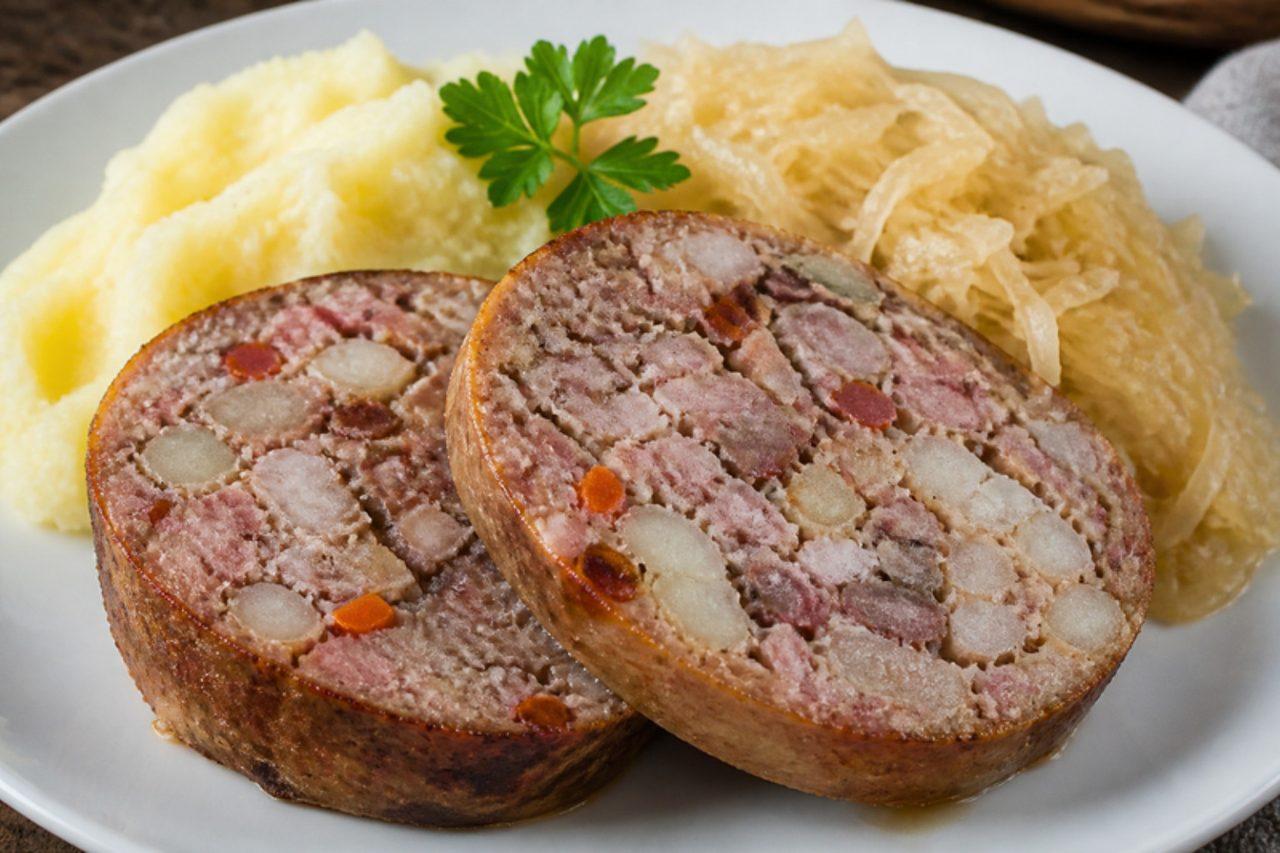
Pfälzer SaumagenStuffed pig's stomach
Saumagen is the pride of the Palatinate, served at wine-village festivals and family dinners from the Haardt hills to Ludwigshafen. A cleaned pig's stomach is stuffed with diced pork shoulder, pork sausage meat, potato and carrot seasoned with marjoram and nutmeg, poached slowly, then sliced thick and fried until crusty. The stomach works only as a casing and is ordered from a butcher; if you can't get one, bake the same filling in a covered terrine in a water bath. Serve with sauerkraut and mashed potato. Chef's tip: fill the stomach only three-quarters full, or it bursts as the potatoes swell.
 German

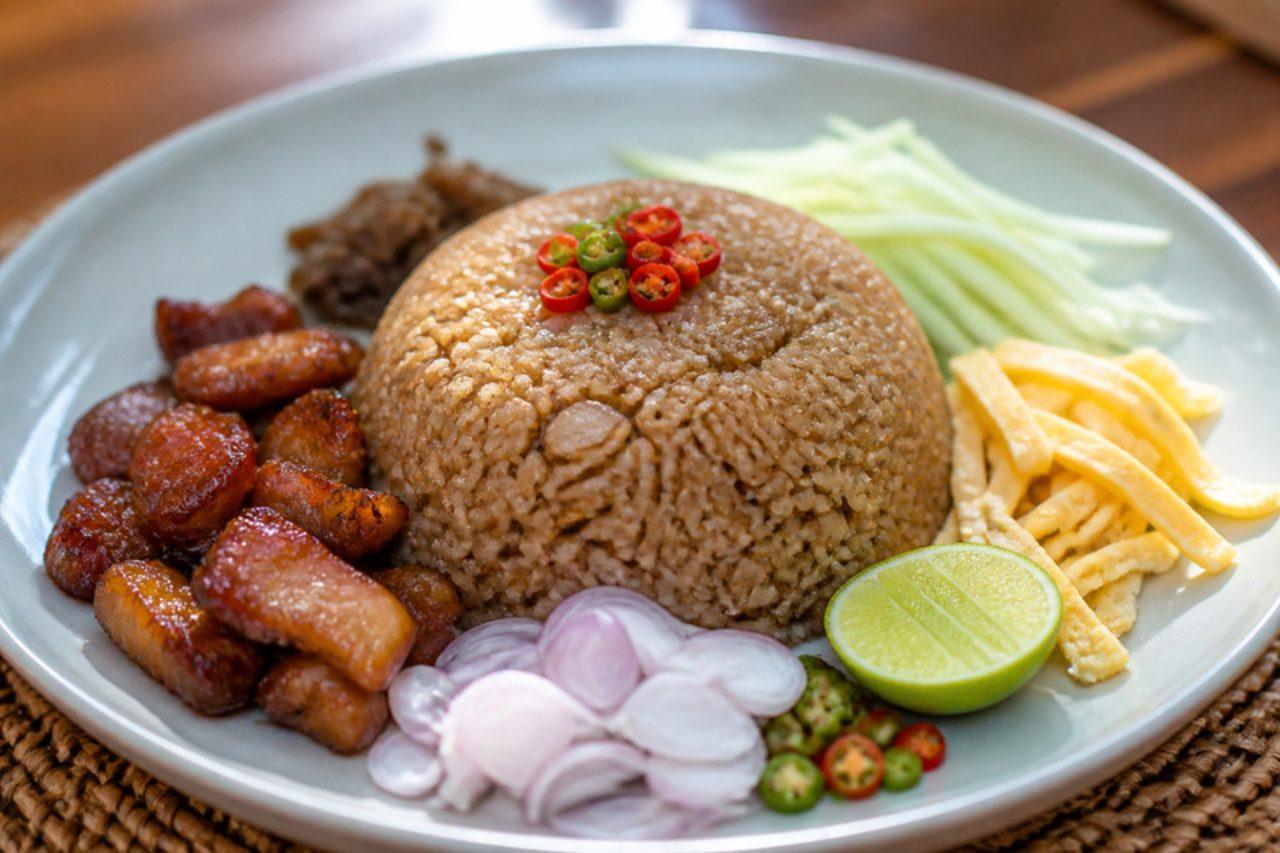
Khao kluk kapiShrimp paste rice
Everything on this central Thai plate is arranged in little heaps around a mound of rice tossed with garlic and fermented shrimp paste: sticky caramelised pork (moo wan), threads of sour green mango, shallots, chillies, sliced long beans, crisp dried shrimp and ribbons of thin omelette. You mix a bit of each into every spoonful, so salty, sweet, sour and hot arrive together. It's a favourite at Bangkok's curry-and-rice shops and a clever way to use up yesterday's rice at home; lime wedges and cucumber cool it down. Chef's tip: use day-old jasmine rice straight from the fridge, because freshly cooked rice clumps and smears the shrimp paste instead of coating each grain.