
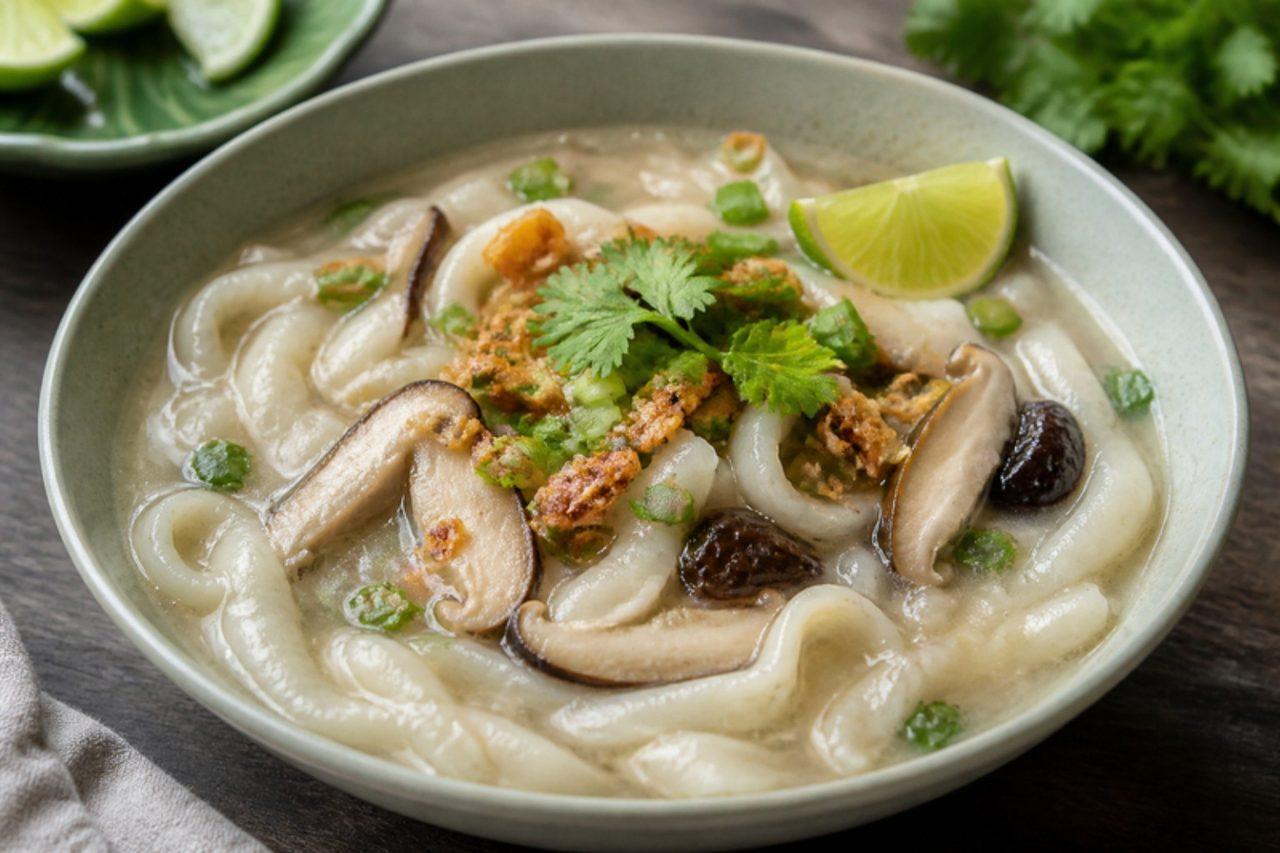
AI-generated image
Khao piak sen with mushroom broth
Khao piak sen: Lao hand-cut rice and tapioca noodles in a thick, garlicky mushroom broth


Khao piak sen is the soup Laotians crave on a cool morning or when they feel unwell, and roadside shops in Vientiane and Luang Prabang sell it from dawn. The noodles are cut by hand from a soft rice and tapioca dough and cooked straight in the broth, so their starch turns the soup thick, slippery and comforting. Instead of the usual chicken stock, this version builds a deep broth from dried shiitake, charred onion and ginger, and finishes it with crisp fried garlic, spring onion and coriander. Chef's tip: dust the cut noodles well with tapioca starch and keep them apart; they stick together into a clump in seconds if left in a pile.
- Total time
- 75 min
- Difficulty
- medium
- Serves
- 4
Ingredients
For the broth
For the noodles
To serve
Method
0/8 doneStep 1: Char 1 onion and 1 oz fresh ginger cut side down in a dry pan over a high heat for 4–5 minutes, until blackened in patches.
5 minStep 2: Put them in a large pot with 8 dried shiitake mushrooms, 1 stalk lemongrass and 2 litres water. Bring to the boil, then simmer over a medium-low heat, partly covered, for 30 minutes, until the broth is deep brown and smells savoury.
30 minStep 3: While it simmers, make the noodles. Mix 7 oz rice flour, 3 ½ oz tapioca starch and ½ tsp salt in a bowl, pour in 1 cup boiling water and stir with chopsticks, then knead for 4–5 minutes once cool enough to touch, until you have a smooth, soft dough like play dough. Add a spoon more water if it cracks, a spoon more tapioca if it sticks.
5 minStep 4: Dust the worktop with tapioca and roll the dough out 3 mm thick. Fold it loosely in three, cut into 4–5 mm wide strips with a sharp knife, and toss them immediately in more tapioca to keep them separate.
Step 5: Put 8 cloves garlic and 4 tbsp vegetable oil in a cold small pan over a medium-low heat and stir for 4–5 minutes, until the garlic turns pale gold and smells nutty. Pour into a heatproof bowl; it keeps darkening off the heat.
5 minStep 6: Strain the broth, discarding the onion, ginger and lemongrass. Slice the shiitake caps and put them back in, with 7 oz oyster or king oyster mushrooms, 2 tbsp tamari, 1 tsp salt and 1 tsp sugar.
Step 7: Bring the broth to a rolling boil, shake the excess starch off the noodles and drop them in, stirring at once. Cook for 4–5 minutes, until they float, turn translucent and feel soft and chewy, and the broth has thickened. Common mistake: cooking the noodles separately in water; the whole point is that their starch thickens the soup.
5 minStep 8: Ladle into bowls and top each with a spoon of fried garlic and its oil, 3 spring onions and 1 handful coriander leaves. Serve with 1 lime and 1 tbsp chilli oil or sliced chilli.
Nutrition per serving
- Calories
- 430 kcal
- Protein
- 6 g
- Carbs
- 76 g
- Fat
- 13 g
- Fibre
- 3 g
Nutrition values are estimates.
KrazyBadal
Good to know
- How long does khao piak sen with mushroom broth take?
- About 75 minutes in total: 30 minutes to prepare and 45 minutes to cook.
- How many people does it serve?
- 4 as written. Change the servings above the ingredients and every amount scales to match.
- Is it vegan?
- Yes. It has no meat, fish, dairy or eggs.
- Is it gluten free?
- Yes, as written. Check the labels on stock, sauces and spice mixes, which sometimes contain gluten.
- What can I use instead of dried shiitake mushrooms?
- Aubergine, diced, same weight.
- What can I use instead of onion?
- 2 shallots per onion.
Reviews
No reviews yet. Be the first to cook it.
Rate this recipe
Sign in to rate and review this recipe.
You might also like

Soto Banjar
Along the rivers of Banjarmasin in South Kalimantan, breakfast often means soto Banjar eaten at a wooden riverside warung, sometimes after a dawn trip to the floating market. Unlike the turmeric sotos of Java, this broth is pale and clear, perfumed with the sweet spices that traders brought up the river centuries ago: cinnamon, cloves, star anise, cardamom and nutmeg. Shredded chicken, glass noodles, carrot and a boiled egg go into the bowl with rice cakes, and lime and a little chilli sharpen it at the table. Chef's tip: toast the whole spices in the pan for a minute before the paste goes in; it brings out their sweetness without the dusty edge of ground spice.


Miso soup
Miso soup (味噌汁) is drunk every day in homes all over Japan, at breakfast as well as dinner, beside a bowl of rice. The base is dashi; this vegan version uses kombu and dried shiitake instead of bonito, which gives it a deep, rounded flavour. Silken tofu and wakame seaweed are the classic fillings. It takes ten minutes; just remember not to boil the miso. Chef's tip: add the miso at the very end and never let it boil. Boiling kills the miso's fresh, fermented aroma; Japanese cooks say the soup should only 'smile', with the surface barely trembling.

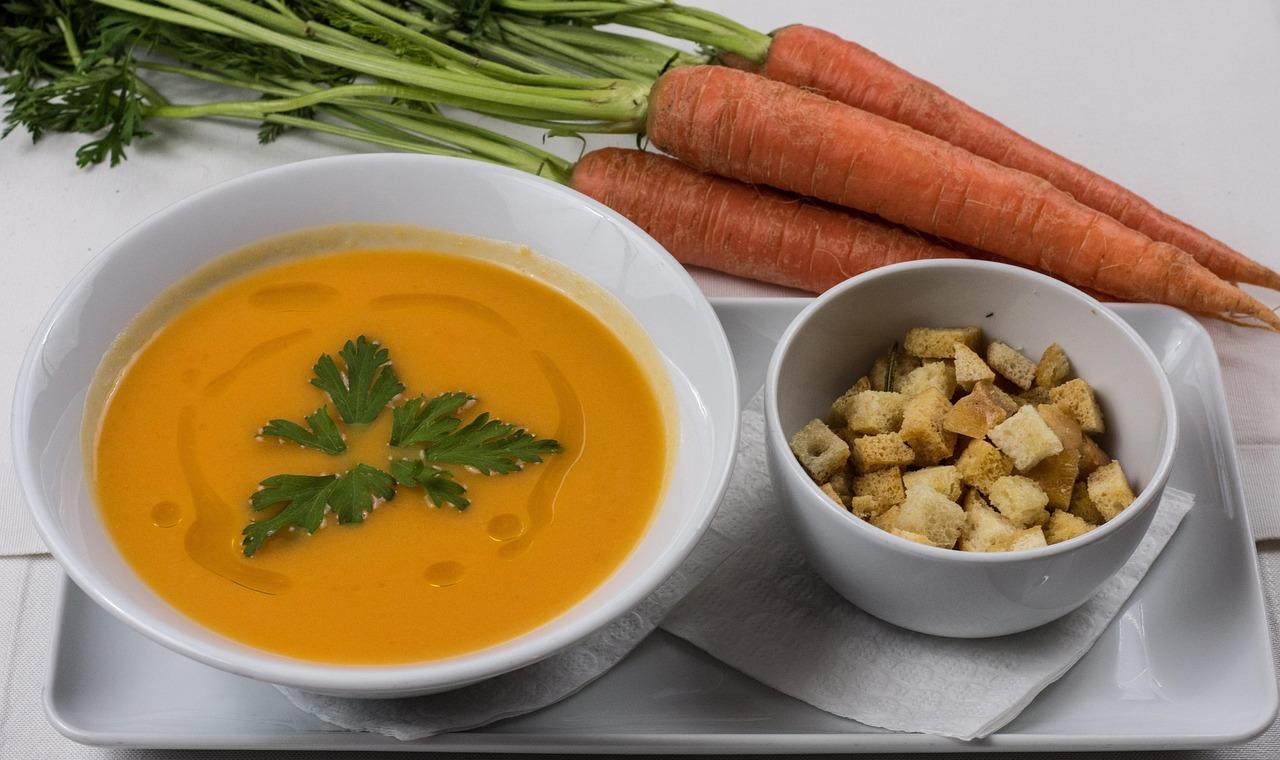
Carrot & coriander soup
A smooth, velvety carrot soup blended with potato for body and finished with butter-fried coriander and a splash of milk. It's mild and warming, so it suits the whole family. Serve it with crusty bread or croutons.