
AI-generated image
Khobz mella
Ember-baked bread
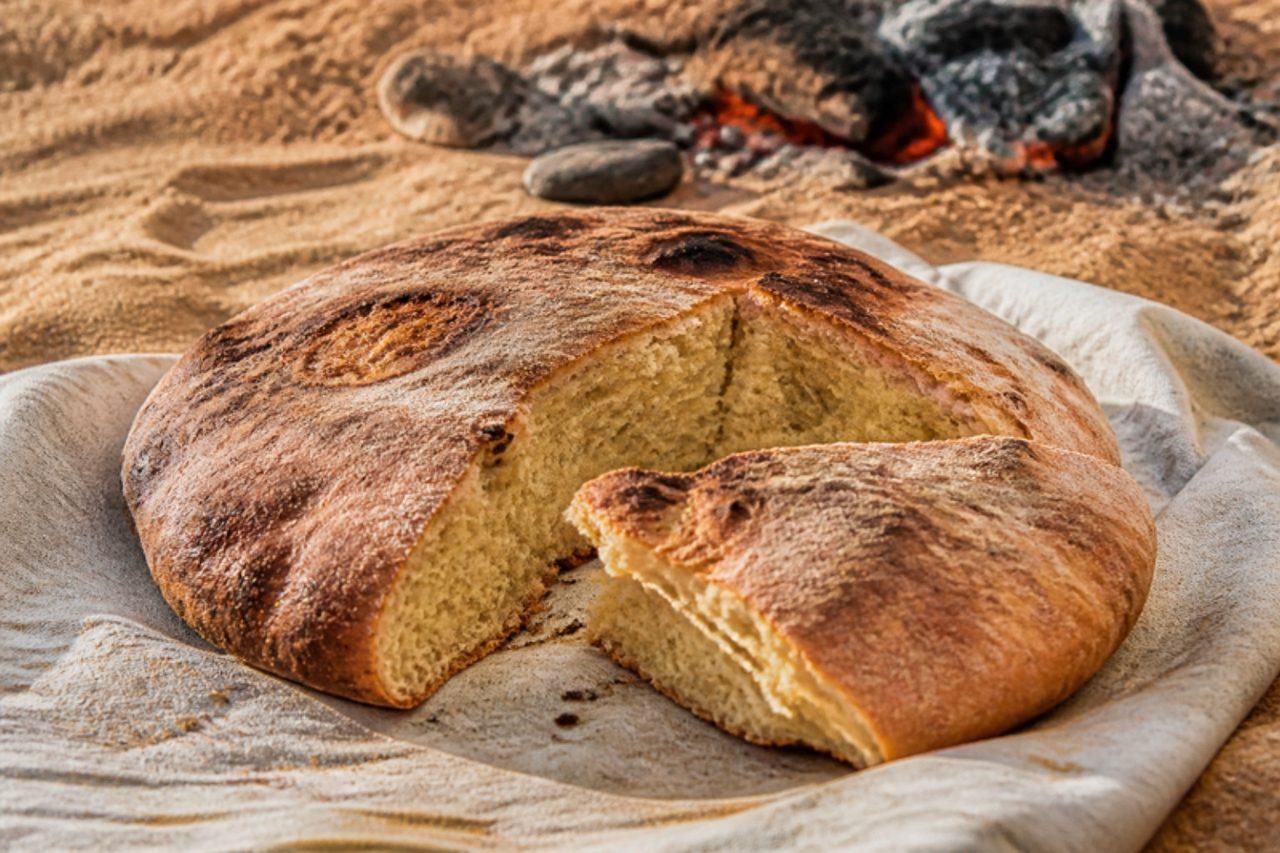
Khobz mella: Saharan Bedouin bread baked under hot sand and embers, done here in a hot oven


Around Douz, on the edge of the Tunisian Sahara, nomadic herders bake khobz mella by digging a hollow in sand heated under a fire, laying in a thick round of dough and burying it under more hot sand and embers. Brushed off and broken up, the crusty, smoky bread is crumbled into a tomato, pepper and onion stew to make mella, or eaten with olive oil and dates. Visitors to desert camps watch it being made by firelight. At home, a pizza stone or an upturned heavy tray in a very hot oven gives a similar chewy loaf with a thick crust; a charcoal barbecue gets you close to the smoky flavour. Chef's tip: dock the dough well with a fork; without it the round puffs up into a hollow ball and the crust cracks.
- Total time
- 90 min
- Difficulty
- medium
- Serves
- 6
Ingredients
For the bread
- 10 ½ oz fine semolina
- 7 oz plain flour
- 1 ½ tsp salt
- 1 ½ cups warm waterabout
- 2 tbsp olive oil
For the mella stew
- 4 tbsp olive oil
- 1 onionchopped
- 3 garlic clovescrushed
- 2 green pepperschopped
- 4 tomatoeschopped
- 1 tbsp harissa paste
- 1 tsp salt
- 1 cup water
Shop this recipe on Amazon
What you'll need
Links open Amazon in a new tab. As an Amazon Associate, WhatToEat.Today earns from qualifying purchases.
Method
0/7 doneStep 1: Mix 10 ½ oz fine semolina, 7 oz plain flour and 1 ½ tsp salt in a bowl. Add 1 ½ cups warm water gradually and knead for 8–10 minutes into a firm, smooth dough. Rest it under a cloth for 20 minutes.
30 minStep 2: Put a pizza stone or heavy upturned baking tray in the oven and heat to 475°F (fan 450°F) for at least 30 minutes, until very hot.
Step 3: Press the dough into a round about 25 cm across and 2 cm thick. Prick it all over with a fork and brush with 2 tbsp olive oil.
Step 4: Slide the bread onto the hot stone and bake for 15 minutes, then turn it over and bake for 10–15 minutes more, until deep golden, crusty and hollow-sounding when tapped underneath.
28 minStep 5: Meanwhile make the stew: heat 4 tbsp olive oil in a pan over a medium heat and cook 1 onion and 2 green peppers for 8 minutes until soft. Add 3 garlic cloves and 1 tbsp harissa paste and stir for 1 minute.
9 minStep 7: Cool the bread for 5 minutes, then break it into bite-sized pieces in a bowl and ladle over the stew, letting it soak for a minute. A common mistake is soaking it too long; the crumbs should be soft at the edges but still chewy. Eat at once, or eat the bread plain with olive oil and dates.
Nutrition per serving
- Calories
- 420 kcal
- Protein
- 11 g
- Carbs
- 70 g
- Fat
- 12 g
- Fibre
- 5 g
Nutrition values are estimates.
KrazyBadal
Good to know
- How long does khobz mella take?
- About 90 minutes in total: 20 minutes to prepare and 70 minutes to cook.
- How many people does it serve?
- 6 as written. Change the servings above the ingredients and every amount scales to match.
- Is it vegan?
- Yes. It has no meat, fish, dairy or eggs.
- What can I use instead of plain flour?
- Self-raising flour, same amount (then leave out the baking powder).
- What can I use instead of onion?
- 2 shallots per onion.
Reviews
No reviews yet. Be the first to cook it.
Rate this recipe
Sign in to rate and review this recipe.
You might also like

BsissaRoasted barley flour with olive oil
A tin of bsissa sits in many Tunisian kitchen cupboards, from Tunis flats to farmhouses in the south: a finely ground flour of roasted barley, roasted chickpeas and spices such as coriander, fennel and aniseed. In the morning a few spoonfuls are worked with olive oil and something sweet into a nutty, crumbly paste, or stirred with water into a thick drink, and it keeps you going until lunch. Travellers and pilgrims once carried it for the road. Roasting your own flour takes 15 minutes and makes a jar that lasts weeks. Sugar and dates keep it vegan; some families use honey. Chef's tip: roast the flours separately over a low heat and stir constantly; the moment they smell like toasted biscuits and turn light tan, tip them out of the pan.


ChipaCheese bread rings
In Paraguay you hear 'chipa, chipa!' called by vendors with big baskets on buses and street corners, and every family bakes it for Holy Week, when chipa is the food of Good Friday. Cassava starch, a little cornmeal, butter, eggs and a lot of hard cheese are kneaded into a dough scented with aniseed, shaped into rings or small rolls and baked in a hot oven, traditionally a domed clay tatakua. It's chewy, crisp outside and best warm with cocido (toasted yerba tea). Chef's tip: the dough should feel soft and slightly greasy; add milk a spoon at a time, as too much makes the chipa spread flat.
 Paraguayan

Banatage (tuna potato croquettes)
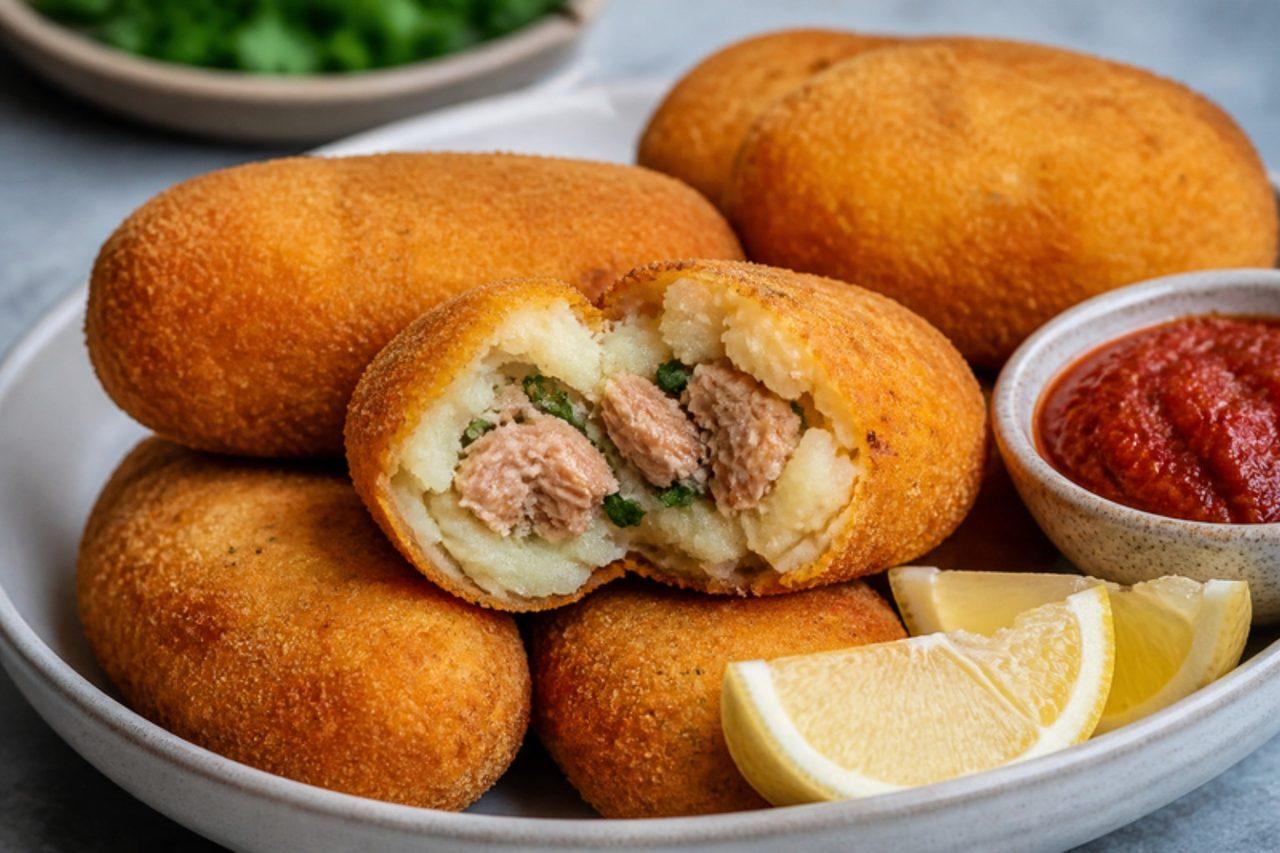
Golden, crunchy outside and soft inside, banatage are mashed-potato croquettes hiding a spoon of tuna, parsley and harissa, rolled in breadcrumbs and fried. They come out during Ramadan beside the brik and chorba, are tucked into lunchboxes and are a favourite with children all over Tunisia. Leftover mash works well, as long as it is firm. Serve them hot with lemon wedges, a salad or a dab of harissa. Chef's tip: dry the boiled potatoes in the hot pan for a minute before mashing; wet, watery mash is the usual mistake and makes croquettes that split open in the oil.