
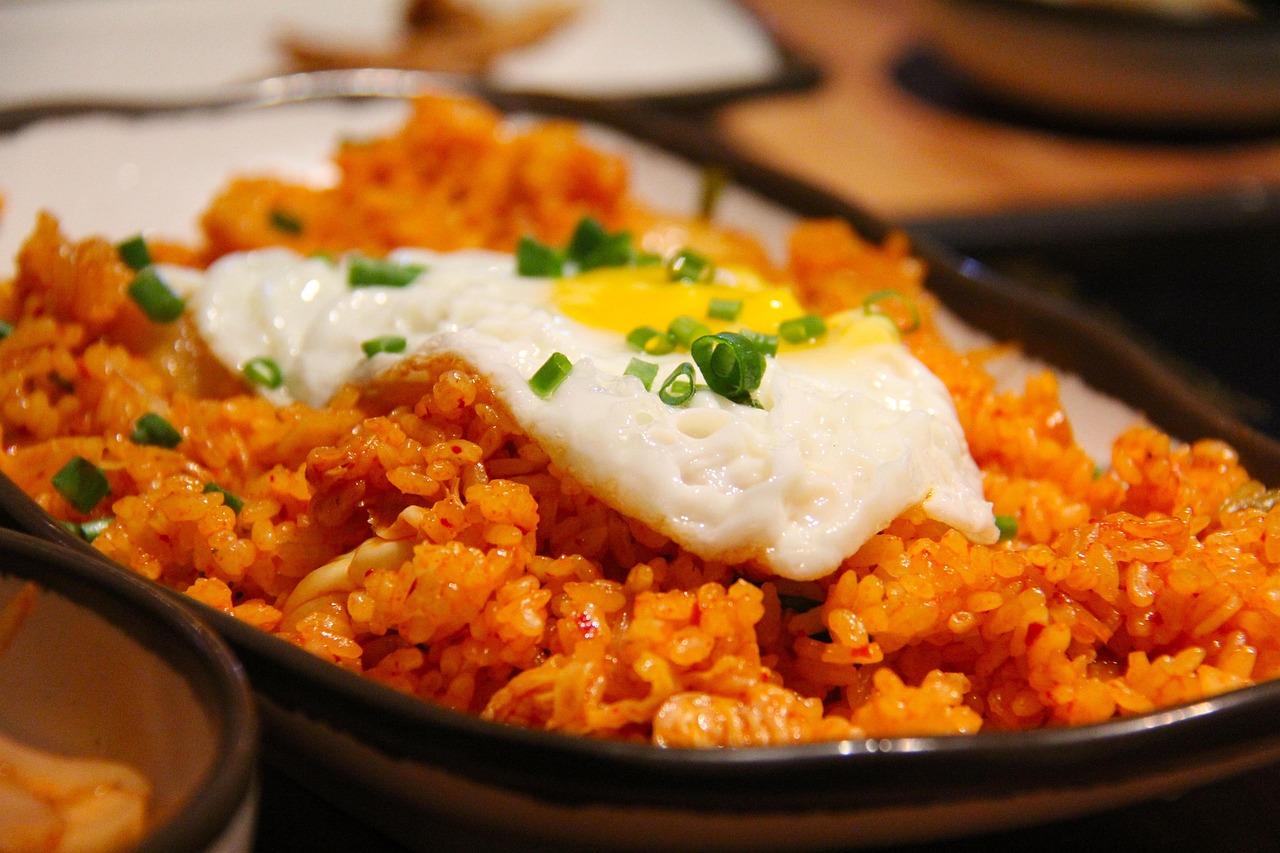
Kimchi fried rice
김치볶음밥 · Day-old rice fried with sour kimchi and gochujang, topped with a runny egg

Kimchi fried rice (김치볶음밥, kimchi bokkeumbap) is the dish Korean households all over the country make when the kimchi has turned sour and there is leftover rice in the fridge. The kimchi and its juice are fried first so they caramelise, then the rice is tossed through until every grain is red, tangy and a little smoky. A fried egg with a runny yolk on top makes it a meal. Use well-fermented vegetarian kimchi, such as the baechu kimchi in this collection; many shop-bought kimchis contain fish sauce or shrimp, so check the label. Chef's tip: the kimchi must be properly sour, at least two or three weeks old. Fresh kimchi makes a flat, watery fried rice; fry it until it catches slightly before the rice goes in.
- Total time
- 15 min
- Difficulty
- easy
- Serves
- 2
Ingredients
For the fried rice
To serve
Method
0/7 doneStep 1: Break up 14 oz cooked short-grain rice with your fingers so there are no clumps.
Step 2: Heat 2 tbsp neutral oil in a large frying pan or wok over a medium-high heat. Fry ½ onion and 2 cloves garlic for 2 minutes until soft.
2 minStep 3: Add 7 oz kimchi and ½ tsp sugar and fry for 3 minutes, stirring, until the kimchi looks glossy and starts to catch at the edges.
3 minStep 4: Stir in 1 tbsp gochujang (Korean chilli paste) and 3 tbsp kimchi juice, then add the rice. Toss and press it against the pan for 3 minutes until evenly red and piping hot, with a few crisp bits. Listen for a crackle as the rice touches the pan; if it goes quiet and steams, your heat is too low.
3 minStep 5: Season with 1 tsp soy sauce, add 1 tsp toasted sesame oil and most of the 2 spring onions and toss once more. Spoon onto two plates.
1 minStep 6: Add 1 tsp neutral oil to the same pan and fry 2 eggs over a medium heat for 2–3 minutes, until the whites are set and the yolks still runny.
3 minStep 7: Put an egg on each plate of rice and scatter with the rest of the spring onions, 1 tsp toasted sesame seeds and 1 sheet roasted seaweed (gim). Break the yolk into the rice as you eat.
Nutrition per serving
- Calories
- 560 kcal
- Protein
- 16 g
- Carbs
- 78 g
- Fat
- 20 g
- Fibre
- 5 g
Nutrition values are estimates.
KrazyBadal
Good to know
- How long does kimchi fried rice take?
- About 15 minutes in total: 5 minutes to prepare and 10 minutes to cook.
- How many people does it serve?
- 2 as written. Change the servings above the ingredients and every amount scales to match.
- Is it vegetarian?
- Yes. It has no meat or fish.
- Is it very spicy?
- It has some heat. Use less chilli for a milder version, or more if you like it hot.
- What can I use instead of onion?
- 2 shallots per onion.
- What can I use instead of garlic?
- ½ tsp garlic paste or ⅛ tsp garlic powder per clove.
Reviews
No reviews yet. Be the first to cook it.
Rate this recipe
Sign in to rate and review this recipe.
You might also like
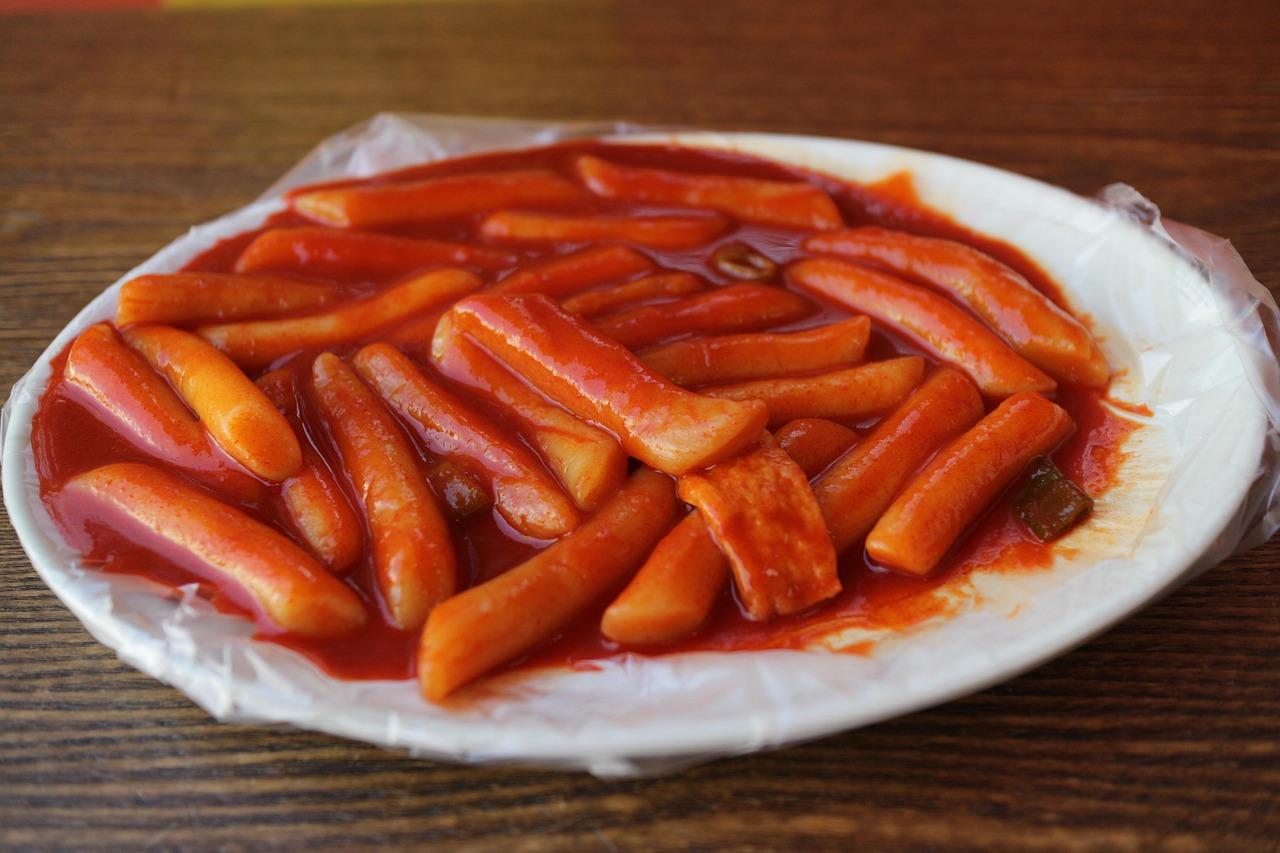
Tteokbokki
Tteokbokki (떡볶이) is Korea's best-loved street snack: chewy cylinders of rice cake simmered in a thick, glossy, sweet and spicy red sauce. It became a classic in Seoul, where it is sold from street stalls and snack bars in every neighbourhood. Street versions use anchovy stock and fish cakes; this vegan version uses a quick kelp and shiitake stock with cabbage and spring onions, and has all the same punch. Eat it hot, while the rice cakes are soft and stretchy. Chef's tip: keep stirring and scrape the bottom; the rice cakes release starch that thickens the sauce but also catches. The sauce is right when it clings to the spoon in a glossy coat.


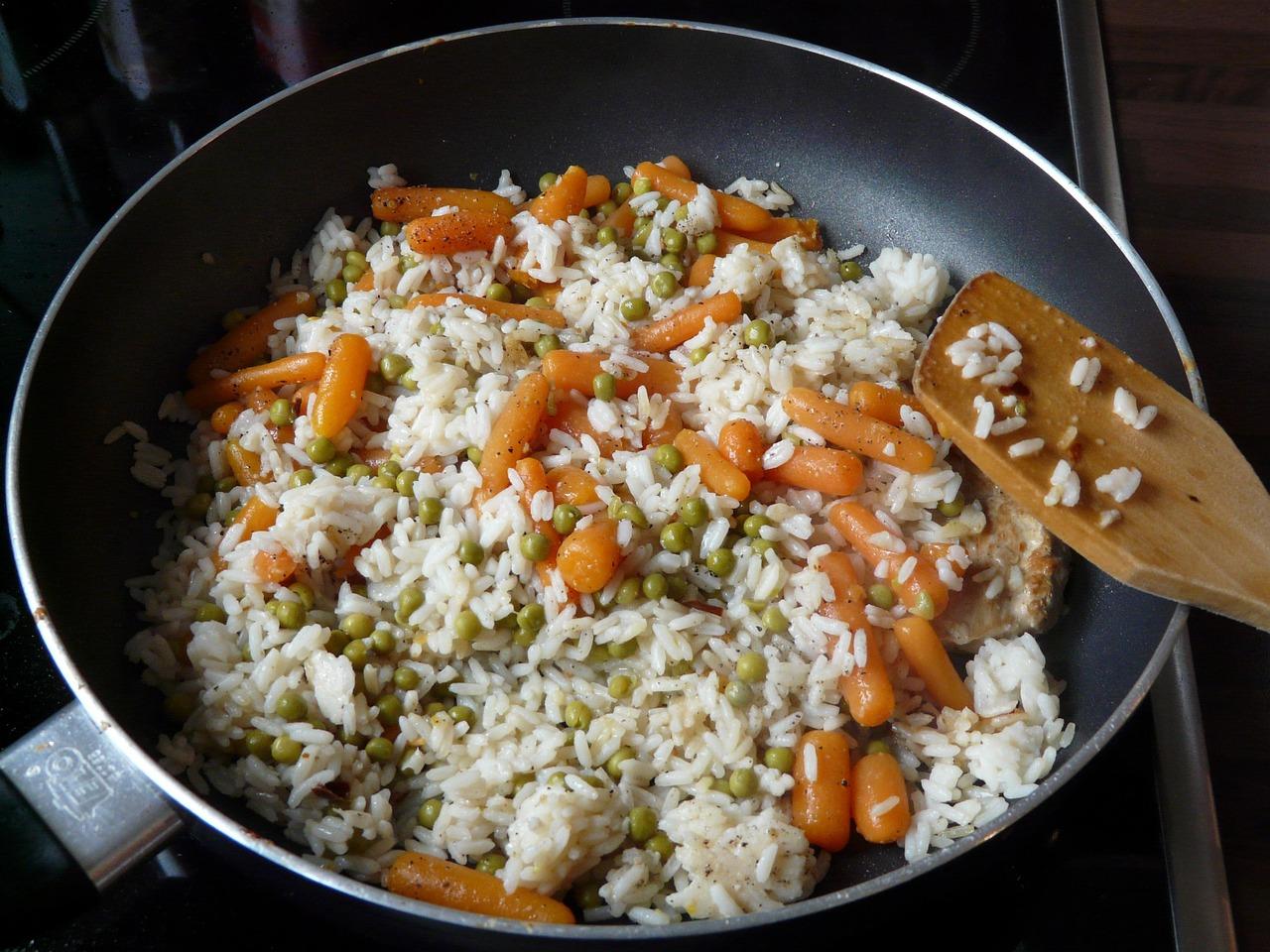
Vegetable risotto for babies
A smooth, savoury first meal of rice with carrot, new potatoes and spinach, pureed with baby milk for babies of 4–8 months. Use plain, unsalted cooked rice. Make it a little thicker as your baby gets used to texture.

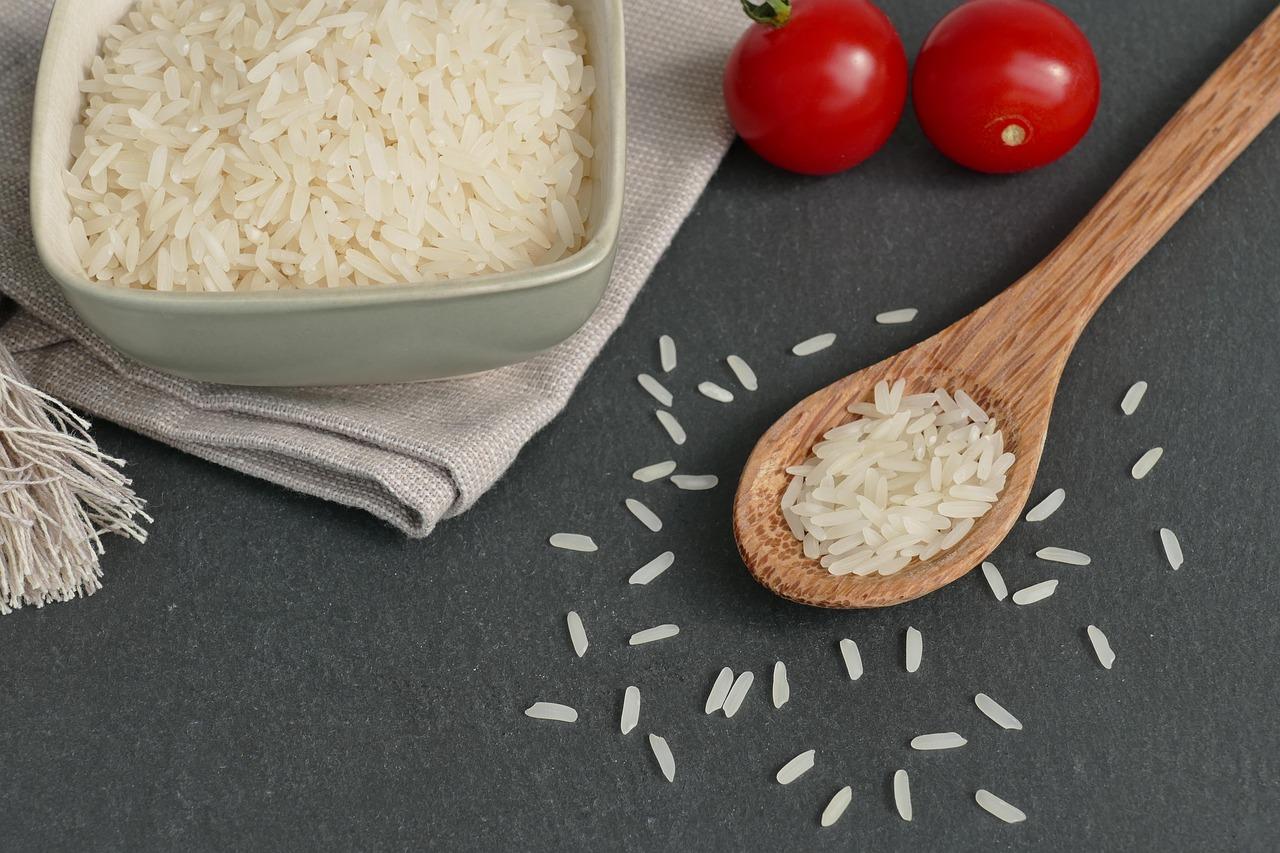
Plain cooked rice
Two reliable ways to cook plain rice. Method 1 lets the rice soak up all its water, for soft, fluffy rice to serve with curry and dal. Method 2 boils it in plenty of water and drains it, giving separate grains for fried rice, pilau and salads. Soaking first helps the grains cook evenly.
