
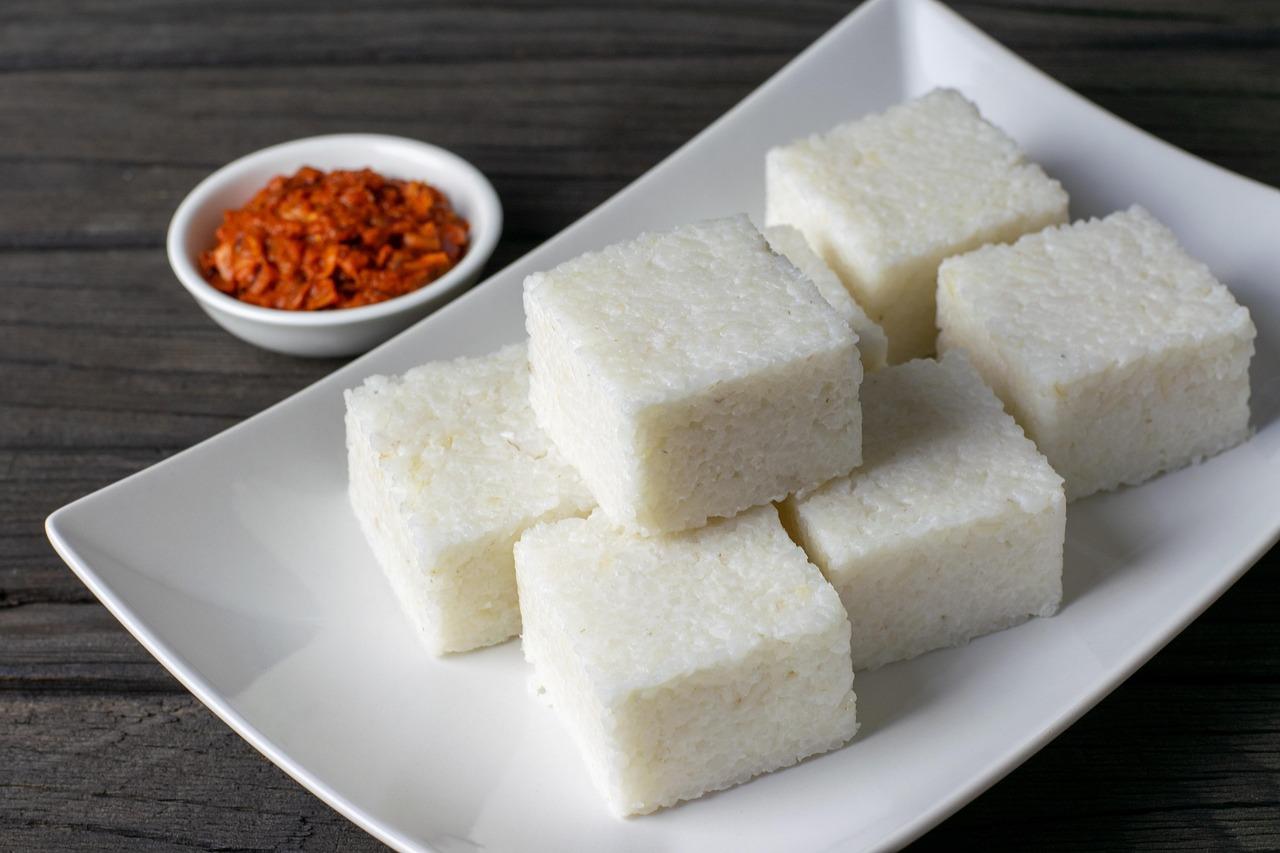
Kiri bath
Coconut milk rice
Kiri bath: Sri Lankan coconut milk rice for New Year and lucky first mornings, served with lunu miris



Kiri bath is the first food eaten at Sinhala and Tamil New Year (Aluth Avurudu) in mid-April, cooked at the exact auspicious time the astrologers announce, and it also starts the first day of each month, birthdays and new jobs across Sri Lanka. White rice is boiled until very soft, then cooked again with thick coconut milk and salt until it sets into a creamy slab that is cut into diamonds. It's eaten with lunu miris, a fierce red onion and chilli paste, or with jaggery and bananas for the sweet-toothed. Lunu miris often contains Maldive fish; ours doesn't. The common mistake is adding the coconut milk before the rice is completely soft: the grains stay hard. Chef's tip: press the hot rice flat with a banana leaf or the back of a spoon dipped in coconut milk; it stops sticking and gives the classic glossy top.
- Total time
- 35 min
- Difficulty
- easy
- Serves
- 4
Ingredients
For the milk rice
- 10 ½ oz short-grain white riceSri Lankan white raw rice, Thai jasmine or pudding rice; rinsed
- 2 ½ cups water
- 1 ¾ cups thick coconut milk1 tin
- 1 tsp salt
For the lunu miris
- 1 red onionsmall, roughly chopped (or 5 shallots)
- 2 tsp dried red chilli flakes
- 1 tbsp lime juice
- ½ tsp salt
To serve
- 1 ¾ oz jaggery (hakuru) (optional)broken into pieces
- 4 small ripe bananas (optional)
Shop this recipe on Amazon
Fresh ingredients (3)
Links open Amazon in a new tab. As an Amazon Associate, WhatToEat.Today earns from qualifying purchases.
Method
0/6 doneStep 1: Put 10 ½ oz short-grain white rice and 2 ½ cups water in a heavy pan and bring to the boil over a high heat. Turn the heat to low, cover and cook for 15–18 minutes, until the water is absorbed and the grains are very soft and squash flat between your fingers.
18 minStep 2: Stir 1 tsp salt into 1 ¾ cups thick coconut milk and pour it over the rice. Cook over a low heat, stirring constantly with a wooden spoon, for 6–8 minutes, until the coconut milk is absorbed and the rice turns thick, sticky and creamy and starts to pull away from the sides.
8 minStep 3: Turn the rice out onto a flat plate or tray. Press it into an even slab about 2.5 cm thick with a spoon or a piece of banana leaf dipped in a little coconut milk, smoothing the top until glossy.
Step 4: Leave to set for 10 minutes, then cut with an oiled knife into diamonds or squares.
10 minStep 5: Meanwhile make the lunu miris: pound or pulse 1 red onion, 2 tsp dried red chilli flakes and ½ tsp salt to a coarse, wet red paste, then stir in 1 tbsp lime juice. It should be very hot and sharp.
Step 6: Serve the kiri bath warm with lunu miris, and with 1 ¾ oz jaggery (hakuru) and 4 small ripe bananas for anyone who prefers it sweet.
Nutrition per serving
- Calories
- 430 kcal
- Protein
- 6 g
- Carbs
- 64 g
- Fat
- 17 g
- Fibre
- 2 g
Nutrition values are estimates.
KrazyBadal
Good to know
- How long does kiri bath take?
- About 35 minutes in total: 5 minutes to prepare and 30 minutes to cook.
- How many people does it serve?
- 4 as written. Change the servings above the ingredients and every amount scales to match.
- Is it vegan?
- Yes. It has no meat, fish, dairy or eggs.
- Is it gluten free?
- Yes, as written. Check the labels on stock, sauces and spice mixes, which sometimes contain gluten.
- What can I use instead of short-grain white rice?
- Any long-grain rice, same amount.
- What can I use instead of thick coconut milk?
- Single cream, same amount (not dairy free).
Reviews
No reviews yet. Be the first to cook it.
Rate this recipe
Sign in to rate and review this recipe.
You might also like
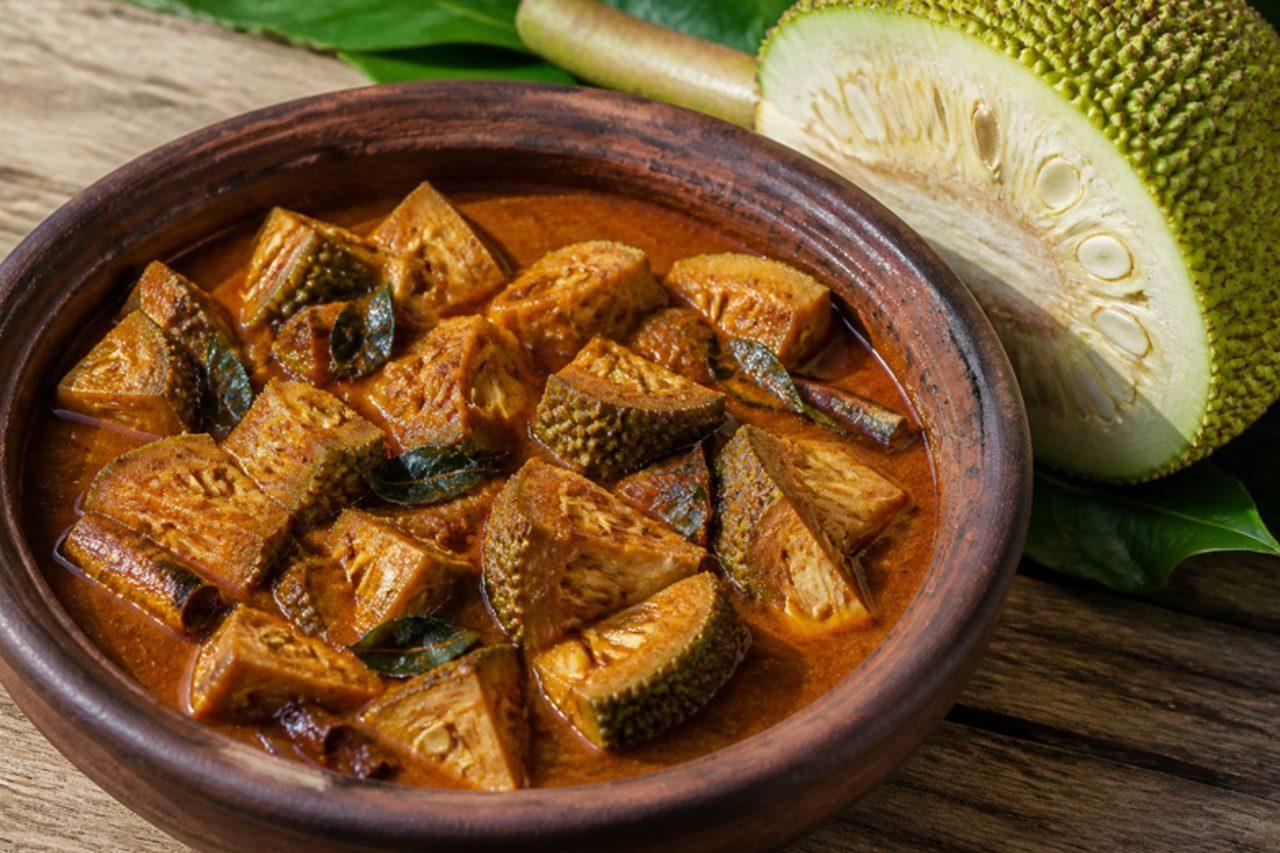
Polos curryYoung green jackfruit curry
Polos is the tiny unripe jackfruit picked in the Western and Sabaragamuwa provinces long before it sweetens, and cooked low and slow it becomes one of the island's most loved festival curries, especially at Sinhala and Tamil New Year in April and at wedding lunches. The firm, pale flesh soaks up a very dark roasted curry powder, garlic, ginger, goraka (a smoky souring fruit) and coconut milk until it turns almost black-brown and tastes rich, sour and meaty. Fresh polos is hard to find abroad; tinned young green jackfruit in brine works well. A frequent mistake is not cooking it long enough, which leaves it squeaky; the pieces must be soft enough to break with a spoon. Chef's tip: oil your hands and knife before cutting fresh jackfruit; the sticky white sap washes off oiled skin but not dry skin.


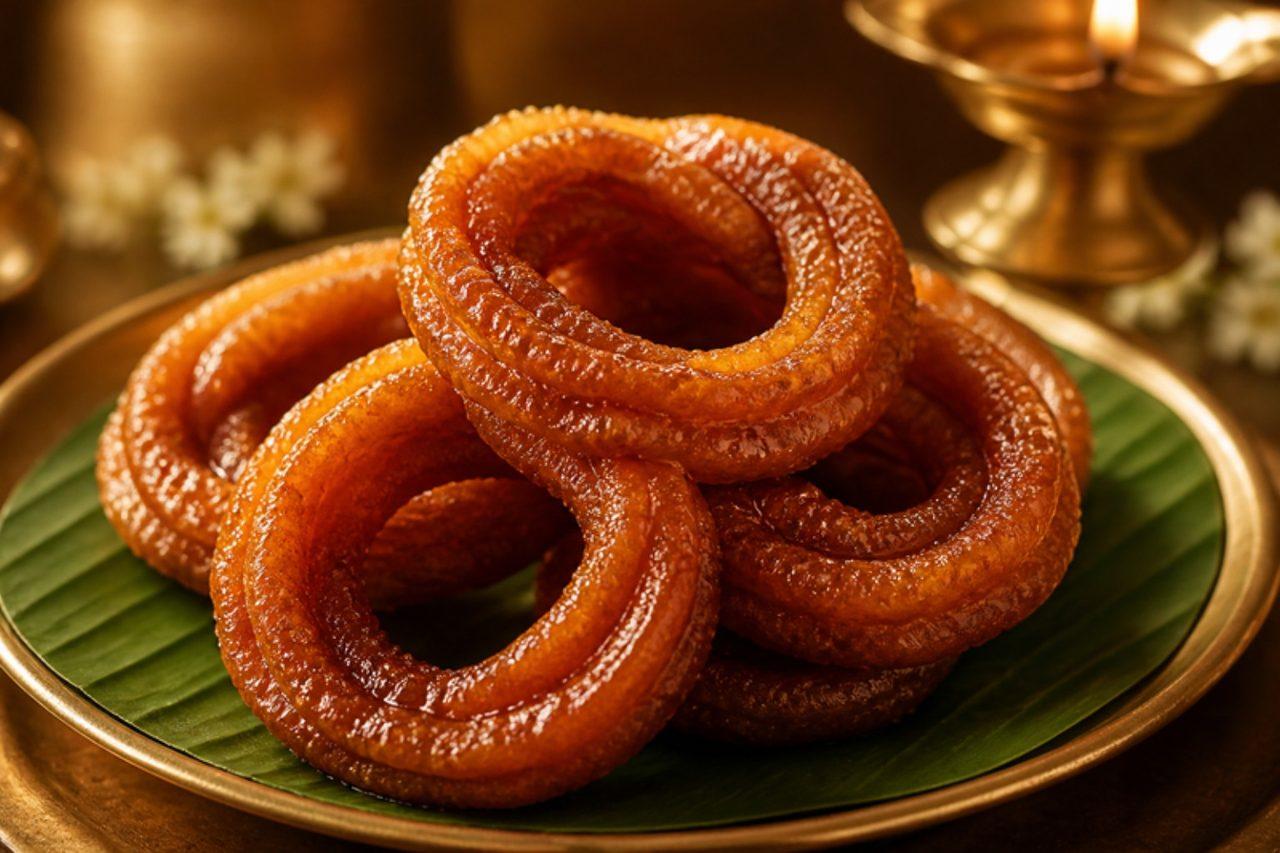
Undu walaluFried urad dal rings in treacle
Walalu means bangles, and these dark, sticky rings of fried urad dal soaked in kithul treacle are a sweet that Sinhala families bring out for Avurudu and for special almsgivings, often made in large batches by an aunt known for her steady hand. A thick, fluffy paste of ground black gram is piped into loops and fried until crisp, then plunged straight into warm treacle, so the rings stay crunchy on the outside while drinking up the syrup. They taste a little like a darker, smokier jalebi, with a toffee finish from the palm treacle. Watery batter is what ruins them; it spreads into flat blobs, so grind the soaked dal with as little water as possible and beat it until light. This recipe uses no asafoetida, so it is naturally gluten free. Chef's tip: pipe the rings onto small squares of baking paper and lower them into the oil paper and all; the paper peels away in seconds.
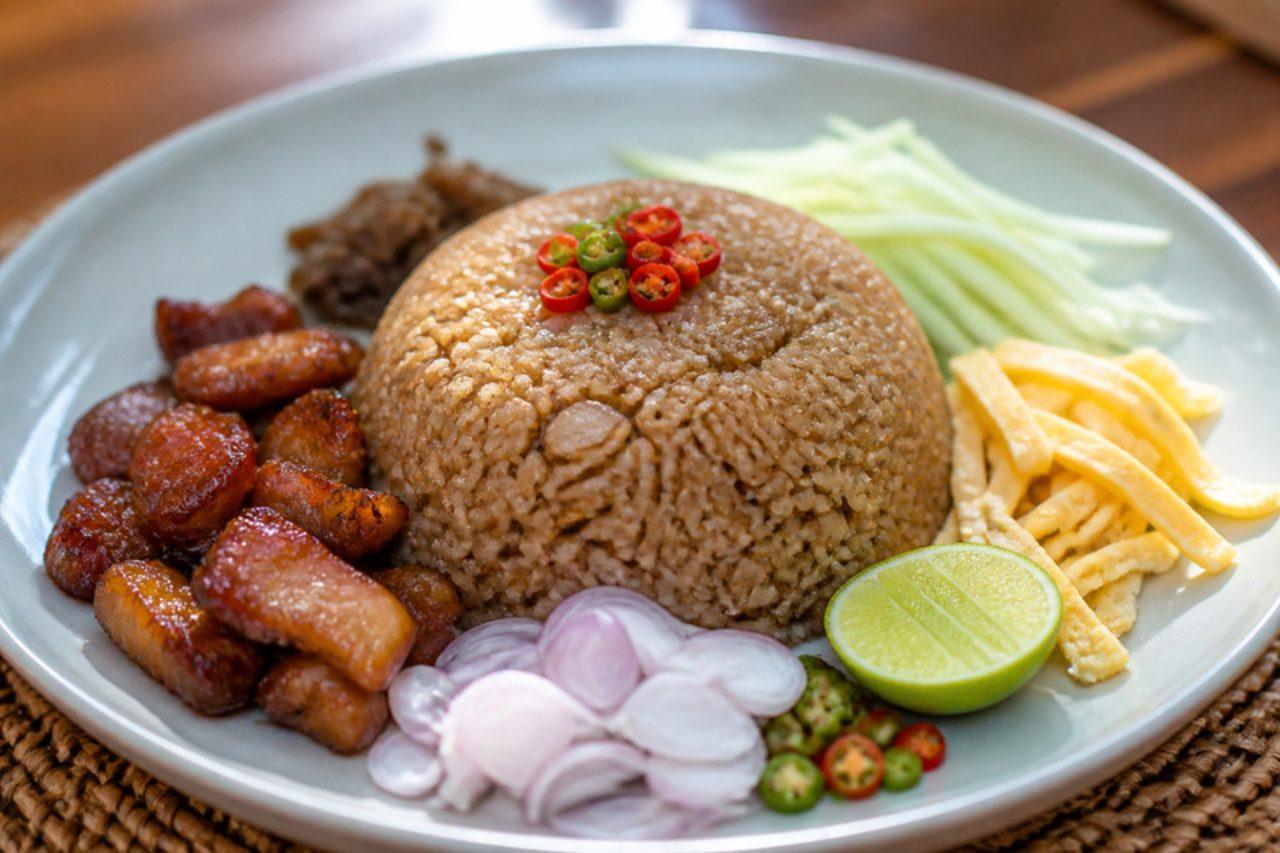
Khao kluk kapiShrimp paste rice
Everything on this central Thai plate is arranged in little heaps around a mound of rice tossed with garlic and fermented shrimp paste: sticky caramelised pork (moo wan), threads of sour green mango, shallots, chillies, sliced long beans, crisp dried shrimp and ribbons of thin omelette. You mix a bit of each into every spoonful, so salty, sweet, sour and hot arrive together. It's a favourite at Bangkok's curry-and-rice shops and a clever way to use up yesterday's rice at home; lime wedges and cucumber cool it down. Chef's tip: use day-old jasmine rice straight from the fridge, because freshly cooked rice clumps and smears the shrimp paste instead of coating each grain.
 Thai